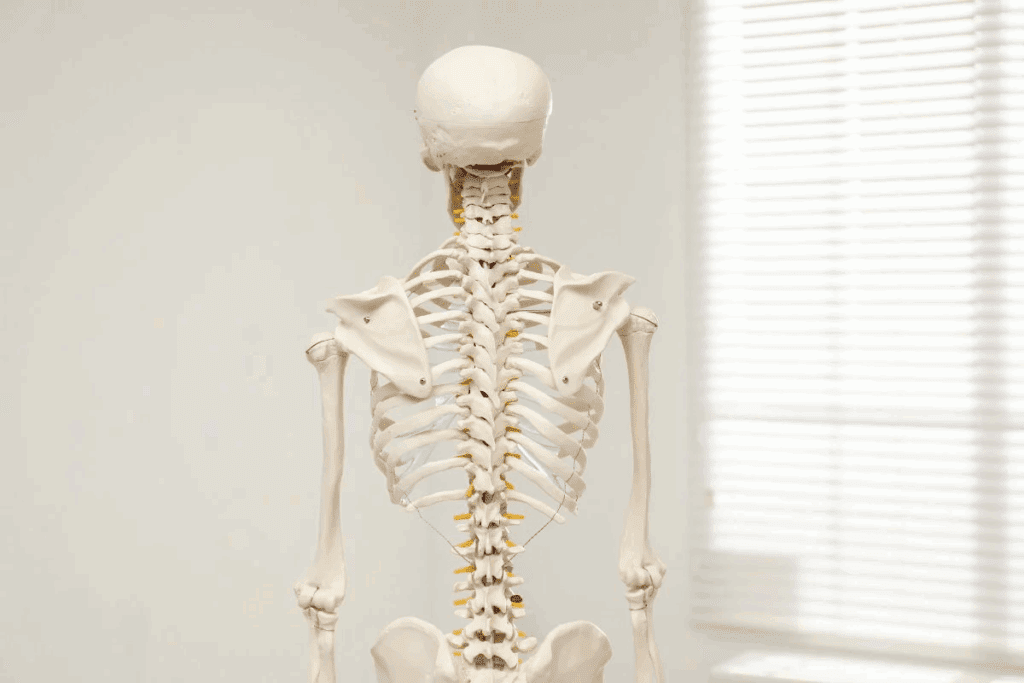
The trigeminal nerve, or cranial nerve 5, is key in sending sensory info about facial feelings and controlling chewing muscles. At Liv Hospital, we stress the need for a detailed trigeminal examination. This is to spot neurological issues and help make treatment plans for patients with facial numbness, weakness, or changes in feeling. Learn how to check cranial nerve 5. This simple guide explains the motor and sensory tests for a complete trigeminal nerve exam.
Getting the trigeminal nerve right is critical for top-notch care. Our team is dedicated to using proven methods for checking trigeminal nerve function. We do this through careful tests of both sensory and motor skills.
Key Takeaways
- Knowing the trigeminal nerve’s anatomy and importance is key for neurological checks.
- A full trigeminal exam covers both sensory and motor tests.
- Systematic nerve tests help find neurological problems.
- Using proven methods ensures accurate nerve function checks.
- Thorough nerve checks help doctors make better treatment plans.
Understanding the Trigeminal Nerve (CN V)

It’s important to know about the trigeminal nerve for neurological tests. This nerve plays a big role in how we feel sensations on our face and control our facial muscles. The trigeminal nerve, or cranial nerve V, has both sensory and motor parts.
Anatomical Structure and Divisions
The trigeminal nerve starts from three sensory nuclei and one motor nucleus. It goes from the midbrain to the medulla. It splits into three main parts: the ophthalmic (V1), maxillary (V2), and mandibular (V3) divisions.
| Division | Sensory Area Covered | Motor Function |
|---|---|---|
| Ophthalmic (V1) | Eye and surrounding area | No motor function |
| Maxillary (V2) | Mid-face area | No motor function |
| Mandibular (V3) | Lower face area | Innervates muscles of mastication |
Functions of the Trigeminal Nerve
The trigeminal nerve sends sensory info from the face to the brain. It handles touch, pain, and temperature. Its motor part controls the muscles we use to chew.
Clinical Significance in Neurological Assessment
Testing the trigeminal nerve is key in neurological exams. It shows if there’s a problem with feeling on the face or chewing. Finding issues with this nerve can point to many neurological problems, making it a vital part of diagnosis.
Preparation for Trigeminal Nerve Examination
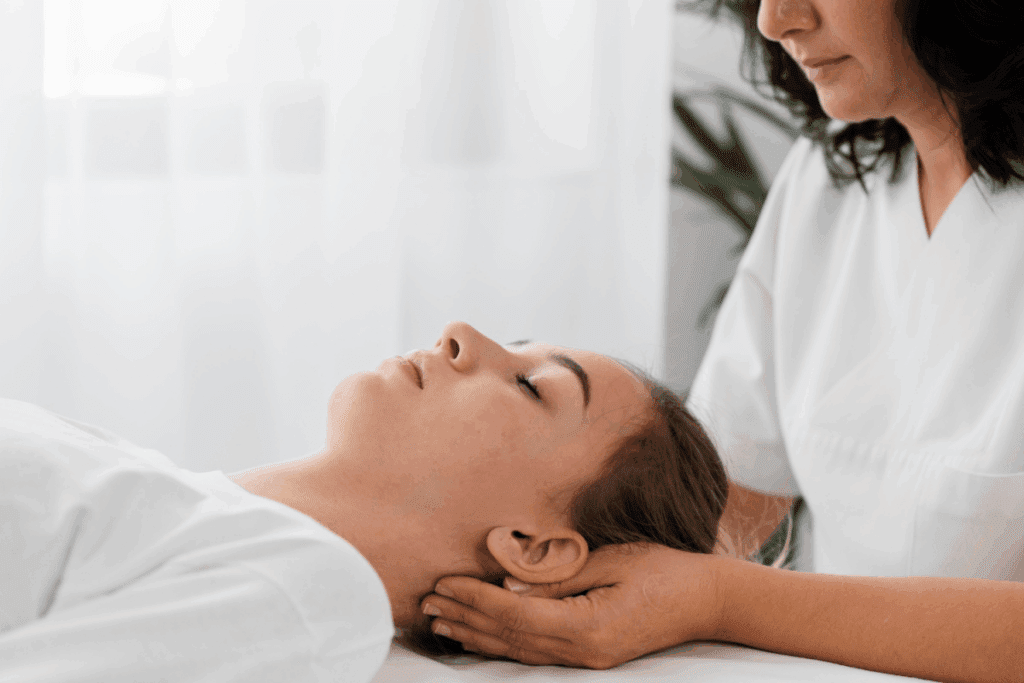
Before we start checking the trigeminal nerve, we need to get ready. This means preparing both the tools and the person being tested. A well-prepared setup helps us get more accurate results.
Required Equipment
To effectively test the trigeminal nerve, we only need a few specific tools. We’ll use cotton wool to check for light touch and a blunt pin for pain. Having these tools ready makes the test go smoothly.
Here’s a quick list of what we need:
| Equipment | Purpose |
|---|---|
| Cotton wool | Assessing light touch sensation |
| Blunt pin | Evaluating pain sensation |
Patient Positioning and Comfort
It’s very important to make sure the patient is comfortable. We should place them in a position they find comfortable, whether sitting or lying down. A comfortable setting helps reduce stress and gives us better results.
Important things for patient comfort include:
- Adjusting the examination table to a comfortable height
- Ensuring good lighting in the examination room
- Maintaining a calm and quiet atmosphere
Explaining the Procedure to the Patient
Before we start, we must explain what will happen. This is important for the patient’s cooperation and to reduce any anxiety. A clear explanation helps the patient know what to expect, making the test easier.
By following these steps, we can make sure the trigeminal nerve examination is thorough and effective. Proper preparation is essential for accurately checking cranial nerve 5.
How to Check Cranial Nerve 5: Overview of the Assessment
Checking cranial nerve 5 is key for diagnosing and treating many neurological issues. The trigeminal nerve, or cranial nerve 5, handles both sensory and motor tasks. This makes it essential for a full neurological check-up.
Components of a Complete Trigeminal Examination
A full trigeminal check includes both sensory and motor tests. The sensory test looks at the three parts of the trigeminal nerve. It checks for light touch, pain, and temperature in these areas.
The motor test looks at the muscles used for chewing. It checks their strength and how well they work. This includes the masseter, temporalis, and lateral pterygoid muscles.
Systematic Approach to Testing
We use a detailed method to test the trigeminal nerve. This method includes:
- Checking how each part of the nerve senses things
- Testing the chewing muscles
- Doing special tests like the corneal reflex and jaw jerk
This way, we make sure we check every part of the trigeminal nerve. This gives us a full picture of how it works.
Documentation Requirements
Keeping accurate records is very important. We write down what we find in both sensory and motor tests. We note any problems or weaknesses.
- We record sensory test results, including any missing sensations
- We check how well the chewing muscles work and look for any weakness
- We also document the results of special tests, like the corneal reflex and jaw jerk
By keeping detailed records, we can see how things change over time. This helps us make better decisions for our patients.
Sensory Testing of the Ophthalmic Division (V1)
To fully check the trigeminal nerve, we first look at the ophthalmic division. This part is key for feeling in the forehead and around the eyes. It covers the skin and mucous membranes from the frontonasal area.
Anatomical Area Covered by V1
The ophthalmic division covers a lot of ground. It includes the forehead skin, upper eyelid, and the cornea. It also handles the nasal cavity and paranasal sinuses’ mucous membranes. Knowing this area is vital for checking V1’s function.
Light Touch Assessment Technique
Testing light touch is key for checking the ophthalmic division. We use a cotton swab or cotton wool to lightly touch areas V1 covers. The patient closes their eyes and tells us where they feel it.
- Gently touch the patient’s forehead with the cotton swab.
- Compare the sensation on the left and right sides.
- Test the upper eyelid and cornea, taking care not to cause discomfort.
Pain and Temperature Sensation Testing
We also check pain and temperature to fully understand V1. A blunt pin is used for pain, and cold or warm objects for temperature. This gives a full view of V1’s function.
- Use a blunt pin to gently prick the skin in areas innervated by V1, avoiding sharp pain.
- Test temperature sensation by applying a cold or warm object to the skin.
- Compare the patient’s ability to distinguish between different sensations on both sides of the face.
By testing light touch, pain, and temperature in the ophthalmic division’s area, we can see how well V1 works. This helps us spot any problems or issues.
Sensory Testing of the Maxillary Division (V2)
The maxillary division of the trigeminal nerve is key for facial sensation. It covers the mid-face area, including the lower eyelid, cheek, and upper lip. Testing this division is vital for spotting nerve problems.
Anatomical Area Covered by V2
The maxillary division affects a specific face area. This includes the lower eyelid, cheek, and upper lip. Knowing where V2 is helps in a detailed check-up.
| Region | Sensory Area |
|---|---|
| Lower Eyelid | Sensation to the skin of the lower eyelid |
| Cheek | Sensation to the skin of the cheek |
| Upper Lip | Sensation to the skin of the upper lip |
Light Touch Assessment Technique
To check light touch in V2, we use a cotton wool swab. Lightly touch the skin without pressure. Ask the patient to say when they feel it and compare both sides.
Key Steps:
- Gently touch the skin with cotton wool
- Ask the patient to report the sensation
- Compare bilateral sensation
Pain and Temperature Sensation Testing
For pain and temperature, we use a blunt pin and cold or warm objects. These tests check if V2 is working right.
To test pain, lightly prick with a blunt pin in the V2 area. For temperature, use a cold or warm object. The patient’s correct identification of these sensations is key to checking V2’s function.
Sensory Testing of the Mandibular Division (V3)
To fully check cranial nerve 5, we need to look closely at the mandibular division. This part of V5 handles the senses of the lower face. It includes the lower lip, chin, and parts of the tongue. It also controls the muscles needed for chewing.
Anatomical Area Covered by V3
The mandibular division (V3) covers important areas. It includes the lower lip, the front two-thirds of the tongue, and the skin on the jaw. Knowing these areas is key for a detailed sensory test.
- The lower lip and chin get their sense from the mental nerve, a V3 branch.
- The front two-thirds of the tongue feel touch, temperature, and pain from the lingual nerve, a V3 branch.
- The skin on the jaw is covered by the buccal and auriculotemporal nerves, both from V3.
Light Touch Assessment Technique
Testing light touch in V3’s area means lightly touching the skin with a cotton swab or soft brush. The patient should keep their eyes closed to avoid seeing and guessing.
- Start by lightly touching areas in V3’s area, like the lower lip or chin.
- Then, touch areas not in V3 to make sure the patient is answering right.
- Ask the patient to say when they feel touched and what it feels like.
Pain and Temperature Sensation Testing
Testing for pain and temperature is key to checking V3. Use a sharp object for pain and cold or warm objects for temperature.
Key points to remember:
- Use a sharp object (like a pin) for pain, but be careful not to hurt the patient.
- For temperature, use cold or warm water in tubes or a cold tuning fork.
- See how well the patient can feel these sensations in V3’s area compared to other places.
By carefully checking the senses of the mandibular division, we learn a lot about the trigeminal nerve. This helps us find any possible nerve problems.
Motor Function Assessment of the Trigeminal Nerve
Checking the motor part of cranial nerve 5 is key for spotting neurological problems. The trigeminal nerve controls the muscles needed for chewing.
Muscles of Mastication: Anatomy and Function
The muscles of mastication are the masseter, temporalis, medial pterygoid, and lateral pterygoid. They work together to move the mandible. This helps us chew and speak.
| Muscle | Primary Action | Innervation |
|---|---|---|
| Masseter | Elevation of the mandible | Trigeminal nerve (V3) |
| Temporalis | Elevation and retraction of the mandible | Trigeminal nerve (V3) |
| Medial Pterygoid | Elevation and rotation of the mandible | Trigeminal nerve (V3) |
| Lateral Pterygoid | Depression and protrusion of the mandible | Trigeminal nerve (V3) |
Testing Masseter Muscle Strength
To check the masseter muscle’s strength, we ask the patient to clench their teeth. We then feel the muscle to see its tone and strength.
Evaluating Temporalis Muscle Function
We test the temporalis muscle by having the patient clench their teeth and then feeling the muscle’s contraction. We also see if the muscle can pull the mandible back.
Lateral Pterygoid Assessment
Checking the lateral pterygoid involves seeing if the patient can push their jaw forward. We watch the mandible’s movement and look for any weakness or deviation.
By thoroughly checking the trigeminal nerve’s motor function, we can spot neurological issues. This helps us give the right care.
Special Tests: Corneal Reflex and Jaw Jerk
Special tests like the corneal reflex and jaw jerk are key parts of checking the trigeminal nerve. They give us important info about how the nerve works. This helps us spot any problems.
Proper Technique for Corneal Reflex Testing
The corneal reflex test involves lightly touching the cornea with cotton wool. This action triggers the trigeminal nerve (CN V), which handles the sensory part of the reflex. The motor part, blinking, is controlled by the facial nerve (CN VII).
To do this test right, we come from the side to avoid startling the patient. We gently touch the cornea and watch for both eyes to blink.
It’s important to use a light touch to avoid hurting the cornea. The cotton wool should come from the side to prevent a voluntary blink.
Jaw Jerk Reflex Assessment
The jaw jerk reflex checks the motor part of the trigeminal nerve. We ask the patient to relax their jaw and then tap their chin with a reflex hammer. This should make their jaw close.
The sensory part of this reflex comes from the trigeminal nerve, while the motor part comes from its motor branches. We look for symmetry and quickness in the response. A weak or missing jaw jerk could mean a problem with the trigeminal nerve or its motor nucleus.
Interpretation of Reflex Responses
Understanding the results of these tests is key. An absent or uneven corneal reflex might show a problem with the trigeminal nerve or the facial nerve. For example, not blinking on one side could mean a nerve issue on that side.
The jaw jerk reflex helps tell if a problem is in the brain or the nerve itself. A strong jaw jerk might mean a brain issue. But a weak or missing jaw jerk could point to a nerve problem.
By looking at the results of these tests and other parts of the trigeminal nerve exam, we can really understand how the nerve works. This helps us find any neurological problems.
Recognizing Abnormal Findings and Clinical Correlations
Spotting unusual signs during a trigeminal nerve check is key to good patient care. The trigeminal nerve, or cranial nerve 5, is vital for feeling on the face and moving facial muscles. So, checking it is a big part of checking the brain.
Common Pathologies Affecting the Trigeminal Nerve
Many problems can harm the trigeminal nerve, leading to odd findings. These include:
- Trigeminal neuralgia: This is a severe facial pain.
- Multiple sclerosis: It can damage the nerve’s covering.
- Tumors: Like acoustic neuromas or meningiomas that press on the nerve.
- Trauma: Injuries to the face can hurt the nerve’s branches.
Central vs. Peripheral Lesions: Differential Findings
Telling apart central and peripheral lesions is key for diagnosis and treatment. Central lesions hit the brainstem or higher areas. Peripheral lesions affect the nerve’s branches outside the brainstem.
| Characteristics | Central Lesions | Peripheral Lesions |
|---|---|---|
| Sensory Loss Pattern | Often bilateral, may involve other cranial nerves | Typically unilateral, limited to trigeminal distribution |
| Motor Involvement | May be present, with other long tract signs | Usually isolated to trigeminal motor function |
| Reflexes | Corneal reflex and jaw jerk may be affected | Reflexes may be preserved or affected depending on the lesion |
Patterns of Sensory Loss and Their Significance
The way sensory loss shows up can tell us a lot about what’s wrong. For example:
- Ophthalmic division (V1) involvement might mean a problem in the superior orbital fissure or cavernous sinus.
- Maxillary division (V2) involvement could point to a problem in the infraorbital nerve or foramen rotundum.
- Mandibular division (V3) involvement might suggest a problem at the foramen ovale or mandibular nerve.
When to Refer for Further Neurological Evaluation
Some findings during a trigeminal nerve check need more checking. These include:
- Persistent or getting worse sensory loss.
- Motor weakness or atrophy.
- Odd reflexes, like a weak corneal reflex or jaw jerk.
- Suspected trigeminal neuralgia or other pain syndromes.
Referring patients for more tests ensures they get the best care and treatment on time.
Troubleshooting and Common Challenges in Trigeminal Testing
Testing the trigeminal nerve can face some hurdles. Knowing these challenges helps make the test more reliable. It’s all about being ready for them.
Managing Uncooperative or Confused Patients
Dealing with patients who don’t want to cooperate or are confused is tough. We need to be patient and adjust our method. First, explain the test in simple words and make sure they’re comfortable.
If they’re not willing, we might need to change our plan. Or focus on the most important parts of the test.
Differentiating True Deficits from Poor Testing Technique
It’s key to tell if a patient really has a problem or if it’s just a test issue. We make sure our tests are the same every time. And we know our equipment well.
Doing the test again and comparing results helps. This way, we can see if the problem is real or just a test glitch.
Addressing Language and Communication Barriers
Language and communication problems can really mess up the test. To get past this, we might use translators or pictures. It’s important the patient knows what’s happening during the test.
Integrating Trigeminal Testing with Complete Neurological Examination
Linking trigeminal nerve tests with a full neurological check is important. It gives us a better view of the patient’s health. This way, we can spot any patterns or oddities that might show a specific problem.
Conclusion: Mastering the Trigeminal Nerve Examination
Learning to do a trigeminal nerve exam is key for checking how well cranial nerve 5 works. It helps us understand if there are problems with this nerve. Knowing how to do this exam well is important for diagnosing and treating many neurological issues.
To test the trigeminal nerve, we need to check both its sensory and motor functions. This way, we can spot any issues. It’s also important to know the nerve’s anatomy, what it does, and why it’s important.
As medical professionals, we face challenges like dealing with patients who don’t cooperate or figuring out real nerve problems from bad testing. Getting better at trigeminal exams helps us give our patients the best care. It also lets us make smart choices about what tests or treatments they need next.
Adding a detailed trigeminal exam to our checks helps improve patient care. It’s a big step towards giving top-notch healthcare with all the support it needs.
FAQ
What is the trigeminal nerve, and why is it important to test it?
The trigeminal nerve, or cranial nerve 5 (CN V), is a complex nerve. It has both sensory and motor parts. It helps us feel sensations on our face and controls chewing muscles. Testing it is key for checking nerve health and finding neurological problems.
What equipment is needed to test the trigeminal nerve?
You only need a few things to test the trigeminal nerve. Cotton wool is used for light touch tests. A blunt pin checks for pain.
How do you assess the sensory function of the trigeminal nerve?
To check the trigeminal nerve’s sensory function, you use cotton wool for light touch. A blunt pin is used for pain tests. These tests cover the ophthalmic, maxillary, and mandibular divisions.
What is the role of the corneal reflex in trigeminal nerve testing?
The corneal reflex tests the ophthalmic branch of the trigeminal nerve and the facial nerve. It shows if the nerve is working right. It helps find nerve problems.
How do you test the motor function of the trigeminal nerve?
To test the motor function, check the muscles of mastication. Feel the masseter and temporalis muscles for strength. Also, check the lateral pterygoid for mandible movement.
What are some common challenges in trigeminal nerve testing, and how can they be addressed?
Testing the trigeminal nerve can be tough. Challenges include dealing with uncooperative patients and language barriers. To overcome these, explain the test clearly and use simple language. Also, do a full neurological exam.
How do you differentiate between central and peripheral lesions affecting the trigeminal nerve?
To tell central from peripheral lesions, know the differences in symptoms. Recognize patterns of sensory loss. This helps in managing the patient’s care.
When should a patient be referred for further neurological evaluation after trigeminal nerve testing?
Refer a patient for more tests if trigeminal nerve testing shows something abnormal. Or if there are signs of nerve problems that need a detailed check-up.
What is the significance of mastering the trigeminal nerve examination?
Knowing how to do a trigeminal nerve exam is vital. It lets healthcare professionals check CN V well. This is important for giving good care to patients.
References
National Center for Biotechnology Information. Evidence-Based Medical Guidance. Retrieved from https://www.ncbi.nlm.nih.gov/books/NBK384/



 Departments
 Related Videos
 Our Doctors
 News
News