
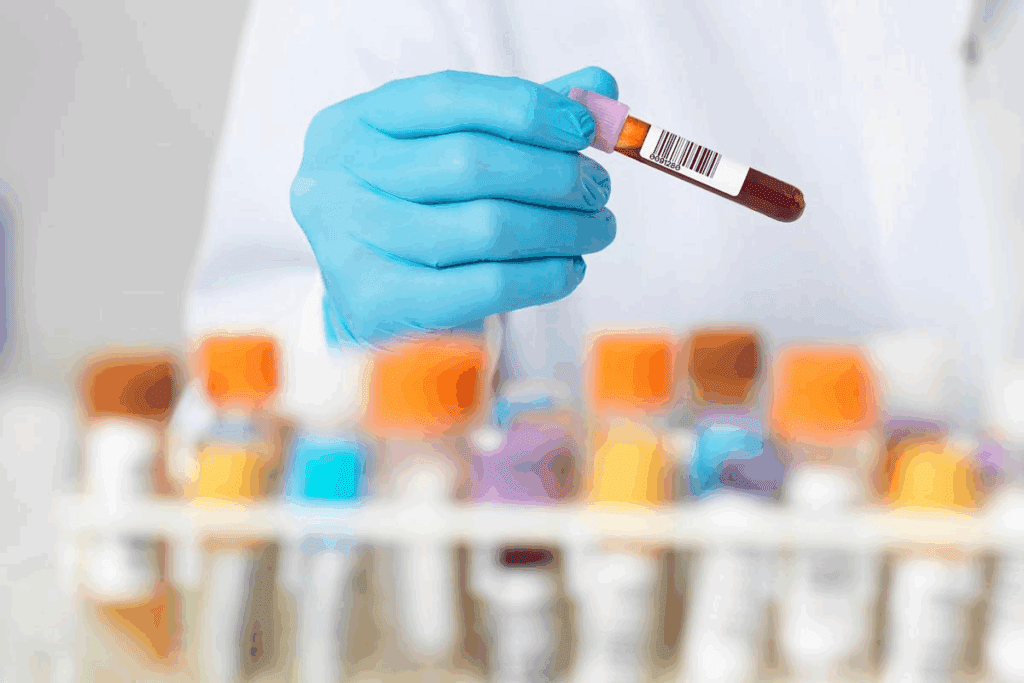
Diagnosing polycythemia vera starts with a simple blood test. It looks for high hematocrit and red blood cell count. It also checks for high hemoglobin levels. A complete blood count (CBC) is the main tool to spot blood cell problems.
At Liv Hospital, they focus on how to diagnose polycythemia accurately. They use advanced blood tests, bone marrow checks, and gene tests to confirm it.
Key Takeaways
- Diagnosing polycythemia vera involves a complete blood count (CBC) to check for high hematocrit and red blood cell count.
- Elevated hemoglobin levels are also a key indicator of polycythemia vera.
- Bone marrow examination and gene testing are used to confirm the diagnosis.
- Liv Hospital’s patient-centered approach ensures accurate detection of polycythemia vera.
- Advanced blood tests are key in diagnosing polycythemia vera.
Understanding Polycythemia and Its Significance
It’s important to understand polycythemia to diagnose and treat it. This condition means having too many red blood cells. It can make blood thicker and increase the risk of blood clots.
Types of Polycythemia
There are two main types of polycythemia: primary and secondary. Primary polycythemia, or polycythemia vera, happens when the bone marrow makes too many red blood cells. Secondary polycythemia is caused by things like low oxygen levels. TheNational Center for Biotechnology Information says polycythemia vera is the most common type.
Health Implications of Untreated Polycythemia
Untreated polycythemia can cause big health problems. It can lead to thrombosis and heart disease. The thick blood can put a lot of strain on the heart, leading to failure or stroke. Getting a diagnosis and treatment early is key to avoiding these issues.
Common Signs and Symptoms That Warrant Testing

Spotting polycythemia early is key. It’s about knowing the signs, which can be small but important. Look out for physical signs that might show you have this condition.
Physical Symptoms of Polycythemia
Some common signs are headache, dizziness, and itching. These happen because your blood gets thicker with too many red blood cells. You might also feel fatigue, shortness of breath, and blurred vision. Here’s a quick guide to these symptoms.
| Symptom | Description |
| Headache | Often due to increased blood viscosity |
| Dizziness | May result from reduced blood flow |
| Itching | Can occur after bathing or showering |
When to Seek Medical Attention
If you keep getting chest pain, severe headache, or trouble breathing, see a doctor fast. Catching it early can really help your health.
Initial Screening: Complete Blood Count (CBC)
The first step in finding out if you have polycythemia is a Complete Blood Count (CBC) test. This test is key because it checks different parts of your blood.
Components of a CBC Test
A CBC test looks at many important parts of your blood. It checks:
- Red Blood Cell (RBC) count
- Hemoglobin levels
- Hematocrit
- White Blood Cell (WBC) count
- Platelet count
These parts give a wide view of your blood’s health. They help find any problems.
Interpreting Red Blood Cell Parameters
Red blood cell parameters are very important for diagnosing polycythemia. They include RBC count, hemoglobin, and hematocrit.
Red Blood Cell Count: If your RBC count is too high, it might mean you have polycythemia.
Hemoglobin and Hematocrit: High levels of hemoglobin and hematocrit also suggest polycythemia. Hemoglobin is the protein in red blood cells that carries oxygen. Hematocrit shows what percentage of your blood is red blood cells.
To understand these numbers, you need to know the normal ranges. These can vary from person to person, and even between men and women.
Key Blood Markers in How to Diagnose Polycythemia
Understanding key blood markers is key to diagnosing polycythemia. This condition is diagnosed by analyzing specific blood components.
Hemoglobin Levels and Their Significance
Hemoglobin levels are vital in diagnosing polycythemia. High hemoglobin levels show an increased red blood cell mass, a key sign of the condition. Hemoglobin carries oxygen in red blood cells to the body’s parts.
A complete blood count (CBC) test can detect high hemoglobin levels. This test is often the first step in diagnosing polycythemia.
Hematocrit Values and What They Indicate
Hematocrit values show the red blood cell proportion in the blood. High hematocrit values mean more red blood cells, a sign of polycythemia. Hematocrit is measured in a CBC test and is key for diagnosing polycythemia.
Platelet and White Blood Cell Considerations
Platelet and white blood cell counts are also important in diagnosing polycythemia. Abnormal counts can reveal the condition’s cause. They help tell primary from secondary polycythemia.
Healthcare professionals analyze these blood markers to diagnose polycythemia accurately. They then create a treatment plan for patients.
Understanding Elevated Hematocrit and Hemoglobin
Hematocrit and hemoglobin are important blood measures. High levels can mean polycythemia. Knowing this helps doctors diagnose and treat the condition well.
Normal Range vs. Elevated Values
Hematocrit shows the red blood cell count in the blood. Hemoglobin is a protein in red blood cells that carries oxygen. Normal values are different for men and women.
Elevated hematocrit and hemoglobin levels mean more than just numbers. High hematocrit can make blood thicker, which can harm the heart.
What Constitutes Dangerously High Levels
High levels are a big concern. For hematocrit, values over 55% in men and 50% in women are risky. Hemoglobin levels over 18.5 g/dL in men and 16.5 g/dL in women also need attention.
Gender Differences in Reference Ranges
Men and women have different normal ranges for hematocrit and hemoglobin. These differences come from body size and muscle mass. The table below shows the normal and high ranges for both genders.
| Parameter | Normal Range for Men | Normal Range for Women | Elevated Range |
| Hematocrit (%) | 40.7 – 50.3 | 36.1 – 44.3 | >55 (Men), >50 (Women) |
| Hemoglobin (g/dL) | 13.8 – 17.2 | 12.1 – 15.1 | >18.5 (Men), >16.5 (Women) |
Knowing these differences helps doctors make better decisions. This is key for diagnosing and treating patients.
Diagnostic Criteria for Polycythemia Vera
The World Health Organization has set clear rules for diagnosing polycythemia vera. Doctors use these rules to confirm the diagnosis. These rules help tell polycythemia vera apart from other blood disorders.
World Health Organization (WHO) Criteria
The WHO criteria for diagnosing polycythemia vera include clinical and lab findings. These criteria are very specific and accurate for the diagnosis.
Major and Minor Diagnostic Criteria
Diagnosing polycythemia vera involves major and minor criteria. The major criteria include:
- Hemoglobin > 16.5 g/dL in men or > 16 g/dL in women, or hematocrit > 49% in men or > 48% in women.
- Bone marrow biopsy showing hypercellularity with trilineage myeloproliferation.
- Presence of JAK2V617F or JAK2 exon 12 mutation.
The minor criterion is:
- Serum erythropoietin level below the normal range.
To diagnose polycythemia vera, either all three major criteria or the first two major criteria and the minor criterion must be met.
| Criteria | Description |
| Major Criterion 1 | Hemoglobin > 16.5 g/dL (men) or > 16 g/dL (women), or hematocrit > 49% (men) or > 48% (women) |
| Major Criterion 2 | Bone marrow biopsy showing hypercellularity |
| Major Criterion 3 | Presence of JAK2V617F or JAK2 exon 12 mutation |
| Minor Criterion | Serum erythropoietin level below normal range |
Understanding these diagnostic criteria is key for accurate diagnosis and treatment of polycythemia vera. By using the WHO criteria, doctors can ensure patients get the right care.
Advanced Diagnostic Tests for Polycythemia
Advanced tests are key in confirming polycythemia vera. They help tell primary from secondary polycythemia. They also guide treatment choices.
JAK2 Mutation Analysis
The JAK2 mutation analysis is vital for diagnosing polycythemia vera. It looks for the JAK2 V617F mutation, common in polycythemia vera patients. A study onOncLive shows JAK2 testing is key for diagnosing.
Bone Marrow Biopsy Procedure and Findings
A bone marrow biopsy takes a small bone marrow sample for study. It checks blood cell production and can spot polycythemia vera signs. The biopsy’s results help confirm the diagnosis and show how the disease is progressing.
Erythropoietin Level Testing
Erythropoietin (EPO) level testing checks EPO in the blood. Low EPO levels often point to polycythemia vera. This test helps tell polycythemia vera apart from other causes.
Differentiating Primary vs. Secondary Polycythemia
To tell primary from secondary polycythemia, we look at blood work closely. Primary polycythemia often comes from genetic changes like JAK2. It has its own set of signs.
Distinguishing Characteristics in Blood Work
Blood tests for primary polycythemia show high hemoglobin and hematocrit. The JAK2 V617F mutation is a big clue for primary polycythemia vera. Secondary polycythemia might look similar but doesn’t have this mutation.
Additional Tests for Secondary Causes
For secondary polycythemia, we need more tests to find the cause. This could be chronic low oxygen or tumors. We use erythropoietin level testing and imaging to find these causes.
Knowing the difference helps doctors plan the right treatment. This way, they can take better care of patients and avoid problems.
Common Causes of Elevated Red Blood Cell Parameters
It’s important to know why red blood cell counts go up. This helps doctors find the right treatment. There are many reasons, like health issues, diseases, and medicines.
Physiological Causes
Dehydration and living at high altitudes can cause red blood cells to increase. Dehydration makes blood more concentrated. At high altitudes, the body makes more red blood cells to handle less oxygen.
Pathological Causes
Health problems like tumors can make more red blood cells. Tumors produce a hormone that tells the body to make more red blood cells. Lung diseases can also cause this because they make it hard for the body to get enough oxygen.
Medication-Induced Polycythemia
Some medicines can make more red blood cells. It’s key for patients to tell doctors about all their medicines. This helps doctors understand why red blood cell counts might be high.
Finding out why red blood cell counts are high is key to treating it right. Doctors use tests and look at medical history to figure it out. This helps them choose the best treatment.
Complications and Risks of High Red Blood Cell Counts
Polycythemia, with its high red blood cell counts, is a serious health issue. If not treated, it can cause severe problems in many parts of the body.
Thrombosis and Clotting Disorders
One big worry with polycythemia is the risk of thrombosis and clotting issues. The blood gets thicker with more red blood cells, making it easier to clot. This can cause serious problems like deep vein thrombosis or pulmonary embolism.
Cardiovascular Complications
High red blood cell counts also put a strain on the heart. The heart has to work harder to move the thicker blood. This can lead to hypertension and other heart problems. In bad cases, it might even cause heart failure or irregular heartbeats.
Neurological Manifestations
Polycythemia can also cause neurological symptoms. These might include headaches, dizziness, and vision problems. In some cases, patients might face more serious issues like transient ischemic attacks or strokes.
Knowing these risks shows why it’s key to diagnose and manage polycythemia early. Early action can greatly lower the chance of these problems.
The Diagnostic Process: What to Expect
Diagnosing polycythemia starts with a detailed medical history. This first step is key to spotting symptoms and risk factors.
Initial Consultation and Medical History
The journey begins with an initial consultation. A healthcare provider will ask about your symptoms, lifestyle, and family history. They will also do a physical exam to look for signs of polycythemia.
Sequential Testing Approach
Next, a sequential testing approach is used. It starts with a Complete Blood Count (CBC) test. If needed, more tests like JAK2 mutation analysis or bone marrow biopsy may follow to confirm the diagnosis.
Timeline for Diagnosis
The timeline for diagnosis varies. It depends on the case’s complexity and the need for more tests. It can take from a few days to weeks. Knowing this helps patients prepare.
Conclusion
Diagnosing polycythemia needs blood tests, bone marrow checks, and a doctor’s evaluation. Knowing these steps is key to finding and treating the condition correctly.
The first step is a Complete Blood Count (CBC) test. It looks at red blood cells, including hemoglobin and hematocrit levels. High levels might show polycythemia, leading to more tests.
Tests like JAK2 mutation analysis and bone marrow biopsies help tell if it’s primary or secondary polycythemia. These tests are vital to find the cause of too many red blood cells.
In summary, finding polycythemia needs a detailed approach with different tests. By knowing these steps, doctors can give the right diagnosis and treatment.
FAQ
What is polycythemia and how is it diagnosed?
Polycythemia is when you have too many red blood cells. Doctors use blood tests, like a Complete Blood Count (CBC), to find out.
What are the symptoms of polycythemia?
Symptoms include headaches, dizziness, itching, and feeling tired. These can make daily life hard and might make you see a doctor.
What is a normal hematocrit level, and what is considered elevated?
Normal levels differ by gender. For men, it’s over 52%, and for women, it’s over 48%. If it’s higher, it might mean polycythemia.
What is the significance of hemoglobin levels in diagnosing polycythemia?
High hemoglobin levels mean you have more red blood cells. This is a key sign of polycythemia.
How is polycythemia vera diagnosed?
Doctors use the World Health Organization (WHO) criteria. They look at hemoglobin and hematocrit levels and check for the JAK2 mutation.
What is the difference between primary and secondary polycythemia?
Primary polycythemia, or polycythemia vera, is a disorder that makes too many red blood cells. Secondary polycythemia is caused by things like low oxygen or tumors.
What are the risks associated with polycythemia?
It can lead to blood clots, heart disease, and problems with the nervous system. If not treated, it can cause serious issues.
How is polycythemia treated?
Treatment depends on the cause. It might include removing blood, taking medicine, or making lifestyle changes.
What is the role of JAK2 mutation analysis in diagnosing polycythemia vera?
The JAK2 mutation test helps confirm polycythemia vera. Finding this mutation is a key part of diagnosing the condition.
Can polycythemia be caused by medications?
Yes, some medicines, like erythropoietin-stimulating agents, can cause too many red blood cells.
What is the timeline for diagnosing polycythemia?
Diagnosing polycythemia involves blood tests and other steps. The time it takes can vary based on the case.
References:
- Tefferi, A., Vardiman, J. W. (2010). Classification and diagnosis of myeloproliferative neoplasms: the 2008 World Health Organization criteria and point-of-care diagnostic algorithms. Leukemia, 24(4), 611-618. https://www.ncbi.nlm.nih.gov/books/NBK557660/