


Keeping an eye on your vision is key to staying healthy. Learning how to do eye exam at home lets you catch small changes fast. Our team at Liv Hospital is here to help you on your wellness journey.
Do you see things blurry or feel too sensitive to light? Spotting these signs with an eye exam distance test can keep you on track. It’s a simple way to stay updated on your health.
Even though digital tools are handy, they can’t replace a doctor’s visit. We want to give you the tools to take care of yourself. Follow our steps to prepare your room for an accurate screening.
Key Takeaways
- Monitor clarity changes from the comfort of your own living room.
- Use digital tools or printed charts to supplement regular checkups.
- Spot issues like blurring or light sensitivity in the early stages.
- Maintain your wellness with simple and frequent screening methods.
- Home assessments complement but do not replace professional medical exams.
- Ensure proper lighting and space for the most accurate results.
Preparing Your Environment for an Accurate Eye Exam
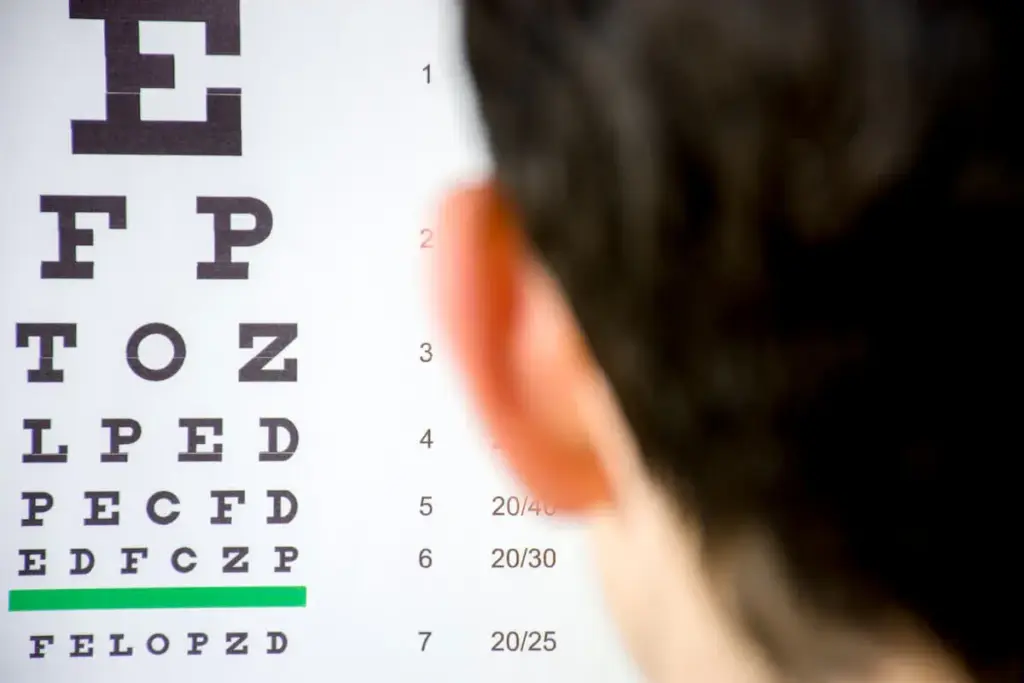
A well-prepared environment is key for a reliable distance vision test. It’s important to focus on two main things: choosing the right Snellen chart and ensuring good lighting and distance.
Selecting and Printing the Correct Snellen Chart
The Snellen chart is essential for checking your distance vision. We suggest using a standard Snellen chart, which you can print from trusted sources. Make sure the chart is clear and easy to read.
To print the Snellen chart correctly:
- Use a high-quality printer for clear results.
- Choose the right scale for accuracy.
- Check that the chart is not distorted or skewed.
Optimizing Lighting and Distance Requirements
Good lighting and distance are key for a precise test. The room should be well-lit, with the chart evenly lit to avoid glare or shadows. Stand 20 feet (6 meters) away from the Snellen chart.
To optimize the lighting and distance:
- Place the Snellen chart at eye level and the correct distance.
- Use natural light or bright, even artificial lighting.
- Adjust the lighting or chart position to reduce glare.
By following these steps, you can set up a space for an accurate distance vision test. This will help you get reliable results.
How to Perform a Distance Vision Test
To check your distance vision, use the Snellen chart you’ve made. It’s easy to do. Just follow a few steps to get a good measure of your vision.
Positioning Yourself and Covering One Eye
First, stand 10 or 20 feet away from the Snellen chart, as it says. Keeping this distance is key for accurate results. Then, cover one eye with your hand or a paddle. Make sure the eye is fully covered to avoid peeking. Start with your dominant eye, as it’s easier.
Reading the Chart and Recording Your Results
With one eye covered, read the letters on the Snellen chart from top to bottom. Take your time and read each letter clearly. Note the smallest line you can read. Do the same with the other eye covered. It’s important to record each eye’s results separately.
To understand your results, here’s a table showing Snellen scores and what they mean.
| Snellen Score | Visual Acuity Interpretation |
| 20/20 | Normal vision |
| 20/40 | Moderate visual impairment |
| 20/60 | Significant visual impairment |
| 20/200 | Severe visual impairment |
By following these steps and understanding your results, you can learn a lot about your distance vision.
Understanding Your Results and Near Vision Acuity
Your distance vision test results are key to knowing your eye health. After the test, it’s important to understand what your results mean. This helps you grasp your overall vision.
We’ll help you understand your Snellen score. We’ll also compare your distance vision with a near vision check. This way, you’ll get a full picture of your eye health.
What Your Snellen Score Means for Your Distance Vision
A Snellen score shows your visual acuity. A 20/20 score means you have normal vision. But a 20/40 score means you need to be closer to see what a person with normal vision can see from farther away. Understanding your Snellen score is key to making sense of your test results.
If your score isn’t 20/20, it doesn’t mean you have a big vision problem. It might mean you need glasses or a closer look. Always talk to an eye care professional to fully understand your results.
Comparing Distance Results with a Near Vision Check
Comparing your distance vision with a near vision check gives a better view of your eye health. A near vision check usually involves reading a near sight eye chart or using a near visual acuity test chart.
Using charts for near vision, like a near vision Snellen test chart, helps check your close-up vision. This comparison can show any differences between your distance and near vision. These differences might point to specific eye health issues.
Knowing both your distance and near vision helps you address any vision problems. If you’re worried about your vision, see an eye care professional for advice tailored to you.
Conclusion
Testing your distance vision at home is a great way to keep your eyes healthy. By using an eye test chart, you can check how well you see at different distances. This can help spot problems like being nearsighted, which might need a detailed eye check.
Even though a home test isn’t a full eye exam, it’s a good way to watch your vision. If you’re worried about your eyes, see an eye doctor. They can do a full check and help keep your eyes healthy.
Looking after your vision is important. Regular eye exams, including tests for distance and near vision, help keep your eyes in top shape. By being proactive, you can make sure your eyes get the care they need.
FAQ
How do I accurately perform an eye test for distance vision from my home?
Use a printed Snellen chart at 6 meters (20 feet), cover one eye, read the smallest visible line, repeat for both eyes in good lighting.
What is the difference between an eye exam distance test and a near vision check?
Distance test checks far vision (Snellen chart), near test checks close vision (Jaeger chart).
Why should I incorporate a near visual acuity test into my home routine?
It helps detect early reading issues, eye strain, and need for glasses, especially with screen use or aging.
What specific tools are required for a near vision examination?
Jaeger chart, good lighting, 35–40 cm distance, and your glasses if used.
Can I use digital tools for a visual acuity test for near vision?
Yes, but keep correct distance, normal brightness, and no zoom for better accuracy.
Does an at-home nearsighted eye test replace a visit to an ophthalmologist?
No, it’s only for screening—full exams by an ophthalmologist are still necessary.
References
National Center for Biotechnology Information. Evidence-Based Medical Insight. Retrieved from https://pubmed.ncbi.nlm.nih.gov/38564179/


 Departments
 Related Videos
 Our Doctors
 News
News


