Recovering from a stroke needs a full plan. Therapy exercises are key to getting back to daily life and being independent.stroke therapy exercisesMassage Therapy Spine Relief
Every year, nearly 800,000 people have a stroke. More than 70 percent struggle with movement and brain issues. But, with the right rehabilitation strategies, big gains in motor skills and life quality are possible.
At Liv Hospital, we mix the latest research with new ways to help patients get better. This helps them on their recovery path.
Key Takeaways
- Stroke recovery needs a full plan.
- Specific therapy exercises boost motor skills and life quality.
- More than 70 percent of stroke survivors face movement and brain challenges.
- Rehabilitation strategies can lead to big improvements.
- Liv Hospital’s focus on the patient supports recovery.
The Critical Role of Rehabilitation After Stroke
Rehabilitation is key for those who have had a stroke. Over 70% of survivors face challenges with movement or brain functions. This makes rehab a vital part of their healing.
Stroke can greatly affect a person’s life, causing movement and brain problems. More than 40% of survivors have trouble moving, and over two-thirds get rehab after the hospital. Good rehab helps them regain independence and feel better overall.
Understanding Stroke’s Impact on Movement and Function
A stroke happens when blood flow to the brain is cut off. This stops brain cells from getting oxygen and nutrients. It can damage or kill brain cells, leading to physical and mental problems.
Movement deficits are common in stroke survivors. These include weakness or paralysis on one side and trouble walking or staying balanced. How much someone is affected can vary a lot, based on the stroke’s location and severity.
Why Early Intervention Matters
Starting rehab early is very important. Studies show that early rehabilitation can greatly improve outcomes. Early rehab helps the brain recover better, boosting neuroplasticity and improving function.
Early rehab can lessen movement problems, improve skills, and help recovery. It’s important for survivors to work with a team of healthcare experts. They can create a rehab plan that meets the person’s specific needs and goals.
The Science Behind Effective Stroke Recovery
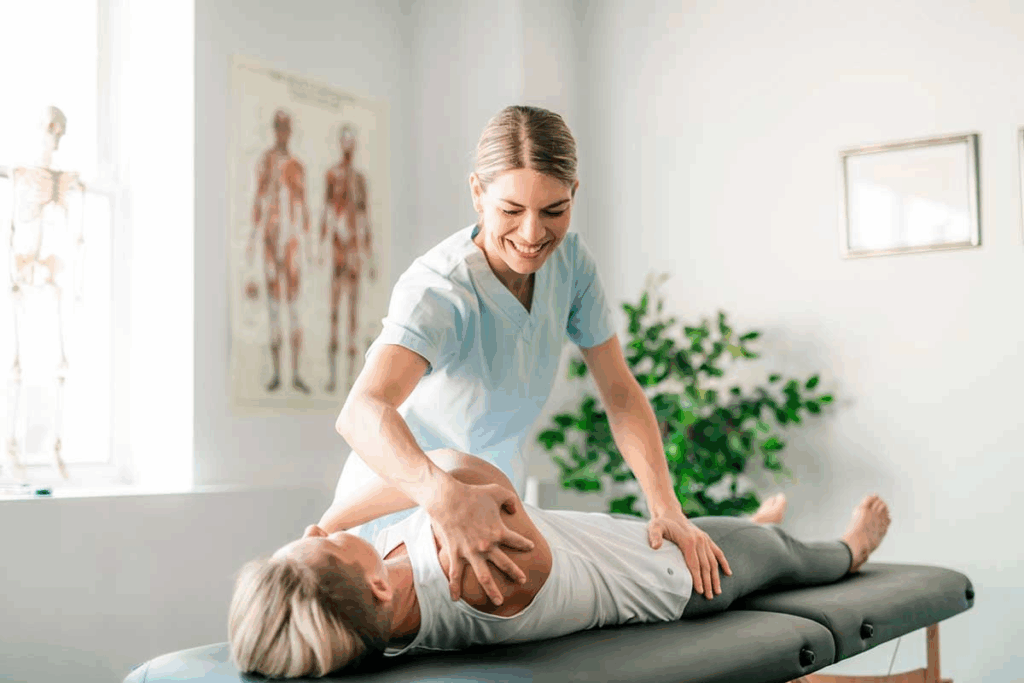
The journey to recovery after a stroke is rooted in the brain’s remarkable ability to adapt. Stroke survivors often face significant challenges in regaining lost functions. But research has shown that with the right therapeutic approaches, substantial improvements are possible.
How Neuroplasticity Enables Recovery
Neuroplasticity, the brain’s capacity to form new neural connections, is the cornerstone of stroke recovery. After a stroke, damaged brain areas can be compensated for by other parts of the brain taking over their functions. This reorganization is facilitated through consistent and targeted rehabilitation exercises.
“Neuroplasticity is not just a concept; it’s a reality that we harness in stroke rehabilitation to help patients regain their independence,” says Medical Expert, a leading neurologist in the field of stroke recovery.
Evidence-Based Benefits of Physical Therapy
Physical therapy interventions have shown significant effectiveness in improving motor function in stroke survivors. By applying rehabilitation exercises early after a stroke, patients can experience substantial recovery. Research indicates that stroke occurs every two seconds worldwide, highlighting the need for effective rehabilitation strategies.
The benefits of physical therapy are multifaceted:
- Improved motor function and mobility
- Enhanced balance and coordination
- Better management of daily activities
- Increased independence
By leveraging neuroplasticity and evidence-based physical therapy, stroke survivors can achieve meaningful recovery. As we continue to advance our understanding of the brain’s adaptability, we can develop more effective treatment plans that cater to the unique needs of each patient.
Starting Your Rehabilitation Journey
Rehabilitation after a stroke is a journey that needs careful planning. Every person’s recovery path is different. A tailored approach is key to the best results.
Working With Your Medical Team
The first step is to work with your medical team. This team includes physical, occupational, and speech therapists. Collaborating with your medical team ensures you get the care you need.
Your team will assess your condition and plan your care. It’s important to share your goals and any challenges you face.
Creating a Personalized Recovery Plan
A personalized recovery plan is central to stroke rehab. This plan includes specific stroke rehab exercises and therapies. They help you regain lost functions and improve your life quality.
Your team will consider your stroke’s severity, health, and goals when creating your plan. This ensures you get the right care for you.
Component | Description | Benefit |
Assessment | Initial evaluation by medical team | Identifies areas for improvement |
Personalized Plan | Customized rehabilitation program | Targets specific needs and goals |
Therapy Sessions | Regular physical, occupational, and speech therapy | Enhances recovery and functionality |
We at our institution are dedicated to top-notch healthcare for international patients. We focus on a supportive environment for your recovery. Our care is both caring and effective.
Essential Stroke Therapy Exercises for Upper Body
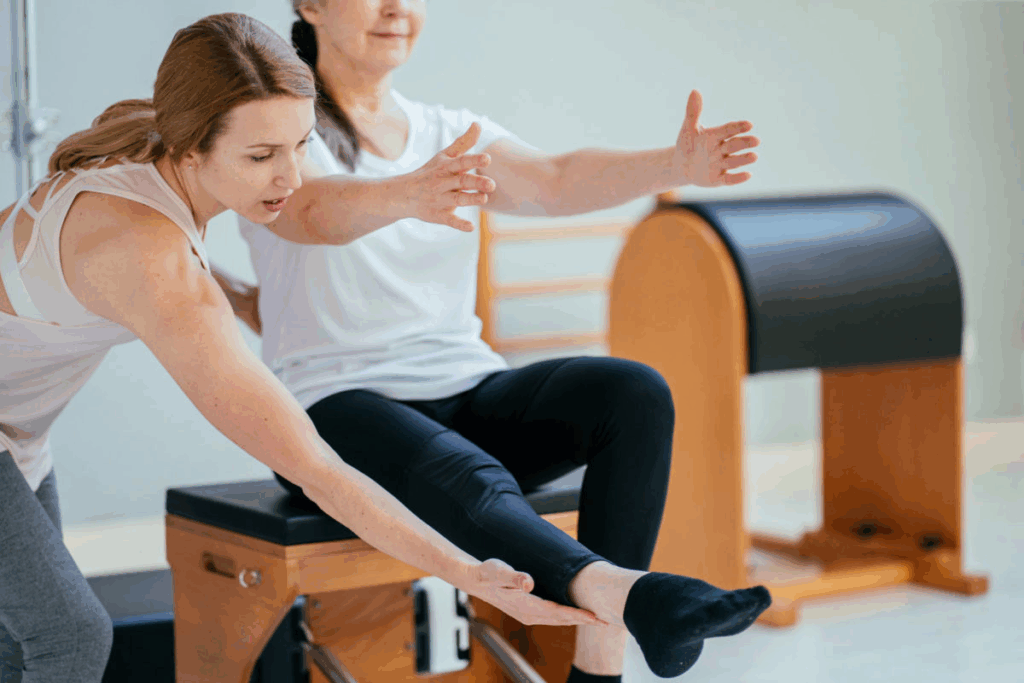
Recovering from a stroke needs a full plan, focusing on the upper body. Good rehab includes exercises to boost mobility, strength, and coordination. Task-oriented therapy is key, helping patients do daily tasks easily.
Shoulder and Arm Mobility Exercises
Exercises for the shoulders and arms are key to moving better and feeling less stiff. They help with everyday tasks like getting dressed and eating. Here are some good ones:
- Shoulder Rolls: Roll your shoulders forward and backward to loosen them up.
- Arm Lifts: Hold your arm straight out and then lower it, doing this to improve arm movement.
- Wall Crawls: Use your fingers to “crawl” up a wall, slowly getting better at moving your arm.
A study shows that moving around is key for getting back to daily life. These exercises should be done with a physical therapist to make sure they’re safe and work well.
Hand and Wrist Rehabilitation
Working on the hands and wrists is important for fine motor skills and dexterity. These exercises help with tasks that need precision, like buttoning a shirt or picking up small things.
“Rehabilitation of the hand and wrist is critical for stroke survivors to regain independence in daily activities.”
Here are some important exercises:
- Finger Spreads: Place your hand flat and spread your fingers as far as you can.
- Wrist Extensions: Hold your arm straight and lift your hand up, then lower it.
- Object Manipulation: Practice holding and letting go of small objects to improve hand skills.
Adding these exercises to a rehab plan can help patients get better. It’s important to work with a healthcare expert to make sure the exercises fit the person’s needs and abilities.
Lower Body Rehabilitation Techniques
Rehabilitating the lower body is key after a stroke. It helps patients move better and live more independently. The right exercises and techniques boost leg strength and mobility.
Starting early with physical therapy is very important. It makes a big difference in how well someone recovers. Transfer training is a big part of this. It helps with moving safely, like getting from a bed to a wheelchair.
Leg Strengthening and Mobility Exercises
Leg exercises are essential for standing, walking, and doing daily tasks. They include:
- Straight leg raises to strengthen the quadriceps muscles
- Heel slides to improve knee flexion and range of motion
- Ankle circles to enhance ankle mobility
- Static squats or seated leg presses to build leg strength
It’s important to do these exercises with a healthcare professional. They make sure you’re doing them right and safely.
Foot and Ankle Rehabilitation
Foot and ankle therapy is also critical. It affects balance, walking, and mobility. Exercises for this area include:
- Toe curls and spreads to improve toe dexterity
- Ankle dorsiflexion and plantarflexion to enhance ankle range of motion
- Heel raises to strengthen calf muscles
- Balance exercises on different surfaces to challenge and improve balance
Adding these exercises to a rehab plan can greatly improve lower body function. It also boosts overall quality of life for stroke victims.
Core Stability and Trunk Control Exercises
Rebuilding core strength and trunk control is key after a stroke. It helps with balance, posture, and daily activities. We’ll look at exercises and techniques to help stroke survivors regain these skills.
Seated Balance Training
Seated balance training is vital for core stability and trunk control. It involves sitting on a stable surface and doing movements that test balance. Start by sitting with feet flat, then lift your feet or use a therapy ball.
Begin with simple exercises like sitting for 30 seconds to a minute. Then, add arm movements or close your eyes. This helps improve balance under different conditions.
Progressive Core Strengthening
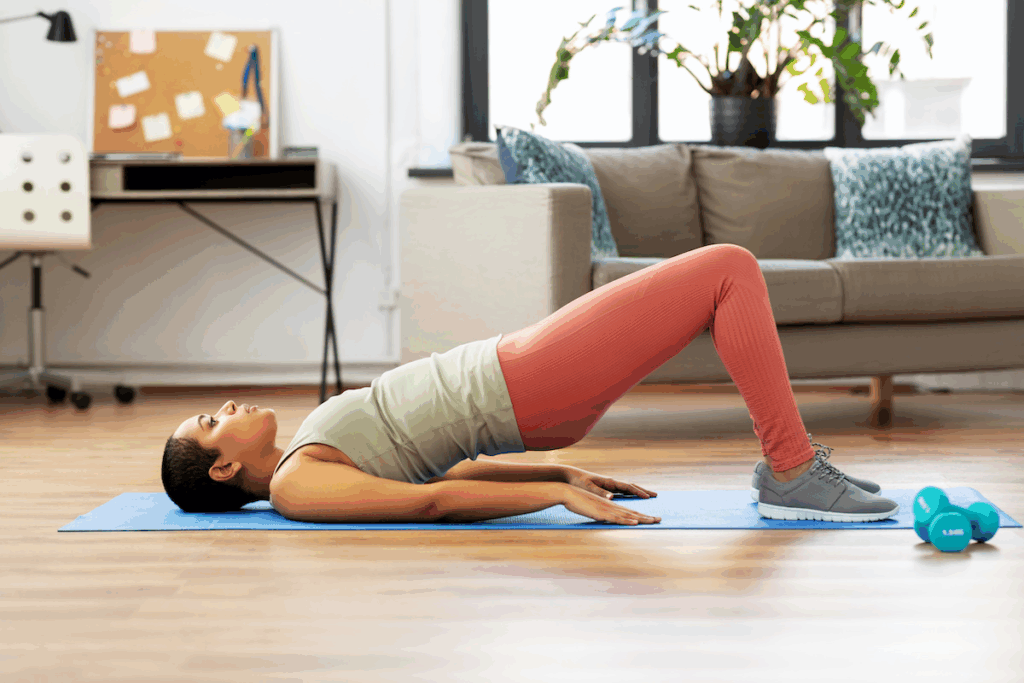
Progressive core strengthening exercises boost core muscle strength and endurance. These can include pelvic tilts, bridges, Russian twists, and planks. Start with easy reps and increase as you get stronger.
- Pelvic tilts: Lie on your back with knees bent and feet flat, tilt your pelvis upwards and then back down.
- Bridges: Lift your hips off the ground, squeezing your glutes and lower back muscles.
- Russian twists: Sit on the floor with knees bent, lean back slightly, and twist your torso from side to side.
Posture Improvement Techniques
Good posture is linked to core stability and trunk control. Awareness exercises and physical exercises strengthen posture-supporting muscles. Regular practice improves mobility and reduces discomfort.
Home-based treatment is beneficial for recovery. By doing these exercises daily, stroke survivors can progress in a familiar setting.
Task-Oriented Therapy for Practical Recovery
Task-oriented therapy helps patients get better at everyday tasks. It lets them practice full skills and learn how to do things in order. This makes rehab more useful and effective.
Activities of Daily Living (ADL) Practice
ADL practice is key in task-oriented therapy. It teaches patients how to do things like bathing, dressing, and eating. Doing these tasks improves fine motor skills, coordination, and thinking. For example, buttoning a shirt boosts hand-eye coordination and dexterity.
“Relearning daily activities is not just about regaining independence; it’s about rebuilding confidence,” says a rehabilitation specialist. We add ADL practice to therapy to make recovery more complete and focused on the patient.
Functional Movement Training
Functional movement training is also vital in task-oriented therapy. It teaches movements needed for daily life, like walking, climbing stairs, or moving from a bed to a chair. Practicing these movements boosts mobility and lowers fall risks.
- Walking on different surfaces to improve balance
- Climbing stairs to enhance leg strength
- Transferring from one surface to another to practice coordination
Real-World Skill Development
Real-world skill development teaches patients to use what they learn in therapy in everyday life. This could be cooking, shopping, or doing household chores. By practicing these skills, patients can smoothly return to their daily lives and achieve lasting recovery.
“The ultimate goal of rehabilitation is to help patients return to their normal lives as much as possible. Task-oriented therapy is a vital tool in achieving this goal.”
We focus on real-world skill development in our therapy to help patients live fulfilling and independent lives after recovery.
Home-Based Stroke Therapy Exercises
Home-based stroke therapy exercises are a great way to help with recovery. They are designed to fit your needs and help you get back to daily life. Every physical therapy plan includes a home exercise program.
Setting Up a Safe Home Exercise Environment
It’s important to make your home safe for exercises. Clear clutter, secure rugs, and make sure the room is well-lit. Having a clear space for exercises is key to avoid accidents. Choose a specific area for therapy to stay organized.
Adapting Household Items for Therapy
You can use household items to make exercises more fun and challenging. Water bottles can be used as weights, and towels for resistance. Being creative with items you have at home can make therapy more engaging. Look around your house for things you can use for therapy.
Family Involvement in Recovery
Having your family involved in your recovery is very important. They can offer support, encouragement, and help with exercises. When family is involved, they can better understand your recovery journey. Make sure to keep them updated regularly.
Balance and Coordination Training
After a stroke, it’s key to work on balance and coordination. This helps prevent falls and boosts mobility. “Regaining balance is not just about preventing falls; it’s about restoring confidence in one’s ability to move and function,” say experts.
Static Balance Exercises
Static balance exercises help keep your center of gravity stable. You do these while standing or sitting, holding a position for a while. Examples include standing on one leg and sitting without support.
Key static balance exercises include:
- Standing with feet shoulder-width apart
- Single-leg stance (with support)
- Sitting without back support
Dynamic Balance Progression
Dynamic balance exercises add movement to balance training. They make it harder to keep balance during activities. Examples include walking on a straight line and stepping over obstacles.
Progressing dynamic balance exercises:
- Start with simple tasks like walking
- Progress to more challenging activities like stepping over objects
- Incorporate turns and changes in direction
Fall Prevention Strategies
Fall prevention is a big part of stroke rehab. Remove tripping hazards, use canes or walkers, and improve lighting. Wearing right shoes and being careful about floor surfaces also helps.
“The key to successful fall prevention lies in a combination of environmental modifications, appropriate use of assistive devices, and targeted balance training,” according to rehabilitation specialists.
By using these strategies in a rehab program, people can lower their fall risk. This improves their life quality a lot.
Cognitive and Communication Recovery
After a stroke, it’s key to get back cognitive and communication skills. This means rebuilding brain paths and improving memory, attention, and solving problems. We’ll look at ways and exercises to help with this.
Memory and Attention Exercises
Memory and attention games are vital for brain recovery. Simple tasks like memory games, puzzles, and focus exercises can boost brain function. For example, remembering lists of items or tasks is a memory recall exercise.
Improving attention involves focused tasks like sorting objects or doing simple math. These activities help the brain focus and process information better.
Speech and Language Rehabilitation
Recovering speech and language skills is also important. Speech therapy helps patients talk better. Techniques include repeating words, reading, and talking in conversations.
We also use AAC devices for those who can’t speak well. These range from simple pictures to complex electronic speech makers.
Therapy Type | Description | Benefits |
Speech Therapy | Repetition, reading, conversation | Improved verbal communication |
AAC Devices | Picture symbols, electronic devices | Enhanced communication for non-verbal patients |
Problem-Solving Activities
Problem-solving activities challenge the brain and aid recovery. Tasks like solving puzzles, playing strategy games, or planning meals are good. They require planning and execution.
We encourage patients to do activities they like and that challenge their brain. This helps in recovery and boosts confidence and independence.
By using these strategies, stroke survivors can greatly improve their life quality and achieve a full recovery.
Tracking Progress and Overcoming Plateaus
Recovering from a stroke means always checking and changing our rehab plans. It’s key to watch how we’re doing and tweak our exercises as we go.
Setting Realistic Recovery Goals
Setting goals that we can reach is a big part of getting better after a stroke. Having clear, measurable goals helps us see how far we’ve come. Our goals should be specific, measurable, achievable, relevant, and time-bound (SMART).
For example, if we want to move our arms better, we might start by aiming to lift our arm a certain distance in a set time. Once we hit that goal, we can make the challenge harder by adding more complex moves or heavier weights.
Measuring Functional Improvements
To really see how we’re doing, we need to check our progress often. This can be done through different tests, such as:
- Seeing if we can do everyday tasks like getting dressed or cooking
- Checking our strength, how far we can move, and how well we coordinate
- Watching how steady we are and how we walk
By checking these things often, we can see where we’re getting better and where we need to work harder.
Assessment Area | Initial Assessment | Follow-Up Assessment |
Arm Mobility | Limited to 30° flexion | Improved to 90° flexion |
Balance | Required assistance | Independent standing balance |
When to Modify Your Exercise Program
As we get better, we need to change our workout to keep pushing ourselves. If we stop getting better, it’s time to shake things up.
“The key to successful rehabilitation is not just doing the exercises, but doing the right exercises at the right time.” – Expert in Stroke Rehabilitation
Changing our workout might mean making it harder, trying new things, or adding new challenges. This keeps our brain and body on their toes.
By always checking our progress, setting smart goals, and changing our workout as needed, we can beat plateaus and get the best results in our recovery.
Conclusion: Sustaining Long-Term Recovery
Keeping up with long-term recovery is key to staying independent after a stroke. We’ve looked at different exercises and techniques to help you move and function better. It’s important to keep practicing these exercises for lasting recovery.
Adding stroke therapy exercises to your daily life can help you keep improving. We urge you to stick to your recovery plan. Work closely with your medical team to overcome any hurdles and celebrate your wins.
Recovery after a stroke is a long journey that needs commitment and hard work. By sticking to your exercise routine and doing activities that help your body and mind, you can stay independent. This will also make your life better.
FAQ
What are the most effective stroke therapy exercises for regaining independence?
Effective stroke therapy exercises include many activities. These include shoulder and arm exercises, hand and wrist rehab, and leg strengthening. Core stability and trunk control exercises are also important. These help improve movement and function, aiding in recovery.
How soon should I start stroke rehabilitation after a stroke?
Starting rehabilitation early is key. It’s best to start within 24-48 hours after a stroke. This depends on your condition and what your medical team advises.
What is neuroplasticity, and how does it contribute to stroke recovery?
Neuroplasticity is the brain’s ability to adapt and change. It’s vital for stroke recovery. It helps the brain compensate for damage and relearn lost functions through practice.
Can I do stroke therapy exercises at home, and how can I set up a safe exercise environment?
Yes, you can do many exercises at home. To create a safe space, remove tripping hazards and ensure good lighting. Also, have a clear area to move around. You can use household items for therapy, like a chair or towel.
How can family members be involved in the recovery process?
Family members can support by helping with exercises and encouraging you. They can also help make your environment safe and motivating. Attending therapy sessions with them can help them learn how to assist.
What are some examples of task-oriented therapy for practical recovery?
Task-oriented therapy focuses on daily activities like bathing and cooking. It also includes functional movements like walking. Skills like grocery shopping and managing money are also part of it.
How can I track progress and overcome plateaus in stroke recovery?
To track progress, set realistic goals and measure improvements. Adjust your exercise program as needed. Regular checks with a healthcare professional can help identify areas for improvement and adjust your treatment plan.
Are there any specific exercises for balance and coordination training after a stroke?
Yes, exercises for balance and coordination include static and dynamic balance exercises. They also include strategies to prevent falls. These exercises improve mobility and reduce fall risks.
Can stroke therapy exercises help with cognitive and communication recovery?
Yes, exercises for memory, attention, speech, and language rehabilitation are included. Problem-solving activities also support cognitive and communication recovery.
How long should I continue practicing stroke therapy exercises for long-term recovery?
To keep improving, continue practicing exercises regularly. Even after making progress, ongoing commitment to exercise is key. It helps maintain and improve your abilities.
References
World Health Organization. Evidence-Based Medical Guidance. Retrieved from https://www.who.int/publications/i/item/9789240050335