
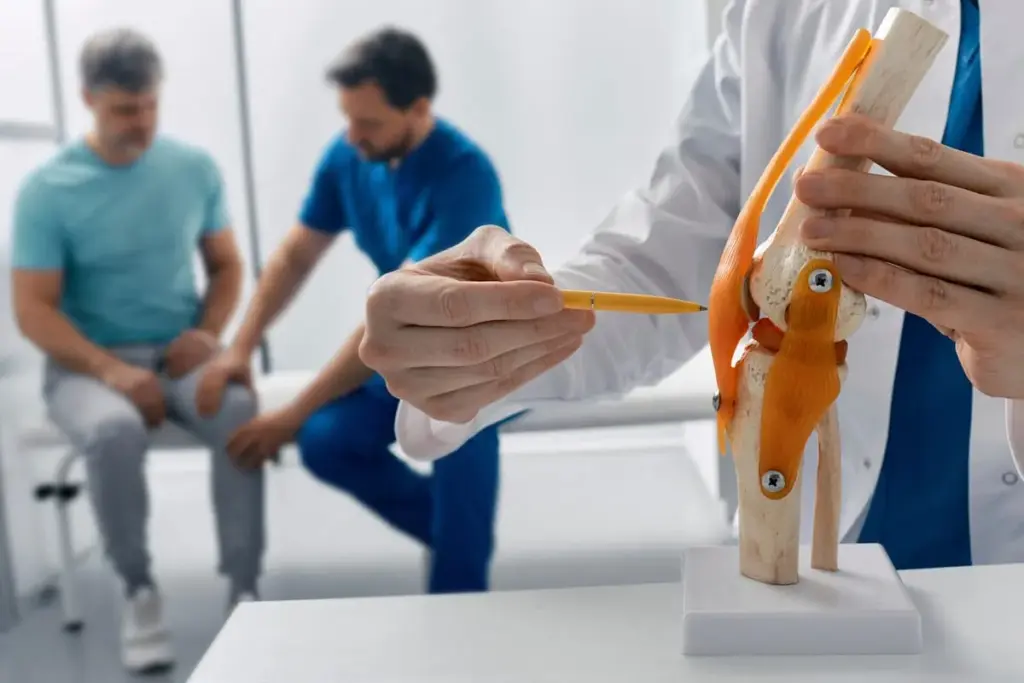
Ligament injuries are a big problem, affecting millions every year. In the U.S., about 25,000 ankle sprains happen daily. Tendon and ligament injuries are common in athletes and everyday people.
Dealing with a torn ligament is tough, affecting many people. At our place, we offer full care to help you get better. Knowing your ligament tear treatment options is key.
Key Takeaways
- Proper diagnosis is essential for effective knee ligament injury treatment.
- Treatment options vary based on the severity of the ligament injury.
- Comprehensive care includes rehabilitation and, in some cases, surgical intervention.
- Recovery timelines differ depending on the treatment approach and individual factors.
- Committing to a structured recovery plan is vital for restoring strength and stability.
Understanding Ligament Injuries
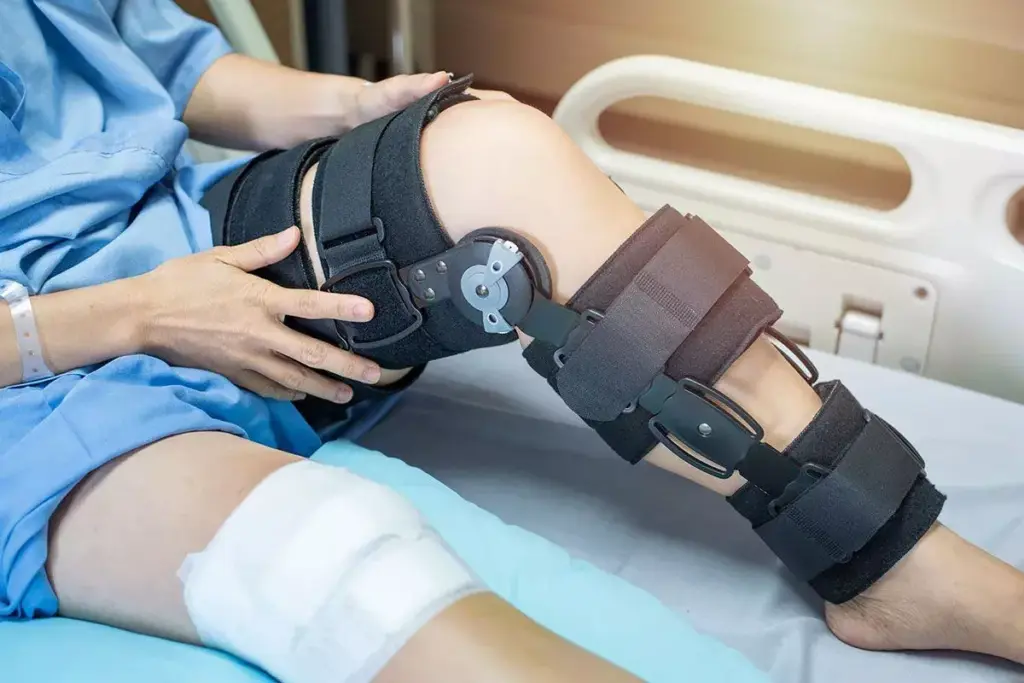
It’s important to know about ligament injuries to get the right treatment. Ligaments are strong tissues that connect bones and keep your joints stable. The knee has four main ligaments: ACL, PCL, MCL, and LCL.
Types and Severity of Ligament Tears
Ligament tears can be different in how severe they are. They are usually divided into three grades:
- Grade 1: A mild stretching or tearing, causing little instability.
- Grade 2: A moderate tear that affects function, leading to partial instability.
- Grade 3: A severe or complete tear, causing a lot of instability and often needing surgery.
Knowing the grade helps decide the best treatment.
Common Locations: Knee, Ankle, and Shoulder Ligaments
Ligament injuries often happen in the knee, ankle, and shoulder. The knee is at high risk because of its complex structure and the stress it faces. Ankle ligament injuries, like those to the ATFL, are common in sports. Shoulder ligament injuries can make the shoulder joint unstable.
Signs You’ve Torn a Ligament
Knowing the signs of a torn ligament is key for getting medical help quickly. Look out for:
- Pain, more so when moving
- Swelling and bruising around the injury
- Feeling like the joint is unstable or giving way
- A popping sound when the injury happens
If you notice these signs, get medical help right away to avoid more damage.
When to Seek Medical Attention
If you think you’ve hurt a ligament, see a doctor. They can diagnose it with a physical exam and tests like MRI. Getting help early can make a big difference in recovery. Waiting too long can lead to more problems, like chronic instability or more injuries.
Go to the doctor right away if you have severe pain, a lot of swelling, or can’t put weight on the joint.
How to Fix a Torn Ligament: Treatment Options
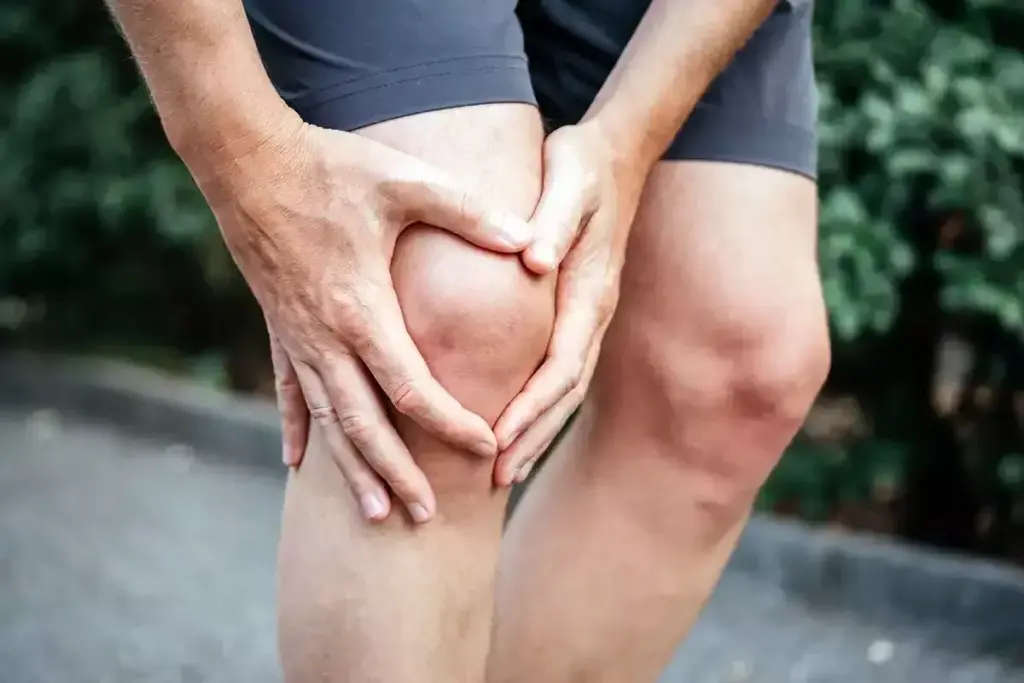
Fixing a torn ligament can be done in several ways. You might need to rest, use physical therapy, or even surgery. The right treatment depends on how bad the injury is and your overall health. Studies from 2024 show that many people can heal from anterior cruciate ligament injuries without surgery.
Conservative Treatment Approaches
For less severe ligament injuries, non-surgical treatments work well. These methods aim to reduce pain, improve joint stability, and help you move better without surgery.
- Rest, Ice, Compression, and Elevation (RICE): This first step helps lessen pain and swelling.
- Physical Therapy: A special physical therapy plan can boost joint movement and muscle strength.
- Bracing: A brace can offer extra support to the joint, helping it heal.
The treatment for torn ligaments depends on the injury’s severity. Partial tears usually need 2-8 weeks of rest and care. Moderate tears might take 2-3 months with a brace.
Surgical Interventions
If non-surgical methods don’t work, or the tear is severe, surgery might be needed. Surgery is considered when the ligament is completely torn or if rest and physical therapy don’t help enough.
- Ligament Reconstruction: This method uses a graft to rebuild the torn ligament. The graft can come from another part of your body or a donor.
- Arthroscopic Surgery: This is a minimally invasive surgery that can repair or rebuild the ligament. It often means less time recovering.
Knowing your treatment options is key to choosing the best way to fix a torn ligament. Whether it’s through rest, physical therapy, or surgery, the goal is to get you moving and feeling better again.
Recovery Timeline and Rehabilitation Process
Healing from a torn ligament takes several steps. Each step is important for recovery. Knowing what to expect can help you prepare.
Partial Tear Recovery
Recovering from a partial tear takes 2 to 8 weeks. During this time, you’ll follow a plan that includes rest, ice, compression, and elevation (RICE). Physical therapy is also key to keep strength and mobility.
Key components of partial tear recovery include:
- Initial rest and immobilization
- Gradual introduction of physical therapy exercises
- Strengthening exercises to restore function
Moderate Tear Rehabilitation
Moderate tears need more time to heal, usually 2 to 3 months. The recovery plan includes both conservative management and intense physical therapy.
Sports medicine experts say, “A good rehab program is key to getting your knee back to normal and avoiding more injuries.”
Complete Tear Recovery
Complete tears often need surgery and take 6 to 9 months to recover. The recovery includes a detailed rehab program to build strength, stability, and full movement.
| Tear Severity | Recovery Time | Rehabilitation Approach |
| Partial Tear | 2-8 Weeks | Conservative management, physical therapy |
| Moderate Tear | 2-3 Months | Conservative management, intensive physical therapy |
| Complete Tear | 6-9 Months | Surgical intervention, extensive rehabilitation |
Physical Therapy Protocols
Physical therapy is essential for ligament injury recovery. A good physical therapy plan helps regain strength, improves movement, and boosts joint stability.
Our physical therapy plans are made for each patient’s needs. We use exercises that help with healing and getting back to normal.
Conclusion: Long-Term Outlook and Prevention
Many people can fully recover from ligament injuries with the right care and rehab. Knowing how to heal a knee ligament or repair a tear is key for a good outcome.
To avoid future injuries, keep your muscles strong and flexible. Use the right techniques in sports and wear protective gear. These steps can lower your risk of ligament injuries.
For long-term joint health, it’s important to know how to fix a torn ligament in the knee. Taking early action helps keep your joints healthy and functional. This way, you can avoid needing major treatments.
FAQ
What are the common symptoms of a torn ligament?
Symptoms include pain, swelling, and feeling unstable. You might also find it hard to move the joint. If you notice these signs, get medical help right away.
How is a torn ligament diagnosed?
Doctors use a physical exam and look at your medical history. They might also do X-rays or an MRI to see how bad the tear is.
What are the treatment options for a torn ligament?
You can try rest, ice, compression, and elevation (RICE). Physical therapy and bracing are also options. In some cases, surgery is needed.
How long does it take to recover from a torn ligament?
Recovery time depends on the tear’s severity. Small tears might heal in 2-8 weeks. Bigger tears can take 2-3 months. The worst cases might need 6-9 months or more to heal.
Can a torn ligament heal without surgery?
Yes, some tears can heal with rest and physical therapy. But, very bad tears might need surgery to fix the joint.
What is the role of physical therapy in treating a torn ligament?
Physical therapy is key in getting better. It helps build strength and improve movement. It’s used for both non-surgical and post-surgical care.
How can I prevent future ligament injuries?
To avoid future injuries, stay healthy and exercise regularly. Use the right techniques and wear protective gear when playing sports or doing activities.
What is the success rate of ligament surgery?
Surgery success depends on the tear’s severity, your health, and how well you follow up with physical therapy. Most people see big improvements in joint stability and function.
How to repair a torn ligament in the knee?
Treatment for a torn ligament in the knee can be non-surgical or surgery, depending on the injury. Our team will decide the best course of action for you.
What is the treatment for a torn ligament in the knee?
Treatment options include RICE, physical therapy, bracing, or surgery. The choice depends on the tear’s severity and your health.
References
National Center for Biotechnology Information. Evidence-Based Medical Insight. Retrieved from https://pmc.ncbi.nlm.nih.gov/articles/PMC4041869/[3