

Discover how PDO thread lifts can subtly lift and tighten sagging skin along the jawline and thread lift for Jowls without surgery. Learn about this minimally invasive face threading procedure.
Do you see your face looking older than you feel because of sagging jowls? Thread lifts are a new, non-surgical way to change your jawline quickly. You won’t need to spend a lot of time recovering.
At Liv Hospital, we use top-notch techniques for thread lifting. We focus on you, making sure you get a younger, sharper jawline. This is all done without the big risks and long recovery times of old-school surgery.
Thread lifts are a simple cosmetic fix. They use special threads, like polydioxanone (PDO), to pull up and firm sagging skin. This makes your jawline look younger without needing surgery.
Key Takeaways
- Thread lifts are a non-surgical solution for sagging jowls.
- PDO threads are used to lift and tighten the skin.
- The procedure offers minimal downtime compared to traditional surgery.
- Thread lifts can provide a more youthful and defined jawline.
- Liv Hospital offers advanced thread lifting procedures with international standards of care.
Understanding Face Threading Face Lift for Jowls
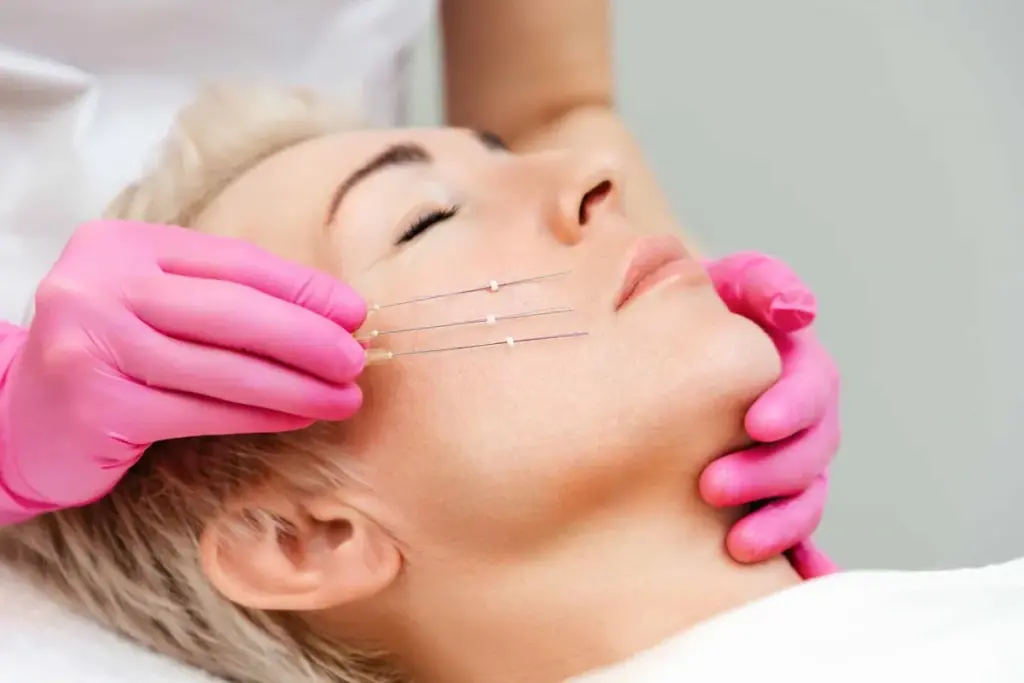
PDO threads are changing cosmetic surgery. They offer a less invasive way to lift and rejuvenate the face, focusing on the jowls. Thread lifting is popular for those wanting to lift sagging skin without a traditional facelift.
What Are PDO Threads and How They Work
PDO threads are made from a material called polydioxanone, which the body absorbs over time. They are inserted under the skin with a fine needle, giving an immediate lift. They also boost collagen production, tightening the skin and adding volume over months.
Studies show PDO thread lifts are safe and effective for facial rejuvenation. Serrated threads with spicules are best for a long-lasting lift.
Ideal Candidates for Jowl Thread Lifts
People with mild to moderate jowl sagging are good candidates. Those wanting a non-surgical facelift and are healthy are also suitable. It’s key to have realistic expectations about the results.
Types of Threads Used for Jowl Treatment
There are smooth, cogged, and screw threads for jowl treatment. Cogged threads, with their barbs or spicules, are best for lifting and anchoring the skin.
| Type of Thread | Description | Application |
| Smooth Threads | Simple, smooth threads without barbs | Skin tightening and collagen stimulation |
| Cogged Threads | Threads with barbs or spicules | Lifting and anchoring sagging skin |
| Screw Threads | Threads with a twisted or spiral design | Volume enhancement and tissue repositioning |
Expected Results and Longevity
Thread lift results are seen right away, with more improvement as collagen grows. Results last 12 to 18 months, depending on the threads, skin, and lifestyle.
In conclusion, PDO thread lifts are a promising option for jowl treatment without surgery. Knowing about the threads and expected results helps make informed choices.
The Thread Lift Procedure Process
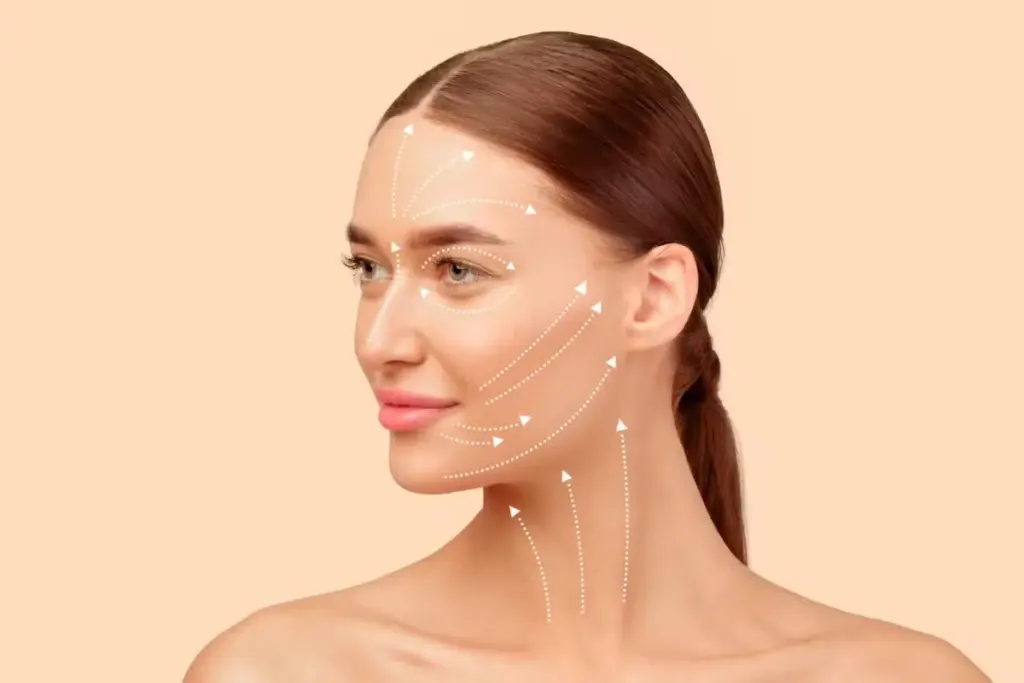
The thread lift procedure is a minimally invasive treatment. It gives a refreshed look without surgery. We start with a detailed consultation to understand your concerns and create a personalized plan.
Consultation and Preparation
In the initial consultation, we talk about your aesthetic goals and skin condition. We then decide on the best thread lift approach for you. This stage is key in making a treatment plan that meets your specific needs.
To prepare for the procedure, we make sure you are comfortable and informed. We use local anesthetic to reduce discomfort during the treatment.
Step-by-Step Procedure Breakdown
The thread lift procedure usually takes 30 to 60 minutes. Here’s a step-by-step overview:
- The treatment area is cleaned and prepared.
- Local anesthetic is administered to ensure your comfort.
- Threads are carefully inserted beneath the skin using a fine needle or cannula.
- The threads are then gently pulled to achieve the desired lifting effect.
- The procedure is completed by securing the threads in place.
For more detailed information on the thread lift procedure, you can visit Healthline’s guide on thread lifts.
Recovery and Aftercare Instructions
After the procedure, you may experience mild side effects like bruising or swelling. We give personalized aftercare instructions to help minimize these effects and ensure a smooth recovery.
| Aftercare Tips | Benefits |
| Avoid strenuous activities | Reduces risk of complications |
| Keep the treated area clean | Promotes healing |
| Follow-up appointments | Ensures optimal results |
Potential Side Effects and Complications
While thread lifts are generally safe, there are possible side effects and complications. These include temporary bruising, swelling, or thread migration. We discuss these risks in detail during your consultation and take necessary precautions to minimize them.
By understanding the thread lift procedure process, you can make an informed decision about whether this treatment is right for you. Our team is dedicated to providing you with the highest level of care and support throughout your treatment journey.
Conclusion
Thread lifts are a new way to tackle jowls and facial sagging. They use PDO threads to make you look younger without surgery.
Cosmetic threading, or thread face lifts, is becoming more popular. It’s effective and has little downtime. The threads lift facial tissues, giving you a smoother look.
Thread facelift results can last 12 to 18 months. You’ll see the best results in 4 to 6 weeks as collagen grows. If creams and quick fixes aren’t working, PDO thread lifts could be your answer.
It’s smart to talk to a skilled practitioner before getting a thread lift. They can explain the benefits and what you can expect. Thread face lifts offer quick results and long-term skin support, all without surgery or scars.
FAQ
What is a thread lift for jowls?
A thread lift for jowls is a non-surgical way to lift and tighten sagging skin. It gives you a younger look.
How do PDO threads work?
PDO threads are made from a material that’s safe for the body. They help make collagen, lifting and tightening the skin. A fine needle is used to insert them, and their design pulls the skin up.
Are thread lifts suitable for everyone?
Thread lifts work best for people with mild to moderate sagging skin. They’re a good choice for those who don’t want surgery. But, if you have severe sagging, you might need something else.
What are the benefits of thread lifts over traditional facelifts?
Thread lifts are less invasive and have less downtime than facelifts. They’re also cheaper. Plus, they help make more collagen, giving you longer-lasting results.
How long do thread lift results last?
How long thread lift results last depends on your skin and lifestyle. Usually, they last 12 to 24 months.
What is the difference between PDO and other types of threads?
PDO threads are made from a material that’s safe and gets absorbed by the body. Other threads might be made from different materials, like PLLA or PCL. These have different effects and how long they last.
Are thread lifts painful?
Thread lifts are done under local anesthesia, so you won’t feel much pain. Some people might feel a bit sore after, but that’s okay.
Can thread lifts be combined with other treatments?
Yes, thread lifts can be done with other treatments like fillers or botulinum toxin. This can help rejuvenate your face more.
What is the cost of a thread lift for jowls?
The cost of a thread lift for jowls changes based on a few things. Like how many threads you need, how complex the procedure is, and the doctor’s fees.
How do I choose a qualified practitioner for a thread lift?
To find a good practitioner, look at their credentials and experience. Make sure they’re trained in thread lifts and know about facial anatomy.
What is the recovery time for a thread lift?
Recovery from a thread lift is usually quick. Most people can go back to normal in just a few days.
Are there any other side effects or complications?
Like any treatment, thread lifts can have side effects. These include bruising, swelling, or infection. But these are rare. Just follow the aftercare instructions to avoid them.
References
https://pmc.ncbi.nlm.nih.gov/articles/PMC8149973