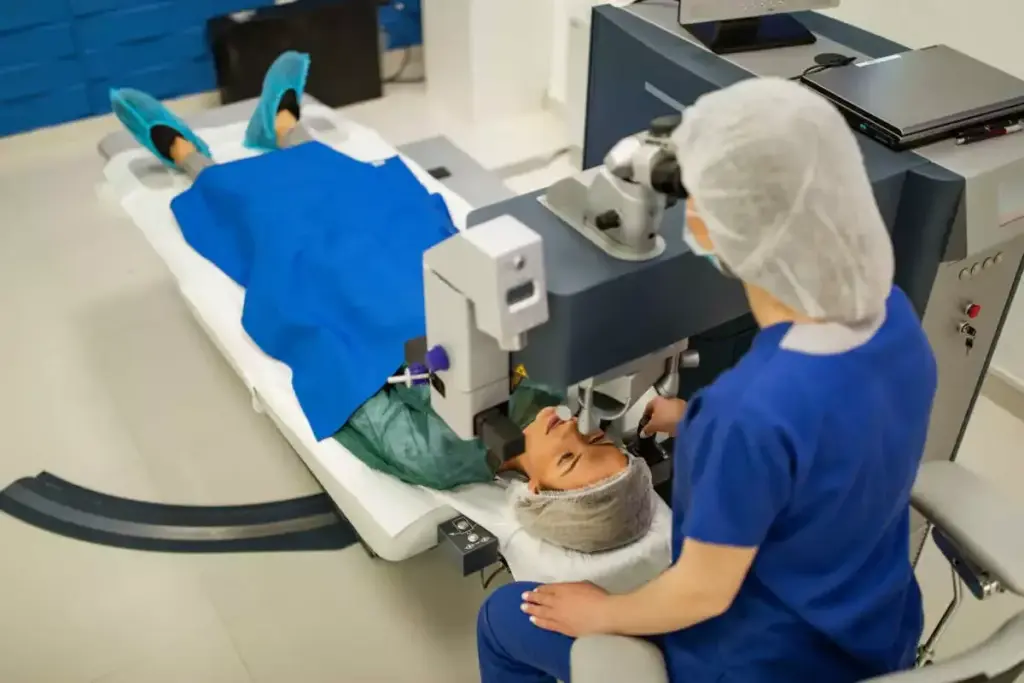
Imagine waking up with crystal-clear vision without glasses or contacts. LASIK, a form of eye surgery, makes this dream come true for millions. It reshapes the cornea so light focuses directly on the retina, giving clearer vision. The process starts with a detailed check-up to see if you’re a good candidate for LASIK.
Choosing LASIK is a big decision. It’s important to know what happens every step of the way. From the first meeting to aftercare, each step is key for success. We aim to help you understand this journey, so you can make the best choice for your eyes.
Key Takeaways
- LASIK is a safe and effective way to correct vision.
- The process begins with a thorough check-up.
- Knowing the LASIK steps helps you make a smart choice.
- Good care after the surgery is vital for the best results.
- Choosing a skilled surgeon lowers the risk of problems.
Understanding LASIK Eye Surgery Step by Step
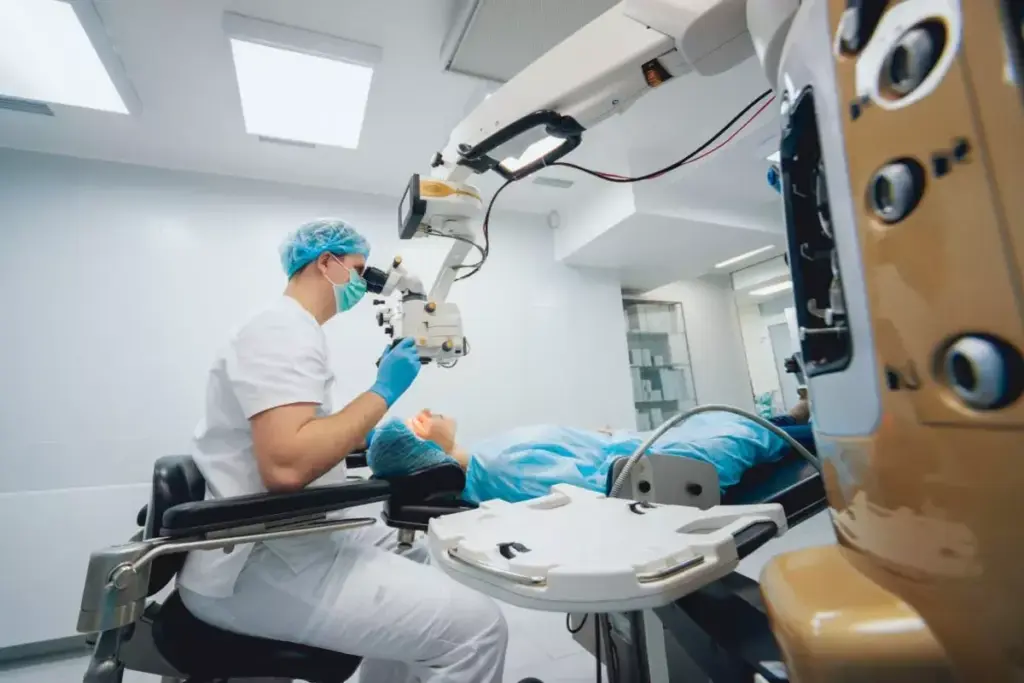
Learning about LASIK eye surgery can help you make smart choices for your eyes. LASIK, or Laser-Assisted In Situ Keratomileusis, is a detailed procedure that needs skill and care. By looking at each step, we can see how it fixes vision issues.
What is Laser-Assisted In Situ Keratomileusis
LASIK reshapes the cornea, the front part of the eye, with an excimer laser. This reshaping helps light focus on the retina, fixing vision problems. It’s a precise and effective method, making it a top choice for those tired of glasses or contacts. The American Academy of Ophthalmology says LASIK is safe and works well, with millions done worldwide.
Medical Expert, Ophthalmologist
Vision Problems Corrected by LASIK
LASIK fixes myopia (nearsightedness), hyperopia (farsightedness), and astigmatism. It reshapes the cornea so light focuses right on the retina, giving clearer vision. Its flexibility makes LASIK a great choice for many vision needs. Each person’s LASIK is customized for their specific vision issues, aiming for the best results.
Medical organization’s LASIK Eye Surgery article says, “LASIK can cut down or get rid of glasses or contacts.” This happens because LASIK reshapes the cornea to focus light correctly on the retina.
Pre-Operative Assessment and Preparation
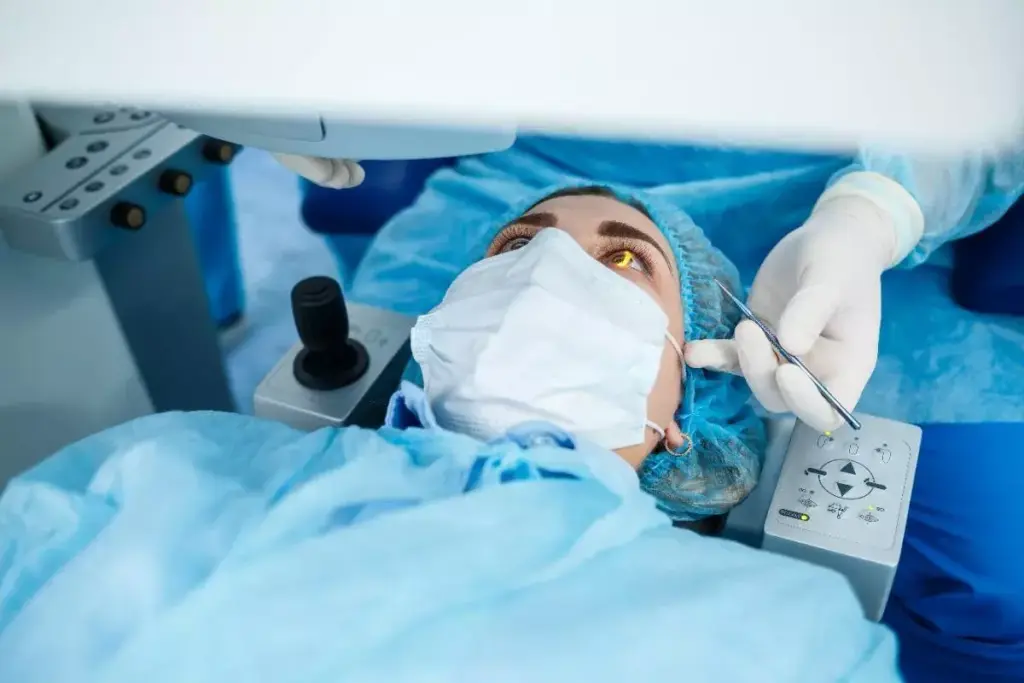
The journey to clear vision with LASIK starts with a detailed pre-operative check. We look at many factors that affect the surgery’s success. Preparing for LASIK involves important steps to ensure patients are ready and have the best results.
Initial Consultation and Eligibility Screening
The first step is an initial consultation. We check if the patient is a good candidate for LASIK. This includes talking about their medical history, like past eye surgeries or conditions.
We also look at the patient’s overall health and what they hope to achieve. This helps us decide if LASIK is right for them.
Comprehensive Eye Examination
A detailed eye exam is key before surgery. We do several tests to check the patient’s eye health. This includes looking at corneal thickness, shape, and refractive error.
This info is important for planning the best treatment. It helps us tailor the surgery to the patient’s needs.
| Test | Purpose |
| Corneal Topography | To map the surface of the cornea, identifying any irregularities or conditions that may affect the surgery. |
| Pachymetry | To measure the thickness of the cornea, ensuring it is sufficient for the LASIK procedure. |
| Refraction Test | To determine the patient’s refractive error, which guides the laser treatment. |
Pre-Surgery Instructions
After deciding if LASIK is right, we give detailed instructions. These help patients get ready for the surgery. We tell them to stop wearing contact lenses, avoid certain medicines, and more.
By following these steps, patients can reduce risks. This ensures the best results from their LASIK surgery.
The LASIK Procedure: Detailed Surgical Steps
Learning about the LASIK procedure can ease worries for those thinking about it. It’s a complex surgery with several steps to fix vision problems.
Creating the Corneal Flap
The first step is making a thin flap in the cornea. This is done with a femtosecond laser or a microkeratome blade. The choice depends on the surgeon and the patient’s needs.
Reshaping the Cornea with Excimer Laser
After the flap is made, it’s gently lifted. Then, an excimer laser reshapes the cornea. It removes tiny bits of tissue to fix vision problems.
The laser is set with the patient’s prescription. This ensures the cornea is reshaped correctly.
The excimer laser technology is advanced. It makes precise changes to the cornea. This is key for good vision correction.
Repositioning the Flap and Completion
After reshaping, the flap is put back in place. It acts as a natural bandage, helping healing and reducing pain. The process is simple, and the flap heals without stitches.
The LASIK procedure is quick, taking about 30 minutes per eye. It’s painless, thanks to numbing drops. Patients can go home soon, with vision improving in a few days.
Recovery and Post-Operative Care
After LASIK eye surgery, the healing starts with the corneal flap acting as a natural bandage. This means no stitches are needed. We keep a close eye on patients to help them heal smoothly.
Patients get specific instructions to help their eyes heal right. They use eye drops to care for the cornea and avoid activities that might harm the flap. Regular follow-up visits are also key to track the healing progress.
By following these steps, patients can get the best results from LASIK. They can look forward to better vision. Our team is here to support you every step of the way, ensuring a smooth recovery.
FAQ
What is LASIK eye surgery and how does it work?
LASIK is a surgery that reshapes the cornea with an excimer laser. This allows light to focus on the retina. It corrects myopia, hyperopia, and astigmatism.
What vision problems can LASIK eye surgery correct?
LASIK fixes nearsightedness (myopia), farsightedness (hyperopia), and astigmatism. It reshapes the cornea for better light focus on the retina.
What is the pre-operative assessment and preparation phase of LASIK eye surgery?
Before LASIK, a detailed eye check is done. It checks eye health and if you’re a good candidate. It looks at corneal thickness, shape, and refractive error.
What are the detailed surgical steps involved in LASIK eye surgery?
LASIK creates a thin flap in the cornea. It lifts the flap to expose the tissue underneath. Then, an excimer laser reshapes the cornea. The flap is then put back, acting as a natural bandage.
What is the recovery and post-operative care phase of LASIK eye surgery?
After LASIK, patients are watched for a short time before going home. They get specific care instructions. This includes using eye drops, avoiding hard activities, and attending follow-up visits.
How long does it take to recover from LASIK eye surgery?
Recovery from LASIK varies. Most can get back to normal in a few days. Vision will keep getting better over weeks.
Are there any potentially risks or complications associated with LASIK eye surgery?
Yes, LASIK can have risks like dry eye, infection, and vision problems. But these are rare. Following post-op instructions can help avoid them.
Can I undergo LASIK eye surgery if I have a high level of myopia or hyperopia?
LASIK for high myopia or hyperopia depends on corneal thickness and eye health. It’s decided on a case-by-case basis during the pre-op check.
How do I prepare for LASIK eye surgery?
To prepare for LASIK, follow your surgeon’s pre-surgery instructions. This might include stopping contact lens use, avoiding certain meds, and arranging for post-procedure transport.
What are the steps to getting LASIK eye surgery?
To get LASIK, first, you’ll have a thorough pre-op check. Then, you’ll get pre-surgery instructions. Next, you’ll have the LASIK procedure. Lastly, follow post-op care to recover smoothly.
Is LASIK eye surgery a painful procedure?
No, LASIK is not painful. Patients are given numbing drops or local anesthesia to keep them comfortable during the surgery.
Can I have LASIK eye surgery if I have astigmatism?
Yes, LASIK can correct astigmatism. It reshapes the cornea to focus light properly on the retina.
How is the cornea reshaped during LASIK eye surgery?
The cornea is reshaped with an excimer laser during LASIK. It removes tiny amounts of tissue to correct the refractive error.
References
National Center for Biotechnology Information. Evidence-Based Medical Insight. Retrieved from https://www.ncbi.nlm.nih.gov/books/NBK555970/



 Departments
 Related Videos
 Our Doctors
 News
News