About 1 in 5 kids in the U.S. have learning and thinking differences. But many go unnoticed. It’s key to spot learning disabilities early to help them succeed.
Studies show that learning disability affects about 8.85 percent of U.S. kids aged 6 to 17. At Liv Hospital, we offer detailed checks. These help parents and teachers see the signs of educational disability early on.
Key Takeaways
- Early spotting of learning disabilities is key for help.
- Liv Hospital does detailed checks for kids.
- Many U.S. kids face learning disabilities.
- Support is vital for kids with learning issues.
- Parents and teachers are important in spotting early signs.
Understanding Common Learning Disorders in Children

It’s key to know about learning disorders to help kids do well in school and life. These disorders, or learning disabilities, are found in many people worldwide. They make it hard for kids to learn and interact with their world.
Dyslexia: The Most Prevalent Learning Disability
Dyslexia is a common learning disorder that mainly makes reading and spelling hard. It’s thought that about 10 percent of the global population has dyslexia. This isn’t because someone is not smart or doesn’t try hard. It’s because their brain processes written words differently.
ADHD and Executive Function Challenges
Attention Deficit Hyperactivity Disorder (ADHD) is a big learning disorder. It makes it hard for kids to focus, control their impulses, and stay active. ADHD is found in 6 to 10 percent of youth around the world. It often goes hand in hand with problems in planning, organizing, and managing time.
Other Common Learning Disabilities
There are more learning disabilities beyond dyslexia and ADHD. For example, dysgraphia makes writing hard, dyscalculia makes math tough, and central auditory processing disorder messes with how the brain hears sounds. Knowing about these different disabilities helps us find better ways to support kids.
Recognizing Early Warning Signs of Learning Disorders
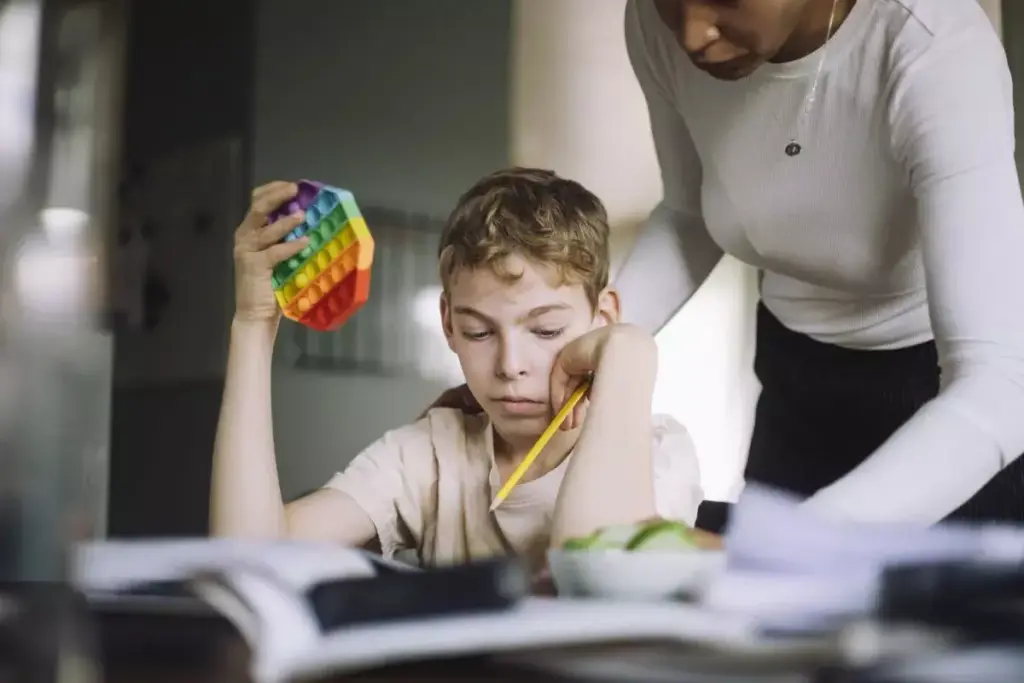
Learning disorders show different signs at different ages. Spotting these signs early can really help kids. We’ll look at signs for kids from preschool to teens.
Preschool Age Indicators (Ages 3-5)
In preschool, kids might have delayed speech or language. They might find it hard to talk or follow simple directions. They could also not want to play with others or have trouble with social skills.
Some signs to watch for in preschoolers include:
- Struggling to pronounce sounds or words correctly
- Difficulty in following simple directions
- Limited vocabulary compared to peers
- Avoiding activities that involve drawing or puzzles
Elementary School Indicators (Ages 6-12)
When kids start elementary school, they face new challenges. They might struggle with reading, writing, or math. They could also have trouble staying organized, like losing things or forgetting homework.
Some key indicators in this age group include:
| Area of Difficulty | Common Signs |
| Reading | Slow reading speed, difficulty with comprehension, mixing up letters |
| Writing | Poor handwriting, trouble with spelling, avoiding writing tasks |
| Math | Difficulty with basic arithmetic, trouble with word problems, struggling with math concepts |
Adolescent Indicators (Ages 13-17)
In teens, learning disorders can show up as trouble with organization and time management. They might find it hard to finish homework or keep up with assignments.
Some signs to watch for in teens include:
- Struggling to maintain a schedule or planner
- Difficulty in completing long-term projects
- Avoiding tasks that require sustained mental effort
- Frequently losing track of assignments or materials
Knowing these signs can help parents and teachers support kids with learning disorders. Early help can really make a difference in their success.
Steps to Obtain a Professional Learning Disorders Diagnosis
Understanding how to get a diagnosis for learning disorders is key for parents. It helps them get the support their child needs. Getting a diagnosis usually means school tests and doctor’s assessments.
When to Consult a Specialist
If you think your child has learning difficulties, see a specialist. This could be a doctor, psychologist, or special teacher. They can guide you on what to do next.
See a specialist if your child struggles with reading, writing, or math. Also, if they seem frustrated or have low self-esteem because of school.
Types of Evaluations and Tests
Getting a diagnosis means many tests and evaluations. These include:
- Academic tests to check your child’s skills
- Cognitive tests to see how they think
- Looking at your child’s past to find patterns or concerns
The OPA Guidelines for Diagnosis and Assessment of Learning say a full assessment is key for a correct diagnosis.
Overcoming Barriers to Diagnosis
But, getting a diagnosis can be hard. Barriers include:
- Not having access to specialists
- Money problems
- Not knowing about learning disorders
To get past these barriers, parents should fight for their child’s needs. Look for help from local groups. Work with teachers and doctors for a full check-up.
Conclusion
Early help can make a big difference for kids in school and with friends. Kids with learning disabilities can do well with the right help. It’s key to spot the signs early to help them out.
Knowing the signs of learning disabilities like dyslexia and ADHD helps us act fast. We can get a proper diagnosis and make plans to support them. Giving kids the right help can really make a difference.
We all need to work together to support kids with learning challenges. This way, they can fully join in and achieve their dreams, no matter their disability.
FAQ
What are learning disorders in children?
Learning disorders are neurological conditions that affect how children process information. They are not a reflection of a child’s intelligence. These disorders can impact a child’s academic performance, self-esteem, and social interactions.
What is dyslexia, and how does it affect children?
Dyslexia is the most prevalent learning disability. It affects a child’s reading and spelling abilities. Children with dyslexia may struggle to decode words, read fluently, and spell correctly.
What are the early warning signs of learning disorders in preschool-age children?
Early signs of learning disorders in preschoolers include delayed speech or language development. They may also have trouble with rhyming and identifying and manipulating sounds.
How is a learning disorder diagnosed?
A team of professionals, including psychologists and educators, assesses a child to diagnose a learning disorder. This team uses various evaluations and tests, such as cognitive and academic assessments.
What is the difference between a learning disability and a learning difficulty?
A learning disability is a neurological condition that affects information processing. A learning difficulty is a specific challenge, like dysgraphia or dyscalculia.
Can children with learning disorders succeed academically and socially?
Yes, children with learning disorders can succeed with the right support. Early identification and intervention are key to helping them reach their full academic and social potentials.
What is the role of ADHD in learning disorders?
ADHD is a neurodevelopmental disorder that affects attention and executive function. It can make it hard for children to focus, organize, and complete tasks.
How can parents and educators support children with learning disorders?
Parents and educators can support children with learning disorders by providing individualized instruction. They can also offer accommodations and modifications to help them access the curriculum and reach their full potentials.
What are the benefits of early identification and intervention for children with learning disorders?
Early identification and intervention help children with learning disorders succeed academically and socially. They reduce the risk of long-term negative consequences, such as low self-esteem and decreased academic achievement.
How can I overcome barriers to obtaining a professional diagnosis for a learning disorder?
To overcome barriers to a diagnosis, parents can consult with their child’s teacher or healthcare provider. They should seek a referral to a specialist and advocate for a thorough assessment by a multidisciplinary team of professionals.
References
https://www.nichd.nih.gov/health/topics/learning/conditioninfo/signs