



Knowing your tools is key to safe surgery and happy patients. We think it’s vital for all healthcare workers to know sterile processing instruments names. Our team works hard to clean everything well to keep our patients safe.
We use systems to mark and track each item. This helps us keep everything in order and meet rules. Tracking helps us work better in the operating room.
Choosing the right tools for each surgery is important. It helps avoid delays and mistakes. We created this guide to help you deliver top-notch care. Together, we make sure every tool is ready for its important job.
We aim to help hospitals provide safe and efficient surgeries. By using smart ways to identify tools, we cut down on mistakes. Good identification means better care in every medical procedure.
Key Takeaways
- Accurate tracking ensures patient safety and inventory precision.
- Identification systems support regulatory compliance and audits.
- Clear naming conventions help reduce surgical delays.
- Marking methods maintain the lifecycle of medical tools.
- Meticulous cleaning protocols enhance overall workflow efficiency.
Understanding the Main Categories of Surgical Instruments
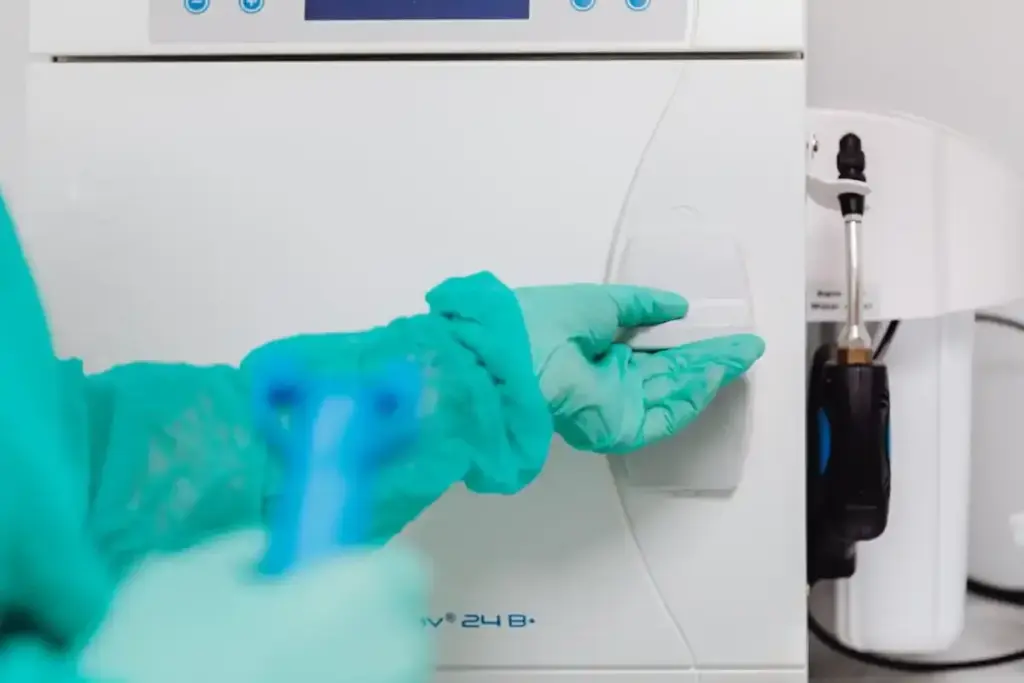
Learning about sterile processing instruments starts with knowing the main categories. Surgical tools are grouped by their use, like grasping, cutting, clamping, and retracting. It’s key to know these groups for correct tool use and management.
There are several main types of surgical instruments based on their functions. This helps healthcare workers keep track of their tools better. The main groups include tools for grasping, cutting, clamping, and retracting.
Grasping and Holding Instruments
Grasping and holding tools help surgeons hold or move tissue during surgery. Forceps and clamps are examples. They give a firm hold on tissues or objects, making various surgical tasks easier.
Cutting and Dissecting Instruments
Cutting and dissecting tools are for cutting or separating tissue. Scalpels and scissors are common ones. They are essential for making cuts, separating tissue, and doing other cutting tasks in surgery.
Clamping and Occluding Instruments
Clamping and occluding tools are for closing off blood vessels or other structures. Hemostats and vascular clamps are examples. They are important for stopping bleeding and closing off vessels during surgery.
Retractors and Exposing Instruments
Retractors and exposing tools help move tissue and show the surgical area. Retractors and tissue graspers are examples. They help the surgical team see clearly, making their work easier.
Knowing these categories helps healthcare workers manage their tools better. This knowledge leads to better tool handling, fewer mistakes, and safer care for patients.
Practical Techniques for Identifying Sterile Processing Instruments
Identifying sterile processing instruments is a complex task. It requires different methods and tools for accuracy. We will look at practical ways healthcare professionals can do this well.
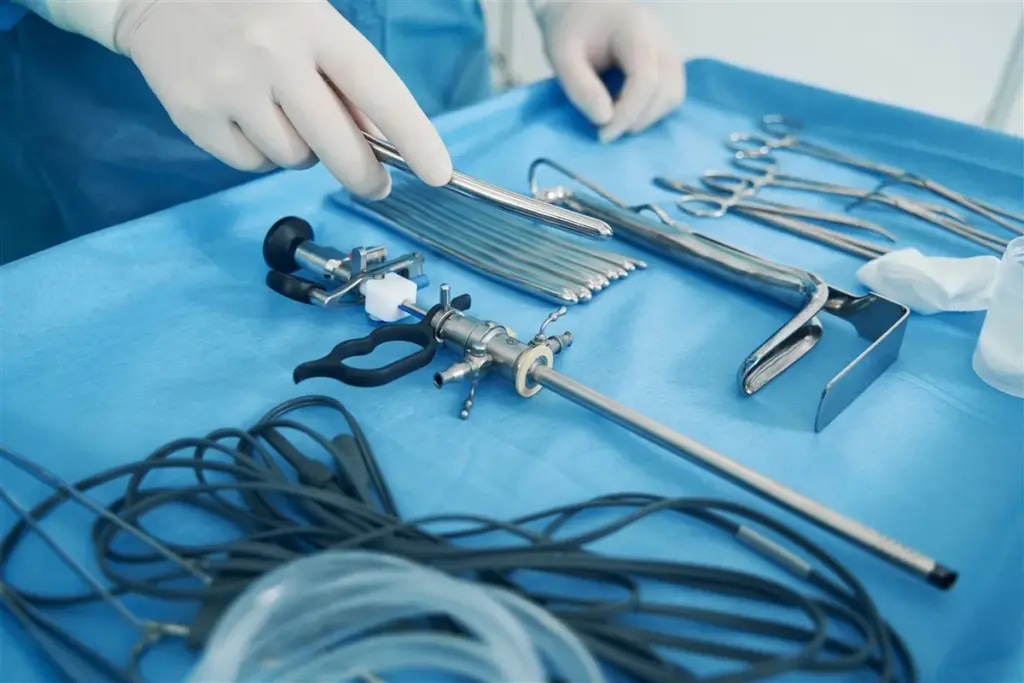
Read Instrument Markings and Manufacturer Labels
Reading instrument markings and labels is a key method. These often show the instrument’s name and who made it. Techniques like laser etching and electrochemical marking engrave this info on the instruments.
Also, the packaging and labels of single-use surgical instruments are important. They tell you the instrument’s name, how it was sterilized, and when it expires. Knowing this is key to using the instruments right and on time.
Analyze Physical Characteristics and Design Features
Looking at an instrument’s shape, size, and how it works is another way to identify it. For example, instruments for grasping and cutting have special features. Grasping instruments have ratchets and serrations, while cutting ones have sharp edges.
Knowing these details helps healthcare professionals quickly find the right instruments. This is very important when time is short.
Utilize Learning Resources and Study Materials
There are many ways to learn about identifying sterile processing instruments. Quizlet sterile processing and sterile processing technician quizlet offer interactive learning. They have flashcards and quizzes to practice.
Also, manufacturers give detailed guides and training on their products. This includes info on sterile processing equipment and sterile processing supplies. Using these resources helps healthcare professionals get better at identifying and managing these instruments.
Conclusion
Identifying sterile processing instruments is key for patient safety and efficient workflow. We’ve covered the main types of surgical tools and how to identify them. This includes reading labels and using tools like surgical instrument flashcards pdf and sterile processing quizlet.
Using these methods and tools can help healthcare facilities manage instruments better. This reduces risks and improves patient care. Accurate identification of instruments is essential for quality healthcare.
At our institution, we aim to provide top-notch healthcare, including support for international patients. Following the guidelines in this article helps us manage our instruments well. This ensures better care for our patients.
FAQ
Why is the accurate identification of sterile processing instruments names vital for patient safety?
Correct identification ensures proper sterilization, reduces surgical errors, prevents cross-contamination, and guarantees the right instrument is available during procedures, directly protecting patient safety.
How can a sterile processing technician quizlet or surgical tools flashcards assist in training?
Flashcards and Quizlet help memorize instrument names, functions, and proper handling, making training more interactive and improving recall under pressure.
What are the distinguishing features of a sterile single use surgical instrument of name brands like Teleflex or B. Braun?
These instruments are pre-sterilized, disposable, and designed with precise materials, often labeled with brand markings, batch numbers, and specific use instructions to ensure safety and traceability.
What techniques do we use to manage sterile processing supplies and inventory?
Methods include barcoding, automated tracking systems, color-coded storage, rotation by expiration date, and regular audits to maintain accuracy and availability.
Where can I find comprehensive study guides for sterile processing Quizlet examinations?
You can access study materials on Quizlet.com, professional organizations like IAHCSMM, textbooks, and online training platforms dedicated to sterile processing certification.
References
National Center for Biotechnology Information. Evidence-Based Medical Insight. Retrieved from https://pmc.ncbi.nlm.nih.gov/articles/PMC11175864/[2


 Departments
 Related Videos
 Our Doctors
 News
News


