
At places like Liv Hospital, catheter angiography is done with great care. This test uses an angiographic catheter to see the heart’s arteries. It’s a key way to check for problems.
We make sure patients are safe and comfortable during the test. We take care of them from start to finish.
Key Takeaways
- Catheter angiography is a precise diagnostic tool for visualizing coronary arteries.
- The procedure involves threading a catheter through a blood vessel to the heart.
- A contrast agent is used to identify blockages in the heart’s arteries.
- Patient safety and comfort are key throughout the process.
- Advanced medical institutions like Liv Hospital follow strict protocols for catheter angiography.
Understanding Catheter Angiography: Definition and Purpose
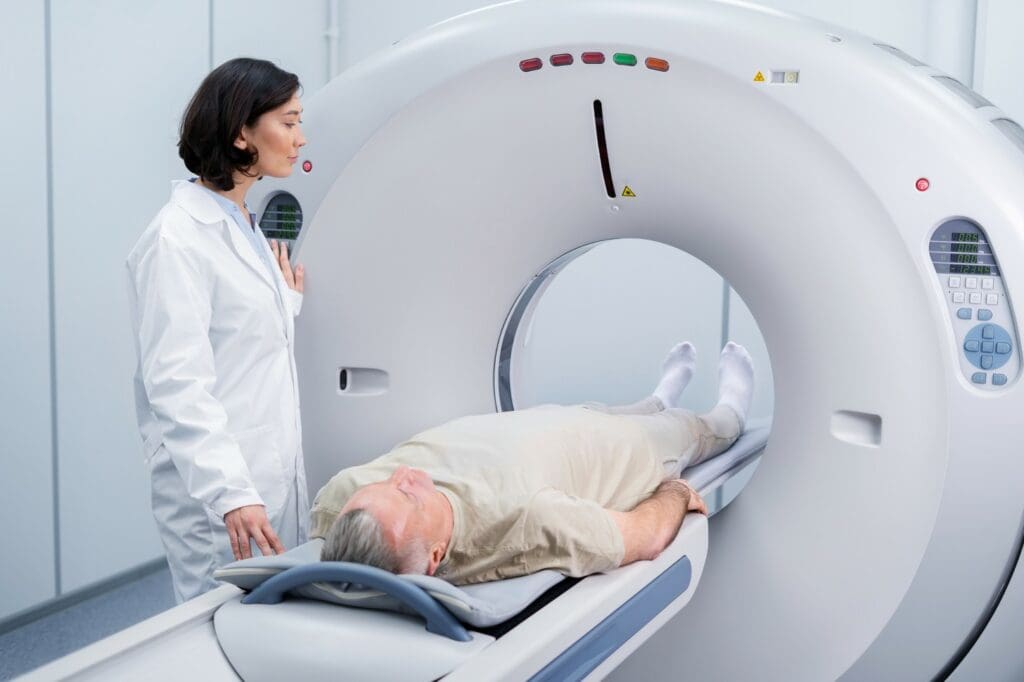
Catheter angiography is a key medical imaging method. It has changed how we diagnose and treat blood vessel problems. This method uses a catheter to see inside blood vessels and find blockages or issues.
What Is a Catheter Angiography?
Catheter angiography, or a cath angiogram, shows detailed images of blood vessels. It uses angiographic catheters to explore the vascular system. Contrast media is injected to make the blood vessels visible on X-ray images.
At places like the Department of Cardiology at Sir H. N. Reliance Foundation Hospital, it helps find blockages in heart arteries. This aids in diagnosing and treating heart issues.
Clinical Indications for Angiographic Procedures
Catheter angiography is used for many health issues. It helps find problems in coronary arteries, heart valves, and blood vessels. It shows how severe blockages are and helps plan treatments like angioplasty or stenting.
- Diagnosing coronary artery disease
- Evaluating heart valve disorders
- Assessing peripheral vascular disease
Benefits Over Non-invasive Imaging Techniques
While CT and MRI angiography are useful, catheter angiography has its own perks. It gives clearer images and allows for immediate treatment. The use of angiography tubes and advanced systems helps see the blood vessels in detail.
It’s also great for getting detailed vascular info for treatment plans. Being able to treat during the test makes it a key part of cardiology today.
The Science Behind Cath Angiogram

The cath angiogram uses X-ray technology to see blood vessels. It’s key for diagnosing and treating vascular issues. We use X-ray and echocardiography to give our patients the best care.
How X-ray Imaging of Blood Vessels Works
X-ray imaging makes blood vessels visible with a contrast agent. We inject this agent through an angiography tube into the blood vessel. Then, X-ray images show us the blood vessels in detail.
Types of Contrast Media Used
There are many contrast media for cath angiograms. Iodine-based agents are common because they absorb X-rays well. For those allergic to iodine, gadolinium-based agents are an option. The choice depends on the patient’s history and the procedure’s needs.
Digital Subtraction Angiography Technology
Digital Subtraction Angiography (DSA) improves angiogram images. It removes background tissue and bone, showing only the blood vessels. This is great for complex procedures, like the HeartFlow PCI Navigator in cardiology.
These technologies help us make accurate diagnoses and treatments. They improve patient outcomes and the quality of care we provide.
Essential Equipment for Catheter Arteriography
Catheter arteriography needs special equipment for accurate imaging and patient safety. We use the latest technology to give top-notch care.
Angiography Tubes and Imaging Systems
The heart of catheter arteriography is its imaging systems and angiography tubes. These tubes carry contrast agents to blood vessels. The imaging systems then take clear pictures of the vessels.
At places like Sir H. N. Reliance Foundation Hospital, we have advanced imaging systems. They help us do complex procedures with great precision.
Types of Angiographic Catheters
There are many types of angiographic catheters for different procedures and blood vessels. Choosing the right catheter depends on the patient’s body and the target vessel. Our team picks the best catheter for each case, ensuring the best results.
- Catheters for coronary angiography
- Catheters for cerebral angiography
- Catheters for peripheral vascular angiography
Monitoring and Safety Equipment
Besides imaging and catheter tools, monitoring and safety equipment are key for patient safety. We use ECG monitors, defibrillators, and vital sign monitors to watch patients closely. This lets us act fast if there’s a problem.
With top catheter arteriography gear and skilled doctors, we give our patients the best care. Our use of the latest tech and strict safety rules shows our commitment to top healthcare.
Patient Preparation for Angiogram Catheterisation
Getting ready for a cath angiogram is key to its success. This includes checking the patient’s health before the test, teaching them about the procedure, and managing their medications. We make sure everything is ready to keep the patient safe and the test effective.
Pre-procedure Assessment and Laboratory Tests
First, we do a detailed check-up before the test. This includes blood tests to see how the patient’s body is doing. We look at kidney function and how blood clots. Other tests might be needed too.
Patient Education and Informed Consent
Teaching patients about the test is very important. We make sure they know what will happen, the risks, and the benefits. We get their consent after talking about everything.
We give patients all the details about the test. This includes what happens during and after. We also talk about contrast media and its risks.
Medication Management and Fasting Requirements
Managing medications is also key. We check the patient’s meds and change them if needed. This helps avoid problems during the test. Patients also need to fast before the test for their safety.
For more info on cath angiogram procedures, visit https://int.livhospital.com/angiogram/. We make sure every step of preparation is covered. This makes the cath angiogram safer and more successful.
Setting Up the Angio Cath Lab Environment
The setup of the angio cath lab environment is key for patient safety and the success of cath angiograms. A well-prepared cath lab is vital for these procedures.
Sterile Field Preparation
Creating a sterile field is essential to prevent infections during cath angiograms. Sterility is maintained with sterile drapes, gloves, and equipment. Our team follows strict protocols for cleaning and disinfecting the lab before each procedure.
Equipment Arrangement and Safety Checks
The equipment in the angio cath lab is arranged for safety and efficiency. All necessary equipment is within reach of the medical team. Safety checks are done to ensure everything works right, including angiography tubes and imaging systems.
Radiation Safety Protocols
Radiation safety is a top priority in the angio cath lab. We follow strict protocols to reduce radiation exposure for patients and staff. This includes using lead shielding and minimizing fluoroscopy time. Everyone wears the right protective gear.
By carefully setting up the angio cath lab, we ensure a safe and successful cath angiogram. Our focus on radiation safety, sterile technique, and equipment readiness shows our commitment to quality patient care.
Vascular Access Techniques for Catheterization
Getting vascular access right is key for a good cath angiogram. There are many ways to do it. We’ll look at the different methods, their benefits, and what to consider.
Femoral Artery Approach: Technique and Considerations
The femoral artery method is very common for cath angiography. It uses the femoral artery in the groin. The femoral artery is big and easy to get to.
To do a femoral artery approach, we follow these steps:
- Patient preparation, including local anesthesia administration
- Insertion of the needle into the femoral artery
- Guidewire placement and catheter introduction
- Fluoroscopic guidance to ensure correct catheter positioning
Even though it’s common, the femoral approach can lead to bleeding and hematomas.
Radial Artery Approach: Benefits and Challenges
The radial artery method is becoming more popular. It has less risk of bleeding than the femoral approach. Accessing the radial artery in the wrist makes after-care easier and reduces major bleeding risk.
But, the radial artery approach has its own issues:
- The radial artery is smaller, making catheter use harder
- It needs special tools and skills
- There’s a chance of radial artery spasm or blockage
Despite these problems, the radial approach is better for patient comfort and quicker recovery.
Alternative Access Sites and Selection Criteria
While the femoral and radial arteries are usual, other sites like the brachial or ulnar arteries might be used. This depends on the patient’s body, the procedure type, and certain health reasons.
| Access Site | Advantages | Disadvantages |
|---|---|---|
| Femoral Artery | Large diameter, straightforward access | Higher risk of bleeding complications |
| Radial Artery | Lower risk of bleeding, easier post-procedure care | Smaller diameter, possible artery spasm |
| Brachial/Ulnar Arteries | Alternative options for specific patient anatomies | Less commonly used, may need more skill |
Picking the right vascular access site is very important. It depends on the patient and the procedure. We look at these factors to find the best method for each person.
Step-by-Step Procedure for Performing a Cath Angiogram
The cath angiogram is a detailed diagnostic test with several key steps. At our institution, we follow a strict protocol for each cath angiogram. This ensures every procedure is done with great care and precision.
Initial Angiocath Insertion and Securing Access
The first step is inserting the angiocath. This is done by accessing the blood vessel through a small incision, usually in the groin or arm. We use a local anesthetic to reduce discomfort during this step.
Once the angiocath is in, it’s secured to prevent movement. This is important to keep the procedure safe and effective.
Navigating the Angiogram Catheter to Target Vessels
With the angiocath in place, we then navigate the angiogram catheter to the target vessels. This is done under fluoroscopic guidance, allowing us to see the catheter’s movement in real-time. We carefully move the catheter through the blood vessels until it reaches the desired location.
Key considerations during this step include:
- Careful manipulation to avoid vessel damage
- Continuous monitoring to ensure accurate placement
- Adjustments as needed to accommodate anatomical variations
Contrast Administration Techniques and Timing
Once the catheter is in position, we administer a contrast agent to see the blood vessels. The timing of contrast administration is critical. It must be coordinated with the imaging sequence to capture high-quality images. We use a specialized injector to deliver the contrast agent at the precise moment required.
Image Acquisition Sequences and Processing
The final step is acquiring and processing the images for diagnostic purposes. Our imaging system captures a series of images as the contrast agent flows through the vessels. These images are then processed using advanced software to enhance clarity and provide detailed views of the vascular anatomy.
By following this step-by-step procedure, we can perform cath angiograms accurately and safely. This provides valuable diagnostic information for patient care.
Specialized Catheter Angiography Procedures
Modern medicine relies on specialized catheter angiography procedures. These advanced methods help diagnose and treat vascular conditions. They improve patient care and outcomes.
Coronary Angiography Techniques
Coronary angiography is key for diagnosing and treating heart disease. A catheter is inserted into the heart’s arteries. This lets doctors see blood flow and find blockages.
Key steps in coronary angiography include:
- Insertion of the catheter through a peripheral artery
- Guiding the catheter to the coronary arteries using fluoroscopy
- Injecting contrast media to visualize the coronary vessels
- Capturing images to assess the extent of any disease
Cerebral Angiography Considerations
Cerebral angiography helps see brain blood vessels. It diagnoses issues like aneurysms and stenosis. This procedure needs careful brain blood vessel consideration and risk awareness.
The process involves:
- Accessing the femoral or radial artery
- Navigating the catheter to the cerebral arteries
- Using contrast media to highlight the cerebral vessels
- Capturing detailed images to aid in diagnosis
Peripheral Vascular Angiography Approaches
Peripheral vascular angiography diagnoses and treats leg artery disease. It visualizes limb blood vessels to find blockages or narrowing.
Approaches to peripheral vascular angiography include:
- Accessing the femoral artery for lower limb angiography
- Using the radial or brachial artery for upper limb angiography
- Employing contrast media to visualize the peripheral vessels
- Assessing the extent of disease and planning interventions
Interventional Applications During Diagnostic Studies
Diagnostic angiography can lead to treatments like angioplasty and stenting. These aim to improve blood flow and reduce symptoms.
Interventional applications include:
- Angioplasty to dilate narrowed vessels
- Stenting to keep vessels open
- Thrombectomy to remove blood clots
- Embolization to treat vascular malformations or bleeding
Interpreting Angiogram Results and Findings
Understanding angiogram results needs knowledge of blood vessel anatomy and matching findings with symptoms. At Sir H. N. Reliance Foundation Hospital, our Cardiology Department is skilled in this. This skill is key for correct diagnosis and treatment plans.
Normal Vascular Anatomy Visualization
Seeing normal blood vessel anatomy is the first step to spot problems. Angiography gives detailed pictures of blood vessels. Clear images of normal anatomy help find any issues.
Common Pathologies Identified
Angiography spots many blood vessel problems, like stenosis, aneurysms, and malformations. Finding these conditions accurately is important for the right treatment. Common issues seen include:
- Stenosis: Narrowing of blood vessels
- Aneurysms: Ballooning of blood vessel walls
- Malformations: Abnormal formations of blood vessels
Correlation with Clinical Presentation
Linking angiogram results with a patient’s symptoms is key. This means combining the imaging with the patient’s symptoms, medical history, and other tests. Good correlation helps doctors create a detailed treatment plan for each patient.
Our team uses knowledge of blood vessel anatomy, common problems, and matching with symptoms to interpret angiogram results. This detailed approach ensures patients get the best care for their specific needs.
Post-Procedure Care After Angiogram Tube Removal
Immediate Recovery Monitoring Parameters
We keep a close eye on patients’ vital signs right after the procedure. This includes blood pressure, heart rate, and oxygen levels. We also check the vascular access site for any bleeding or swelling.
Key Monitoring Parameters:
| Parameter | Normal Range | Action if Abnormal |
|---|---|---|
| Blood Pressure | 90-140 mmHg | Notify physician if outside range |
| Heart Rate | 60-100 bpm | Notify physician if outside range |
| Oxygen Saturation | >95% | Administer oxygen if necessary |
Vascular Access Site Management and Hemostasis
Managing the vascular access site is key to stopping bleeding and preventing complications. We use manual compression and closure devices to secure the site.
Vascular access site management involves:
- Assessing the access site for bleeding or hematoma
- Applying manual compression or using a closure device
- Monitoring for signs of vascular complications
Discharge Instructions and Follow-up Recommendations
Before leaving the hospital, patients get detailed instructions on care. This includes wound care, medication, and follow-up appointments. We also teach them to recognize and act on any complications.
Discharge Instructions Include:
- Follow-up appointment scheduling
- Medication instructions
- Activity level recommendations
- Signs of complications to watch for
Potential Complications and Risk Management
Understanding and managing complications is key in cath angiogram procedures. At our institution, we focus on patient safety. We have protocols to reduce risks from catheter angiography.
Access Site Complications: Prevention and Management
Common risks include bleeding and hematoma at the access site. Proper technique and post-procedure care are vital. We give our patients thorough care, including monitoring the access site.
To handle access site complications well, we follow certain steps. These include:
- Careful selection of the access site
- Precise technique during catheter insertion and removal
- Post-procedure monitoring for signs of bleeding or hematoma
Contrast-Related Adverse Events
Adverse events from contrast, like allergic reactions, are a risk. Proper patient screening is key to spotting high-risk patients. We review medical history and kidney function before using contrast media.
To lower the risk of contrast-related adverse events, we:
- Use the lowest effective dose of contrast media
- Monitor patients closely during and after the procedure
- Have emergency protocols for allergic reactions
Rare but Serious Complications
Though rare, serious issues like cardiac arrest can happen. Emergency preparedness is vital. Our team is trained in advanced cardiac life support and has emergency equipment ready.
Emergency Protocols and Interventions
Having strong emergency protocols is essential. At the Department of Cardiology at Sir H. N. Reliance Foundation Hospital, we have detailed emergency plans. These include:
| Emergency Situation | Protocol |
|---|---|
| Cardiac Arrest | Immediate CPR and defibrillation |
| Severe Allergic Reaction | Administration of epinephrine and antihistamines |
By knowing about complications and having good risk management, we provide top care for patients getting cath angiography.
Conclusion
We’ve looked into the cath angiogram procedure, a key tool for diagnosing vascular issues. It has changed how we treat vascular diseases, making patients’ lives better.
Knowing about the cath angiogram helps us care for patients better. As medical tech improves, the cath angiogram stays a key part of treating vascular diseases.
What is a cath angiogram?
A cath angiogram is a way to see inside blood vessels. It uses a catheter to diagnose and treat vascular issues.
How does an angiogram work?
It works by putting a contrast agent into a blood vessel. This agent shows up on X-rays, helping doctors see the vessels.
What are the benefits of catheter angiography over non-invasive imaging techniques?
Catheter angiography gives clearer images. It also lets doctors do treatments during the procedure. This makes it a key tool for vascular issues.
What is the purpose of using a contrast agent in angiography?
The contrast agent makes blood vessels visible. It does this by absorbing X-rays and showing up on images.
What are the different types of contrast media used in angiography?
There are iodine-based and gadolinium-based agents used. Each has its own role in the procedure.
How is vascular access achieved for catheter angiography?
Access is gained through the femoral, radial artery, or other sites. Each method has its own benefits and risks.
References
- Coronary angiography. Retrieved from: https://www.mountsinai.org/health-library/tests/coronary-angiography
- Coronary angiography. Retrieved from: https://medlineplus.gov/ency/article/003876.htm
- Coronary angiogram. Retrieved from: https://www.betterhealth.vic.gov.au/health/conditionsandtreatments/coronary-angiogram
- Coronary angiography. Retrieved from: https://www.pennmedicine.org/treatments/coronary-angiography
- CT angiography. Retrieved from: https://www.radiologyinfo.org/en/info/angioct?PdfExport=1