Learning the 12 cranial nerves is key for checking the brain and for doctors. Students and nurses often struggle to remember these complex parts of the body.Discover how to remember cranial nerves in order. Our guide provides the easiest and most popular mnemonics to memorize all 12 nerves fast.
At Liv Hospital, we know how important new ways to learn are in medical school. Mnemonic devices help make remembering easier and stickier.
There are many mnemonic tricks, like “Oh Oh Oh To Touch And Feel Very Good Velvet Such Heaven” and “Some Say My Mother Bought My Brother Some Bad Beer My My.” They make learning the nerves simpler.
Key Takeaways
- Mnemonic devices aid in memorizing the 12 cranial nerves.
- Effective learning techniques are key for medical students.
- Liv Hospital supports new ways of learning in medicine.
- Knowing the cranial nerves well is vital for brain checks.
- Using mnemonics makes complex body parts easier to remember.
The Importance of Mastering Cranial Nerves
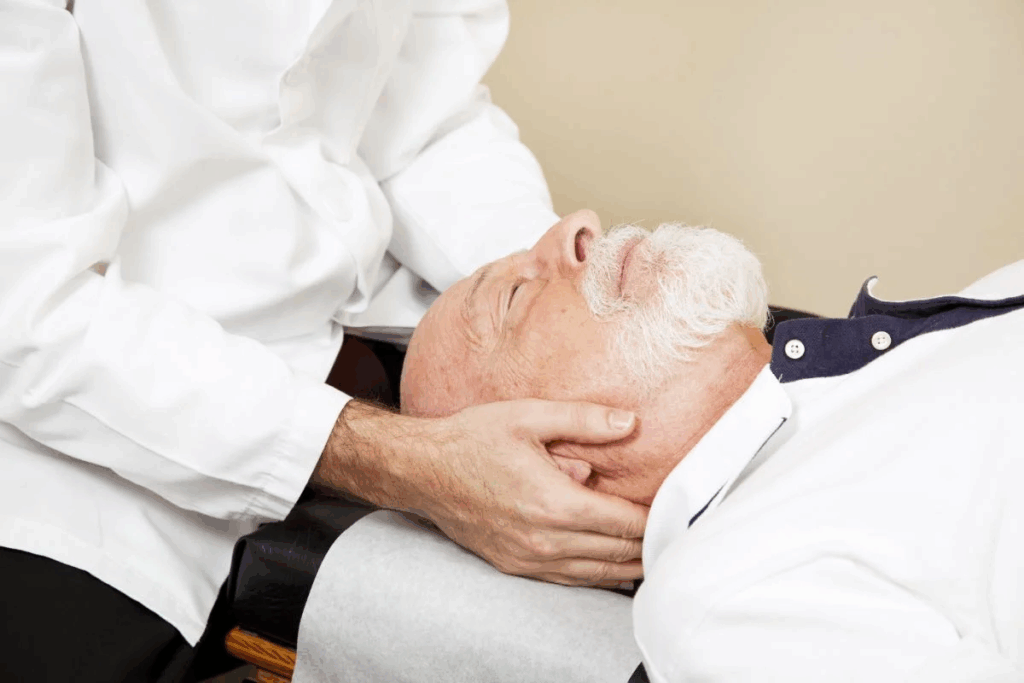
Knowing how to identify cranial nerve functions is key for good patient care. These nerves come straight from the brain and control things like sight, smell, hearing, and facial movements. It’s vital to understand them for diagnosing and treating neurological issues.
Role in Neurological Assessment
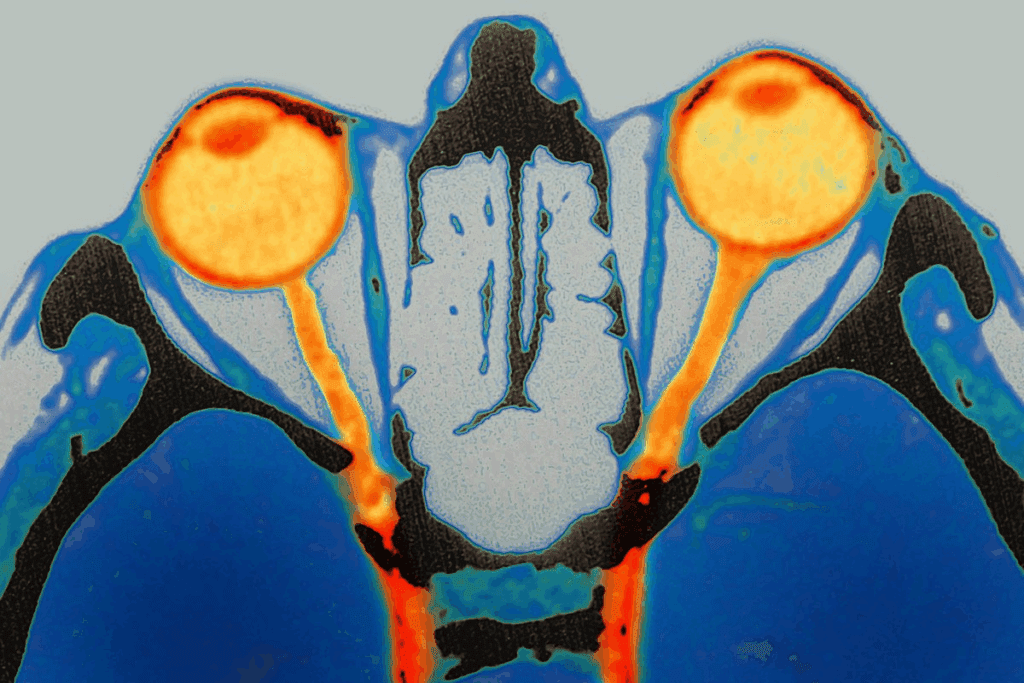
Cranial nerves are essential in checking the nervous system. Testing these nerves can show a lot about the nervous system’s health. For example, checking the olfactory nerve (I) can help find problems with smell. Looking at the optic nerve (II) can tell us about vision and vision problems.
Healthcare professionals test cranial nerve functions during exams. They check:
- Sensory functions, like vision and hearing
- Motor functions, like facial and eye movements
- Autonomic functions, like how the pupils react
Clinical Significance in Medical Practice
The role of cranial nerves in medicine is huge. Problems with these nerves can cause many symptoms, from facial paralysis to visual disturbances. Knowing the order and function of cranial nerves is key for diagnosing and treating neurological issues.
Using mnemonics, like the “cranial nerves acronym dirty,” can help remember the order of the 12 cranial nerves. This is very helpful in urgent situations where quick memory is needed.
By learning about cranial nerves, healthcare workers can do better neurological exams. This leads to better patient care.
Understanding the 12 Cranial Nerves
Knowing the 12 cranial nerves is key for doctors. These nerves come straight from the brain and control important body functions. It’s important to learn about their origins, functions, and how they’re organized.
Origin and Basic Functions
The 12 cranial nerves start from different brain parts, mainly the brainstem. They are named with Roman numerals (I-XII) from head to tail. Each nerve has its own job, like sensing or moving muscles.
The olfactory nerve (I) deals with smells. The oculomotor nerve (III) helps move the eyes. Knowing these roles helps doctors diagnose and treat brain issues.
Anatomical Organization
The 12 cranial nerves are organized by where they start and what they do. Some are just for sensing (like smell), others for moving muscles, and some do both.
Cranial Nerve | Primary Function | Origin |
Olfactory (I) | Sensory | Telencephalon |
Optic (II) | Sensory | Diencephalon |
Oculomotor (III) | Motor | Midbrain |
Trochlear (IV) | Motor | Midbrain |
Sensory vs. Motor Functions
Cranial nerves are divided into sensory, motor, or mixed types. Sensory nerves send out information, like what we see or smell. Motor nerves make muscles move. Mixed nerves do both.
Knowing the difference is key for doctors to diagnose and treat. Damage to sensory nerves can cause loss of feeling. Damage to motor nerves can lead to muscle weakness or paralysis.
Using mnemonics can help remember the 12 cranial nerves. “Dirty” mnemonics, being unusual or funny, are great for remembering. A memorable and a bit cheeky mnemonic can help students learn the nerves in order.
Why Mnemonics Are Effective for Medical Memorization
Mnemonics are key for medical students to remember complex stuff like cranial nerves. They’re not just helpful; they’re backed by science. Studies show they boost memory and recall.
We’ll dive into the science behind mnemonics, look at research, and see why students love them.
Cognitive Science Behind Memory Techniques
Mnemonics use our brain’s way of storing info. They link new stuff to familiar things, like words or images. This makes memories stick better.
They tap into our brain’s love for patterns and connections. For example, a mnemonic for remembering cranial nerves might be a sentence where each word starts with a nerve’s first letter.
Research on Mnemonic Effectiveness
Many studies prove mnemonics work in medical school. They help students remember complex info, like cranial nerves. Mnemonics make learning easier by reducing stress.
They work best when they’re personal or fun. That’s why “dirty” mnemonics, being unusual or funny, are favorites among students.
Why Medical Students Rely on Memory Aids
Medical students have a lot to learn, from anatomy to physiology. Mnemonics help them organize and remember this info better.
With cranial nerve mnemonics, students can easily recall the 12 nerves and their roles. This is vital for medical practice. Mnemonics are a must for students facing tough medical school.
In short, mnemonics are a game-changer in medical education. They’re supported by science and make complex info easy to remember. They’re a must-have for medical students.
Classic Mnemonics for Cranial Nerve Order
Learning the order of cranial nerves is key for medical students. Classic mnemonics have helped for years. They make it easier to remember the 12 cranial nerves in the right order.
“Oh Oh Oh To Touch And Feel Very Good Velvet Such Heaven”
A famous mnemonic is: “Oh Oh Oh To Touch And Feel Very Good Velvet Such Heaven.” It spells out the first letter of each nerve: Olfactory, Optic, Oculomotor, Trochlear, Trigeminal, Abducens, Facial, Vestibulocochlear, Glossopharyngeal, Vagus, Spinal Accessory, Hypoglossal.
To enhance this mnemonic, we can link each word to its nerve. For example, “Oh” is for the Olfactory nerve, which handles our smell.
“Ooh Ooh Ooh To Touch And Feel Very Good Velvet So Heavenly”
A slight change is: “Ooh Ooh Ooh To Touch And Feel Very Good Velvet So Heavenly.” It’s similar but uses “So” and adds “ly” to “Heavenly.” Both are good, and students can pick the one they like better.
Mnemonics like these can really help students remember the cranial nerves. The goal is to make a sentence that’s easy to remember and links well to the information.
Other Traditional Mnemonic Variations
Many other mnemonics exist to aid in remembering the cranial nerves. Some examples are:
- “On Old Olympus’ Towering Top, A Finn And German Viewed Some Hops”
- “Only One Of Those Tiny Trophies Arrives Freshly, Vending Good Vegetables, Salads, Hamburgers”
These mnemonics differ in words but aim to help students remember the nerves in order. By mixing these and practicing, students can confidently learn the cranial nerves.
Dirty Mnemonics: Why They Work Better
Dirty mnemonics are surprisingly good for memorizing cranial nerves. Medical students often find it hard to remember the 12 cranial nerves in order. But, using funny or unexpected mnemonics can really help.
Dirty mnemonics work well because they create strong emotional connections. They use unexpected or risqué elements to grab your attention and help you remember better.
The Psychology of Memorable Obscenity
Dirty mnemonics use the brain’s memory tricks. Studies show that emotional info sticks better in our memory. This is because our brain treats emotional experiences as more important.
The shock or humor in ‘dirty’ mnemonics makes them unforgettable. For example, a mnemonic that’s a bit risqué or surprising will stay in your mind longer than a plain one.
Popular Dirty Mnemonics for Cranial Nerves
Many ‘dirty’ mnemonics are popular among medical students. Here are a few:
Mnemonic | Expansion |
“On Old Olympus’ Towering Top, A Finn And German Viewed Some Hops” | Olfactory, Optic, Oculomotor, Trochlear, Trigeminal, Abducens, Facial, Vestibulocochlear, Glossopharyngeal, Vagus, Spinal Accessory, Hypoglossal |
“Our Of Of Oliver’s Tighty Whites, A Fat Vampire Goes Hunting” | Same as above, a variation |
Creating Emotional Connections for Better Recall
To make a ‘dirty’ mnemonic, create a sentence or phrase that’s memorable and linked to the info you want to remember. It should be personal or shocking enough to stay in your memory.
The process involves several steps:
- Identify the first letter of each cranial nerve in order.
- Create a sentence or phrase where each word corresponds to these letters.
- Make sure the sentence is memorable, either by making it funny, personal, or unexpected.
By following these steps and making a ‘dirty’ mnemonic that works for you, you can greatly improve your recall of cranial nerves and their functions.
How to Remember Cranial Nerves in Order Using Dirty Mnemonics
Dirty mnemonics are a fun way to learn the 12 cranial nerves. They use humor or shock to make learning stick. This makes studying more enjoyable and effective.
Step-by-Step Memorization Technique
To use dirty mnemonics, start with a sentence that matches the first letter of each nerve. For example, “On Old Olympus’ Towering Top, A Finn And German Viewed Some Hops” is a classic. You can make it “dirty” by adding humor, like “Oh Oh Oh, To Touch And Feel Very Good Velvet, So Heavenly.”
Step 1: List the first letter of each nerve: O, O, O, T, T, A, F, V, G, V, S, H.
Step 2: Make a sentence or story with these letters. Add something memorable or funny.
Step 3: Repeat the mnemonic often to remember it.
Creating Your Own Personalized Dirty Mnemonic
Making your own mnemonic can be even better. Think of a joke or event that’s meaningful to you. Adapt it to fit the first letter of each nerve.
Tips for creating your own mnemonic:
- Choose words that are funny or meaningful to you.
- Use visuals that are easy to remember.
- Keep it short but memorable.
Practice Exercises for Reinforcement
Practice reciting the nerves in order with your mnemonic. Try to remember them without looking. You can also test yourself by covering the names and naming them in order.
Practice Exercise: Write down the nerves in order from memory. Then, check if you got them right. Do this several times until you’re sure.
By following these steps and practicing, you can use dirty mnemonics to remember the cranial nerves. This makes studying more fun and productive.
Remembering Cranial Nerve Functions
To diagnose and treat neurological conditions, knowing cranial nerve functions is key. These nerves control vital functions like sensing and moving. It’s important for students and professionals to understand these roles.
“Some Say My Mother Bought My Brother Some Bad Beer My My”
The mnemonic “Some Say My Mother Bought My Brother Some Bad Beer My My” helps remember the 12 cranial nerves. Each word starts with a nerve’s first letter. It also tells if it’s sensory (S), motor (M), or both (B). Let’s look at it:
Cranial Nerve | Function | Mnemonic Word |
I. Olfactory | Sensory | Some |
II. Optic | Sensory | Say |
III. Oculomotor | Motor | My |
IV. Trochlear | Motor | Mother |
V. Trigeminal | Both | Bought |
VI. Abducens | Motor | My |
VII. Facial | Both | Brother |
VIII. Vestibulocochlear | Sensory | Some |
IX. Glossopharyngeal | Both | Bad |
X. Vagus | Both | Beer |
XI. Accessory | Motor | My |
XII. Hypoglossal | Motor | My |
Dirty Alternatives for Function Memorization
Dirty mnemonics can be more memorable than traditional ones. A dirty mnemonic links to the first letter of each nerve and its function. A funny or vivid sentence can help remember the sequence and functions of cranial nerves.
Connecting Function to Nerve Location
Knowing where each cranial nerve is located helps remember its function. Visualizing the nerve’s path aids in recalling its role. For example, the trigeminal nerve (V) is in the face and has sensory and motor functions.
Using mnemonics with anatomical knowledge improves memory and understanding. This method is key for neurological assessment and diagnosis.
Detailed Breakdown of Each Cranial Nerve
Learning about the 12 cranial nerves is key for medical students. They help us understand how our body works. We’ll look at each nerve, making it easier to remember.
Nerves I-III: Olfactory, Optic, Oculomotor
The first three nerves handle our basic senses. The Olfactory Nerve (I) deals with smell. Damage here can cause a loss of smell.
The Optic Nerve (II) sends visual info to the brain. The Oculomotor Nerve (III) controls eye movements and keeps the eyelid open.
Using mnemonics can help remember these nerves. For example, “On Old Olympus’ Towering Top, A Finn And German Viewed Some Hops” helps recall the order.
Nerves IV-VI: Trochlear, Trigeminal, Abducens
The next three nerves are important for eye movement and facial sensation. The Trochlear Nerve (IV) controls the superior oblique muscle, helping the eye move.
The Trigeminal Nerve (V) handles face sensation and chewing muscles. The Abducens Nerve (VI) moves the eye outward.
These nerves are often grouped together. Mnemonics like “Ooh Ooh Ooh To Touch And Feel Very Good Velvet So Heavenly” can help remember them.
Nerves VII-IX: Facial, Vestibulocochlear, Glossopharyngeal
The seventh to ninth nerves control facial expressions, hearing, and swallowing. The Facial Nerve (VII) manages facial muscles and taste. The Vestibulocochlear Nerve (VIII) handles sound and balance. The Glossopharyngeal Nerve (IX) senses the tongue’s back part and aids in swallowing.
These nerves are vital for visible and invisible functions. Mnemonics can make remembering their functions easier.
Nerves X-XII: Vagus, Accessory, Hypoglossal
The last three nerves are key for swallowing, speaking, and tongue movement. The Vagus Nerve (X) controls many organs and is vital for the nervous system. The Accessory Nerve (XI) moves the head and shoulder. The Hypoglossal Nerve (XII) controls the tongue, important for speech and swallowing.
Using mnemonics like “Some Say My Mother Bought My Brother Some Bad Beer My My” can help remember these nerves.
Common Mistakes and Misconceptions
Learning about cranial nerves can be tricky. It’s easy to mix up similar-sounding nerves or get their functions wrong. Understanding these challenges is key to mastering neurological assessment.
Frequently Confused Nerves
One big challenge is telling apart nerves with similar names or roles. For example, the trigeminal nerve (V) and the trochlear nerve (IV) are often mixed up. Using mnemonics can help keep them straight.
Some common mix-ups include:
- Getting the oculomotor (III), trochlear (IV), and abducens (VI) nerves mixed up because of their eye movement roles.
- Confusing the glossopharyngeal (IX) and vagus (X) nerves, as both play roles in swallowing and have complex functions.
Function Attribution Errors
Another mistake is getting the functions of cranial nerves wrong. For instance, it can be hard to remember that the olfactory nerve (I) handles smell, while the optic nerve (II) deals with vision. Mnemonics can help avoid these errors.
Some common function mix-ups to watch out for include:
- Thinking the facial nerve (VII) only controls facial expressions, when it also handles taste.
- Forgetting that the vagus nerve (X) affects heart rate and digestion, among other things.
Overcoming Learning Challenges
To beat these challenges, try using mnemonics, repetition, and active recall. Personalized mnemonics, like “dirty” ones, can be very helpful. Also, testing your knowledge and using active recall can improve your understanding and retention.
Some ways to overcome learning hurdles include:
- Creating concept maps or diagrams to see how different cranial nerves relate.
- Using flashcards to test your knowledge of cranial nerve names and functions.
- Practicing with clinical scenarios to apply your knowledge in real-life situations.
Testing Your Knowledge: Practical Applications
Now that we’ve looked at mnemonics for cranial nerves, it’s time to test your knowledge. Practicing with real-world scenarios helps solidify your understanding. It also prepares you for clinical applications.
Self-Assessment Techniques
Self-assessment is a great way to strengthen your knowledge of cranial nerves. Create flashcards with the nerve name on one side and its function and mnemonic on the other. Quiz yourself by covering the answer side and trying to recall the information.
Another good method is to take online quizzes or tests on cranial nerves. Many medical education websites have interactive quizzes. These can help you see where you need more practice.
Clinical Scenarios for Practice
Using your knowledge in clinical scenarios is a great way to deepen your understanding. For example, consider a patient with trouble swallowing (dysphagia). Which cranial nerves might be involved? Think about the nerves that control swallowing muscles.
Practice by making your own clinical scenarios or using case studies from medical textbooks. Try to figure out which cranial nerves are relevant to each scenario. Also, think about how you would assess them.
Integrating Knowledge into Patient Examinations
When examining patients, it’s key to systematically check the cranial nerves. Start with the olfactory nerve (I) and go down to the hypoglossal nerve (XII). Use a structured approach, like the “CN Exam Template”:
- Inspect for abnormalities
- Test each nerve’s function
- Record your findings
As
“The art of medicine is long, but life is short.”
– Hippocrates. Learning to integrate your knowledge of cranial nerves into patient exams takes time. It requires practice and dedication.
By regularly practicing self-assessment and applying your knowledge to clinical scenarios, you’ll get better at remembering and understanding cranial nerves. This skill will help you in your medical career. It will enable you to provide top-notch care to your patients.
Conclusion
We’ve looked into why knowing the 12 cranial nerves is key. We also saw how mnemonic devices help in remembering them. Mnemonics, like “dirty” ones, make it easier for students to recall the nerves’ order and roles.
A well-known mnemonic for this is “dirty.” It helps students remember the nerves better. By making these aids emotional, they stick in your mind longer.
Mastering cranial nerves is vital for neurological exams and clinical work. We suggest practicing with the methods we’ve shared. This will help you do well in your medical studies.
A mnemonic for cranial nerves is a great tool for students. It makes hard info easy to remember, even when you’re under stress.
FAQ
What is a mnemonic device, and how can it help me remember the 12 cranial nerves?
A mnemonic device helps you remember new information by linking it to something familiar. For the 12 cranial nerves, mnemonics can be very helpful. They create a sentence or phrase where each word starts with the first letter of each nerve.
What are some common mnemonics used to remember the order of the 12 cranial nerves?
Common mnemonics include “Oh Oh Oh To Touch And Feel Very Good Velvet Such Heaven” and “On Old Olympus’ Towering Top, A Finn And German Viewed Some Hops.” These sentences are easy to remember. Each word in the sentence matches the first letter of each cranial nerve.
What are “dirty” mnemonics, and why are they effective?
“Dirty” mnemonics use humor or memorable content to help you remember. They work because they create a strong emotional connection. This makes the information stick in your memory better.
Can I create my own mnemonic device for remembering cranial nerves?
Yes, making your own mnemonic can be a great way to remember the cranial nerves. Choose a sentence or phrase that means something to you. This will help you remember the nerves better.
How do I remember the functions of the cranial nerves?
To remember the functions, use mnemonics like “Some Say My Mother Bought My Brother Some Bad Beer My My.” This sentence matches the nerves’ functions (Sensory, Motor, or Both). Knowing where each nerve starts and how it’s organized also helps.
What are some common mistakes when learning cranial nerves?
Common mistakes include getting the nerves mixed up, assigning wrong functions, and forgetting the order. Using mnemonics and testing yourself can help avoid these mistakes.
How can I test my knowledge of cranial nerves?
Test your knowledge by quizzing yourself on the names and functions of the nerves. Practice with clinical scenarios and use your knowledge in patient exams.
Why is it important to master the 12 cranial nerves in medical practice?
Mastering the 12 cranial nerves is key for neurological exams and understanding nerve damage. Knowing the nerves well helps you provide better patient care.
References
National Center for Biotechnology Information. Evidence-Based Medical Guidance. Retrieved from https://www.ncbi.nlm.nih.gov/books/NBK470223/