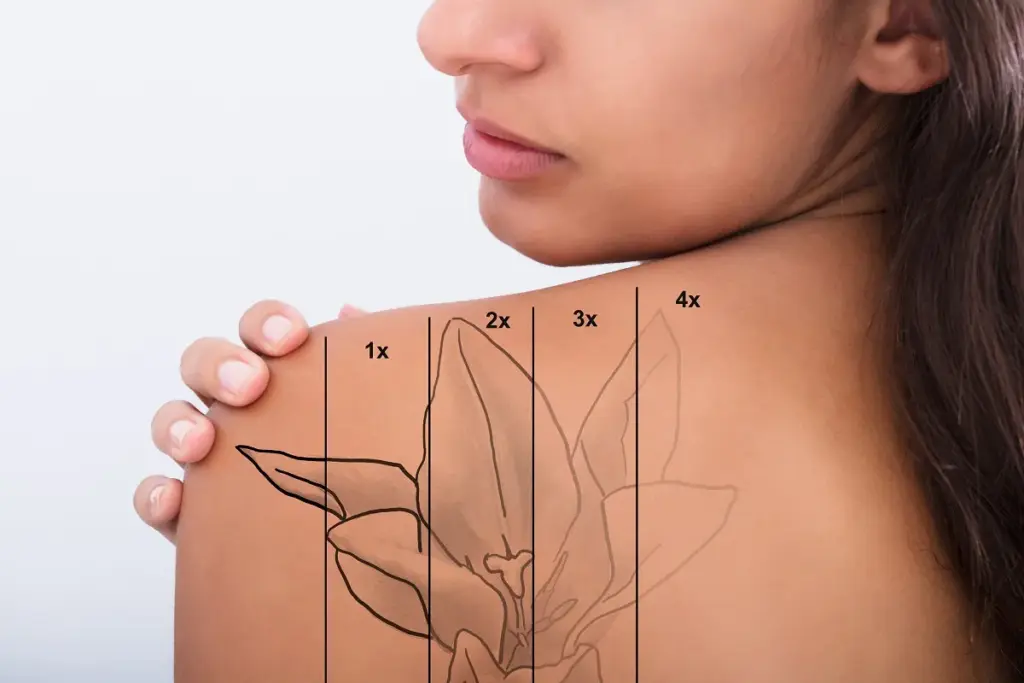
Removing colorful tattoos is tough because of the many ink colors used. Unlike black tattoos, which need just one laser, colorful ones need several lasers and more treatments.
New laser tech has made color tattoo removal more advanced. People remove tattoos for many reasons, like changing tastes or life events.
At Liv Hospital, we use the latest methods for tattoo removal. Our guide helps those wanting to get rid of colorful tattoos. It talks about how many treatments you might need for complete removal.
Key Takeaways
- Multiple laser treatments are typically required for complete color tattoo removal.
- Advanced laser technology has improved the effectiveness of color tattoo removal.
- Understanding the specific techniques and expected outcomes is key for making informed choices.
- Liv Hospital uses top-notch laser tech for the best results.
- Custom treatment plans are vital for removing vibrant, full-color tattoos.
Understanding Color Tattoo Removal Technology
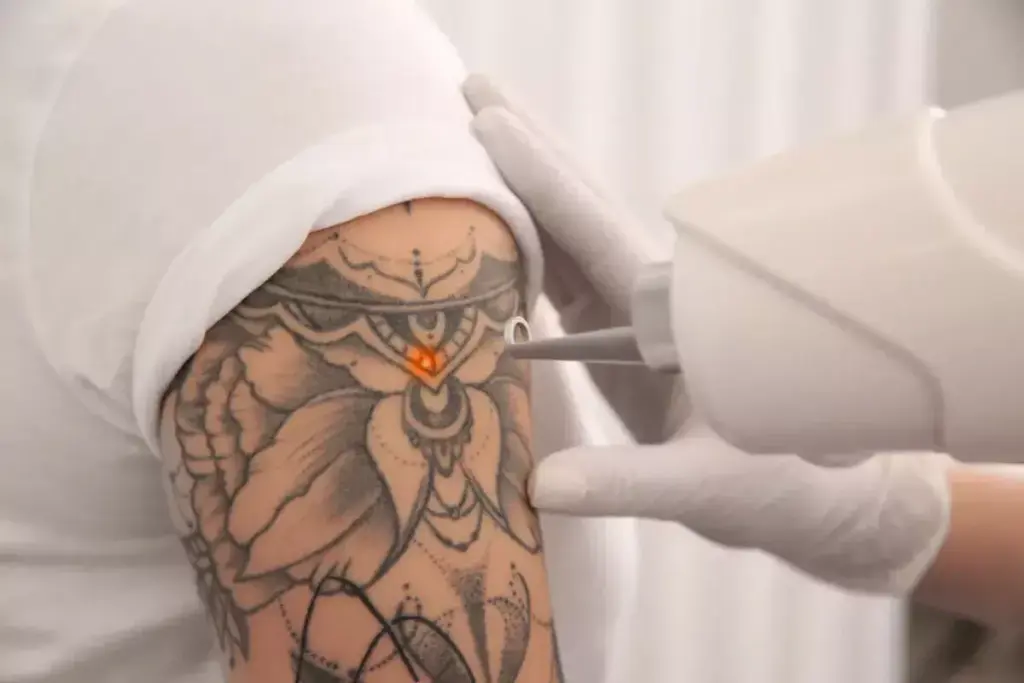
The tech behind removing tattoos has really improved, making treatments better. We’ve seen big steps forward in laser tech, which is key for removing tattoos.
Evolution of Laser Technology for Tattoo Removal
Laser tech has changed a lot over time. At first, lasers could only target a few tattoo colors. But now, modern lasers are much better, helping to remove colorful tattoos more effectively. This is thanks to lasers that can send out different kinds of light.
Lasers send out light that different colors absorb. For example, black ink absorbs all kinds of light, making it easy to remove. But colors like green and blue need special lasers that can hit their specific light absorption points.
How Lasers Target Different Pigments
Lasers work by sending out light that tattoo colors absorb. This light breaks down the color into tiny bits that the body then gets rid of. The trick to removing colors well is to match the laser light to the color. For instance, red and pink colors do best with lasers that send out 532 nm light.
- Black and dark pigments: 1064 nm wavelength
- Red and pink pigments: 532 nm wavelength
- Green and blue pigments: 755 nm Alexandrite lasers
Picosecond vs. Nanosecond Q-Switched Lasers
The debate between picosecond and nanosecond lasers has been going on. Picosecond lasers are better at removing colors like blue, green, and yellow because of their very short pulses. This tech makes the ink break down into tiny bits that the body can easily clear out.
On the other hand, nanosecond lasers have worked well but might need more treatments to get the same results as picosecond lasers for some colors. The choice between these lasers depends on the tattoo and the patient’s skin.
Color Tattoo Removal: Effectiveness by Pigment Type
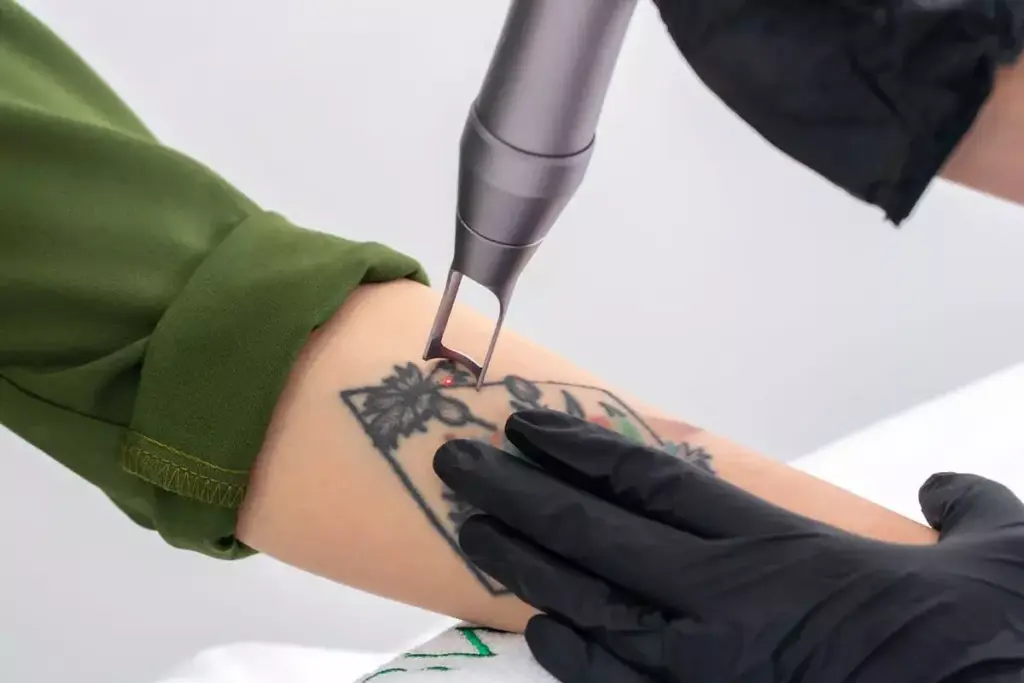
Knowing how different pigments react to lasers is key for removing tattoos. The success of tattoo removal depends on the pigment and the laser used. We’ll look at how each pigment type responds to laser treatments, focusing on the wavelengths that target specific colors.
Black and Dark Pigments
Black tattoos are easy to remove with 1064 nm wavelengths. This wavelength goes deep into the skin, breaking down the pigment well. After several treatments, black tattoos become much less visible.
Red and Pink Pigments
Red and pink tattoos are best removed with 532 nm wavelengths. The 532nm wavelength absorbs well by red ink, leading to its effective removal. For more on ink color and laser tattoo removal, check Kay Dermatology’s guide.
Green and Blue Pigments
Green and blue inks need specific wavelengths, like 755nm (Alexandrite) or 694nm (Ruby), for effective removal. The 755nm Alexandrite laser is great for green and blue, targeting them well.
Yellow and Orange Pigments
Yellow and orange are the hardest colors to remove. They often need special lasers and may not respond well to treatment, making them tough to get rid of.
Here’s a table showing how different wavelengths work on various pigments:
| Pigment Color | Effective Wavelength | Laser Type |
| Black/Dark | 1064 nm | Q-Switched Nd:YAG |
| Red/Pink | 532 nm | Q-Switched Nd:YAG |
| Green/Blue | 755 nm | Alexandrite |
| Yellow/Orange | Variable, often challenging | Specialized Lasers |
By knowing the wavelengths needed for each pigment, we can make laser tattoo removal more effective. While some colors are easier to remove, new laser tech is making tattoo removal better for all colors.
Conclusion: What to Expect During Your Color Tattoo Removal Journey
Removing a color tattoo is complex, and knowing what to expect is key. The number of treatments needed depends on the tattoo’s age, ink color, and your skin type. Usually, most tattoos require 5 to 10 sessions for the best results.
Black and dark pigments are often the easiest to remove, thanks to 1064 nm wavelengths. But, yellow and orange pigments are harder to remove and need special lasers. Old color tattoos are tougher to remove because the ink is deeper and may have faded over time.
We will closely work with you to find the best treatment plan. With the right tattoo ink, we can get great results. On average, 7-10 treatments are needed, but it can vary based on individual factors.
Knowing what to expect helps you prepare for your tattoo removal journey. We’re dedicated to top-notch healthcare and support. We aim to give you the best care during your treatment.
FAQ
What is the most effective laser technology for color tattoo removal?
We use picosecond lasers, which are a big leap in tattoo removal. These lasers send out super short pulses. This creates a strong effect that breaks the ink into tiny bits. The body then gets rid of these bits naturally.
How many treatments are required to remove a color tattoo?
The number of treatments needed depends on several factors. These include the tattoo’s color, size, and your skin type. On average, it takes several treatments, spaced weeks apart, to get the best results.
Which tattoo colors are the most challenging to remove?
Yellow and orange are the toughest to remove. They need specific wavelengths that not all lasers have. Our advanced lasers are designed to tackle these hard colors.
Can all colors be removed with laser tattoo removal?
Most colors can be removed, but some are harder than others. Black, red, and green usually respond well. Yellow and orange might need more treatments.
How do lasers target different pigments in color tattoos?
Lasers use specific wavelengths to match the colors in the tattoo. For example, 1064 nm wavelengths work on black and dark colors. 532 nm wavelengths are for red and pink.
Is color tattoo removal painful?
We know pain is a worry. Some might feel a bit of discomfort during treatment. But we do our best to make it as comfortable as possible.
How long does it take to see results from color tattoo removal?
You might see results right after the first treatment. But the best results usually come after several sessions, spaced weeks apart.
Are there any side effects associated with color tattoo removal?
Like any treatment, there can be side effects. These might include temporary redness, swelling, or changes in skin color. We work hard to minimize these risks and ensure a safe treatment.
Can I remove an old color tattoo?
Yes, we can remove old color tattoos. The success of the treatment depends on the tattoo’s age, the pigment used, and your skin type.
What is the difference between picosecond and nanosecond Q-switched lasers?
Picosecond lasers send out very short pulses to break the ink into tiny particles. Nanosecond Q-switched lasers use longer pulses. Picosecond lasers are generally better at removing tattoos.
Reference
National Center for Biotechnology Information. Evidence-Based Medical Guidance. Retrieved from https://pmc.ncbi.nlm.nih.gov/articles/PMC2884836/