

The anterior cruciate ligament (ACL) is a key part of the knee. It helps keep the knee stable during sports and physical activities. ACL injuries can be very serious, but the right exercises can help prevent them by up to 60%. Knowing how to strengthen your ACL and prevent injuries is important for anyone who wants to keep their knees safe.
We will look at why ACL injury prevention exercises are so important. We’ll also see how you can add them to your workout routine. This will help make your knees stronger and improve your athletic skills.
Key Takeaways
- Structured exercise programs can significantly reduce ACL injury risk.
- ACL strengthening exercises are key for knee stability.
- Prevention strategies boost athletic performance.
- Understanding ACL injuries is vital for prevention.
- Adding ACL injury prevention exercises to your routine can improve knee health.
Understanding ACL Injuries and Their Impact
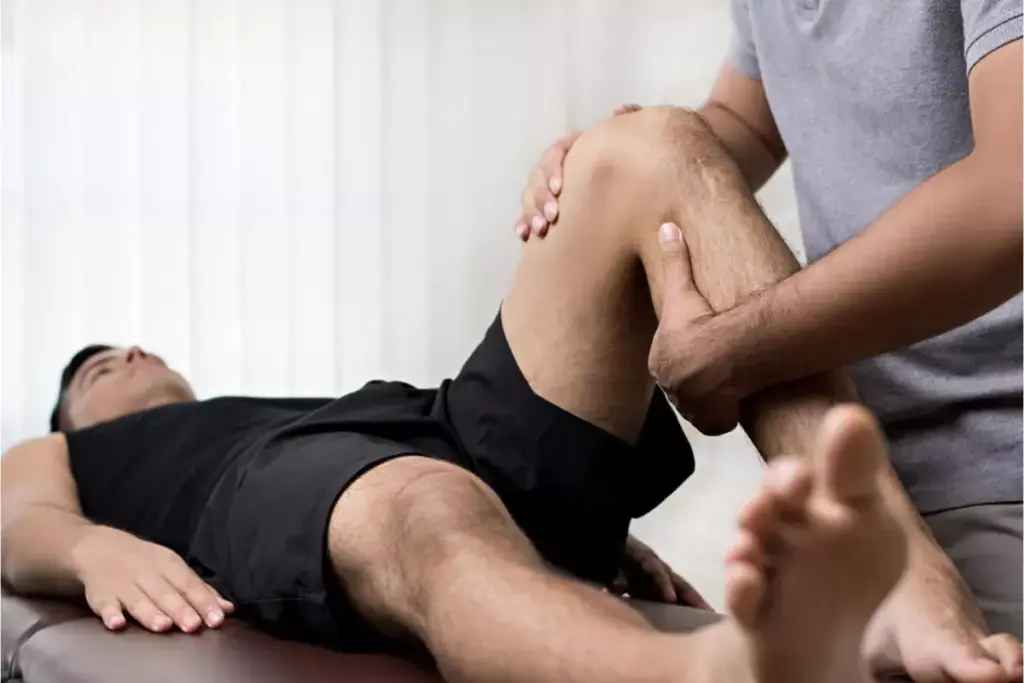
The anterior cruciate ligament (ACL) is key to knee stability. Injuries to it can be very limiting. It’s important for keeping the knee stable, mainly when moving in certain ways.
What is the ACL and Its Function in Knee Stability
The ACL is a major ligament that keeps the knee stable. It stops the tibia from moving too far forward compared to the femur. It also controls rotational movements. ACL injuries can make the knee unstable and may lead to more damage if not treated.
Knowing how the ACL works is key to understanding ACL injuries. Its role in knee stability is critical for anyone who is active.
Risk Factors and Common Injury Mechanisms
Several factors can increase the chance of an ACL injury. These include:
- Previous ACL injuries
- Muscle imbalances
- Certain biomechanical factors
- Poor training techniques
- Inadequate equipment or footwear
ACL injuries often happen during sudden stops, changes in direction, or direct contact. Knowing these causes helps in preventing them.
| Risk Factor | Description | Prevention Strategy |
| Previous ACL Injuries | History of ACL injury increases the risk of re-injury | Rehabilitation and strengthening exercises |
| Muscle Imbalances | Weakness or imbalances in leg muscles | Strengthening and conditioning programs |
| Biomechanical Factors | Abnormal movement patterns | Training to improve movement techniques |
Understanding the ACL’s role and the factors that lead to injuries helps in creating prevention programs. This can lower the number of ACL injuries.
How to Strengthen ACL Injury Prevention Through Exercise
Preventing ACL injuries starts with a good exercise plan. This plan should strengthen the knee and its muscles. It’s key for athletes and anyone who plays sports that involve quick stops or changes in direction.
Strength Training Fundamentals
Strengthening the knee muscles is key to preventing ACL injuries. Squats, lunges, and leg presses are great for the quadriceps, hamstrings, and glutes. It’s important to do these exercises right to get the most benefit and avoid injury.
Begin with lighter weights and slowly add more as you get stronger. Don’t forget to work on your hamstrings too. They help keep the knee stable and prevent ACL injuries.
Plyometric Training Progressions
Plyometric training, like explosive jumping, is also important. It boosts explosive power and helps keep the knee stable. But, start slow and gradually get more challenging to avoid knee stress.
Try box jumps, depth jumps, and single-leg hops. Start with lower heights and distances and increase them as you get better.
Balance and Proprioception Training
Balance and proprioception training are also essential. They improve knee stability and help us sense our knee’s position and movement. Try single-leg squats, balance boards, and stability balls.
Adding these exercises to your routine can greatly lower ACL injury risk. Make sure to do them often and challenge yourself to get the best results.
Evidence-Based Prevention Programs and Implementation
By using evidence-based prevention programs, athletes and coaches can lower ACL injury risks. These programs aim to boost knee stability and neuromuscular control. They also aim to reduce ACL injury risk factors.
Multicomponent Training Protocols
Multicomponent training combines strength, plyometrics, and balance exercises. It’s proven to prevent ACL injuries. These programs strengthen the lower limbs and improve neuromuscular control.
A study in the Journal of Orthopaedic & Sports Physical Therapy showed a 45% drop in ACL injuries in female athletes. The program included squats, lunges, and balance exercises. It was done 2-3 times a week.
Specific Considerations for Female Athletes
Female athletes face a higher risk of ACL injuries. Hormonal influences, anatomical differences, and neuromuscular control play a role. Prevention programs for them should address these factors.
A study in the Journal of Science and Medicine in Sport found a 75% drop in ACL injuries in female athletes. They did a neuromuscular training program.
Optimal Training Frequency and Programming
The best training frequency and programming vary by population and goals. But, research shows programs should be done 2-3 times a week. They should last at least 6-8 weeks.
| Training Frequency | Program Duration | Injury Reduction |
| 2-3 times/week | 6-8 weeks | 45% |
| 3-4 times/week | 12-16 weeks | 60% |
| 4-5 times/week | 20-24 weeks | 75% |
In conclusion, evidence-based prevention programs are key. They use multicomponent training, focus on female athletes, and have the right training frequency. These programs can greatly reduce ACL injury risks.
Conclusion
To lower the risk of ACL injuries, it’s key to use a variety of strengthening methods. We’ve talked about how to mix strength training, plyometric exercises, balance, and proprioception. This mix is vital for keeping knees healthy.
A well-rounded training program is critical for preventing ACL injuries. By using these methods, people can make their knees stronger. This helps in avoiding ACL injuries.
It’s important for everyone to add these exercises to their workout plans. This will help protect their knees and strengthen ACLs. Doing so leads to a healthier, more active life.
FAQ
What is the ACL, and what role does it play in knee stability?
The ACL, or anterior cruciate ligament, is key for knee stability. It stops the tibia from moving too far forward compared to the femur. It also controls rotational movements.
How can I strengthen my ACL through exercise?
To strengthen your ACL, focus on exercises for the muscles around your knee. This includes the quadriceps, hamstrings, and calf muscles. Doing strength training, plyometric exercises, and balance training can improve knee stability and lower ACL injury risk.
Are there specific exercises that can help prevent ACL tears?
Yes, exercises that strengthen knee muscles and improve balance can prevent ACL tears. Try squats, lunges, leg press, and balance exercises on a BOSU ball or single-leg squats.
Why are female athletes at a higher risk of ACL injuries, and what can they do to prevent them?
Female athletes face a higher risk of ACL injuries due to neuromuscular control and biomechanics differences. To prevent ACL injuries, female athletes should do multicomponent training. This includes strength training, plyometric exercises, and balance training, focusing on proper technique and landing mechanics.
How often should I perform ACL injury prevention exercises, and what is the optimal programming?
The best frequency and programming for ACL prevention exercises depend on your training level and athletic demands. Aim to do these exercises 2-3 times a week. Focus on increasing the difficulty and changing the exercises to keep your training effective.
Can strengthening the ACL prevent injuries entirely?
Strengthening the ACL and surrounding muscles can greatly reduce ACL injury risk. But, it’s not a complete guarantee against injuries. A well-rounded approach that includes strength training, plyometric exercises, balance training, and proper technique can help minimize ACL injury risk.
What are some evidence-based prevention programs for ACL injuries?
Evidence-based prevention programs for ACL injuries include multicomponent training. This includes strength training, plyometric exercises, and balance training. Programs like the FIFA 11+ and other neuromuscular training have shown to be effective in reducing ACL injury risk.
How can I incorporate ACL injury prevention exercises into my existing training routine?
To add ACL prevention exercises to your routine, start by identifying exercises for the muscles around your knee. Include exercises for the quadriceps, hamstrings, and calf muscles. Gradually add these exercises 2-3 times a week. Focus on increasing the difficulty and changing the exercises to keep your training effective.
References
National Center for Biotechnology Information. Evidence-Based Medical Insight. Retrieved from https://pubmed.ncbi.nlm.nih.gov/26265778/



 Departments
 Related Videos
 Our Doctors
 News
News