

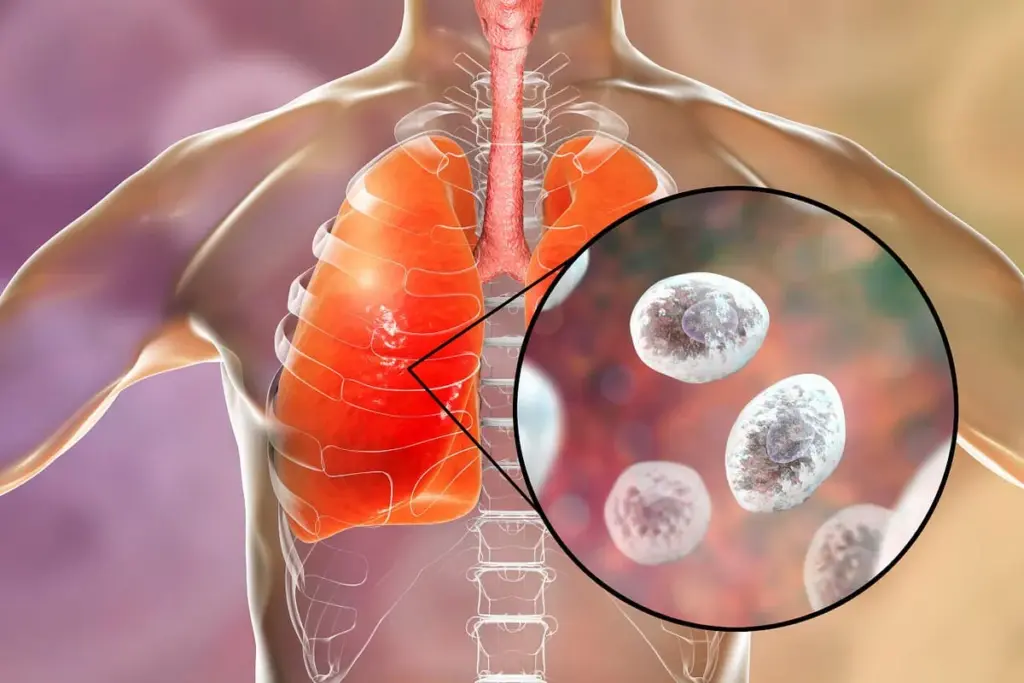
Hyperinflated lungs happen when lungs grow too big because of trapped air. This is often seen in people with Chronic Obstructive Pulmonary Disease (COPD). When airways get narrow or damaged, it’s hard to breathe out fully. This leads to trapped air and lungs that expand too much.
It’s important to know the causes and find the right lung hyperinflation treatment. Spotting the causes of hyperinflated lungs early can really help improve life quality for those affected.
Key Takeaways
- Hyperinflated lungs are a serious condition associated with COPD.
- Air trapping prevents full exhalation, causing lung expansion.
- Damaged or narrowed airways contribute to the development of hyperinflated lungs.
- Early recognition of causes improves treatment outcomes.
- Effective management of hyperinflated lungs enhances quality of life.
Understanding Hyperinflated Lungs
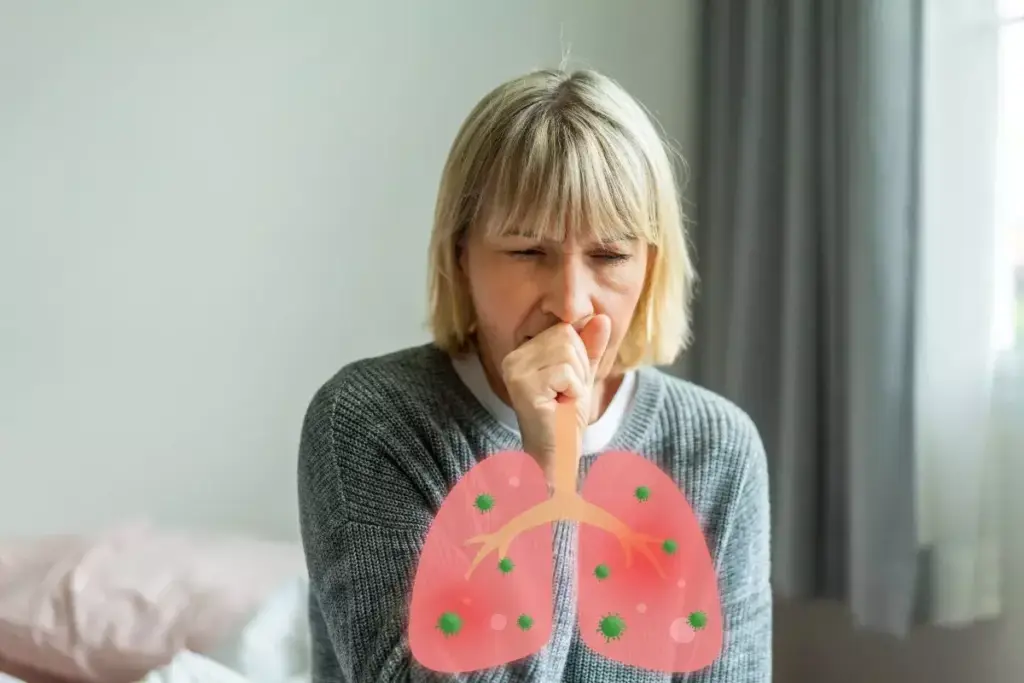
Hyperinflated lungs hold too much air, affecting life quality. This issue, or pulmonary hyperinflation, happens when air stays in the lungs after trying to breathe out.
What Is Pulmonary Hyperinflation?
Pulmonary hyperinflation makes it hard for lungs to deflate. Trapped air causes hyperinflated lungs symptoms like breathing trouble and pain. Knowing about this condition helps find the right treatment.
Types of Lung Hyperinflation
There are two main types: static and dynamic. Static hyperinflation happens when you’re not moving and air stays in the lungs. Dynamic hyperinflation occurs when you’re active and air gets trapped before you can fully breathe out. Knowing these types helps manage the condition better.
It’s important to tell static from dynamic hyperinflation for treatment. Both involve air trapping, but their causes and how they affect treatment are different.
| Type of Hyperinflation | Characteristics | Common Causes |
| Static Hyperinflation | Occurs at rest, air trapped during exhalation | Chronic respiratory diseases, anatomical issues |
| Dynamic Hyperinflation | Happens during physical activity, air trapped before complete exhalation | Exercise, exacerbation of respiratory conditions |
Understanding hyperinflated lungs, including static and dynamic types, is key for effective treatment. By knowing the specific type and cause, doctors can tailor treatments to help patients better.
Hyperinflated Lungs Symptoms
Hyperinflated lungs can cause many symptoms that make daily life hard. It’s important to know these symptoms to get the right medical help and keep lungs healthy.
Common Signs and Manifestations
The symptoms of hyperinflated lungs vary based on the cause. Common signs include shortness of breath, difficulty inhaling, chronic cough, wheezing, chest tightness, and fatigue. These symptoms can make simple tasks hard.
Medical Expert, a pulmonologist, says, “It’s key to spot hyperinflated lung symptoms early for good care and treatment.”
Complications of Untreated Hyperinflation
Untreated hyperinflated lungs can cause serious problems. These include respiratory failure, pulmonary hypertension, and heart issues. If symptoms don’t get better or get worse, see a doctor right away.
Knowing the symptoms and risks of hyperinflated lungs helps people take care of their lung health. Getting medical help early can improve life quality and prevent long-term harm.
Causes and Risk Factors
It’s important to know the causes of hyperinflated lungs to manage and treat them well. Hyperinflated lungs happen when air gets stuck, often because of long-term health issues.
Medical Conditions Leading to Hyperinflated Lungs
Many health problems can lead to hyperinflated lungs. Chronic obstructive pulmonary disease (COPD) is a big one. In COPD, air gets stuck because of inflammation and damage to lung tissue, making it hard to breathe out.
- Airway inflammation: Diseases like asthma cause airway swelling, narrowing the airways and trapping air.
- Weakened respiratory muscles: Breathing muscles can weaken, making it hard to push air out fully.
- Conditions preventing normal air expulsion: Some conditions stop the lungs from fully deflating, leading to hyperinflation.
Diagnosis and Assessment
Figuring out if someone has hyperinflated lungs involves both doctor’s checks and tests. Pulmonary function tests (PFTs) are key for checking how well the lungs work and spotting hyperinflation.
Here are some main ways to diagnose:
- Chest X-ray or CT scan: These images help see the lungs and check for hyperinflation.
- Pulmonary function tests (PFTs): Tests like spirometry measure lung function and capacity.
- Arterial blood gas analysis: This test checks oxygen and carbon dioxide levels in the blood.
Getting a correct diagnosis is key to creating a good treatment plan. By knowing the causes and how much the lungs are inflated, doctors can make plans to help patients get better.
Treatment Options and Management
Hyperinflated lungs treatment aims to ease symptoms and find the root cause. It often combines medical treatments, lifestyle changes, and pulmonary rehab.
Medical Treatments
Medical treatments for hyperinflated lungs aim to boost lung function and lessen symptoms. They include bronchodilators to open airways, corticosteroids to fight inflammation, and antibiotics for infections.
Oxygen therapy is used to boost blood oxygen, making breathing easier. For severe cases, lung volume reduction surgery or lung transplantation might be needed.
Pulmonary Rehabilitation
Pulmonary rehab is a detailed program for managing symptoms and improving life quality. It’s customized to fit each person’s needs, helping them do daily tasks better.
The program includes:
- Exercise to boost endurance and strength
- Breathing exercises to better lung function
- Education on symptom management and medication use
- Nutritional advice for a healthy weight
Can Hyperinflated Lungs Be Reversed?
Hyperinflated lungs can be managed and lung function improved with the right treatment and lifestyle changes. Quitting smoking, avoiding pollutants, and staying active are key.
In some cases, hyperinflated lungs can be reversed or significantly improved with the right care. But how much improvement depends on the cause and how severe it is.
Knowing the outlook and working with healthcare providers is vital. It helps people with hyperinflated lungs make informed choices about their care. This can potentially increase their life expectancy.
Conclusion
Understanding hyperinflated lungs is key to managing them well. When lungs expand too much, it can make breathing hard and lead to other issues. Early detection and proper care can greatly improve lung function and life quality.
Knowing the causes, signs, and treatments for inflated lungs is the first step to better lung health. Pulmonary rehab and making lifestyle changes are important. They help people breathe better and live more comfortably.
With the right steps, lung function can improve, and complications can be avoided. Taking charge of your lung health today can bring a sense of well-being. It empowers you to take control of your health and look forward to a brighter future.
FAQ:
What are hyperinflated lungs?
Hyperinflated lungs occur when air becomes trapped in the lungs, causing them to over-expand. This happens because the lungs cannot fully empty when a person breathes out, leading to an abnormal increase in lung volume.
What causes hyperinflated lungs?
The most common cause is Chronic Obstructive Pulmonary Disease (COPD), particularly emphysema, which destroys the elasticity of the air sacs. Other causes include severe asthma, cystic fibrosis, and obstructions in the airways.
Can hyperinflated lungs be reversed?
Structural damage to lung tissue, like that seen in emphysema, is generally permanent and cannot be reversed. However, hyperinflation caused by inflammation or asthma can often be significantly improved with proper treatment.
What are the symptoms of hyperinflated lungs?
Common symptoms include shortness of breath (especially during activity), a “barrel-chested” appearance, difficulty taking a deep breath, and decreased physical stamina.
How are hyperinflated lungs diagnosed?
Diagnosis is typically made using imaging tests like chest X-rays or CT scans, which show a flattened diaphragm and increased lung volume, along with pulmonary function tests (PFTs) to measure trapped air.
What is the life expectancy with hyperinflated lungs?
Life expectancy varies widely based on the underlying cause and how well it is managed. Many people live for decades with hyperinflation by following treatment plans, quitting smoking, and staying active.
What is the treatment for hyperinflated lungs?
Treatment focuses on opening the airways using bronchodilators, reducing inflammation with steroids, and using pulmonary rehabilitation. In severe cases, surgical options like lung volume reduction or endobronchial valves may be considered.
Can mild hyperinflation of lungs be treated?
Yes, mild hyperinflation is treated by addressing the primary cause, such as managing asthma or early-stage COPD, and using breathing exercises to improve the efficiency of the diaphragm.
References:
National Center for Biotechnology Information. Evidence-Based Medical Insight. Retrieved from https://pubmed.ncbi.nlm.nih.gov/9117010/
























