

Are you or your child feeling ear fullness, hearing loss, or balance issues? Otitis Media with Effusion (OME), also known as glue ear, affects up to 90% of kids before they start school. It also impacts adults more after they get respiratory infections.
This condition can really hurt your hearing and daily life. But, many people don’t know about the effective treatments. We’ll give you a detailed guide on treating OME, covering its definition, causes, symptoms, diagnosis, and treatment choices.
At Liv Hospital, we use proven methods to diagnose and treat OME. We aim to help you improve your life quality. Our mission is to provide top-notch information and support for those seeking healthcare worldwide.
Key Takeaways
- Understanding Otitis Media with Effusion (OME) and its impact on hearing and quality of life.
- Exploring the definition, causes, symptoms, diagnosis, and treatment options for OME.
- Discovering Liv Hospital’s evidence-based approach to diagnosing and managing OME.
- Learning about effective treatment options for OME.
- Regaining quality of life with proper management of OME.
Understanding Otitis Media with Effusion
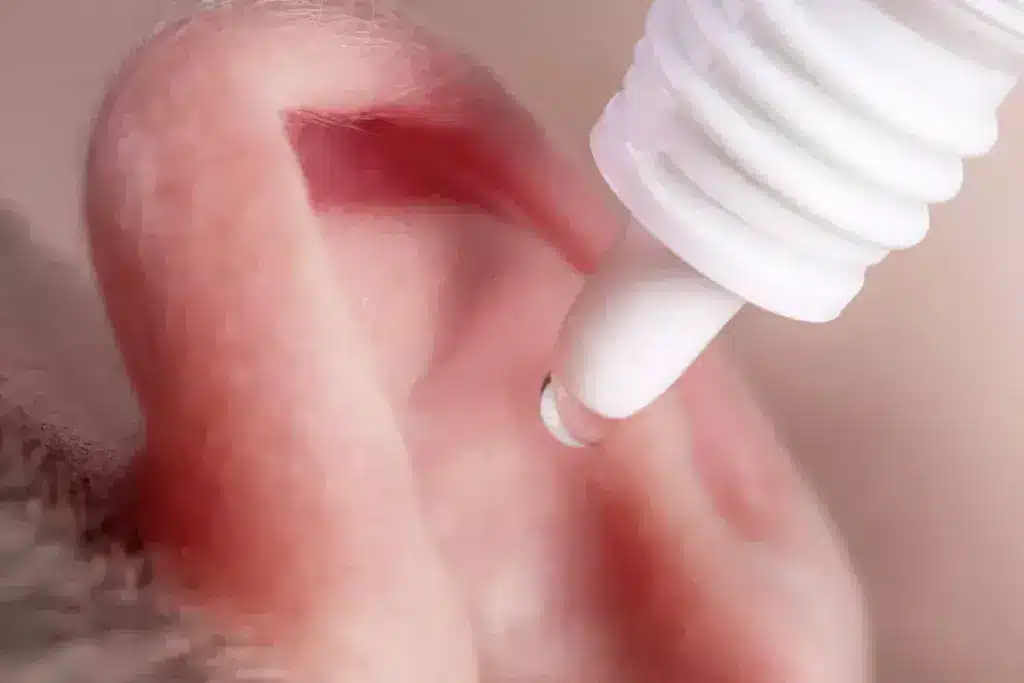
Otitis media with effusion (OME) is a condition that affects the middle ear. It causes fluid to build up behind the eardrum. This can hurt hearing and, in kids, might affect speech development.
Definition and Pathophysiology
Otitis media with effusion is when fluid builds up in the middle ear. This fluid is usually sterile, which sets it apart from other ear infections. The main cause is eustachian tube dysfunction, which stops the middle ear from getting air.
The fluid buildup is due to the middle ear’s negative pressure. This pressure comes from the eustachian tube not working right. It shows how important the eustachian tube function is for ear health.
| Characteristics | Description |
| Fluid Type | Serous, mucoid, or purulent |
| Eustachian Tube Function | Dysfunctional, leading to poor ventilation |
| Tympanic Membrane | Intact, without signs of acute infection |
Common Symptoms and Signs
The symptoms of otitis media with effusion can be hard to spot. Common signs include:
- Hearing loss or difficulty hearing
- Delayed speech development in children
- Sometimes, a sensation of fullness or pressure in the ear
OME can also be without symptoms. Regular check-ups are key for catching it early, which is very important for kids.
Risk Factors and Prevalence
Several things can increase the risk of getting otitis media with effusion. These include:
- Eustachian tube dysfunction
- Environmental exposures (e.g., smoke, allergens)
- Anatomical anomalies (e.g., cleft palate)
- Upper respiratory tract infections
OME is common, mainly in children. Knowing the risk factors helps in preventing and managing it.
Diagnosis and Treatment Options for Otitis Media with Effusion

Managing otitis media with effusion (OME) starts with a correct diagnosis and treatment. The right approach depends on the patient’s situation. To diagnose OME, doctors use a mix of clinical checks and tests to see if there’s fluid in the middle ear.
Diagnostic Techniques
The American Academy of Pediatrics says several methods confirm OME. Pneumatic otoscopy is key, letting doctors check the eardrum’s movement. Tympanometry also helps, measuring eardrum movement and middle ear reflexes.
Audiometry is used to check hearing, important if there’s a hearing loss worry. These tests help doctors accurately diagnose OME and tell it apart from other ear issues.
Medical Management Approaches
OME treatment can include waiting, antibiotics, and more. Watchful waiting is often suggested for kids with OME, as it might get better by itself. But if it doesn’t, antibiotics might be given to fight the infection.
Other treatments like nasal decongestants or antihistamines might be tried too. The right treatment depends on how bad the symptoms are, if there’s hearing loss, and the patient’s health.
Surgical Interventions When Necessary
If medical treatments don’t work or the condition is serious, surgical interventions might be needed. Myringotomy with tympanostomy tube insertion is a common surgery. It involves making a small hole in the eardrum to drain fluid and putting in a tube to help the ear breathe.
This surgery can improve hearing, lower the chance of more infections, and ease other OME symptoms. The choice to have surgery depends on the patient’s specific needs and medical history.
Conclusion
Otitis Media with Effusion (OME) is a complex condition. It needs a detailed approach for diagnosis and treatment. Knowing its definition, symptoms, and risk factors is key for effective management.
Chronic otitis media with effusion can cause serious problems if not treated. Treatment for OME may include medical management and sometimes surgery. This is to remove the fluid from the tympanic membrane.
Following the advice given can help manage otitis media effusion better. This improves one’s quality of life. Quick diagnosis and treatment are vital to avoid long-term complications from OME.
Understanding otitis media with effusion well is very important. It helps provide the best care. With the right treatment, people can get better and keep their ears healthy.
FAQ
What is Otitis Media with Effusion (OME)?
Otitis Media with Effusion is a condition where fluid collects in the middle ear without signs of an active ear infection.
What are the common symptoms of Otitis Media with Effusion?
Common symptoms include muffled hearing, a feeling of fullness in the ear, balance issues, and delayed speech in children.
How is Otitis Media with Effusion diagnosed?
It is diagnosed through ear examination, tympanometry, and hearing tests to detect fluid behind the eardrum.
What are the treatment options for Otitis Media with Effusion?
Treatment may include observation, hearing monitoring, medications if needed, or surgical options like ear tubes in persistent cases.
What is the role of eustachian tube dysfunction in Otitis Media with Effusion?
Eustachian tube dysfunction prevents proper drainage of fluid from the middle ear, leading to fluid buildup.
Can Otitis Media with Effusion be managed without surgery?
Yes, many cases resolve on their own and can be managed with watchful waiting and hearing follow-up.
What is the significance of tympanic membrane effusion in OME?
Effusion behind the eardrum confirms the presence of middle ear fluid and helps diagnose OME.
How does Otitis Media with Effusion affect hearing?
It causes temporary conductive hearing loss by reducing sound transmission through the middle ear.
Are there any complications associated with untreated Otitis Media with Effusion?
Untreated OME can lead to hearing problems, speech delay, and changes in the eardrum.
What is the management strategy for chronic Otitis Media with Effusion?
Chronic OME is managed with regular hearing checks, speech monitoring, and possible surgical intervention such as ventilation tubes.



 Departments
 Related Videos
 Our Doctors
 News
News