
De Quervain’s tenosynovitis is a common issue that affects the tendons around the thumb. It causes pain and discomfort on the thumb side of the wrist. This condition also leads to swelling and pain that spreads through the forearm.
This condition can really affect daily life, but it’s more common in women over forty. About 1.3% of women and 0.5% of men suffer from it. This makes thumb and wrist pain a big concern for many.
At Liv Hospital, we’re dedicated to top-notch healthcare for international patients. Knowing about De Quervain’s tenosynovitis and its symptoms is key to treating it well.
Key Takeaways
- De Quervain’s tenosynovitis is a common condition affecting the tendons surrounding the thumb.
- The condition causes pain and discomfort on the thumb side of the wrist.
- Women over forty are more likely to be affected by De Quervain’s tenosynovitis.
- Effective treatment and management require understanding the condition and its symptoms.
- Liv Hospital provides extensive support for international patients with De Quervain’s tenosynovitis.
Understanding Pain at Base of Thumb and Wrist
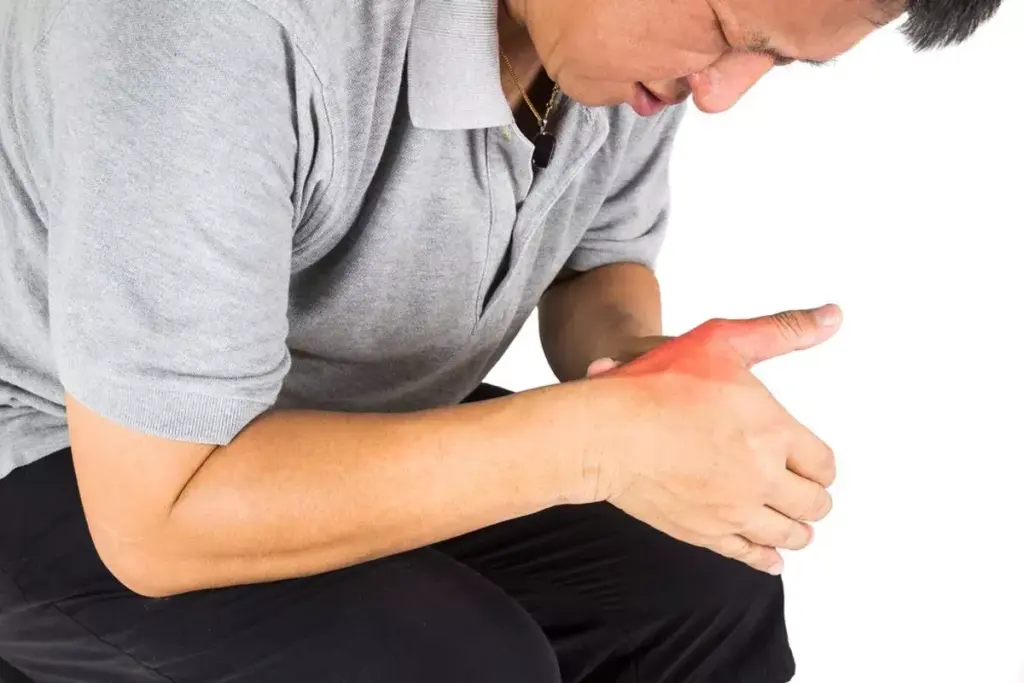
It’s important to know why pain happens at the base of the thumb and wrist. This pain can come from different causes. De Quervain’s tenosynovitis is a big one, affecting the tendons around the thumb.
What is De Quervain’s Tenosynovitis?
De Quervain’s tenosynovitis is when the tendons on the thumb side of your wrist get inflamed. It affects the abductor pollicis longus and extensor pollicis brevis tendons. These tendons help move your thumb.
This condition makes it painful to form fists, grasp, or turn your wrist. Knowing about De Quervain’s tenosynovitis helps doctors diagnose and treat it right.
Anatomy of the Affected Area
The thumb and wrist have complex tendons and muscles. The abductor pollicis longus and extensor pollicis brevis tendons go through a narrow tunnel on the thumb side. This tunnel is surrounded by a tendon sheath.
When these tendons get inflamed, the sheath can thicken. This causes pain and makes it hard to move your thumb. Knowing the anatomy helps doctors diagnose and treat it well.
Common Symptoms and Diagnosis
De Quervain’s tenosynovitis symptoms include pain and tenderness on the thumb side of the wrist. You might also see swelling and trouble moving your thumb. Doctors use a physical exam to check for these signs.
They might do tests like the Finkelstein test to see if it hurts. Sometimes, X-rays or ultrasound are used to check for other problems. “Early diagnosis is key to avoid lasting damage and get the right treatment,” say doctors.
Common Causes and Risk Factors

Understanding De Quervain’s tenosynovitis is key to managing it. This condition comes from many factors. These include who you are, what you do, and where you are.
Demographic Patterns
Studies show De Quervain’s tenosynovitis hits women and people in their 40s and 50s hard. Demographic patterns suggest a higher incidence in certain populations. This might be because of genes, hormones, and lifestyle.
Repetitive Movements and Overuse
Doing the same thing over and over can cause De Quervain’s tenosynovitis. Things like typing or gaming can hurt the tendons. This makes the risk of getting the condition higher.
Electronic Device Usage Connection
Using smartphones and other devices too much is linked to De Quervain’s tenosynovitis. This is true for teens. The strain from typing or gaming on these devices can lead to the condition.
We need to know the risks of modern life. We should take steps to prevent these problems.
Effective Treatment Options for Thumb and Wrist Pain
De Quervain’s tenosynovitis treatment includes many options. We’ll look at each one, talking about their good points and possible downsides. This will help you choose the best treatment for you.
Conservative Treatment Approaches
First, we try non-surgical methods. This includes rest and splinting to ease pain and swelling. It helps the tendons heal by not putting too much strain on them.
Physical therapy is also key. It helps move your thumb and wrist better, making them less stiff. We might also use anti-inflammatory medications to control pain and swelling.
Medical Interventions
If non-surgical methods don’t work, we might use medicine. Corticosteroid injections are often used. They help by reducing inflammation right where it’s needed.
We also look at platelet-rich plasma (PRP) therapy. This involves using your own blood to help your body heal faster.
Surgical Options for Persistent Cases
If other treatments don’t help, surgery might be needed. The main surgery is release surgery. It opens up the area around the tendons to relieve pressure.
| Treatment Option | Description | Benefits |
| Conservative Management | Rest, splinting, physical therapy, and anti-inflammatory medications | Non-invasive, reduces inflammation and improves mobility |
| Corticosteroid Injections | Injecting corticosteroids into the affected area | Targeted relief, reduces inflammation |
| Surgical Release | Surgery to relieve pressure on the affected tendons | Effective for persistent cases, improves tendon gliding |
Choosing the right treatment depends on how bad your symptoms are and how involved your tendons are. We work with you to find the best treatment plan. This ensures you get the care that fits your needs best.
Conclusion: Managing and Preventing Recurrence
De Quervain’s tenosynovitis is a common issue that causes pain at the base of the thumb and wrist. Knowing its symptoms, causes, and treatments is key to managing it well.
To stop it from coming back, avoid repetitive movements and take breaks during tasks that strain your wrist and thumb. Keeping your wrists and hands clean is also important. A lump on the thumb side of the wrist might mean you have De Quervain’s. Catching it early can help avoid more problems.
If your symptoms don’t get better or get worse, see a doctor. Understanding the condition and acting early can help manage symptoms and prevent long-term damage. There are many treatment options, from simple methods to medical interventions, to help with the pain.
By taking preventive steps and getting medical help when needed, you can improve your life quality. This helps reduce the effects of De Quervain’s tenosynovitis.
FAQ
What is De Quervain’s tenosynovitis?
De Quervain’s tenosynovitis is inflammation of the tendons on the thumb side of the wrist, causing pain and swelling. It affects the tendons that control thumb movement.
What are the common symptoms of De Quervain’s tenosynovitis?
Symptoms include pain and tenderness along the thumb and wrist, swelling, difficulty gripping or pinching, and a “sticking” sensation when moving the thumb.
How is De Quervain’s tenosynovitis diagnosed?
Diagnosis is clinical, often using physical exams like the Finkelstein test. Imaging such as ultrasound may be used to confirm tendon inflammation.
What are the risk factors for developing De Quervain’s tenosynovitis?
Risk factors include repetitive thumb or wrist movements, pregnancy, inflammatory conditions, and activities like texting, lifting, or certain sports. Women are more commonly affected.
What are the treatment options for De Quervain’s tenosynovitis?
Treatment includes rest, splinting, anti-inflammatory medications, corticosteroid injections, and in severe cases, surgery to release the tendon sheath.
Can De Quervain’s tenosynovitis be prevented?
Yes, prevention involves avoiding repetitive thumb movements, taking breaks during tasks, using ergonomic tools, and strengthening wrist and thumb muscles.
How can I manage De Quervain’s tenosynovitis?
Management includes wearing a thumb spica splint, applying ice, taking anti-inflammatory medications, modifying activities, and performing gentle stretching exercises.
What is the role of the abductor pollicis brevis muscle in De Quervain’s tenosynovitis?
While the abductor pollicis brevis helps move the thumb, De Quervain’s primarily affects the tendons of the abductor pollicis longus and extensor pollicis brevis. Tightness or strain in related muscles may contribute to discomfort.
Can excessive smartphone use contribute to De Quervain’s tenosynovitis?
Yes, frequent texting, swiping, or gaming can strain thumb tendons and increase the risk of De Quervain’s tenosynovitis. Limiting repetitive use and ergonomic adjustments can help prevent it.
References
National Center for Biotechnology Information. Evidence-Based Medical Insight. Retrieved from https://www.ncbi.nlm.nih.gov/books/NBK513340/