Carpal tunnel syndrome (CTS) affects millions worldwide, causing numbness, tingling, and pain in the hand or arm. Early diagnosis is key to avoid long-term problems and support better care. At Liv Hospital, we use electromyography (EMG) and nerve conduction studies. These are the top methods for diagnosing CTS, with a success rate of 95-98%.
If you often feel numbness or weakness in your fingers and hand, it could be CTS. Our skilled team does advanced EMG testing to confirm the diagnosis and find the best treatment. With cutting-edge diagnostic tools, we offer top care for patients from around the world looking for effective treatments.
Key Takeaways
- EMG testing is the gold standard for diagnosing carpal tunnel syndrome.
- Early diagnosis helps prevent long-term complications.
- Liv Hospital offers state-of-the-art EMG testing performed by experienced specialists.
- EMG and nerve conduction studies have a sensitivity rate of 95-98%.
- Timely treatment supports better management of CTS symptoms.
Understanding EMG for Carpal Tunnel
Getting a correct diagnosis for carpal tunnel syndrome is key to effective treatment. Electromyography (EMG) is a vital tool in this process. We’ll look into what EMG is, how it works, and why it’s the top choice for diagnosing CTS.
What is Electromyography?
Electromyography (EMG) is a test that checks the electrical activity of muscles. It helps find nerve damage by seeing how muscles react to nerve signals. This test is important for checking muscle and nerve health.
During an EMG test for carpal tunnel, the electrical activity in hand and forearm muscles is measured. EMG is great because it shows muscle damage or dysfunction caused by nerve issues. It helps doctors figure out how bad the nerve damage is and plan the right treatment.
Nerve Conduction Studies and Their Role
Nerve conduction studies (NCS) are used with EMG to check the median nerve’s function. NCS measure how fast and strong electrical signals travel through nerves. This info is key for understanding nerve damage and planning treatment.
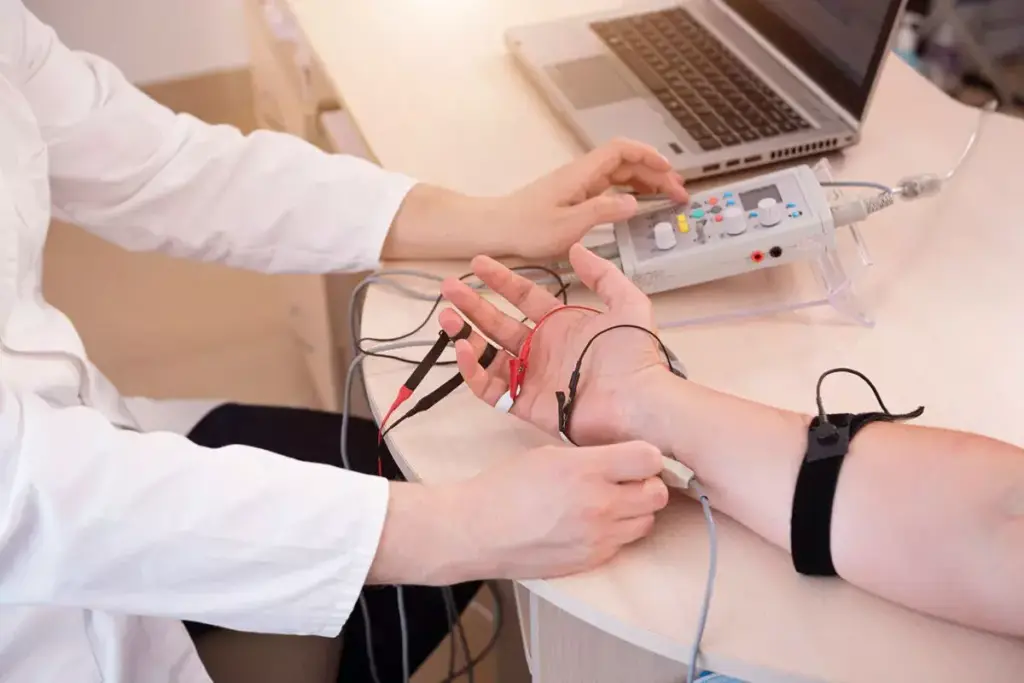
NCS use electrodes to stimulate the nerve and measure the response. For carpal tunnel, the nerve conduction study checks the median nerve’s function at the wrist. It gives important info on nerve compression or damage.
Key aspects of NCS for carpal tunnel syndrome include:
- Measuring the speed of nerve signals
- Assessing the strength of nerve signals
- Identifying nerve compression or damage
Why EMG is the Gold Standard for Diagnosis
EMG is the top choice for diagnosing carpal tunnel syndrome. It directly measures muscle activity and nerve function. By checking how muscles react to nerve signals, EMG helps doctors accurately diagnose and understand the severity of the condition.
Using EMG and NCS together gives a full picture of muscle and nerve function. This helps doctors create specific treatment plans. This accuracy is vital for better patient outcomes and effective carpal tunnel syndrome management.
The EMG Testing Process
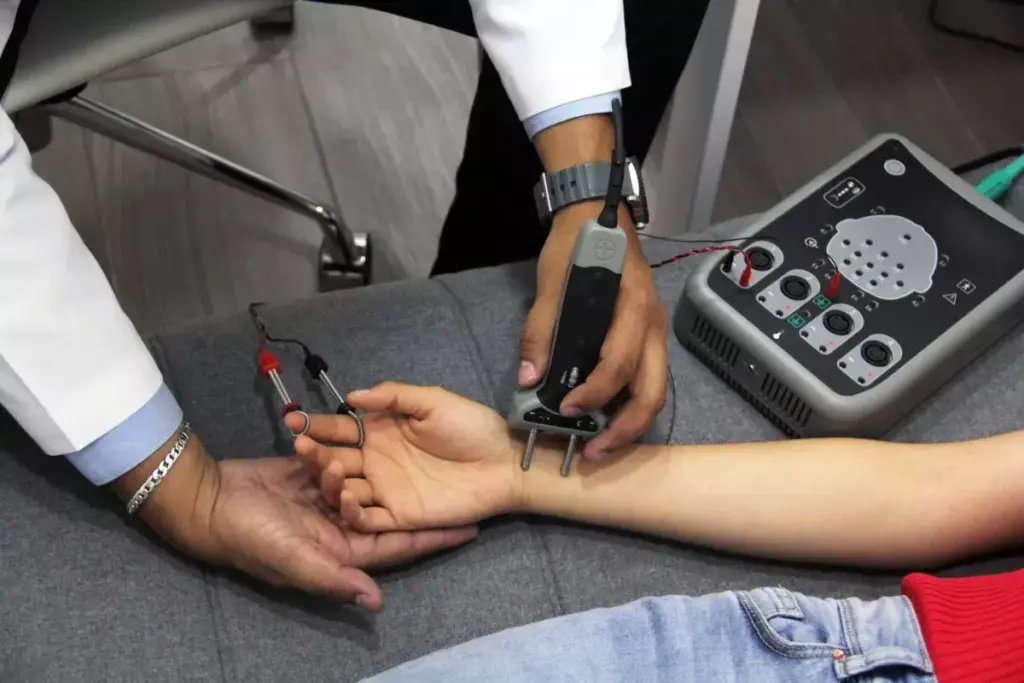
EMG testing for carpal tunnel syndrome involves several steps. These include preparation, nerve conduction studies, and needle electromyography. Knowing these steps can make patients feel more at ease.
Preparation for the Test
Before the EMG test, avoid using lotions or oils on your skin. These can make it hard to place the electrodes. Wear loose, comfy clothes that let you easily access your arm and hand. Tell your doctor about any medications, like blood thinners, as they might affect the test.
Nerve Conduction Study Procedure
A nerve conduction study (NCS) is a key part of the EMG test. Electrodes are placed on your skin over the median nerve. Then, mild electrical pulses are applied to stimulate the nerve, and the response is recorded.
This procedure is quick and might cause a bit of discomfort. But the electrical pulses are not harmful. They’re just strong enough to stimulate the nerve. The data from this test gives valuable insights into the nerve’s health.
Needle Electromyography Examination
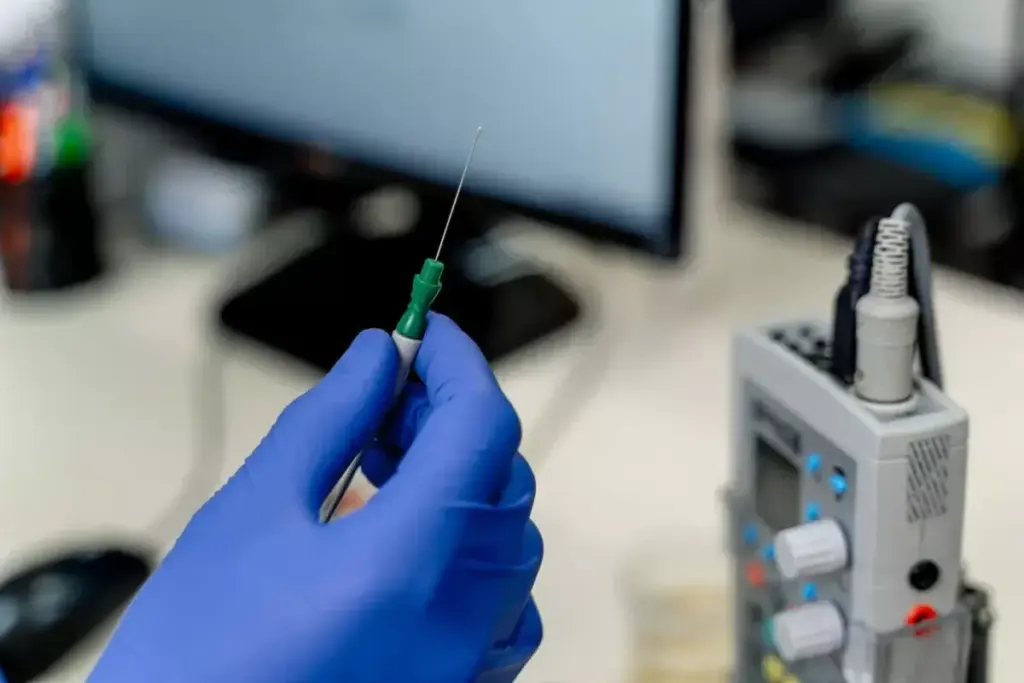
After the NCS, a needle electromyography examination is done. A small needle electrode is inserted into specific muscles in your hand or forearm. It records the muscle’s electrical activity at rest and during contraction.
This test helps find out if there’s muscle damage or if the muscle is getting the right nerve signals. Some important parts of this examination include:
- Insertion of a small needle electrode into the muscle
- Recording electrical activity at rest and during muscle contraction
- Assessing muscle damage or nerve signal disruption
Needle insertion might seem scary, but it’s usually not too bad. The test is important for diagnosing carpal tunnel syndrome and figuring out how severe it is.
By combining the results of the nerve conduction study and the needle electromyography, doctors can understand your condition fully. This helps them make accurate diagnoses and plan the best treatment.
Interpreting EMG Results for Diagnosis
Understanding EMG results is key to spotting carpal tunnel syndrome. These findings, along with nerve conduction studies (NCS), give a full picture of the condition.
We look for certain signs in EMG and NCS to diagnose carpal tunnel syndrome. We check if the median nerve’s speed is under 50 meters per second in the carpal tunnel. We also compare the median and ulnar nerves’ signals. NCBI research shows these are key for a correct diagnosis.
Key Diagnostic Criteria
Diagnosing carpal tunnel syndrome depends on NCS and EMG results. NCS tells us about nerve signal speed, strength, and timing. EMG shows muscle response delays, denervation, and weak muscle activity.
- Median nerve conduction velocity less than 50 meters per second across the carpal tunnel.
- Latency differences between the median and ulnar nerves.
- Delayed muscle response and denervation observed in EMG results.
Severity Assessment and Classification
After diagnosing carpal tunnel syndrome, we need to know its severity. This helps decide the best treatment. We judge severity by nerve damage and muscle denervation in EMG and NCS.
We divide severity into three levels: mild, moderate, and severe. Here’s how we decide:
| Severity | NCS Findings | EMG Findings |
| Mild | Prolonged latency, normal amplitude | Normal |
| Moderate | Prolonged latency, reduced amplitude | Occasional denervation |
| Severe | Significantly prolonged latency, markedly reduced amplitude | Significant denervation, weak motor unit recruitment |
Getting EMG and NCS results right is vital for the right treatment. Knowing the carpal tunnel syndrome severity helps us tailor treatment for each patient.
Conclusion: From Diagnosis to Treatment Planning
EMG testing is key in diagnosing carpal tunnel syndrome. It helps doctors understand how severe the nerve compression is. This information guides them in creating treatment plans that fit each patient’s needs.
There are many ways to treat carpal tunnel syndrome. Options include making lifestyle changes, physical therapy, corticosteroid injections, and surgery. The choice depends on how bad the condition is, based on EMG and nerve conduction tests.
Using EMG testing can greatly improve patient care. It helps doctors find the right treatment for each person. This way, patients get the best care for their carpal tunnel condition.
FAQ
What is electromyography (EMG) and how is it used to diagnose carpal tunnel syndrome?
Electromyography (EMG) is a test that checks muscle electrical activity. It helps see if the median nerve is working right. This is key for diagnosing carpal tunnel syndrome (CTS).
What is the difference between EMG and nerve conduction studies (NCS) for diagnosing carpal tunnel syndrome?
How do I prepare for an EMG test for carpal tunnel syndrome?
Is EMG testing painful?
What are the key diagnostic criteria for carpal tunnel syndrome using EMG and NCS?
How do EMG and NCS results help guide treatment decisions for carpal tunnel syndrome?
Can EMG testing diagnose other conditions beside carpal tunnel syndrome?
How long does an EMG test for carpal tunnel syndrome typically take?
Are there any risks or complications associated with EMG testing for carpal tunnel syndrome?
References
National Center for Biotechnology Information. Evidence-Based Medical Insight. Retrieved from https://pubmed.ncbi.nlm.nih.gov/12084881/