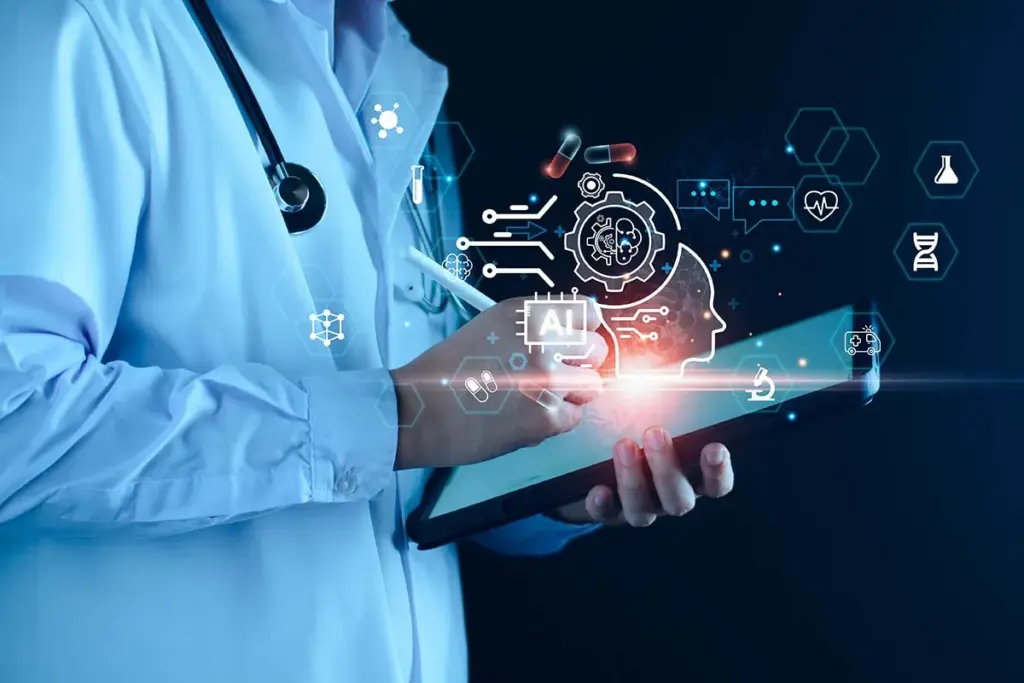
In recent years, artificial intelligence has made significant advancements. Some studies show it can do better than human capabilities in certain tasks. For example, AI can look through huge amounts of medical data as well as doctors do. This makes us wonder about AI’s role in healthcare and other areas.
As we keep improving and using AI, it’s key to know how it stacks up against human capabilities. We’ll look at how AI has evolved, its current abilities, and how it compares to humans. This will help us see the good and bad sides of using AI.
Key Takeaways
- AI has made big strides in precision, often matching human skills.
- It’s important to compare AI and human precision in different areas.
- Knowing AI’s strengths and weaknesses is key for its right use.
- AI’s accuracy has big effects on healthcare and financial analysis.
- The debate on AI precision versus human precision will keep growing.
The Evolution of Artificial Intelligence
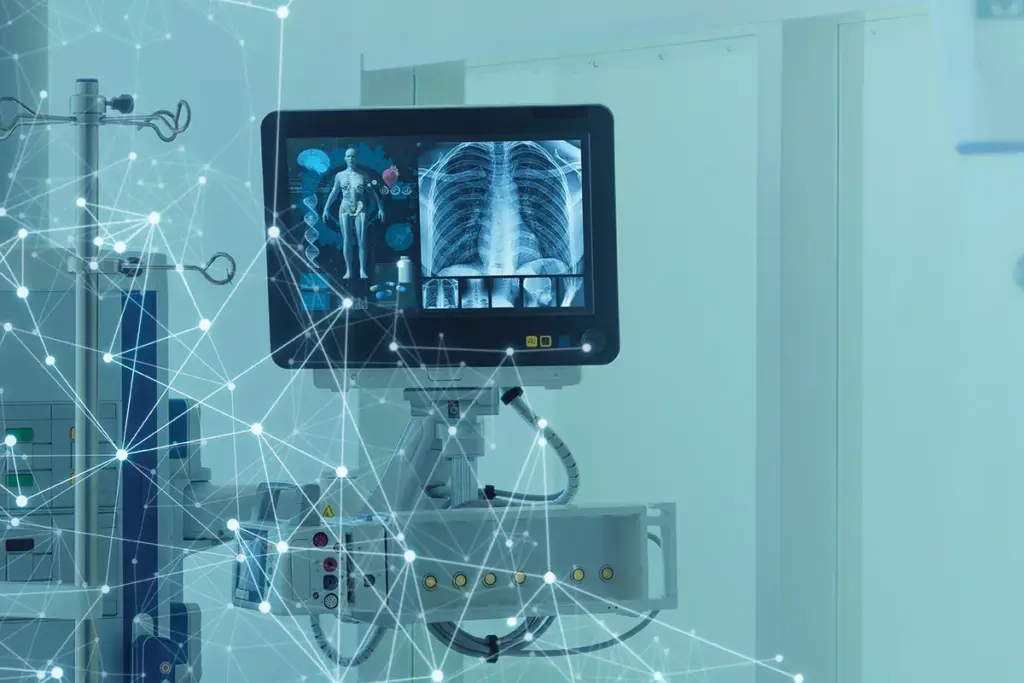
Artificial intelligence has changed a lot, from simple computers to today’s advanced systems. This change came from better computing power, more data storage, and new algorithms.
From Early Computing to Modern AI Systems
The start of AI was with early computers, which mainly did math and processed info. These systems grew to use more complex algorithms. This helped create today’s AI.
The big step was machine learning. It let AI systems get better over time by learning from data.
Key Milestones in Neural Networks Development
Neural networks are key to AI’s growth. Important moments include the first neural network models, deep learning progress, and using neural networks in real life.
|
Year |
Milestone |
Description |
|---|---|---|
|
1950s |
First Neural Network Models |
Initial development of neural network models, laying the foundation for future advancements. |
|
1980s |
Backpropagation Algorithm |
Introduction of the backpropagation algorithm, significantly improving the training of neural networks. |
|
2010s |
Deep Learning Advancements |
Advances in deep learning techniques, enabling the application of neural networks to complex tasks such as image and speech recognition. |
Understanding Precision in Different Contexts

Precision is important in many areas, from medical work to finance. It shows how well humans and AI systems do their jobs. The need for precision can greatly affect the results of tasks.
Defining Precision in Technical Terms
Precision means getting the same results when you do the same thing over and over. It’s different from accuracy, which is about how close you get to the real value. Precision is about being consistent.
In medical imaging, for example, an AI can be very precise. It might not always be right, but it’s always consistent. This is important because sometimes being consistent is more valuable than being perfectly accurate.
Measuring Accuracy in Human vs Machine Performance
It’s important to measure how accurate humans and machines are. They do well in different areas.
- Humans are great at tasks that need judgment and understanding.
- Machines are better at doing the same thing over and over, where precision is key.
In finance, AI can look at lots of data and find trends that humans might miss. But, humans are needed to understand these trends in the bigger picture.
Key things to think about when measuring precision include:
- The task or application.
- How precision is defined.
- The variability in human performance.
- The ability to improve AI for precision.
Understanding these points helps us see how humans and AI work together better. This leads to more effective teamwork between humans and machines.
Human or AI: Comparing Cognitive Abilities
The meeting of human-computer interaction and cognitive science shows us how humans and AI process information. We see that both have special strengths for different uses.
Pattern Recognition Capabilities
AI systems are great at finding patterns, handling big data fast and right. This skill is key in healthcare, where AI spots issues in medical images that humans might miss.
AI’s pattern recognition strengths are:
- Speed: AI is way faster than humans.
- Scalability: AI can handle huge data sets.
- Consistency: AI always performs well.
Problem-Solving Approaches
AI is top in pattern finding, but humans are better at solving complex problems. Humans use creativity, intuition, and make decisions with incomplete info. Their skills are great for new challenges or when we need fresh ideas.
“The human brain is capable of extraordinary feats of creativity and innovation, often solving complex problems through intuition and experience.”
Humans and AI have different strengths. Working together, they can make big strides in many areas. This teamwork could lead to great advancements.
By knowing and using these differences, we can improve how humans and AI work together. This will boost performance and spark new ideas.
Data Processing: Speed and Volume Comparison
AI systems can process huge amounts of data much faster than humans. This shows a big difference in how humans and AI handle data. It’s not just a matter of how much they can do, but also how they do it.
Human Limitations in Information Processing
Humans face limits when dealing with information. Our brains can only hold so much at a time. For example, we can remember about seven pieces of information before it gets too hard.
Also, humans are much slower than AI when it comes to processing data. It takes us time to read, understand, and make decisions. Cognitive scientist George Miller said, “The magical number seven, plus or minus two, is a fundamental limit on our ability to process information.”
“The human brain is capable of processing a vast amount of information, but it is not designed to handle the sheer volume and speed at which AI systems operate.”
AI’s Computational Advantages
AI systems, on the other hand, can handle lots of data quickly and accurately. They can run complex algorithms and make fast decisions. For example, AI can analyze data in real-time, giving us instant insights.
|
Capability |
Human |
AI |
|---|---|---|
|
Processing Speed |
Slow |
Fast |
|
Data Volume |
Limited |
High |
|
Accuracy |
Prone to Errors |
Highly Accurate |
The table shows AI’s big advantages in speed, volume, and accuracy. While humans add judgment, AI’s power with data is unmatched.
In conclusion, humans have limits in processing information, but AI’s strengths are huge. AI is key in today’s data world. It helps us make better decisions and innovate.
Decision-Making Under Uncertainty
Uncertainty is where human judgment meets AI’s power in making decisions. We look at how humans and AI tackle uncertain situations. We see their differences and how they can work together.
Human Intuition vs Algorithmic Decisions
Human intuition is key in making decisions, even when things are unclear. It’s based on experience, feelings, and recognizing patterns. AI, on the other hand, uses algorithms and data to decide, without emotions but relying on good data and design.
Key differences between human intuition and algorithmic decisions include:
- Processing Approach: Humans use a holistic approach, relying on intuition and experience. AI, by contrast, analyzes data through complex algorithms.
- Speed and Scalability: AI can handle huge amounts of data quickly, making it better for big decisions. Humans are slower but can adapt better.
- Adaptability: Humans can change their decisions based on new information. AI’s flexibility is limited by its programming and training data.
Risk Assessment Differences
Risk assessment is vital when making decisions with uncertainty. Humans judge risk based on experience, gut feeling, and biases. AI, though, uses statistical models and machine learning to predict outcomes based on past data.
|
Aspect |
Human Approach |
AI Approach |
|---|---|---|
|
Risk Perception |
Influenced by experience and emotions |
Based on statistical analysis and data |
|
Decision Speed |
Generally slower due to cognitive processing |
Faster, as it processes data rapidly |
|
Adaptability |
Can adapt to new information and contexts |
Limited by its training data and algorithms |
Understanding these differences helps us use the best of both human and AI decision-making. This way, we can make better decisions, even when things are uncertain.
AI vs Human Intelligence in Specialized Fields
Fields like medical diagnostics, financial analysis, and scientific research are changing with AI. AI helps make these areas more precise and efficient.
Medical Diagnostics and Healthcare
AI is helping in medical diagnostics by analyzing images and predicting patient outcomes. For example, AI can spot early signs of diseases like cancer in images. This leads to quicker diagnosis and more tailored treatments.
The benefits of AI in healthcare include:
- Enhanced diagnostic accuracy
- Personalized medicine
- Streamlined clinical workflows
Financial Analysis and Market Prediction
In finance, AI is used for predicting markets and analyzing risks. AI can quickly go through huge amounts of financial data. It finds patterns that humans might miss. This leads to more accurate forecasts and better risk management.
Some key applications of AI in finance include:
- Predictive analytics for market trends
- Automated trading systems
- Risk assessment and management
Scientific Research and Discovery
AI is also helping in scientific research by analyzing data and suggesting hypotheses. AI can go through large datasets much faster than humans. This helps scientists find new areas to study more quickly.
The integration of AI in scientific research has several advantages:
- Accelerated data analysis
- Enhanced hypothesis generation
- Improved collaboration through data sharing
As we keep using AI in these fields, it’s important to know both the good and the bad. This way, we can use AI to improve human intelligence. It will lead to new discoveries in many areas.
The Role of Creativity and Innovation
The mix of artificial intelligence and creativity is really interesting. As we explore what AI can do, understanding creativity and innovation is key.
Creativity is a complex trait seen as unique to humans. But, AI has made big strides in creating content like art, music, and writing. The big question is: Can AI be truly creative?
Can AI Be Truly Creative?
AI can handle lots of data, spot patterns, and make new content. This skill lets AI create things that look like they were made by humans. For example, AI art has been in galleries, and AI music has been played by orchestras.
But, AI’s creativity is limited by its training data and algorithms. It can mix and match ideas in new ways. Yet, it doesn’t have the personal experiences, feelings, and intuition that humans do.
Human Ingenuity and Its Unique Value
Human ingenuity adds something special to creative work. Humans can think outside the box, come up with new ideas, and innovate without limits. Human creativity is fueled by experiences, emotions, and understanding complex situations.
Key differences between human and AI creativity include:
- Ability to understand and convey complex emotions
- Capacity for original thought beyond algorithmic manipulation
- Flexibility in adapting to entirely new situations
AI can help human creativity by providing tools and support. But, the true value of human ingenuity is unmatched. Working together, humans and AI can create something truly innovative.
|
Aspect |
Human Creativity |
AI Creativity |
|---|---|---|
|
Emotional Depth |
High |
Limited |
|
Originality |
High |
Moderate |
|
Scalability |
Limited |
High |
In conclusion, AI has made great progress in creating content. But, human ingenuity is something special. The future of creativity will likely be a mix of human and AI efforts, leading to amazing and new results.
Emotional Intelligence and Human-Computer Interaction
Emotional intelligence is key in how we talk to machines. It makes our interactions with computers more effective and caring. As AI gets smarter, knowing about emotional intelligence is more important than ever.
The Human Edge in Understanding Emotions
Humans are great at reading and feeling emotions. This skill is vital for making strong connections and showing empathy. It helps us deal with tough social situations and react right to emotional signs.
Key aspects of human emotional intelligence include:
- Recognizing and understanding emotional expressions
- Empathizing with others’ emotional states
- Regulating one’s own emotions in response to others
These skills are part of what makes us human. They are essential for good communication with others.
AI’s Progress in Sentiment Analysis
AI has gotten better at figuring out how people feel, but it’s not as good as humans. It can look at lots of data and spot some emotional signs. But it often misses the fine details and context.
Recent advancements in AI sentiment analysis have focused on:
- Improving natural language processing capabilities
- Developing more sophisticated machine learning algorithms
- Integrating multimodal inputs (e.g., text, speech, facial expressions)
Even with these improvements, AI’s grasp of emotions is not as deep as ours.
As we make AI smarter, we must remember its strengths and weaknesses in understanding emotions. By using both human and AI skills, we can make better ways for humans and computers to talk to each other.
Precision in Physical Tasks and Robotics
Robots guided by AI are changing how we do things in healthcare and manufacturing. They bring new levels of precision and efficiency. This is thanks to AI’s role in robotics.
AI-controlled robots are changing how we do physical tasks. In healthcare, they help with surgical precision. This leads to better results from surgeries.
Surgical Precision: Robots vs Human Surgeons
There’s a big debate about who does surgery better: robots or humans. Robots, like the da Vinci Surgical System, offer better control and vision. This means surgeons can do complex tasks more accurately.
Research shows robots can make surgeries safer and faster. This shows AI robots can really improve surgical precision.
Manufacturing and Quality Control
In manufacturing, AI is changing quality control. It lets us check products in real time. AI robots can spot problems quickly, making sure products are top-notch.
AI also makes production better by cutting down on waste. As AI gets better, we’ll see more precision and efficiency in manufacturing.
Using AI robots can make things more precise and efficient. This leads to better results and saves money.
Natural Language Processing vs Human Communication
AI’s natural language processing and human communication show both progress and limits. We’re working hard to make AI talk like us. But, it’s tough to match the complexity and subtlety of human speech.
Understanding Context and Nuance
Human talk is full of subtleties, like context and idioms. AI has improved a lot, but it’s not perfect. It often misses the point of sarcasm or jokes because it takes language too literally.
We’re getting better at teaching AI to understand language better. It’s learning to spot idioms and colloquialisms. But, human language is so complex that there’s a lot more to learn.
Translation and Interpretation Accuracy
Translation and interpretation are key in both human and AI communication. AI has gotten better at translating, but humans are better at catching the fine details. They understand cultural references that AI might miss.
Looking at translation accuracy, we see AI’s strengths and weaknesses. Here’s a comparison:
|
Aspect |
AI Translation |
Human Interpretation |
|---|---|---|
|
Speed |
High |
Variable |
|
Accuracy |
Generally high, but can struggle with nuance |
High, with a better understanding of nuance and context |
|
Cultural Understanding |
Limited |
High |
We need to keep improving AI’s language skills. We must balance speed and accuracy with understanding context and subtlety. By using both AI and human communication, we can make language systems more effective and nuanced.
Ethical Decision-Making and Moral Reasoning
Ethical decision-making is a complex task for both humans and AI systems. Humans use moral frameworks shaped by culture and experience. AI systems rely on algorithms and data.
Human Moral Frameworks
Human moral frameworks combine ethical theories, personal values, and societal norms. They help guide decisions that are both legal and ethical. The complexity of human morality lies in its ability to adapt to new situations and to consider the nuances of each case.
In healthcare, ethical decisions balance patient autonomy with doing good and avoiding harm. Healthcare professionals use their experience and moral judgment to make these decisions.
Programming Ethics into AI Systems
Programming ethics into AI systems is a tough task. It requires translating human moral principles into algorithms. The difficulty lies in capturing the nuances of human moral reasoning and the contextual nature of ethical decisions.
Researchers are working on ways to add ethical decision-making to AI. They are using machine learning models and rule-based systems with ethical guidelines.
As AI grows, it’s vital to have strong ethical frameworks for AI decision-making. This ensures AI systems are trustworthy in areas like healthcare and finance.
Bias and Fairness in Artificial and Human Intelligence
Understanding bias is key to making AI systems fair and just. It’s also important to see how bias affects human thinking. Bias can cause unfair results and discrimination, impacting both human choices and AI actions.
Human Cognitive Biases
Humans face many cognitive biases that shape our judgments and decisions. These biases come from our experiences, culture, and environment. For example, confirmation bias makes us favor information that agrees with what we already believe. Anchoring bias causes us to overvalue the first information we get.
To fight these biases, we need to encourage critical thinking and objective analysis. Using debiasing training and decision-support systems can lessen the effects of cognitive biases on our judgments.
Algorithmic Bias in AI Systems
AI systems can carry biases from their training data, leading to unfair outcomes. Algorithmic bias comes from biased data, flawed design, and poor testing. For instance, facial recognition systems often show bias against certain groups because their training data lacks diversity.
To tackle algorithmic bias, developers must focus on fairness and transparency in AI. They should use diverse training data, implement bias-detection tools, and audit AI systems for fairness. This way, we can build AI that is accurate, fair, and just.
Learning and Adaptation Capabilities
Humans and AI systems can both learn and adapt, but in different ways. This ability is key to their intelligence, helping them grow and get better over time.
Human Neuroplasticity
The human brain can change and form new connections throughout life. This flexibility is vital for learning new things, recovering from injuries, and adjusting to new situations. Neuroplasticity makes humans very adaptable and open to new experiences, supporting ongoing learning and adaptation.
Studies have found that neuroplasticity doesn’t stop in childhood. It keeps going into adulthood, allowing for continuous learning and adaptation. This ability is a core part of human intelligence, helping us solve complex problems and behave in complex ways.
Machine Learning and Cognitive Computing Approaches
Machine learning and cognitive computing are like AI’s version of neuroplasticity. They let AI systems learn from data and get better over time. AI can adjust to new information and changing situations, just like humans do.
But, how AI learns is very different from how humans do. AI uses algorithms and big datasets to learn and adapt, without the biological parts that humans have.
Even with these differences, AI has made huge strides in many areas. It’s great at things like recognizing images and speech, and making complex decisions. As AI keeps getting better, its learning and adapting abilities will be even more important.
The Future of Human-AI Collaboration
AI is getting better, and working with humans will be key in the future. Humans and AI can do great things together. They can make systems more effective and efficient.
Complementary Strengths and Weaknesses
Humans and AI are good at different things. Humans are creative and can make complex decisions. AI is great at handling big data and doing the same tasks over and over.
In healthcare, AI can look at medical images for problems. But, doctors can add the human touch and care. This teamwork leads to better care and more accurate diagnoses.
|
Capability |
Human Strengths |
AI Strengths |
|---|---|---|
|
Data Processing |
Limited capacity for large datasets |
High-speed processing of vast data |
|
Pattern Recognition |
Excellent in complex, nuanced patterns |
High accuracy in repetitive patterns |
|
Creativity |
Highly creative and innovative |
Limited creativity, but improving |
Augmented Intelligence Models
Augmented intelligence means using AI to make humans better, not replace them. It’s about creating systems that help humans make decisions, not do it all by themselves.
For example, AI tools can help doctors by analyzing patient data. But, the doctor makes the final call. This way, patient care stays personal and nuanced.
Emerging Hybrid Systems
Hybrid systems that mix human and AI skills are starting to appear. They use the best of both worlds to get better results.
In finance, AI can spot market trends. But, human analysts use this info to make smart decisions. This teamwork leads to better financial planning.
By working together, humans and AI can open up new possibilities. They can drive innovation in many areas.
Conclusion: Redefining Precision in the Age of AI
AI is changing how we see precision. We’ve looked at how humans and AI compare in skills like thinking and making decisions. AI is great at analyzing data and spotting patterns. But humans are better at feeling emotions and being creative.
The future of AI looks bright for making things more precise in fields like health, money, and science. It’s important to know how AI changes precision and how humans and AI can work together. This way, we can find new ways to grow and improve our decisions.
We need to use AI wisely, keeping its benefits and our human skills in balance. The goal is not to replace humans but to make them better. Together, humans and AI can achieve amazing things, making our world more accurate and innovative.
FAQ
What is the current state of AI in comparison to human precision?
AI has made big strides in precision. It often beats humans in tasks like image recognition and data analysis.
How has AI evolved over time?
AI has grown a lot. It started with simple systems and now uses neural networks and machine learning. This lets it do complex tasks like recognizing patterns and making decisions.
What is precision in technical terms?
Precision means how accurate and exact something is. It’s key in fields like medicine, finance, and manufacturing.
How do human and AI cognitive abilities compare?
Humans and AI are good at different things. AI is great at recognizing patterns and processing data. Humans are better at solving problems, being creative, and understanding emotions.
What are the advantages of AI in data processing?
AI can handle lots of data fast and accurately. This makes it very useful for things like real-time analytics and scientific research.
How do humans and AI differ in decision-making?
Humans make decisions based on experience and intuition. AI uses algorithms and data analysis. Both have their own strengths and weaknesses.
Can AI be creative?
AI can create things like art and music. But, it’s not clear if it can be as creative as humans. Humans can think outside the box and come up with new ideas.
How does AI contribute to precision in physical tasks?
AI-controlled robots are used in surgery and manufacturing. They offer high precision and are less invasive. This improves quality control.
What are the challenges in natural language processing for AI?
AI struggles to understand context and nuances in human communication. But, it has improved a lot in translation and interpretation.
How do humans and AI differ in ethical decision-making?
Humans make ethical decisions based on complex moral reasoning. AI follows ethical guidelines, but it’s hard for AI to fully understand human moral frameworks.
What are the issues with bias in AI and human intelligence?
Both humans and AI can have biases. Humans have cognitive biases, and AI can reflect biases in its training data. We need ways to reduce these biases.
How do humans and AI learn and adapt?
Humans learn through neuroplasticity. AI uses machine learning and cognitive computing. Each has its own strengths and limitations.
What is the future of human-AI collaboration?
The future is about working together. We’ll use AI’s strengths and human creativity. This will lead to new, hybrid systems that are better than either alone.
What is the role of emotional intelligence in human-computer interaction?
Emotional intelligence is key for good communication and empathy. AI has made progress in understanding emotions, but it’s not as nuanced as humans.
References
National Center for Biotechnology Information. Human- versus Artificial Intelligence. Retrieved from https://pmc.ncbi.nlm.nih.gov/articles/PMC8108480/



 Departments
 Related Videos
 Our Doctors
 News
News