We often think of inguinal hernias as causing only groin pain. But many people feel pain that spreads to their legs. This happens when the hernia presses on nerves.
A hernia occurs when part of the intestine bulges through a weak spot in the muscles. This can make the bulge painful. Activities like coughing or lifting heavy things can make it worse.
It’s important to know about hernias to get the right treatment. We’ll look at how hernias can cause pain in the legs. We’ll see how the bulging tissue can irritate nerves.
Key Takeaways
- Inguinal hernias can cause radiating leg pain due to nerve compression or irritation.
- Herniated tissue can poke through weak spots in abdominal muscles.
- Actions like coughing or lifting heavy objects can exacerbate hernia symptoms.
- Understanding hernia causes and symptoms is key to proper diagnosis.
- Proper treatment depends on accurately diagnosing hernia-related leg pain.
Understanding Inguinal Hernias and Their Symptoms
To understand the link between inguinal hernias and leg pain, we need to know what inguinal hernias are. An inguinal hernia happens when part of the membrane lining the abdominal cavity or intestine bulges through a weak spot in the abdominal wall. This usually occurs along the inguinal canal.

What is an inguinal hernia, and how does it form
An inguinal hernia occurs when there’s a weakness or opening in the abdominal wall. This lets abdominal contents bulge through. It’s often linked to the inguinal canal, a passageway through the abdominal wall.
The formation of an inguinal hernia is due to several factors. These include genetic predisposition, muscle weakness, and increased abdominal pressure.
The anatomy of the inguinal canal and inguinal ligament
The inguinal canal is a key structure here. It’s a passageway for the spermatic cord in men and the round ligament of the uterus in women. The inguinal ligament, a fibrous band, forms the floor of the inguinal canal.
Knowing the anatomy of the inguinal canal and its surroundings is vital for diagnosing and treating inguinal hernias.
Common symptoms in the groin area
Symptoms of inguinal hernias vary but often include a noticeable bulge in the groin area. You might also feel a burning or aching sensation. Discomfort or pain, often when coughing, lifting, or bending over, is common.
“The presence of a hernia can cause significant discomfort and pain, impacting daily activities and overall quality of life.”
It’s important to recognize these symptoms early. This way, you can seek timely medical evaluation and treatment.
The Connection Between Inguinal Hernias and Leg Pain
Understanding the link between inguinal hernias and leg pain requires a closer look at how herniated tissue impacts surrounding nerves. We will examine how the presence of an inguinal hernia can lead to discomfort or pain in the leg. We will look at the underlying anatomical and physiological factors.
How Herniated Tissue Affects Surrounding Nerves
When an inguinal hernia occurs, the protruding tissue can compress or irritate the nerves in the groin area. This compression can lead to pain that radiates to the leg. The ilioinguinal, iliohypogastric, and genitofemoral nerves are most likely to be affected because of their proximity to the inguinal canal.
The ilioinguinal nerve, for example, runs through the inguinal canal. It can be compressed by the herniated tissue, causing pain in the groin that may extend to the thigh or leg. The genitofemoral nerve, which also traverses this region, can be affected, leading to pain or discomfort in the femoral area.
The Role of Ilioinguinal, Iliohypogastric, and Genitofemoral Nerves
The nerves surrounding the inguinal canal play a key role in the pain associated with inguinal hernias. The ilioinguinal nerve provides sensory innervation to the inner thigh and parts of the genitalia. The iliohypogastric nerve innervates the abdominal muscles and the skin over the inguinal region. The genitofemoral nerve has both genital and femoral branches, affecting the sensation in the femoral area.
- The ilioinguinal nerve can cause pain in the groin and inner thigh.
- The iliohypogastric nerve can lead to pain in the lower abdominal region.
- The genitofemoral nerve can cause pain or discomfort in the femoral area.
Differentiating Between Direct and Indirect Inguinal Hernias
It’s essential to differentiate between direct and indirect inguinal hernias. Their impact on surrounding nerves can vary. Indirect inguinal hernias occur when tissue protrudes through the deep inguinal ring, often due to a congenital defect. Direct inguinal hernias occur when tissue pushes through the posterior wall of the inguinal canal, typically due to muscle weakness.
Understanding the type of inguinal hernia is key to determining the right treatment and managing leg pain. The distinction between direct and indirect hernias affects the surgical approach and the risk of nerve irritation.
5 Ways an Inguinal Hernia Can Cause Leg Pain
Inguinal hernias can cause leg pain in different ways. We will look at five main reasons why this happens. This will help us understand how hernias affect leg pain.
1. Compression of Nerve Pathways in the Groin
One main reason for leg pain from hernias is compression of nerve pathways in the groin. A hernia can press on nerves in the inguinal canal. This leads to pain that goes down to the leg.
The ilioinguinal, iliohypogastric, and genitofemoral nerves are often affected. This can cause sharp pains or a dull ache in the groin, thigh, and leg.
2. Inflammation of the Greater Omentum and Surrounding Tissues
Inflammation of the greater omentum and surrounding tissues is another cause of leg pain. When the greater omentum gets trapped in a hernia, it can get inflamed. This leads to pain.
This inflammation can irritate nerves, causing pain to spread to the leg. The pain can get worse with movement and may be accompanied by nausea and fever.
3. Strain on the Internal Oblique Muscle
Strain on the internal oblique muscle also contributes to leg pain in hernia patients. This muscle is key to the stability of the abdominal wall.
An inguinal hernia can strain this muscle, causing pain and discomfort. This strain can affect the leg, mainly during physical activity.
4. Referred Pain Patterns from the Groin to the Leg
Referred pain patterns from the groin to the leg are important. The nerves in the groin connect to other parts of the body, including the leg.
An inguinal hernia can irritate these nerves, causing pain in the leg. This pain can be confusing and hard to diagnose.
5. Additional Mechanisms
Other factors can also contribute to leg pain in hernia patients. For example, the size and location of the hernia can affect the pain level.
Understanding these mechanisms is key to effective diagnosis and treatment. We will explore more in the next sections.
Diagnosing Inguinal Hernia-Related Leg Pain
To find out if leg pain is from an inguinal hernia, we use physical checks and imaging. We’ll look at how we do this.
Physical Examination Techniques for Groin Hernias
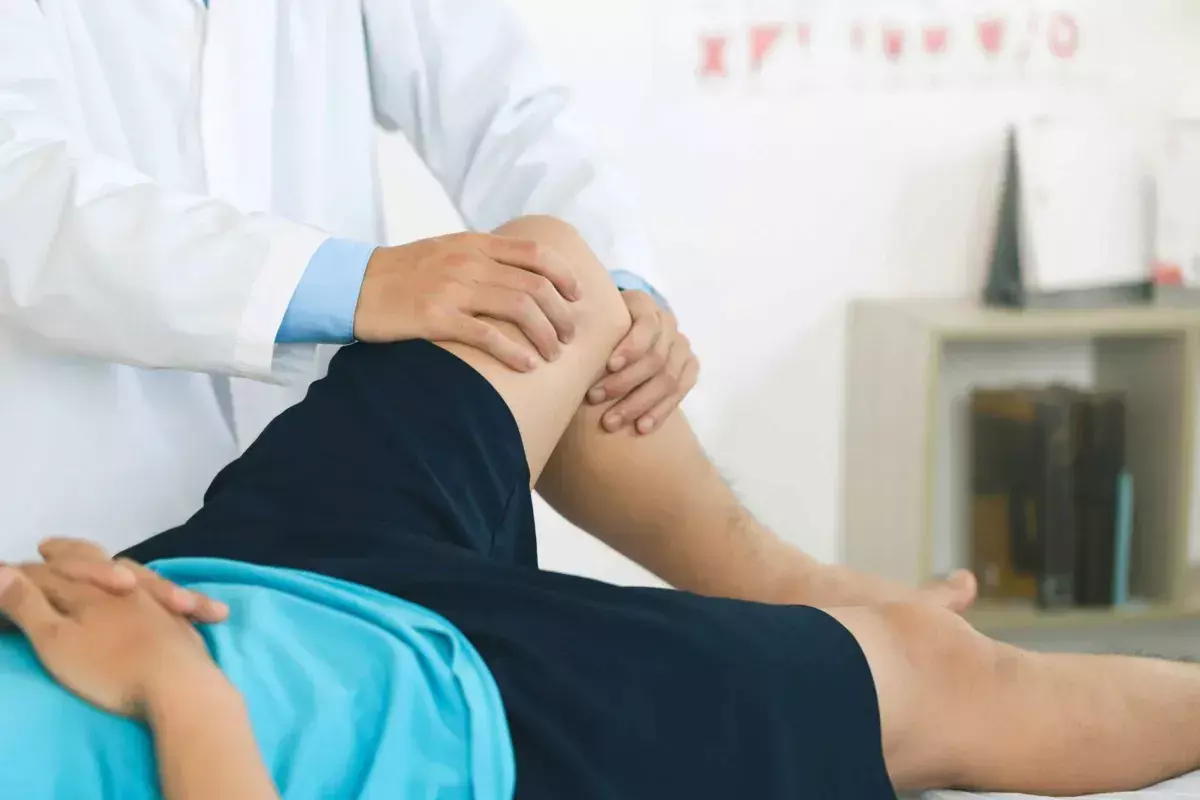
First, we do a detailed check of the groin area. We look for bulges or swelling. Then, we feel for lumps or tenderness.
We also ask you to cough or strain. This makes the hernia easier to see.
These steps help us find out if you have a hernia. We can see how big it is and where it is.
Imaging Studies to Confirm Diagnosis
Even with a physical check, sometimes we need more proof. That’s when we use imaging. We might use:
- Ultrasound: To see the hernia and the tissues around it
- Computed Tomography (CT) scan: For detailed pictures of the hernia and nearby areas
- Magnetic Resonance Imaging (MRI): To check for soft tissue damage or swelling
These tools help us understand the hernia better. Then, we can plan the best treatment.
Distinguishing from Other Causes of Leg Pain
It’s important to tell if leg pain is from a hernia or something else. This includes:
- Musculoskeletal injuries: Muscle or tendon strains or tears
- Nerve compression: Issues like sciatica or femoral neuropathy
- Vascular diseases: Problems like peripheral artery disease or deep vein thrombosis
By using physical checks and imaging, we can find the real cause of leg pain. Then, we can make a good treatment plan.
Treatment Options and Pain Management
People with inguinal hernias have different treatment options. These include hernia belts and surgery. The right treatment depends on how bad the symptoms are, the size of the hernia, and the person’s health.
Conservative Approaches Including Hernia Belts
Non-surgical methods are used to manage symptoms and stop the hernia from getting worse. A hernia belt is often used. It supports the area and can ease pain. Always talk to a doctor to find the right belt and make sure it fits well.
Hernia belts help, but they don’t fix the problem. They’re for people who can’t have surgery or are waiting for it.
Surgical Intervention for Inguinal Hernia Repair
Inguinal hernia surgery is usually the best fix for big problems. It pushes the bulge back in and strengthens the area with mesh.
There are open and laparoscopic surgeries. The choice depends on the surgeon and your situation. We’ll talk about the pros and cons to find the best option for you.
Managing Post-Surgical Pain
It’s key to manage pain after inguinal hernia surgery. Good pain care can make recovery better and lower risks.
Strategies include medicine, rest, and slowly getting back to normal. We’ll make a pain plan just for you.
Many people feel pain after inguinal hernia surgery. But, with the right care, most can feel better and get back to life in a few weeks.
Conclusion:
It’s important to understand how inguinal hernias and leg pain are connected. This knowledge helps in diagnosing and treating the issue effectively. We’ve looked at how hernias can cause leg pain by pressing on nerves and straining tissues.
Knowing the signs of inguinal hernias, like pain in the groin, is key. This helps identify why someone might have leg pain. Healthcare experts can then create better treatment plans to help patients feel better.
We stress the need to see a doctor for a proper diagnosis and treatment. With the right care, people can find relief from their symptoms and live better lives.
FAQ’s:
What is an inguinal hernia?
An inguinal hernia happens when part of the intestine bulges through a weak spot in the abdominal muscles. This weak spot is in the groin area.
Can an inguinal hernia cause leg pain?
Yes, it can. The hernia can press on nerves, causing pain that spreads to the leg.
What are the common symptoms of an inguinal hernia?
Symptoms include a bulge in the groin, burning, and pain. These symptoms worsen when you cough, lift, or bend.
How is an inguinal hernia diagnosed?
Doctors use physical exams and imaging, like ultrasound or CT scans, to diagnose it. They look for a bulge in the groin.
What is the difference between direct and indirect inguinal hernias?
Direct hernias happen when tissue pushes through a weak spot in the abdominal wall. Indirect hernias occur when tissue enters the inguinal canal through a natural opening.
How can inguinal hernias cause leg pain through nerve compression?
The hernia can press on nerves like the ilioinguinal, iliohypogastric, and genitofemoral nerves. This causes pain that spreads to the leg.
What are the treatment options for inguinal hernias?
Treatment includes wearing hernia belts and supportive measures. Surgery is also an option to relieve symptoms and prevent complications.
How is post-surgical pain managed after inguinal hernia repair?
Pain after surgery is managed with pain meds, rest, and follow-up care. This helps monitor recovery and address any issues.
Can wearing a hernia belt help alleviate symptoms?
Yes, it can. A hernia belt provides support and reduces discomfort by keeping the hernia from bulging further.
What is the role of the greater omentum in inguinal hernias?
The greater omentum can get involved in the hernia. This can cause inflammation and contribute to pain.
References
- American College of Surgeons. (2020). Hernia Surgery. Retrieved from https://www.facs.org/
- Simons, M. P., Smietanski, M., & The European Hernia Society. (2018). International guidelines for groin hernia management. Hernia, 22(1), 1–165. https://doi.org/10.1007/s10029-017-1678-5