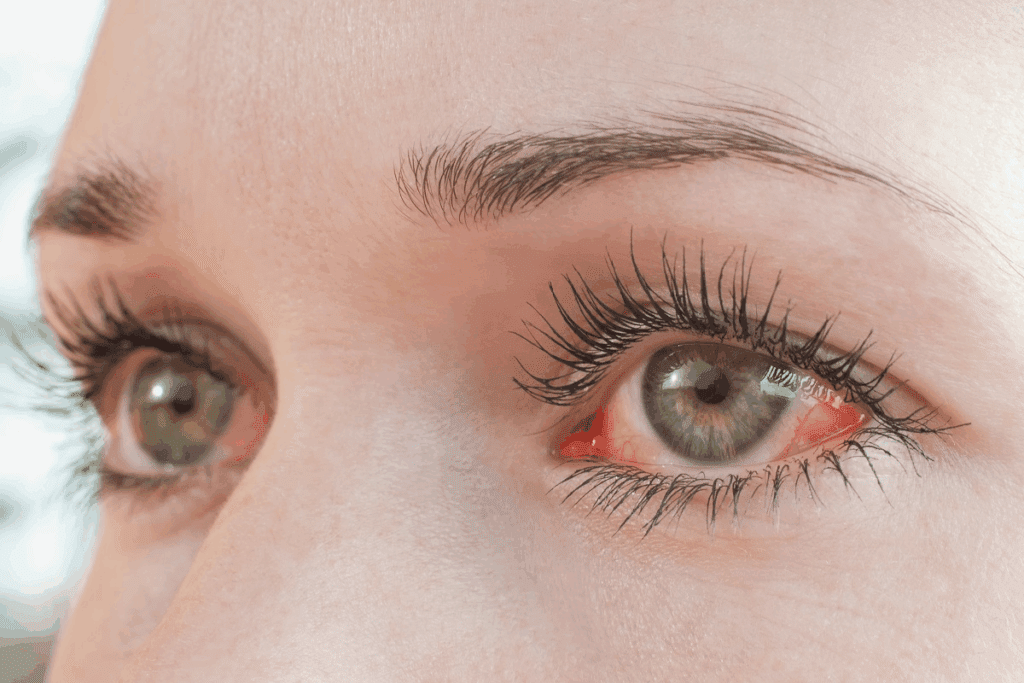
Have you seen red veins in your eyes and wondered why? Seeing your inner eye turn red and veiny can be scary. But, most of the time, it’s not serious and can be fixed with simple home remedies or doctor’s advice inside eye redness.
Knowing why red veins in sclera happen helps you take care of your eyes. We’ll look at why this happens and how to make your eyes feel better.
Key Takeaways
- Red veins in the eyes can be caused by various factors, including mechanical irritation and allergic reactions.
- Understanding the underlying cause is key to solving the problem.
- Common causes include conjunctivitis, subconjunctival hemorrhage, and dry eye syndrome.
- Simple home remedies and professional medical advice can help treat red veins.
- Protecting your vision means paying attention to the underlying causes.
Understanding Inside Eye Redness and Blood Vessel Changes

Inside eye redness can be scary, but knowing why it happens is key. The white part of the eye, called the sclera, has tiny blood vessels. These can swell or get inflamed for many reasons.
Anatomy of the Eye’s Blood Supply
The eye has a complex blood vessel network that’s usually hidden. But when these vessels get bigger or inflamed, the eye looks red or veiny. This redness can show up on the side of the eye or all over, depending on the cause.
The sclera, being the outer layer, shows blood vessel changes more easily. A burst blood vessel just under the surface can cause a bright red spot. This raises worries about why is there a red line in my eye.
Distinguishing Normal from Problematic Redness
Not all eye redness is a worry. Some cases are temporary and harmless, fading away by themselves. But if the redness lasts or gets worse, it might mean there’s a problem that needs a doctor’s help.
Many wonder: do red veins in eyes go away? It depends on the reason. Minor irritation or allergies might clear up once the cause is gone. But if the redness doesn’t go away or comes with pain or vision problems, you should see a doctor.
Common Causes of Inside Eye Redness

Red veins in the eyes can come from many things. This includes things like dry air and getting older. We’ll look at what causes eye redness and how to deal with it.
Environmental Triggers
Things like dry air and too much sun can make your eyes red. Dry air can dry out your eyes, making them red and itchy. Not wearing sunglasses can also make your eyes red and sore.
Other things that can bother your eyes include:
- Wind
- Dust
- Pollution
- Smoke
These things can make your eyes red and uncomfortable. Wearing protective eyewear and keeping your area clean can help.
Lifestyle Contributors
How you live affects your eyes. Too much screen time, smoking, or not sleeping enough can make your eyes red. Looking at screens for too long can make your eyes dry and red. Smoking can also make your eyes red and sore. Not getting enough sleep can make your eyes look tired and red.
Lifestyle Factor | Impact on Eye Health |
Prolonged Screen Time | Reduces tear production, leading to dryness and redness |
Smoking | Irritates the eyes, causing redness and discomfort |
Lack of Sleep | Leads to fatigue, causing redness and puffiness |
Age-Related Vascular Changes
As we get older, our eye blood vessels can show more, making our eyes red. Getting older can make these blood vessels weak and more likely to break. This can make your eyes look red or bright red vein in eye.
Staying healthy, protecting your eyes, and getting regular eye exams can help keep your eyes healthy as you age.
Conjunctivitis: The Primary Cause of Red, Veiny Eyes
Red, veiny eyes often mean you have conjunctivitis. This is an inflammation of the conjunctiva, the thin layer over the eye’s white part. It can be from viruses, bacteria, or allergies.
Viral Conjunctivitis Characteristics
Viral conjunctivitis spreads easily and starts in one eye. It can move to the other. Symptoms include redness, watery discharge, and light sensitivity. It usually gets better in a week or two.
Bacterial Infections and Eye Redness
Bacterial conjunctivitis causes thick, yellow or green discharge. This discharge can make your eyelids stick together, worse after sleep. You might need antibiotics to treat it.
Allergic Conjunctivitis Symptoms and Patterns
Allergic conjunctivitis happens when your eyes react to allergens like pollen or pet dander. It shows as redness, itching, and watery discharge. It can be seasonal or all year, depending on the allergen.
Type of Conjunctivitis | Causes | Symptoms | Treatment |
Viral | Viral infection | Redness, watery discharge, sensitivity to light | Self-resolving, supportive care |
Bacterial | Bacterial infection | Thick, yellow or green discharge, redness | Antibiotic treatment |
Allergic | Allergic reaction to pollen, dust, etc. | Redness, itching, watery discharge | Avoiding allergens, antihistamines |
Knowing about the different conjunctivitis types helps find the right treatment. If your symptoms don’t go away or get worse, see an eye doctor. They can give you the right care.
Subconjunctival Hemorrhage: Understanding Red Lines in Eyes
A subconjunctival hemorrhage is when a blood vessel breaks under the eye’s surface. It shows as red lines or a patch. This condition is usually harmless but can be startling.
Why Blood Vessels Break in the Eye
Many things can cause blood vessels in the eye to break. These include:
- Straining or heavy lifting: Increased pressure can cause small blood vessels to rupture.
- Coughing or sneezing: Sudden, forceful actions can put stress on the vessels.
- High blood pressure: Hypertension can weaken blood vessel walls.
- Trauma to the eye: A direct hit or injury can cause a vessel to break.
Knowing these causes can help you understand why you might see red lines in your eyes.
Healing Timeline and What to Expect
Subconjunctival hemorrhages usually heal on their own. Here’s what you can expect during the healing process:
- The redness will initially be quite noticeable.
- Over time, the color will change from red to greenish or yellowish, similar to a bruise healing.
- The condition usually resolves within 2-3 weeks.
While waiting for the hemorrhage to heal, it’s essential to monitor your condition. If you experience pain, vision changes, or if the redness is accompanied by other symptoms, seek medical attention.
Digital Eye Strain and Red Veins in Sclera
Spending more time in front of screens puts a lot of stress on our eyes. This can cause digital eye strain, with symptoms like red veins in the sclera, dryness, and discomfort. It’s a common problem because we use digital devices so much in our daily lives.
How Screen Time Affects Eye Vasculature
Looking at screens for a long time can change the blood vessels in our eyes. This makes the veins in the sclera more visible. Not blinking enough while staring at screens can also irritate our eyes.
Screen time and eye health are closely linked. Studies show that too much digital device use can dry out and irritate our eyes. This happens because we don’t blink as much when we’re staring at screens.
Screen Time Factor | Effect on Eyes |
Reduced Blinking | Increased Dryness |
Blue Light Exposure | Potential Retinal Damage |
Poor Ergonomics | Eye Strain and Fatigue |
Recognizing Digital Eye Strain Symptoms
It’s important to know the signs of digital eye strain. Symptoms include redness, dryness, irritation, and feeling tired. Some people might also get headaches or see things blurry after using screens for a long time.
“Digital eye strain is a growing concern in the digital age, affecting people of all ages who spend significant time in front of screens.”
To fight digital eye strain, try the 20-20-20 rule. Look away from your screen every 20 minutes and focus on something 20 feet away for 20 seconds. Also, adjust your device’s display settings to reduce eye strain.
Understanding digital eye strain and its symptoms helps us prevent it. We can reduce its effects by being mindful of our screen time, taking breaks, and taking care of our eyes.
Allergies and Their Impact on Eye Appearance
Allergies can make our eyes look red, itchy, and uncomfortable. They can make the blood vessels in our eyes more visible. This makes our eyes look red and veiny.
When we have an allergic reaction, histamine is released. This chemical makes blood vessels dilate. This dilation makes the blood vessels in our eyes more visible, causing redness and veining.
Seasonal vs. Year-Round Allergens
Allergens can be seasonal or year-round. Seasonal allergens like pollen from trees and grasses are more common at certain times. Year-round allergens include dust mites, pet dander, and mold, which are always present.
Knowing the difference helps us take steps to avoid symptoms. For example, staying indoors and using air purifiers can help during peak pollen seasons.
The Allergic Response in Eye Blood Vessels
The allergic response in our eyes is caused by histamine. This chemical makes blood vessels dilate. This dilation increases blood flow and makes the blood vessels visible, causing red, veiny eyes.
Managing Allergic Conjunctivitis involves avoiding allergens and using medications. Antihistamine eye drops or oral medications can help reduce symptoms.
Allergen Type | Common Allergens | Management Strategies |
Seasonal | Pollen from trees, grasses, and weeds | Stay indoors during peak pollen hours, use air purifiers |
Year-Round | Dust mites, pet dander, mold | Use dust mite-proof bedding, bathe pets regularly, reduce humidity |
Understanding and managing allergic conjunctivitis can help reduce red, veiny eyes. It also helps alleviate discomfort.
Dry Eye Syndrome: A Major Contributor to Red Eyes
Dry eye syndrome affects millions, causing eye discomfort and redness. It happens when the eyes don’t make enough tears or when the tears are bad. This can make the eyes look red and veiny.
Tear Film Disruption Mechanisms
The tear film is key to eye health. It has three layers: lipid, aqueous, and mucin. Problems with any layer can cause dry eye.
Tear film disruption mechanisms include:
- Inadequate tear production
- Poor tear quality
- Environmental factors like dry air or wind
- Prolonged screen time
When the tear film is broken, it can’t lubricate the eyes well. This leads to dryness, irritation, and red veins.
How Dryness Leads to Visible Red Veins
Dryness from tear film problems can cause eye inflammation and irritation. This inflammation makes the blood vessels in the sclera visible, leading to red, veiny eyes. The appearance of red veins can be a concern for many.
To fix dry eye syndrome and reduce red veins, we need to tackle the root causes. This means making lifestyle changes like taking breaks from screens, using humidifiers, and staying away from dry places.
“Dry eye syndrome is a multifactorial disease that requires a complete treatment approach.” –
American Academy of Ophthalmology
Understanding tear film disruption and how dryness causes red veins helps us find the right treatment. This way, we can get relief from dry eye syndrome.
Serious Medical Conditions Associated with Inner Eye Redness
Inner eye redness can be more than just a cosmetic issue; it may signal underlying serious medical conditions. While many cases are benign, certain instances warrant closer examination due to their association with significant health issues.
Inflammatory Eye Disorders
Inflammatory eye disorders are a group of conditions that can cause inner eye redness. These include:
- Uveitis: Inflammation of the uvea, the middle layer of the eye, which can lead to redness, pain, and vision problems.
- Scleritis: A severe inflammatory condition affecting the sclera, the white outer layer of the eyeball, often associated with autoimmune disorders.
- Choroiditis: Inflammation of the choroid, a layer between the sclera and retina, which can cause redness, floaters, and vision disturbances.
These conditions can be painful and potentially sight-threatening if not properly treated. They often require medical attention to manage symptoms and prevent complications.
Systemic Diseases That Affect Eye Appearance
Certain systemic diseases can manifest with inner eye redness as one of their symptoms. Notable examples include:
- Diabetes: Can cause changes in the blood vessels of the eye, leading to redness and potentially diabetic retinopathy.
- Hypertension: High blood pressure can affect the blood vessels in the eyes, causing redness or visible changes in the retinal vasculature.
- Autoimmune disorders: Conditions like rheumatoid arthritis or lupus can lead to inflammatory eye conditions.
These systemic diseases highlight the importance of considering eye health as part of overall health. Inner eye redness, in these cases, can be an early warning sign of a more significant issue.
It’s important for individuals experiencing persistent or severe inner eye redness to consult with a healthcare professional. Early diagnosis and treatment can significantly impact the management of these conditions and prevent long-term damage.
Effective Treatments for Red, Veiny Eyes
Red, veiny eyes can be a bother. But, there are many treatments to help. Knowing the cause and choosing the right treatment is key.
Lubricating Eye Drops and Over-the-Counter Solutions
For many, the first step is over-the-counter (OTC) lubricating eye drops. These drops moisturize the eyes, reducing dryness and irritation. Preservative-free eye drops are best as they don’t irritate more.
Choose OTC drops with hyaluronic acid or glycerin. These keep moisture in the eyes. Always follow the instructions and talk to an eye doctor if problems last.
Prescription Medications for Underlying Conditions
For red, veiny eyes caused by conditions like conjunctivitis or uveitis, prescription medications are needed. These can fight infections or reduce swelling and redness.
See an eye doctor to find out why your eyes are red and veiny. They’ll give the right medicine and watch your condition to avoid problems.
Evidence-Based Home Remedies
There are also home remedies backed by science. A warm compress can reduce inflammation and help healing. Using a humidifier in dry places keeps the air moist and eyes less dry.
Good eye care is also important. Avoid rubbing your eyes and remove makeup carefully. These steps can stop irritation and make red veins less noticeable.
Prevention Strategies for Maintaining Clear, Healthy Eyes
To keep your eyes clear and healthy, you need to take a few steps. This means changing your environment, how you use digital devices, and adopting better lifestyle habits.
Environmental Modifications
Changing your environment is key to preventing eye redness. Using a humidifier keeps the air moist. This helps prevent dry eyes, which can cause redness.
Also, avoid allergens and irritants. Keep windows closed when pollen is high, use air purifiers, and stay away from strong chemicals or fragrances.
Digital Device Habits
How you use digital devices affects your eyes. Follow the 20-20-20 rule: every 20 minutes, look away from your screen and focus on something 20 feet away for 20 seconds.
Adjust your device settings for better eye comfort. Make sure your workspace is set up for good posture and comfortable viewing angles.
Lifestyle Changes for Better Eye Health
Changing your lifestyle can greatly improve your eye health. Quitting smoking is essential, as it lowers the risk of eye problems. Regular exercise and a diet full of fruits, vegetables, and omega-3 fatty acids also help.
Don’t forget regular eye exams. They help catch problems early, like red lines in your eyes, so you can get treatment quickly.
Prevention Strategy | Description | Benefit |
Humidifier Use | Maintains air moisture | Reduces dry eye risk |
20-20-20 Rule | Regular breaks from screens | Decreases digital eye strain |
Lifestyle Changes | Quitting smoking, balanced diet | Improves overall eye health |
By using these prevention strategies, you can lower your risk of eye redness. This helps keep your eyes clear and healthy.
Conclusion: Taking Control of Your Eye Health
Understanding why your inner eye gets red is key to fixing the problem. Knowing what causes red veins in your eyes helps you protect your vision. This way, you can lower the chance of seeing red in your eyes.
Changing how you react to your environment, eating better, or seeing a doctor for health issues are all steps you can take. If your eyes stay red a lot, it’s important to see a doctor. They can find and treat the cause early, helping your eyes feel better.
Working with doctors and taking steps to prevent eye problems can keep your eyes clear and healthy. This approach helps avoid serious eye issues. It makes sure you can enjoy life to the fullest.
FAQ
What causes red veins in the eyes?
Red veins in the eyes can come from many things. This includes things around us, our lifestyle, and getting older. Common reasons include eye infections, bleeding under the eye, and dry eyes.
Is a red vein in the eye a serious condition?
Some red veins in the eyes are not serious. But, others might mean a bigger health issue. If your eye stays red or hurts a lot, see a doctor right away.
How can I get rid of red veins in my eyes?
To fix red veins, you can try eye drops, medicine from a doctor, or home remedies. Knowing why your eyes are red helps pick the best treatment.
Can allergies cause red, veiny eyes?
Yes, allergies can make your eyes red and veiny. Allergies can make your eyes itch, swell, and turn red. Avoiding allergens and treating allergies can help.
How does screen time affect the eyes?
Too much screen time can hurt your eyes. It can make them dry, red, and uncomfortable. Taking breaks and following the 20-20-20 rule can help.
Can dry eye syndrome cause red, veiny eyes?
Yes, dry eyes can make your eyes red and veiny. When your tears don’t work right, your eyes can get dry and red. Using eye drops and changing your habits can help.
What is subconjunctival hemorrhage?
Subconjunctival hemorrhage is when a blood vessel breaks under your eye. It looks scary but is usually not serious and goes away by itself.
How can I prevent eye redness?
To avoid eye redness, make changes in your life and environment. Use humidifiers, follow the 20-20-20 rule, and stop smoking. These steps can help keep your eyes healthy.
When should I seek medical attention for eye redness?
If your eye redness doesn’t go away or gets worse, see a doctor. Early treatment can make a big difference.
References
Government Health Resource. Glaucoma, Red Eyes, and Floaters: Symptom Awareness. Retrieved from https://jamanetwork.com/journals/jama/fullarticle/1882407