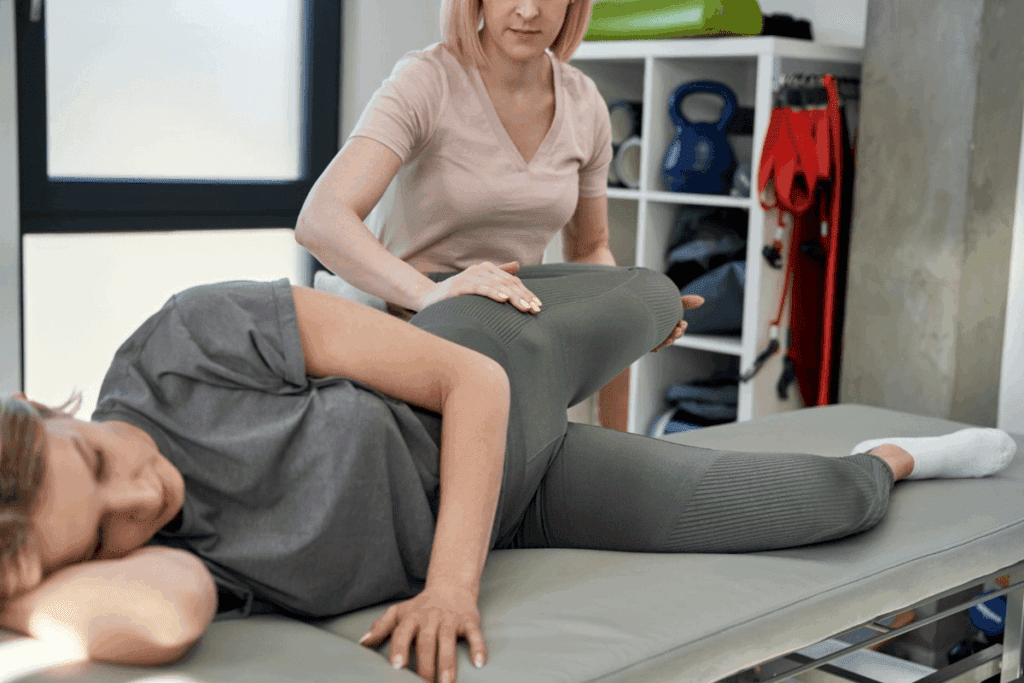
Hip pain can really limit how you move and live. But, the bright side is that targeted physical therapy exercises can help a lot. Research shows that these exercises can cut pain by more than 30% and boost daily activities in hip osteoarthritis patients in just 12 weeks.
At Liv Hospital, we use hip rehabilitation programs that are backed by science. Our goal is to ease pain and improve how you move. We follow international medical standards and focus on patient care and proven exercises to improve hip health.
Guide on performing hip physical therapy exercises correctly to maximize recovery and prevent re-injury.
Key Takeaways
- Targeted exercises can reduce hip pain by over 30%.
- Exercise therapy improves daily function in hip osteoarthritis patients.
- Comprehensive rehabilitation programs are key to hip health.
- Evidence-based exercises are essential for effective hip rehabilitation.
- Liv Hospital offers hip rehabilitation programs based on international standards.
Understanding Hip Anatomy and Common Issues
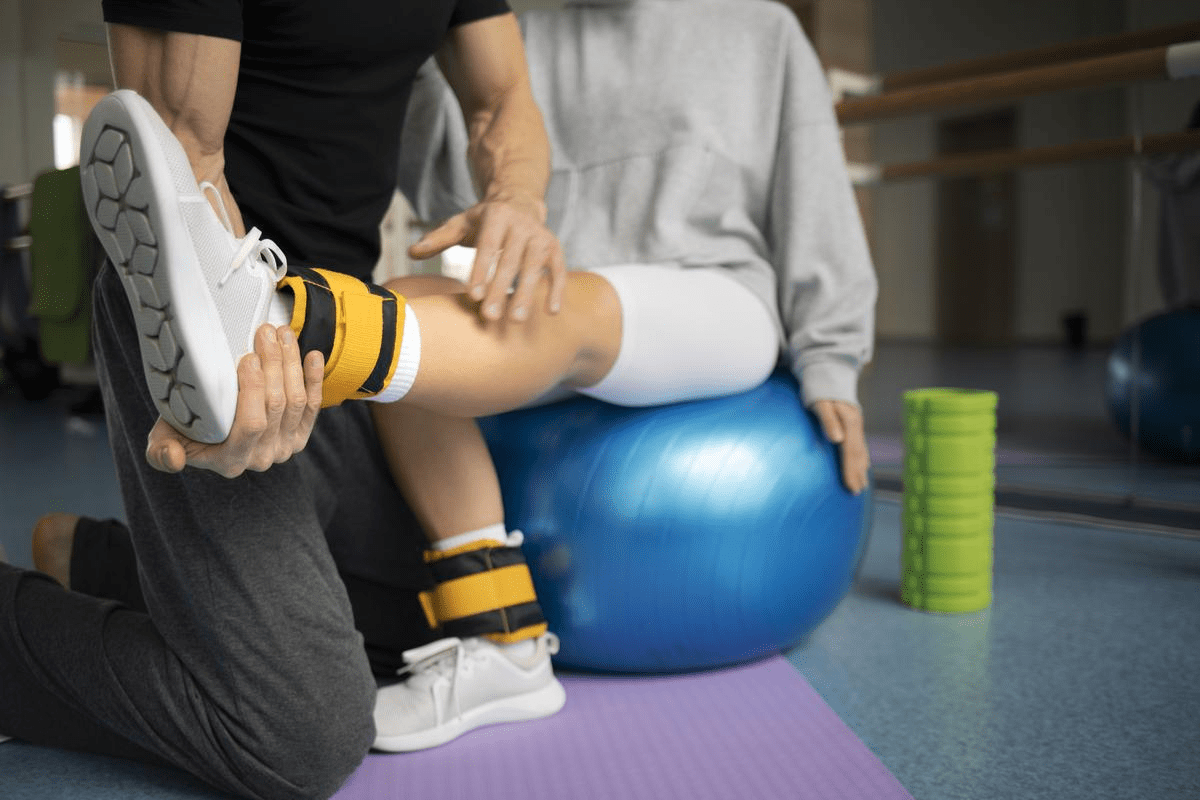
The hip joint is a complex and vital part of our body. It helps us move and do daily tasks. It’s a ball-and-socket joint that connects the thigh bone to the pelvis. This connection allows for movement and supports our body’s weight.
Key Hip Joint Components
The hip joint has several important parts. These parts work together to help us move and stay stable. They include:
- The femoral head (the ball) and the acetabulum (the socket)
- Articular cartilage that covers the femoral head and acetabulum, reducing friction during movement
- The joint capsule, a fibrous structure that encloses the joint
- Ligaments that provide additional support and stability
- Muscles and tendons that enable movement and maintain joint integrity
Common Hip Conditions Requiring Physical Therapy
Many hip conditions can be helped by physical therapy. These include:
- Osteoarthritis: Wear and tear on the joint cartilage, leading to pain and stiffness
- Hip injuries: Fractures, sprains, or strains resulting from trauma or overuse
- Tendinitis: Inflammation of the tendons surrounding the hip joint
- Bursitis: Inflammation of the fluid-filled sacs (bursae) that cushion the joint
- Labral tears: Damage to the cartilage ring surrounding the acetabulum
Signs You Need Hip Rehabilitation
If you have these symptoms, you might need hip rehabilitation:
- Persistent hip pain or stiffness
- Limited range of motion or difficulty walking
- Instability or feeling like the hip is going to give way
- Pain or discomfort when bearing weight on the hip
- Recent hip surgery or injury
Knowing about hip anatomy and common issues helps us see when we need physical therapy. Our goal is to help you move better, feel less pain, and live a better life.
The Science Behind Hip Physical Therapy Exercises

Research has found the best hip physical therapy exercises for rehab. These exercises focus on muscles like the gluteus maximus and gluteus medius. They are key for hip stability and movement.
Research-Backed Benefits
Studies show hip physical therapy exercises greatly improve pain and function. Targeted exercises like the clam, single-leg bridge, and sidestep are very effective. They strengthen hip muscles and improve joint stability.
Adding these exercises to a rehab program helps patients recover faster and live better. The research backing these exercises is strong. Many studies prove their effectiveness for different patients.
Clinical Evidence for Pain Reduction
Clinical trials and studies show hip physical therapy exercises reduce pain. They strengthen hip muscles, improve joint mechanics, and boost function.
Research also shows early intervention with these exercises leads to better pain relief. Starting a rehab program early is key for better results.
Functional Improvement Statistics
Improving function is a main goal of hip physical therapy. Studies show patients in exercise programs get better mobility and strength.
Research statistics show big improvements in function for patients in structured programs. These gains are both significant and meaningful. They help patients do daily activities and sports more easily and confidently.
When to Start Hip Rehabilitation
Knowing when to start hip rehabilitation is key to a successful treatment. The right time for rehabilitation is vital, whether you’re recovering from an injury, surgery, or want to prevent future problems.
Post-Injury Timeline
After a hip injury, talk to a healthcare professional to figure out when to start rehab. You can start with gentle exercises once the pain and swelling go down. This helps avoid stiffness and aids in healing.
Post-Surgical Recovery Guidelines
If you’ve had hip surgery, your doctor or physical therapist will guide when to start rehab. Rehab usually starts a few days after surgery. It focuses on moving your joint, strengthening muscles, and improving how you move.
Preventative Approach Timing
Starting early with exercises to keep your hips flexible and strong is a good idea. This is great for those at risk of hip injuries or with past hip problems. Adding hip exercises to your daily routine or workouts can help keep your hips healthy for a long time.
Essential Equipment for Hip Rehabilitation
Effective hip rehabilitation needs the right tools. The equipment used depends on the person’s needs and the rehab stage.
Basic Home Equipment
Many patients start with basic home tools. Resistance bands are great because they’re versatile and easy to use. They help strengthen hip muscles gently.
Other useful items include exercise balls and foam rollers. They help improve flexibility and ease muscle tension.
Professional Clinic Tools
In clinics, there are more advanced tools for hip rehab. Isokinetic machines measure and boost hip muscle strength. Electrical stimulation devices help with pain and healing.
Physical therapists use manual therapy techniques too. These are part of a detailed treatment plan.
Adaptive Equipment Options
Adaptive equipment is key for those with special needs. It includes walkers or canes to ease hip stress. There’s also specialized seating for extra support.
Adaptive gear helps patients stay independent. It makes rehab exercises more comfortable.
Using the right equipment, at home or in a clinic, improves hip rehab. It leads to better results.
Preparing for Hip Physical Therapy Exercises
To get the most out of hip physical therapy exercises, you need to prepare well. This includes knowing the right warm-up techniques and setting up a good exercise environment. We’ll show you how to get ready for your hip rehabilitation program.
Proper Warm-Up Techniques
Before starting hip physical therapy exercises, warming up your muscles is key. A good warm-up boosts blood flow, reduces stiffness, and gets your joints ready. Here are some effective warm-up techniques:
- Light cardio such as walking or cycling
- Dynamic stretching, like leg swings and hip circles
- Muscle activation exercises, such as glute bridges
Proper warm-up techniques can significantly enhance the effectiveness of your hip physical therapy exercises. Experts say, “A well-structured warm-up is essential for maximizing the benefits of physical therapy and minimizing the risk of injury” (1).
Creating an Optimal Exercise Environment
The place where you do your hip physical therapy exercises matters a lot. To make the best environment:
- Choose a quiet, distraction-free space
- Ensure the floor is clear and non-slippery
- Use a comfortable, supportive surface for exercises
- Have necessary equipment within reach
Environment Factor | Tips for Optimization |
Space | Clear the area of any obstacles or distractions |
Flooring | Use a non-slip mat or ensure the floor is not slippery |
Equipment | Keep necessary equipment, like resistance bands, within easy reach |
Setting Realistic Goals
Setting realistic goals is key to a successful hip rehabilitation program. Clear, achievable goals help you stay motivated and track your progress. Here’s how to set your goals:
“Setting specific, measurable, achievable, relevant, and time-bound (SMART) goals is a strategy that has been shown to enhance patient outcomes in physical therapy.” – Journal of Orthopaedic & Sports Physical Therapy
- Consult with your physical therapist to set SMART goals
- Break down larger goals into smaller, manageable milestones
- Regularly review and adjust your goals as needed
By following these guidelines and preparing well for your hip physical therapy exercises, you can make your rehabilitation program more effective. This will help you recover faster and more sustainably.
Core Hip Physical Therapy Exercises for Rehabilitation
Core hip physical therapy exercises are key in the healing process. They help regain strength and flexibility. These exercises focus on the hip joint and muscles around it. They aid in recovery from injuries, surgeries, or chronic conditions.
By adding these exercises to a rehab program, people can better their hip function. They can also reduce pain and boost mobility.
The following exercises are core parts of hip physical therapy. They are backed by research and fit various fitness levels.
The Clam Exercise
The clam exercise is simple yet powerful. It targets the gluteus medius muscle, essential for hip stability. Here’s how to do it:
- Lie on your side with your legs bent and feet touching.
- Keep your feet together and lift your top knee as high as you can without moving your hips.
- Lower your knee back down to the starting position.
- Repeat for the desired number of repetitions.
Single-Leg Bridge
The single-leg bridge is an advanced exercise. It strengthens the gluteus maximus and improves hip stability. Here’s how to do it:
- Lie on your back with your knees bent and feet flat on the floor.
- Lift one leg off the ground, keeping it straight.
- Lift your hips towards the ceiling, squeezing your glutes at the top.
- Lower your hips back down to the starting position.
- Repeat on the other leg.
Hip Extension Variations
Hip extension exercises are vital for strengthening the gluteus maximus muscle. There are different ways to do them:
- Standing hip extensions: Stand with one hand on a chair for balance and lift one leg backward.
- Prone hip extensions: Lie on your stomach and lift one leg towards the ceiling.
Sidestep Movements
Sidestep movements, also known as lateral walks, target the gluteus medius and other hip stabilizers. Here’s how to do them:
- Wear a resistance band around your legs, just above the knees.
- Stand with your feet shoulder-width apart.
- Take a step to one side, keeping tension in the resistance band.
- Bring the other foot to meet the first foot.
- Repeat in the other direction.
These core hip physical therapy exercises are key for a full rehab program. Adding them to your routine can lead to big improvements in hip strength, flexibility, and function.
Targeted Hip Strengthening Exercises
Exercises that target the hip are key for health and recovery. They help improve movement, lessen pain, and stop injuries. It’s important to strengthen the muscles around the hip.
Gluteus Maximus Activation Exercises
The gluteus maximus is a major muscle for hip movement and stability. It’s vital to activate this muscle well for recovery. Here are some effective exercises:
- Glute Bridges: Lie on your back with knees bent and feet flat. Lift your hips up, squeezing your glutes at the top.
- Deadlifts: Stand with feet shoulder-width apart. Bend at the hips and knees, then lift a weight up to hip level, keeping your back straight and engaging your glutes.
Gluteus Medius Strengthening
The gluteus medius muscle is key for hip abduction and pelvic stability. Strengthening it can help with hip pain and improve function. Here are some exercises:
- Side-Lying Leg Lifts: Lie on your side with legs straight. Lift the top leg up, keeping it straight.
- Clam Shell Exercise: Lie on your side with knees bent and feet touching. Lift your top knee up, keeping your feet together.
Hip Adductor Conditioning
Hip adductor muscles bring the legs together. Conditioning them is important for hip function. Here are some effective exercises:
- Sumo Squats: Stand with feet wider than shoulder-width apart. Lower your body down into a squat, keeping your back straight.
- Adductor Machine: Use a hip adductor machine at the gym to strengthen the adductor muscles.
Minimizing Tensor Fascia Lata Overactivation
The tensor fascia lata (TFL) can become overactive, causing hip pain. To minimize this, strengthen other hip muscles and improve flexibility. Techniques include:
“Proper strengthening of the gluteus maximus and medius can help reduce TFL overactivation by improving hip stability and function.”
Exercises that strengthen the gluteal muscles, as mentioned earlier, can help reduce TFL strain.
Comprehensive Hip Mobility and Flexibility Routines
Keeping your hips flexible is key to avoiding injuries and staying healthy. Hip mobility is vital for your lower body’s health. It affects how you move and your overall quality of life.
Improving hip flexibility can boost your performance in sports and daily tasks. It also lowers the chance of hip injuries.
Dynamic Stretching Protocols
Dynamic stretching is active and stretches your muscles before exercise. For hips, try leg swings, hip circles, and walking lunges. These moves boost blood flow and make muscles more flexible and less injury-prone.
To do dynamic stretching right, follow these tips:
- Do leg swings in different directions to loosen the hip joint.
- Stand with feet apart and move hips in circles, first one way and then the other.
- Use walking lunges to stretch hip flexors and boost mobility.
Static Stretches for Hip Flexibility
Static stretches are held for 15-30 seconds to lengthen muscles and improve flexibility. Key stretches for hips include standing hip flexor, seated piriformis, and lunge stretches.
For best results with static stretches, remember:
- Focus on deep breathing to relax the muscle being stretched.
- Avoid bouncing or jerking, which can hurt.
- Hold the stretch at a gentle tension, not pain.
Range of Motion Enhancement Techniques
To improve hip range of motion, mix stretching, strengthening, and mobilizing exercises. PNF stretching and foam rollers or lacrosse balls for self-myofascial release work well.
To boost hip ROM, try these:
- Use PNF stretching to contract and then lengthen muscles for better flexibility.
- Try self-myofascial release to reduce muscle tension and improve blood flow.
- Do regular strengthening exercises for hip muscles to support and stabilize the joint.
Adding these hip mobility and flexibility routines to your daily routine can greatly improve your hip health. It also increases your range of motion and lowers injury risk. Always consult a healthcare professional or physical therapist to create a program that fits your needs and goals.
Professional Physiotherapist-Led Hip Intervention
A professional physiotherapist-led hip intervention offers a complete solution for hip problems. We know how important it is to have a treatment plan that meets each patient’s needs.
Combining Different Therapeutic Approaches
Combined Therapy Approach
Using a combined therapy approach is often the best way to tackle complex hip issues. We mix different techniques to create a treatment plan that fits each patient’s needs.
Manual therapy techniques are key in this approach. They help improve joint movement, reduce pain, and boost hip function.
Manual Therapy Techniques
Manual therapy techniques are at the heart of our hip interventions. These include joint mobilization, soft tissue massage, and muscle energy techniques. They help improve hip function and reduce pain.
- Joint mobilization helps restore normal joint movement and reduce stiffness.
- Soft tissue massage can alleviate muscle tension and promote healing.
- Muscle energy techniques help improve muscle strength and flexibility.
Patient Education Components
Patient education is a key part of any successful hip intervention program. We teach patients about their condition, treatment options, and how to manage their recovery.
Key elements of patient education include:
- Understanding the diagnosis and prognosis.
- Learning proper exercise techniques and routines.
- Managing pain and discomfort effectively.
Measuring Progress and Outcomes
To check if our hip intervention is working, we regularly measure progress and outcomes. We use standardized tools, track patient feedback, and adjust the treatment plan as needed.
By combining these methods, we see big improvements in hip function and patient satisfaction. Our aim is to offer a supportive care environment that helps patients recover fully and stay well in the long term.
Post-Hip Replacement Physical Therapy Protocol
After hip replacement surgery, a good physical therapy plan is key for a smooth recovery. This plan moves through stages, starting with gentle exercises for early recovery. It then moves to strengthening exercises in the mid-recovery phase and ends with getting ready to return to activities.
Early Recovery Phase Exercises
In the first stages after surgery, the focus is on easy exercises that help healing and avoid problems. These include:
- Ankle pumps and rotations
- Isometric hip abductions
- Straight leg raises
These exercises help keep the joint moving and strengthen the muscles around it. They do this without putting too much stress on the new hip joint.
Mid-Recovery Strengthening
As the patient gets better, the therapy plan gets stronger. This phase includes:
- Resistance band exercises for hip abduction and extension
- Quad sets and short arc quads
- Progressive resistance exercises for the gluteal muscles
Strengthening these muscles is important for getting back to normal and supporting the hip joint.
Return to Activity Preparation
The last stage of the therapy plan gets the patient ready to go back to their usual activities. This includes:
- Balance and coordination exercises
- Functional activities like walking, climbing stairs, and bending
- Sports-specific training for those who want to get back into sports
By making the exercises more challenging, patients can safely start doing their daily and fun activities again.
Precautions and Restrictions
It’s important to follow certain rules during recovery to avoid dislocation and help the hip heal right. Patients are usually told to:
- Avoid bending at the hips beyond 90 degrees
- Not to cross their legs or ankles
- Use walkers or canes as suggested by their therapist
Recovery Phase | Exercises | Goals |
Early Recovery | Ankle pumps, isometric hip abductions, straight leg raises | Promote healing, minimize complications |
Mid-Recovery | Resistance band exercises, quad sets, progressive resistance exercises | Strengthen hip and surrounding muscles |
Return to Activity | Balance exercises, functional activities, sports-specific training | Regain functional ability, return to normal activities |
Conclusion
Recovering from hip injuries or surgery needs effective rehabilitation. Hip physical therapy exercises are key, helping reduce pain and improve function. They play a big role in the recovery process.
Knowing about hip anatomy and common problems helps see why specific exercises are important. The science behind these exercises shows they are backed by research. This makes them a valuable part of rehabilitation.
Remember, adding hip physical therapy exercises to a recovery plan can lead to better results. This summary stresses the importance of a complete approach. It includes the right equipment, expert advice, and a structured exercise plan.
Using these strategies can greatly improve recovery and quality of life. We suggest working with healthcare experts to create a personalized exercise plan. This ensures the best outcomes from hip physical therapy exercises.
FAQ
What are the benefits of hip physical therapy exercises?
Hip physical therapy exercises can reduce pain and improve mobility. They also enhance hip function. These exercises are backed by evidence and are key in rehabilitation programs.
What are some common hip conditions that require physical therapy?
Conditions like osteoarthritis, hip injuries, and post-surgical needs often require physical therapy. Signs you might need it include persistent pain, limited mobility, and trouble with daily activities.
When should I start hip rehabilitation?
The right time for hip rehabilitation varies by individual. It’s best to start soon after injury or surgery. Preventive care can also help keep your hips healthy.
What equipment is needed for hip rehabilitation?
For hip rehab, you can use resistance bands at home. Clinics have more advanced tools. There are also adaptive options for those with special needs.
How do I prepare for hip physical therapy exercises?
To get ready for hip therapy, warm up first. Make sure your exercise space is good. Setting achievable goals is also key for a successful program.
What are some core hip physical therapy exercises for rehabilitation?
Key exercises include the clam, single-leg bridge, and hip extension variations. Sidestep movements are also helpful. These improve hip function and mobility.
How can I strengthen my hip muscles?
Focus on exercises that target the gluteus maximus and medius. Strengthening the hip adductors is also important. This helps avoid overusing the tensor fascia lata.
What is the role of a professional physiotherapist in hip rehabilitation?
A physiotherapist offers a mix of therapy, manual techniques, and education. They track your progress to ensure effective rehabilitation.
What is the post-hip replacement physical therapy protocol?
The protocol includes exercises for early recovery, strengthening in the mid-phase, and preparing for activity. It also includes important precautions for a smooth recovery.
How can I improve hip mobility and flexibility?
Improving mobility and flexibility involves dynamic stretching and static stretches. Techniques to increase range of motion are also helpful.
Are hip physical therapy exercises suitable for everyone?
Hip therapy exercises can be tailored for individual needs. Always consult a healthcare professional to find the best treatment plan.
References
National Center for Biotechnology Information. Evidence-Based Medical Guidance. Retrieved from https://pmc.ncbi.nlm.nih.gov/articles/PMC2758534/