
Understanding lupus anticoagulant panel results is key for diagnosing and managing antiphospholipid syndrome (APS) and thrombophilia. The lupus anticoagulant lab test is not just one test. It’s a panel of tests that find antibodies linked to a higher risk of blood clots.lupus panelTest for Lupus: CBC and Auto Diff with Reflex
We’ll show you how to read these results. We’ll explain what each test means and how they help diagnose APS and thrombophilia. Knowing about anticoagulant testing is important to spot patients at risk for dangerous blood clots.
Key Takeaways
- Understanding lupus anticoagulant testing is vital for diagnosing antiphospholipid syndrome.
- A combination of clot-based tests is used to detect lupus anticoagulant.
- Proper interpretation of test results helps identify patients at risk for thrombotic events.
- Lupus anticoagulant panel results require knowledge of multiple testing methodologies.
- Reflex confirmatory testing is critical for accurate diagnosis.
Understanding Lupus Anticoagulant: A Paradoxical Name

Lupus anticoagulant is a complex condition that needs understanding. It’s a type of antibody linked to thrombosis and pregnancy loss. This has made it a focus in medicine.
What Is Lupus Anticoagulant?
Lupus anticoagulant is an antiphospholipid antibody that affects blood clotting. It’s not related to lupus or bleeding. Instead, it increases the risk of blood clots. It was named because it was first found in patients with systemic lupus erythematosus (SLE).
The Paradox: Why It Causes Clotting Instead of Bleeding
Lupus anticoagulant is paradoxical because it causes thrombosis instead of bleeding. It does this by binding to phospholipids, which are key for clotting. This binding disrupts the clotting process, raising the risk of clots. The exact reasons for this are complex and involve the immune system and coagulation pathway.
- Lupus anticoagulant antibodies bind to phospholipids.
- This binding interferes with the coagulation cascade.
- The interference leads to an increased risk of clot formation.
Association with Antiphospholipid Syndrome
Lupus anticoagulant is closely tied to antiphospholipid syndrome (APS). APS is a condition marked by antiphospholipid antibodies, including lupus anticoagulant. It’s known for causing repeated blood clots and pregnancy issues. The presence of lupus anticoagulant is a key sign of APS.
APS is characterized by:
- Recurrent venous or arterial thrombosis.
- Pregnancy morbidity, such as recurrent miscarriages.
- Presence of antiphospholipid antibodies, including lupus anticoagulant.
Overview of the Lupus Panel Testing Process
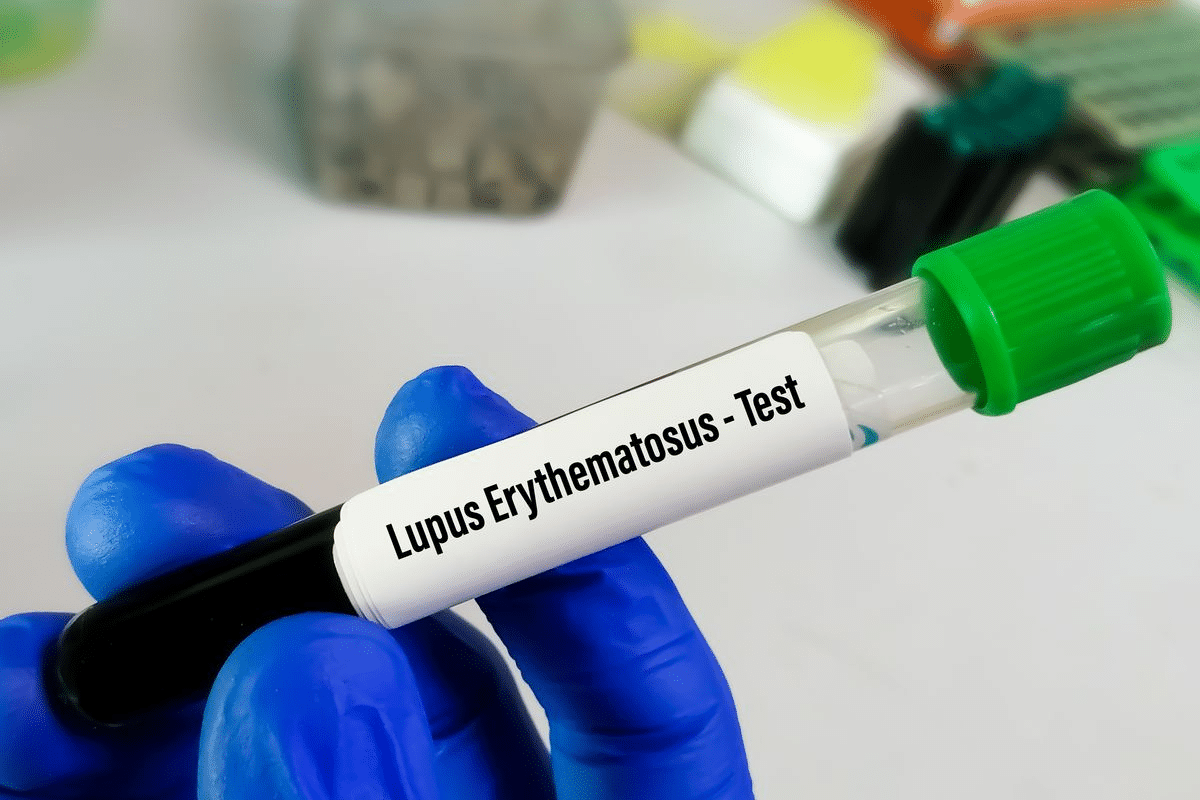
Lupus anticoagulant testing is not just one test. It’s a series of tests done in order to find lupus anticoagulant. This is because lupus anticoagulant can vary and no single test can catch all types.
Why Multiple Tests Are Required
Many tests are needed because lupus anticoagulant is complex. It can be found through different tests. So, a group of tests is needed to make sure the diagnosis is right.
The tests in the panel include the DRVVT (Dilute Russell Viper Venom Time) screen ratio and PTT-LA (Partial Thromboplastin Time-Lupus Anticoagulant). These tests check how lupus anticoagulant affects blood clotting.
Sequential Testing Approach
The tests are done one after another. First, there are screening tests. If those show something abnormal, then there are confirmatory tests. This way, false positives are reduced and the diagnosis is more accurate.
For example, if the DRVVT screen shows something, a DRVVT confirm test is done. This helps to make sure the result is real. The same goes for the PTT-LA screen and mixing studies.
Laboratory Variability Considerations
Each lab might do things a bit differently when testing for lupus anticoagulant. This can lead to different results.
To fix this, labs follow the same rules. These rules are set by the International Society on Thrombosis and Haemostasis (ISTH). This helps to make sure the results are the same everywhere.
CPT Codes for Lupus Anticoagulant Testing
The CPT codes for lupus anticoagulant tests depend on the specific tests done. Common codes are for DRVVT and PTT-LA tests.
|
Test |
CPT Code |
Description |
|---|---|---|
|
DRVVT Screen |
85613 |
Dilute Russell Viper Venom Time screen |
|
DRVVT Confirm |
85613 |
Dilute Russell Viper Venom Time confirmation |
|
PTT-LA |
85732 |
Partial Thromboplastin Time-Lupus Anticoagulant |
Knowing the CPT codes is key for healthcare providers. It helps them to bill correctly for lupus anticoagulant testing.
Primary Screening Tests in the Lupus Anticoagulant Panel
We use two main tests to find lupus anticoagulant: the activated partial thromboplastin time (PTT-LA) and dilute Russell viper venom time (DRVVT). The DRVVT test is key for spotting LA, with a screen and confirm test. We look at the ratio of the patient’s clotting time to the normal time for interpretation.
The PTT-LA screen is also very important, with each lab setting its own normal range. Knowing the normal range is key for correct results. We look at both the lupus anticoagulant PTT and DRVVT screen to confirm LA.
Getting a correct diagnosis depends on choosing and understanding these tests well. Labs use DRVVT tests to find LA, guiding treatment choices. Knowing how PTT-LA and DRVVT work in testing helps doctors better diagnose and manage LA.
FAQ
What is lupus anticoagulant, and how is it related to antiphospholipid syndrome (APS)?
Lupus anticoagulant is not linked to lupus or bleeding. It’s actually tied to a higher risk of blood clots. It’s often found in people with antiphospholipid syndrome (APS), a condition marked by certain antibodies.
What tests are involved in the lupus anticoagulant panel, and why are multiple tests required?
The lupus anticoagulant panel includes tests like PTT-LA and DRVVT. These tests are needed because diagnosing lupus anticoagulant is complex. Each test gives different results, so multiple tests are used to get a clear picture.
How are the results of the PTT-LA and DRVVT tests interpreted?
The PTT-LA and DRVVT tests check for lupus anticoagulant. If these tests show a long clotting time, it might mean lupus anticoagulant is present. More tests, like mixing studies, are then done to confirm this.
What is the significance of the DRVVT screen ratio in lupus anticoagulant testing?
The DRVVT screen ratio is key in lupus anticoagulant testing. A high ratio could mean lupus anticoagulant is present. Further tests are usually needed to confirm this.
What CPT codes are used for lupus anticoagulant testing?
CPT codes for lupus anticoagulant testing depend on the tests done. Common codes include those for PTT-LA and DRVVT tests. There are also codes for extra tests, like mixing studies.
How does laboratory variability affect lupus anticoagulant testing?
Different labs use different methods for lupus anticoagulant testing. This means results can vary. It’s important to use standard tests and consider the patient’s overall health.
What is the role of lupus anticoagulant testing in the diagnosis and management of APS and thrombophilia?
Testing for lupus anticoagulant is vital in diagnosing and managing APS and thrombophilia. It helps doctors understand the risk of blood clots. This information guides treatment to reduce this risk.
References
World Health Organization. Lupus Diagnosis: ANA Test and Comprehensive Blood Analysis. Retrieved from https://www.who.int/publications/i/item/9789240047577