As we get older, our eyes change a lot. We might start seeing vision problems. Eye floaters and macular degeneration are two common issues that happen with age. But they are not the same thing.Specific details on how macular degeneration floaters may or may not be related to this common vision disorder. Understanding macular degeneration floaters.
Eye floaters happen when the vitreous humour in our eyes changes. This is the gel-like stuff that fills our eyes. On the other hand, macular degeneration affects the retina. Knowing the difference is key for taking care of our eyes and catching problems early.
We’ll look into how these conditions are connected. We’ll talk about what causes them, their symptoms, and how to treat them.
Key Takeaways
- Eye floaters and macular degeneration are distinct age-related eye conditions.
- Floaters result from changes in the vitreous humour, while macular degeneration affects the retina.
- Regular eye exams are key for catching problems early.
- Understanding the difference between these conditions is vital for eye care.
- Age can lead to both eye floaters and macular degeneration.
What Are Eye Floaters and Why Do They Occur?

Eye floaters are small, dark shapes that move in our vision. They are usually harmless but interesting to learn about. You notice them most when looking at bright, plain things like the sky or a white wall.
The Structure of the Vitreous Humor
The vitreous humor is like jelly inside the eye. It’s mostly water, with a bit of collagen and hyaluronic acid. This gel keeps the eye’s shape and lets light reach the retina.
As we age, the vitreous humor changes. It starts to liquefy and shrink. This can cause small clumps or strands, seen as floaters.
How Age Affects the Eye’s Interior Gel
Aging makes eye floaters more common. The vitreous humor liquefies and shrinks with age. This is a natural part of aging, but knowing about it helps manage symptoms.
Age Group | Likelihood of Floaters |
Under 40 | Low |
40-60 | Moderate |
Over 60 | High |
Common Causes of Eye Floaters Beyond Aging
Other things can cause eye floaters too. Vitreomacular traction (VMT) is one, where the gel pulls on the retina. Eye injuries, inflammation, and diseases like diabetic retinopathy can also cause them.
“The vitreous gel’s interaction with the retina is complex, and understanding this relationship is key for diagnosing and treating eye floater conditions.” – Medical Expert
If you see more floaters suddenly, see an eye doctor. It might mean there’s a serious problem.
Age-Related Macular Degeneration: An Overview
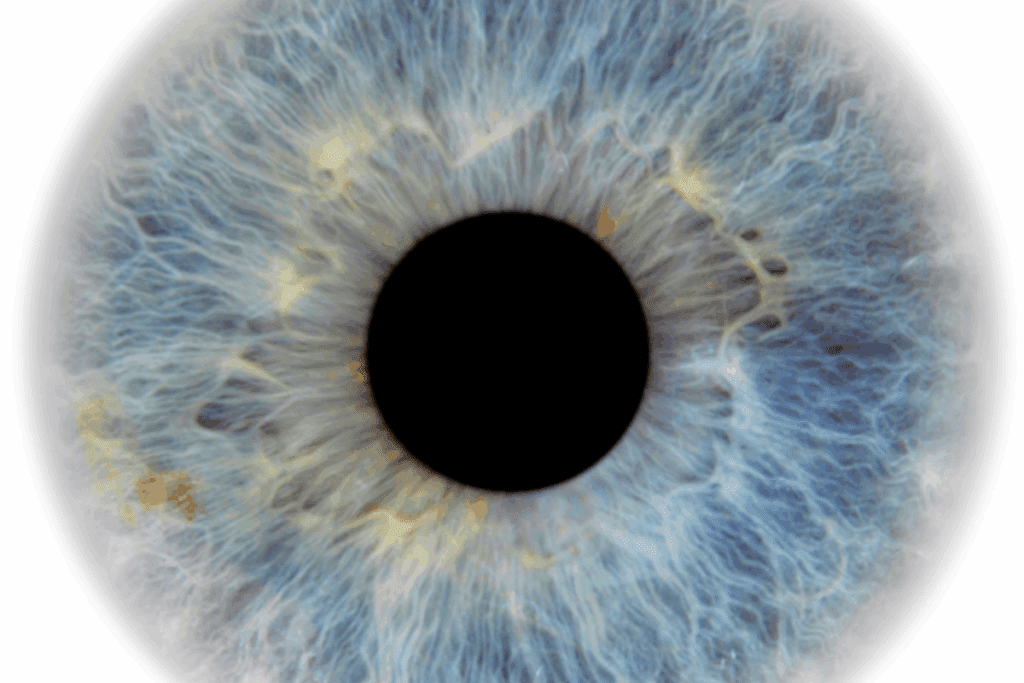
It’s important to know about age-related macular degeneration (AMD) and its link to eye floaters. AMD harms the macula, the part of the retina that helps us see clearly.
The Critical Role of the Macula in Vision
The macula is key for seeing details, colors, and doing everyday tasks like reading. Damage to it from AMD can cause big vision problems, affecting how we live.
Dry vs. Wet Macular Degeneration
AMD comes in two types: dry and wet. Dry AMD causes slow vision loss due to waste buildup. Wet AMD has fast damage from blood vessel growth under the macula.
Dry AMD is more common and grows slowly. Wet AMD is rarer but more serious, needing quick medical help.
Primary Risk Factors for Developing AMD
Several things can raise your risk of getting AMD. These include age, family history, smoking, and being overweight. Knowing these risks helps prevent and catch AMD early.
Risk Factor | Description | Impact on AMD Risk |
Age | Risk increases significantly after age 50 | High |
Genetics | Family history of AMD | Moderate to High |
Smoking | Smoking tobacco products | High |
Obesity | Being significantly overweight | Moderate |
Knowing about AMD risk factors and types helps protect your vision. It also means getting medical help when needed.
The Relationship Between Macular Degeneration and Floaters
Understanding the connection between eye floaters and macular degeneration can ease worries for those with both. As we get older, the chance of having both eye floaters and macular degeneration grows. This raises questions about how they are linked.
Separate Conditions with Concurrent Occurrence
It’s key to know that eye floaters and macular degeneration are different. Eye floaters are small, shadowy spots in the vision due to changes in the vitreous humor. Macular degeneration, like age-related macular degeneration (AMD), is when the macula, the retina’s central part, wears out.
Even though they are different, they often happen together. Medical Expert. Donald Gass said, “Floaters are a sign of aging, and it’s not surprising they often go with other age-related eye diseases like macular degeneration.” This is because aging is a common risk factor for both.
Age as the Common Denominator
Aging is a big risk for both eye floaters and macular degeneration. As we age, the vitreous humor changes, leading to floaters. Also, the risk of macular degeneration goes up with age due to light exposure, genetics, and other factors.
- The vitreous humor’s aging process leads to floaters.
- Age-related macular degeneration is caused by genetics and environment.
Dispelling Common Myths About Causation
Many think eye floaters come from macular degeneration or vice versa. But studies show they are linked by aging, not directly. Macular degeneration does not cause floaters, and having floaters doesn’t mean you’ll get macular degeneration.
“Understanding that eye floaters and macular degeneration are separate entities can help patients better navigate their diagnosis and treatment options.”
By seeing these conditions as different, patients can manage them better. This might mean watching them, making lifestyle changes, or getting medical help.
Recognizing the Symptoms: How to Tell the Difference
It’s important to know the difference between eye floaters and macular degeneration symptoms. This helps keep your eyes healthy and ensures you get the right treatment. Let’s look at how these conditions appear differently.
Characteristic Appearances of Eye Floaters
Eye floaters look like small, dark shapes moving in your field of vision. They might seem like spots, threads, or even cobwebs. Floaters are more noticeable when you look at bright things, like the sky on a sunny day. Even though they can be annoying, they usually don’t hurt your vision a lot.
Common characteristics of eye floaters include:
- Small, dark spots or threads
- Movement with eye movements
- Increased visibility against bright backgrounds
Early Warning Signs of Macular Degeneration
Macular degeneration affects your central vision, making things blurry or distorted. Early signs might include trouble recognizing faces, reading, or doing daily tasks that need clear vision.
Key indicators of macular degeneration include:
Symptom | Description |
Blurry Vision | Difficulty seeing fine details |
Distorted Vision | Straight lines appear wavy or crooked |
Central Blind Spot | A dark or empty area in the center of vision |
Knowing these symptoms helps you figure out if you have eye floaters or macular degeneration. This makes it easier to get medical help on time.
Diagnostic Procedures for Both Conditions
Getting a correct diagnosis is key for treating eye floaters and macular degeneration well. We use different tests to find and watch these conditions. This makes sure patients get the right care.
Comprehensive Eye Examination Techniques
A detailed eye check is the first step in diagnosing floaters and macular degeneration. We look at many parts of eye health, like how clear your vision is and the retina’s state. Visual acuity tests check how sharp your vision is. A dilated eye exam lets us see the retina and vitreous humor closely.
“A complete eye exam is more than just checking your vision,” an eye doctor explains. “It’s about seeing how healthy your eyes are.” This helps us spot problems early.
Specialized Tests for Macular Degeneration
For macular degeneration, we use special tests to check the macula’s health. Optical coherence tomography (OCT) gives us detailed images of the retina. OCT spots even small changes in the macula, helping us act fast.
Fluorescein angiography is another tool we use. It involves putting dye into your blood to see the retina’s blood vessels. This test is great for finding leaking blood vessels in wet macular degeneration.
Evaluating the Severity of Vitreous Changes
To figure out how serious vitreous changes are, we do a detailed check of the vitreous humor. We look at the size, location, and number of floaters in the vitreous gel. Tools like OCT help us see the vitreous and retina’s connection.
Knowing how serious vitreous changes are is important for choosing the right treatment. Sometimes, floaters go away by themselves. But other times, surgery might be needed.
Are Eye Floaters Permanent? Treatment Possibilities
Eye floaters can be a permanent issue for many. But, there are treatments that can help. Floaters are common and can really affect your life. Knowing your options is key to managing them well.
Natural Resolution of Floaters
Some floaters may go away on their own. This happens when the gel inside your eye changes. But, not all floaters disappear, and some can even get worse.
How likely it is for floaters to go away depends on a few things:
- The size and location of the floaters
- The reason for the floaters
- The health of your eye
Surgical Interventions for Severe Cases
If your floaters are really bad, surgery might be needed. A common surgery is vitrectomy, where the gel is removed and replaced. But, this surgery has risks like retinal detachment and cataracts.
Vitreolysis is another surgery. It uses a laser to break up floaters. This surgery is done as an outpatient and has a quick recovery.
Emerging Treatments for Vitreous Floaters
Scientists are always looking for new ways to treat floaters. One idea is pharmacological vitreolysis. It involves injecting enzymes to break down the gel and reduce floaters.
Other new treatments include:
- Advanced laser tech that targets floaters better
- Less invasive surgeries that heal faster and are safer
These new treatments are promising. But, we need more research to know how well they work and if they’re safe.
Current Approaches to Managing Macular Degeneration
Our understanding of macular degeneration is growing. So are the ways to manage it. Managing macular degeneration well is key to keeping vision and quality of life.
Medical Interventions for AMD
Medical treatments are vital for AMD, mainly for the wet form. They aim to slow the disease and sometimes improve vision.
Anti-VEGF Therapy for Wet AMD
Anti-vascular endothelial growth factor (anti-VEGF) therapy has changed wet AMD treatment. It stops new blood vessels in the retina from growing. This helps reduce fluid leakage and slow vision loss.
Treatment | Description | Benefits |
Anti-VEGF Therapy | Injections that inhibit the growth of new blood vessels | Reduces fluid leakage, slows vision loss |
Nutritional Supplements | AREDS formulations containing vitamins and minerals | Slows progression of dry AMD |
Nutritional Supplements and AREDS Formulations
Nutritional supplements, like those from the Age-Related Eye Disease Study (AREDS), help slow dry AMD. They include vitamins C and E, zinc, copper, and lutein/zeaxanthin.
AREDS has shown to lower the risk of advanced AMD in those with intermediate dry AMD or advanced AMD in one eye.
Knowing about treatment options and talking to healthcare providers helps. People with macular degeneration can make better choices. This can slow their condition’s progress.
When to Seek Immediate Medical Attention
Knowing when to get medical help is key to avoiding serious eye problems. Eye floaters are usually harmless, but some vision changes can mean a serious issue. These changes need quick medical check-ups.
Sudden Increase in Floaters or Flashes
A sudden rise in eye floaters or flashes of light might mean a serious problem. This could be a retinal detachment or another serious issue. If you see a sudden increase in floaters or flashes, get medical help right away. Retinal detachment is a medical emergency that can cause permanent vision loss if not treated quickly.
Rapid Vision Loss or Distortion Signs
Fast vision loss or distortion could be a sign of advanced macular degeneration or other serious eye problems. If you notice any of these symptoms, get medical help right away:
- Sudden blurring or distortion of vision
- Loss of central vision
- Straight lines appearing wavy or distorted
Early treatment can greatly improve your chances of a good outcome. Here’s a table with key signs that mean you need to see a doctor right away:
Symptom | Possible Condition | Action Required |
Sudden increase in floaters or flashes | Retinal detachment | Seek immediate medical attention |
Rapid vision loss or distortion | Advanced macular degeneration | Seek immediate medical attention |
Being aware of these signs and acting fast can prevent severe vision loss. If you’re experiencing any of these symptoms, don’t wait. Call your healthcare provider or go to an emergency eye care service.
Living with Macular Degeneration Floaters: Practical Strategies
Managing macular degeneration and eye floaters needs a mix of tech, lifestyle changes, and support. As we age, the gel inside the eye can cause floaters, making vision harder for those with macular degeneration.
Adaptive Technologies for Daily Activities
Adaptive tech can greatly improve life for those with macular degeneration and floaters. This includes:
- Electronic magnifiers that read text aloud or enlarge it for easier reading.
- Smart glasses with cameras and AI to help see better.
- Apps for the visually impaired, like text-to-speech and navigation help.
These tools are great for everyday tasks like cooking, reading, and moving around.
Environmental Modifications to Improve Vision
Changing your environment can also help a lot. Consider:
- Better lighting: Bright, focused light can lessen floater effects and improve sight.
- Less glare: Anti-glare screens and sunglasses can help.
- Neater living spaces: Simplify your home to reduce visual clutter and make it easier to get around.
These changes can make your living space more friendly to your vision, easing the challenges of macular degeneration and floaters.
Support Groups and Psychological Resources
Macular degeneration and floaters can affect your mind too. Support groups, online or in-person, offer a place to share and learn. Counseling provides emotional support and helps you cope with your condition.
Some might wonder are eye floaters permanent. But, with the right treatment, lifestyle changes, and support, you can manage them well.
Using tech, making your environment better, and getting support can greatly enhance your life with macular degeneration and floaters.
Preventive Measures for Long-term Eye Health
Keeping your eyes healthy for the long term involves eating right, living wisely, and getting regular eye exams. These steps can help lower the chance of getting macular degeneration and eye floaters.
Dietary Choices That Support Vision
Eating foods rich in omega-3s, lutein, and zeaxanthin is key for eye health. Leafy greens like spinach and kale, and fish like salmon, are great sources.
Antioxidants like vitamins C and E also help. They fight off damage from free radicals. Nuts, citrus fruits, and berries are full of these vitamins.
Nutrient | Food Sources | Benefit to Eye Health |
Omega-3 Fatty Acids | Salmon, Walnuts | Reduces inflammation |
Lutein and Zeaxanthin | Spinach, Kale | Protects the macula |
Vitamin C | Citrus Fruits, Berries | Antioxidant properties |
Lifestyle Factors: Smoking, UV Protection, and Exercise
What you do every day affects your eyes. Quitting smoking is a big step, as it lowers the risk of macular degeneration. Wearing sunglasses that block all UV rays is also key.
Staying active through exercise boosts your eye health. It improves blood flow and lowers disease risk.
Screening Schedules Based on Risk Factors
Getting regular eye exams is essential for catching eye problems early. How often you go depends on your risk factors, like age and family history.
If you’re at high risk for dry macular degeneration, see your eye doctor more often. This helps track your condition and act fast if needed.
Conclusion
Eye floaters and macular degeneration are two eye conditions that can affect vision and quality of life. They are different but can happen together, mainly in older people. It’s key to understand how they relate for better eye health.
Knowing the causes, symptoms, and treatments for both conditions helps patients protect their vision. Regular eye exams and quick medical care are vital to avoid vision loss. Managing both conditions requires a mix of medical care, lifestyle changes, and technology.
It’s important to stay informed about eye health, including the connection between eye floaters and macular degeneration. This knowledge helps people make better eye care choices. It ensures they can keep their vision clear for many years.
FAQ
What are eye floaters and why do they occur?
Eye floaters are small, dark spots that seem to float in your eyes. They happen when the gel inside your eye changes with age. This causes tiny clumps or cells to form, casting shadows on the retina.
Are eye floaters a symptom of macular degeneration?
No, eye floaters are not a direct sign of macular degeneration. But, both can happen as we age. Macular degeneration affects the macula, a key part of the retina for central vision.
What is the difference between dry and wet macular degeneration?
Dry macular degeneration slowly damages the macula. Wet macular degeneration causes fast vision loss due to abnormal blood vessels under the macula.
Can eye floaters be treated?
Sometimes, eye floaters go away on their own. But, if they don’t, a laser treatment called vitreolysis can break up the clumps causing them.
What are the risk factors for developing macular degeneration?
Risk factors for macular degeneration include age, family history, smoking, and a diet full of processed foods and lacking essential nutrients.
How is macular degeneration diagnosed?
Doctors diagnose macular degeneration through eye exams. They use tests like visual acuity, dilated eye exams, and optical coherence tomography (OCT).
What are the treatment options for macular degeneration?
Treatments for macular degeneration include anti-VEGF therapy for wet AMD, nutritional supplements, and AREDS formulations to slow dry AMD.
When should I seek immediate medical attention for eye floaters or macular degeneration?
See a doctor right away if you notice more floaters or flashes, quick vision loss, or vision distortion. These could be signs of a serious issue like retinal detachment.
Can lifestyle changes help prevent macular degeneration and eye floaters?
Yes, eating healthy, quitting smoking, wearing UV protection, and exercising can help your eye health. They can lower the risk of macular degeneration and eye floaters.
Are there any adaptive technologies that can help with daily activities if I have macular degeneration or eye floaters?
Yes, there are tools like magnifying glasses, reading aids, and digital devices. They can make daily life easier with macular degeneration and floaters.
What is vitreomacular traction (VMT) and how does it relate to eye floaters?
Vitreomacular traction (VMT) is when the gel in your eye pulls on the macula. This can cause vision problems and lead to eye floaters.
Can eye floaters be permanent?
Some eye floaters may go away, but others can stay. Yet, treatments like vitreolysis can help reduce symptoms.
How often should I have my eyes screened for macular degeneration?
How often you need eye screenings for macular degeneration depends on your risk factors. Talk to an eye care professional to find out the best schedule for you.
References
National Health Service (NHS). Eye Floaters and Macular Degeneration: Understanding the Connection. Retrieved from https://www.nhs.uk/conditions/macular-degeneration/