Ovarian cysts are very common in young females. They affect up to 20 percent of women of reproductive age. About 30 percent of teenagers will get them at some point. These cysts are small, fluid-filled sacs that form in or on the ovaries.
Most cysts are harmless and go away on their own. But some can cause pain, irregular periods, or need medical care.
Understanding hormonal changes during puberty is key. At Liv Hospital, we offer international expertise and caring, team-based care. We help young women feel confident about their ovarian cyst diagnosis.
Key Takeaways
- Ovarian cysts are common among young females, affecting up to 20% of women of reproductive age.
- Most ovarian cysts are harmless and resolve without treatment.
- Hormonal changes during puberty can contribute to the development of ovarian cysts.
- Understanding the causes of ovarian cysts is important for making good health choices.
- Liv Hospital provides international expertise and caring care for young women with ovarian cysts.
Understanding Ovarian Cysts in Young Females

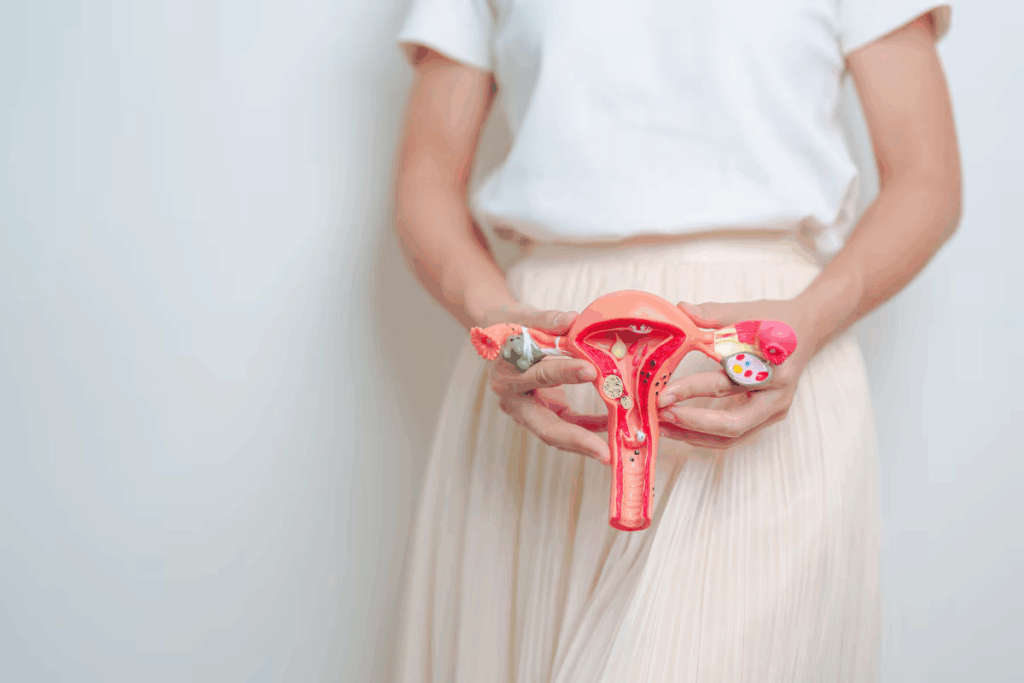
Ovarian cysts are fluid-filled sacs that grow in or on the ovaries. They are common in young women. Knowing what they are and how they work with the ovaries can help ease worries.
Definition and Basic Structure
An ovarian cyst is a sac or pocket in the ovary or on its surface. It’s filled with fluid. The ovaries make eggs and hormones that control the menstrual cycle and help with pregnancy.
“Ovarian cysts are most common in women of reproductive age, during the menstrual cycle,” they are linked to the ovaries’ normal work. An ovarian cyst has a wall that holds the fluid inside.
Normal Ovarian Function
The ovaries are key to the female reproductive system. Each month, they change to get ready for pregnancy. This includes making follicles, small sacs with eggs.
Usually, one follicle matures and releases an egg through ovulation. The menstrual cycle and hormonal changes drive this process. Knowing this helps understand how ovarian cysts form and their link to the menstrual cycle.
Exploring ovarian cysts further, it’s important to see they’re often part of normal ovarian work, mainly in young females. The main reason for ovarian cysts in this group is increased gonadotropin stimulation during puberty. This leads to the growth of functional or physiological cysts as part of the menstrual cycle.
Prevalence and Statistics

Knowing how common ovarian cysts are is key to catching them early. These cysts are quite common in women of childbearing age. Their occurrence changes a lot with age.
Frequency Among Different Age Groups
Ovarian cysts become more common in teens. Research shows that 1.8 percent of kids aged 5-9 have them. But, by the time they’re 10-18, that number jumps to 18.8 percent. About 8% of women before menopause need treatment for cysts.
Here are some numbers to show how common cysts are at different ages:
Age Group | Prevalence of Ovarian Cysts |
5-9 years | 1.8% |
10-18 years | 18.8% |
Premenopausal women | 8% |
Risk Factors for Development
Several things can make you more likely to get ovarian cysts. Hormonal imbalances and genetics are big ones. Also, conditions like polycystic ovary syndrome (PCOS) can play a part. Family history is another important factor. If your family has a history of cysts or other reproductive issues, you might be at higher risk.
“The presence of ovarian cysts can be influenced by various factors, including hormonal fluctuations and genetic predispositions. Understanding these risk factors is essential for managing and treating ovarian cysts effectively.”
Other things that might increase your risk include having had cysts before, being overweight, or taking certain hormones. Young women, and those with a family history or other risk factors, should know about these. They should talk to a doctor if they notice any symptoms.
What Causes Ovarian Cysts in Young Females
It’s important to know why ovarian cysts happen in young women. These cysts are fluid-filled sacs on the ovaries. They can be caused by different things. We’ll look at hormonal changes, gonadotropin stimulation, and genetics.
Hormonal Fluctuations During Puberty
Puberty brings big changes in hormones. These changes can cause ovarian cysts. Hormonal imbalances can mess with how ovaries work.
Some drugs used for fertility can also cause cysts. It’s key to know how hormones affect ovaries.
Gonadotropin Stimulation
Gonadotropin-releasing hormone (GnRH) makes the pituitary gland release hormones. These hormones, like FSH and LH, are key for ovaries. Gonadotropin stimulation can cause follicular cysts.
Genetic Predisposition
Genetics can also play a part in ovarian cysts. Women with a family history of cysts or reproductive issues might get them too. Knowing about genetic risks can help spot who might get cysts.
Cause | Description |
Hormonal Fluctuations | Changes in hormone levels during puberty can lead to cyst formation. |
Gonadotropin Stimulation | Stimulation of gonadotropins can influence ovarian function and cyst development. |
Genetic Predisposition | Family history can play a role in the likelihood of developing ovarian cysts. |
Physiological Cysts: Part of Normal Development
Physiological cysts are common in young females. They happen as part of normal ovarian growth. These cysts are linked to the ovaries’ normal work.
Follicular Cysts
Follicular cysts form when an ovary’s follicle doesn’t release an egg. Instead, it grows and fills with fluid. They are the most common type of ovarian cyst and are usually harmless.
These cysts can be different sizes and may cause some pain. But they often go away on their own in a few months. Follicular cysts are a normal part of how ovaries work and are not usually a worry.
Corpus Luteum Cysts
Corpus luteum cysts develop after ovulation. The follicle that released the egg turns into the corpus luteum. If it fills with fluid, it becomes a cyst. Like follicular cysts, corpus luteum cysts are generally harmless and may go away by themselves.
Knowing about these physiological cysts is key to handling them right. The table below shows the main differences between follicular and corpus luteum cysts.
Characteristics | Follicular Cysts | Corpus Luteum Cysts |
Formation | Form when a follicle fails to release an egg | Develop after ovulation from the corpus luteum |
Nature | Benign, usually resolve on their own | Generally benign, may resolve spontaneously |
Symptoms | May cause discomfort, vary in size | Can cause pelvic pain, may rupture or twist |
Even though physiological cysts are usually not harmful, they can cause symptoms. In rare cases, they can lead to problems. Getting checked and getting the right care can help manage these cysts well.
Pathological Causes of Ovarian Cysts
We will look at the different reasons why ovarian cysts form in young women. These reasons can affect their reproductive health and overall well-being.
Endometriosis and Endometriomas
Endometriosis is when tissue like the uterus lining grows outside the uterus. This can cause endometriomas, or chocolate cysts, to form. These cysts are filled with old blood because of the endometrial tissue on the ovaries.
Endometriomas are linked to endometriosis. They can cause pelvic pain, infertility, and irregular periods. Knowing how endometriosis and endometriomas are connected is key to treating ovarian cysts.
Polycystic Ovary Syndrome (PCOS)
PCOS is another condition linked to ovarian cysts. It’s marked by many small cysts on the ovaries, hormonal imbalances, and problems with ovulation.
Women with PCOS often have irregular periods, excess hair, and acne. The exact cause of PCOS is not known, but it’s thought to be a mix of genetics and environment.
Condition | Characteristics | Common Symptoms |
Endometriosis | Endometrial tissue outside the uterus | Pelvic pain, infertility, menstrual irregularities |
PCOS | Multiple small cysts on ovaries, hormonal imbalance | Irregular menstrual cycles, hirsutism, acne |
Other Pathological Conditions
Other conditions can also lead to ovarian cysts. These include ovarian tumors, dermoid cysts, and cystadenomas. While some are not harmful, they can cause discomfort and health problems.
It’s important to know the different causes of ovarian cysts for accurate diagnosis and treatment. We will dive deeper into these conditions to understand ovarian cysts in young women better.
How Hormonal Imbalances Contribute to Cyst Formation
Hormonal imbalances are key in causing ovarian cysts in young women. Puberty brings big hormonal changes that can lead to imbalances.
These imbalances can mess with the ovaries, causing cysts. Let’s look at the hormones involved.
Estrogen and Progesterone Imbalance
Estrogen and progesterone control the menstrual cycle and ovaries. An imbalance can mess up how ovaries work.
Too much estrogen can make cysts grow on ovaries. This can happen because of hormonal changes during puberty.
“Hormonal changes, like those in puberty, can increase the risk of ovarian cysts.”
Impact of Stress Hormones
Stress hormones, like cortisol, can affect the ovaries. Too much stress can raise cortisol levels, upsetting hormone balance.
This can lead to cysts. Finding ways to manage stress can help lower this risk.
Hormonal Contraceptives and Cyst Development
Hormonal birth control helps with menstrual cycles and cyst symptoms. But, it can affect cyst development differently.
Some birth controls might lower cyst risk by balancing hormones. But, it depends on the type and individual factors.
Hormonal Factor | Impact on Ovarian Cysts |
Estrogen and Progesterone Imbalance | Can stimulate cyst growth |
Stress Hormones (e.g., Cortisol) | Disrupts reproductive hormone balance |
Hormonal Contraceptives | Can regulate cycles and reduce risk |
It’s important to understand how hormones work together to prevent cysts. By fixing hormonal imbalances, young women can lower their cyst risk.
The Relationship Between Ovarian Cysts and Menstrual Cycles
It’s important for young women to know how ovarian cysts affect menstrual cycles. These cysts can cause many irregularities in menstrual health.
No Menstrual Period and Ovarian Cysts
Amenorrhea, or missing periods, is linked to ovarian cysts. We’ll look at how certain cysts can lead to irregular periods, including amenorrhea.
Key factors to consider:
- The type and size of the ovarian cyst
- Hormonal influences on menstrual cycles
- The presence of other reproductive health issues
Can Cysts on Ovaries Stop Periods?
The link between ovarian cysts and missing periods is complex. Some cysts might not directly cause amenorrhea. But, they can lead to hormonal imbalances that affect menstrual cycles.
It’s essential to understand that:
- Not all ovarian cysts will stop menstrual periods.
- Large or complex cysts are more likely to impact menstrual cycles.
- Hormonal fluctuations play a significant role in menstrual irregularities.
Cysts and Follicles: Understanding the Difference
Ovarian cysts and follicles are both fluid-filled structures in the ovaries. But they have different roles. Knowing the difference helps us understand their impact on menstrual cycles.
Characteristics | Ovarian Cysts | Follicles |
Function | Can be pathological or physiological | Normal part of ovarian function |
Impact on Menstrual Cycle | Can cause irregularities or amenorrhea | Essential for ovulation and menstrual cycle regulation |
By understanding the differences between ovarian cysts and follicles, we can better appreciate how they influence menstrual cycles and overall reproductive health.
Recognizing Symptoms of Ovarian Cysts
It’s important to know the symptoms of ovarian cysts early. Many cysts don’t show symptoms and are found during routine checkups. But, some women may notice signs that suggest they have a cyst.
Common Physical Symptoms
Ovarian cysts can cause pain in the abdomen or pelvis. They can also lead to bloating, changes in bowel habits, or frequent urination. These symptoms can be mild or severe and may come and go.
“The presence of ovarian cysts can lead to significant discomfort, affecting daily life.” If you notice these symptoms, it’s important to see a doctor if they don’t go away or get worse.
Menstrual Irregularities
Changes in menstrual cycles are common with ovarian cysts. Women might see irregular periods, heavier or lighter bleeding, or longer periods. Sometimes, cysts can even cause no period at all.
But, it’s important to remember that cysts aren’t the only reason for these changes. Hormonal imbalances can also play a part.
When Symptoms Require Medical Attention
While most cysts are harmless, some need urgent care. Sudden sharp pain, fever, and nausea are signs of a serious issue like a ruptured cyst or ovarian torsion. These are emergencies.
“Severe symptoms, such as sudden sharp abdominal pain, should not be ignored and require immediate medical evaluation.” If you have these severe symptoms, get help right away.
In summary, knowing the symptoms of ovarian cysts and when to see a doctor is key. Regular check-ups and understanding your body can help catch and manage cysts early.
Diagnosis of Ovarian Cysts in Young Females
To find ovarian cysts, doctors use a detailed method. This includes a physical check, advanced imaging, and lab tests. This careful process is key to spotting cysts in young women.
Physical Examination
A physical check is often the first step. A doctor might do a pelvic exam to look for any issues in the reproductive area. This can spot big cysts or any tenderness.
Imaging Studies
Imaging tests are very important for finding cysts. Ultrasound imaging is often used to see the ovaries and find cysts. It shows the cyst’s size, location, and type, like if it’s filled with fluid or solid. Sometimes, MRI or CT scans are used for more detailed info.
Laboratory Tests
Labs also play a big role in diagnosing cysts. Blood tests check hormone levels and tumor markers. These tests help figure out what kind of cyst it is and rule out other problems. For example, high tumor marker levels might mean a complex cyst needs more checking.
Diagnosing ovarian cysts involves these steps together. This way, doctors can understand the cyst’s details and the patient’s health. Then, they can plan the best treatment.
Treatment Approaches for Different Types of Cysts
Every ovarian cyst is different. The treatment depends on the cyst’s type, size, and symptoms. We make sure each plan is tailored to the patient’s unique needs.
Watchful Waiting for Physiological Cysts
Physiological cysts are common in young women. They often go away by themselves. We suggest watchful waiting with regular check-ups and ultrasounds to keep an eye on them.
Medical Interventions
Not all cysts can wait. For some, medical interventions are needed. Hormonal birth control pills can help prevent new cysts and regulate periods. Sometimes, we also prescribe pain medication to ease symptoms.
- Hormonal therapies to regulate hormonal imbalances
- Pain relief medications to manage discomfort
- Monitoring through regular ultrasound examinations
Surgical Options When Necessary
For big, persistent, or symptom-causing cysts, surgical intervention is needed. Laparoscopic surgery is a less invasive way to remove cysts. It’s preferred for its quick recovery and lower risk of complications.
We carefully choose the best treatment for each patient. We make sure it meets their specific needs and health status.
Prevention and Management Strategies
Lifestyle changes and regular check-ups are key to preventing and managing ovarian cysts. Knowing the risks and living a healthy lifestyle can lower the chance of getting ovarian cysts.
Lifestyle Modifications
Changing your lifestyle can help avoid ovarian cysts. Keeping a healthy weight is important because being overweight increases the risk. Eating a diet full of fruits, vegetables, and whole grains helps keep hormones balanced, which lowers cyst risk.
Exercising regularly is also good. It makes your body more sensitive to insulin and can lower the risk of PCOS, a condition linked to cysts.
Lifestyle Change | Benefit |
Maintaining a healthy weight | Reduces risk of ovarian cysts |
Balanced diet | Regulates hormonal balances |
Regular physical activity | Improves insulin sensitivity, reduces PCOS risk |
Regular Monitoring
Going for regular gynecological check-ups is vital for catching ovarian cysts early. These visits include pelvic exams and ultrasounds to check on your ovaries.
If you’ve had cysts before or have other risk factors, you might need to go more often. This helps catch problems early, before they get worse.
When to Seek Medical Advice
It’s important for young women to know when to see a doctor. If you have severe pelvic pain, vaginal bleeding, or other unusual symptoms, go see a healthcare provider.
Getting diagnosed and treated early can make a big difference. Being informed and proactive helps manage your health and lowers the risk of cyst complications.
Conclusion
Ovarian cysts are common in young females. It’s important to know what causes them, their symptoms, and how to treat them. This knowledge helps keep them healthy and happy.
We looked at how often ovarian cysts happen and why they form. We also talked about how hormonal changes can lead to cysts. This helps us understand their role in health.
We discussed how cysts relate to menstrual cycles and how to spot symptoms. We also covered how to diagnose and treat different types of cysts. This information is key to managing ovarian cysts in young women.
In short, ovarian cysts are a big deal for young females. Knowing the causes and symptoms helps us find the right treatment. This improves their life quality. It’s vital to keep an eye on health and seek help when needed.
FAQ
What are the main causes of ovarian cysts in young females?
Ovarian cysts in young females often come from hormonal changes during puberty. Hormonal shifts and genetic factors also play a role. These can lead to different types of cysts, both normal and abnormal.
How do hormonal imbalances contribute to cyst formation?
Hormonal imbalances, like an imbalance of estrogen and progesterone, can cause cysts. Stress hormones can also affect hormone levels, increasing cyst risk.
Can ovarian cysts stop menstrual periods?
Yes, ovarian cysts can disrupt menstrual cycles. They can affect how the ovaries work, leading to irregular or missing periods.
What is the difference between cysts and follicles on the ovaries?
Cysts and follicles are both fluid-filled structures on the ovaries. But, follicles are part of normal ovarian function, releasing an egg. Cysts, on the other hand, are abnormal growths.
What are the common symptoms of ovarian cysts?
Common symptoms include pelvic pain, bloating, and irregular periods. In severe cases, cysts can cause intense pain or other serious issues.
How are ovarian cysts diagnosed?
Diagnosis involves a physical exam, imaging like ultrasound, and lab tests. These help doctors understand the cyst’s type and characteristics.
What are the treatment options for ovarian cysts?
Treatment varies based on the cyst’s type and characteristics. For some, watching and waiting is best. Others may need medical or surgical intervention.
Can lifestyle modifications help prevent or manage ovarian cysts?
Yes, healthy lifestyle choices can help. Maintaining a healthy weight, exercising, and managing stress are key. Regular check-ups and knowing when to seek help are also important.
Are ovarian cysts genetic?
Genetics play a role in ovarian cysts, with some women more likely to get them. But, hormonal changes and environmental factors also influence risk.
What is the relationship between endometriosis and ovarian cysts?
Endometriosis can cause ovarian cysts, known as endometriomas. These cysts are filled with old blood and can cause pain and other issues.
Can ovarian cysts be a sign of an underlying condition like PCOS?
Yes, ovarian cysts can be a sign of PCOS. PCOS is a hormonal disorder that can cause multiple cysts and other symptoms like irregular periods and fertility issues.
How do ovarian cysts affect menstrual cycles?
Ovarian cysts can disrupt menstrual cycles, causing irregularities. The impact on menstrual cycles depends on the cyst’s type and characteristics.
References
National Center for Biotechnology Information. Ovarian Cysts: Prevalence and Characteristics in Young Females. Retrieved from https://www.ncbi.nlm.nih.gov/pmc/articles/PMC11856845/