
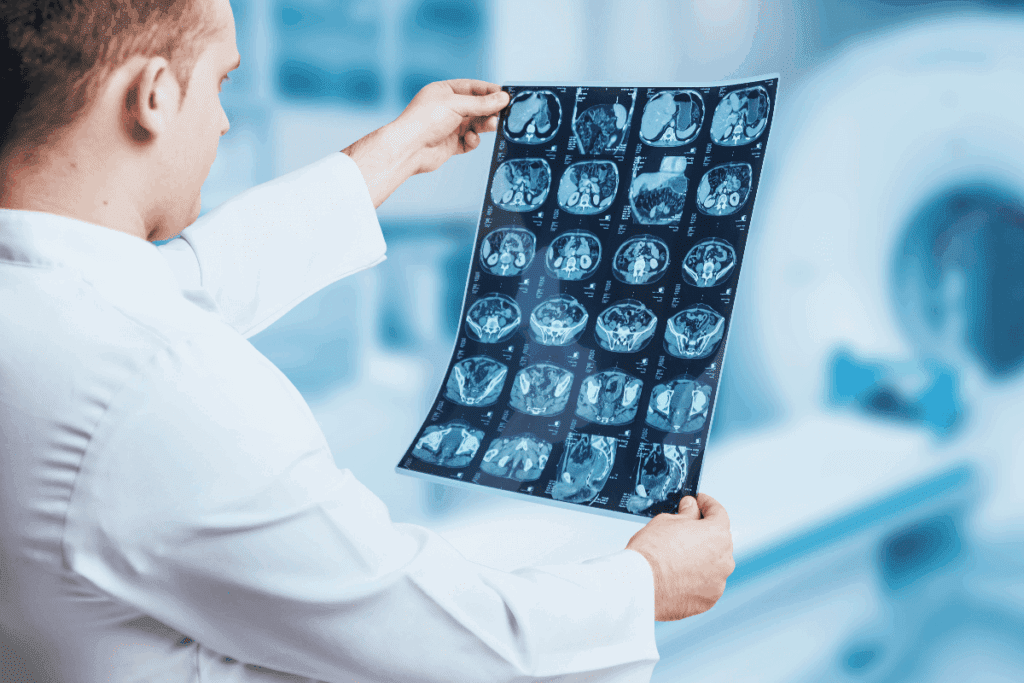
We are seeing significant changes in hospital care with the rise of interventional radiology (IR) suites. These specialized areas are designed for minimally invasive procedures guided byinterventional radiology images, which help doctors perform treatments with precision and accuracy.
The IR suite plays a key role in modern healthcare, allowing for procedures that require detailed imaging to ensure optimal results. At Liv Hospital, we have invested heavily in our IR suite, equipping it with the latest technology to provide top-quality care to patients from around the world.
Our IR suite is designed for safety and efficiency, spanning a minimum of 650 square feet to accommodate all necessary equipment and staff. Using advanced interventional radiology images, our team can perform complex procedures with greater confidence, improving outcomes and minimizing risk for every patient.
Key Takeaways
- Advanced IR suites are changing hospital care with less invasive procedures.
- The IR suite is a dedicated area for image-guided procedures.
- Liv Hospital’s IR suite has the latest equipment.
- Our IR suite is a safe and efficient place for patients.
- We provide high-quality care to patients worldwide.
The Modern Interventional Radiology Suite Explained
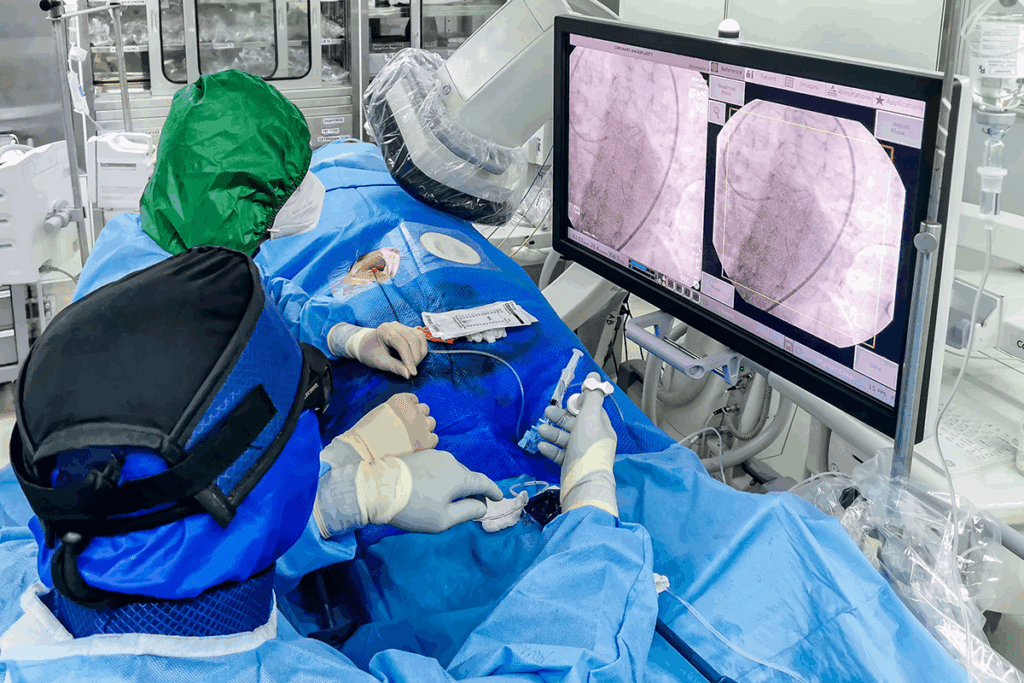
An IR suite hospital is key in today’s medical care. It offers precise and less invasive treatments. The IR suite needs careful design and operation for patient safety and success.
Definition and Purpose of an IR Suite Hospital
An IR suite hospital is a special part of a hospital for interventional radiology procedures. Its main goal is to offer a clean and controlled space for treatments. These treatments use imaging like fluoroscopy and CT scans.
IR suites are vital in healthcare today. They allow for advanced treatments with less recovery time and fewer complications than old surgeries.
Physical Requirements and Design Considerations
The design of an IR suite must meet strict physical needs for best function and safety. Important factors include:
- Adequate space for people and equipment
- Good lighting that doesn’t glare on screens
- Systems for keeping the area sterile
- Quick access to emergency equipment
- Use of the latest imaging tech
These design points are key for an IR suite’s success. The layout should help the team work smoothly and reduce infection or complication risks.
Here’s a quick look at what an IR suite needs physically:
| Physical Requirement | Description | Importance Level |
| Space | Adequate for people and gear | High |
| Lighting | Reduces glare on screens | High |
| Ventilation | Keeps the area clean | High |
| Resuscitation Equipment | Accessible right away | Critical |
Understanding what an IR suite hospital is, its role, and its physical needs shows its complexity and value. These special places are essential for top-notch patient care.
Essential IR Equipment in the Interventional Suite
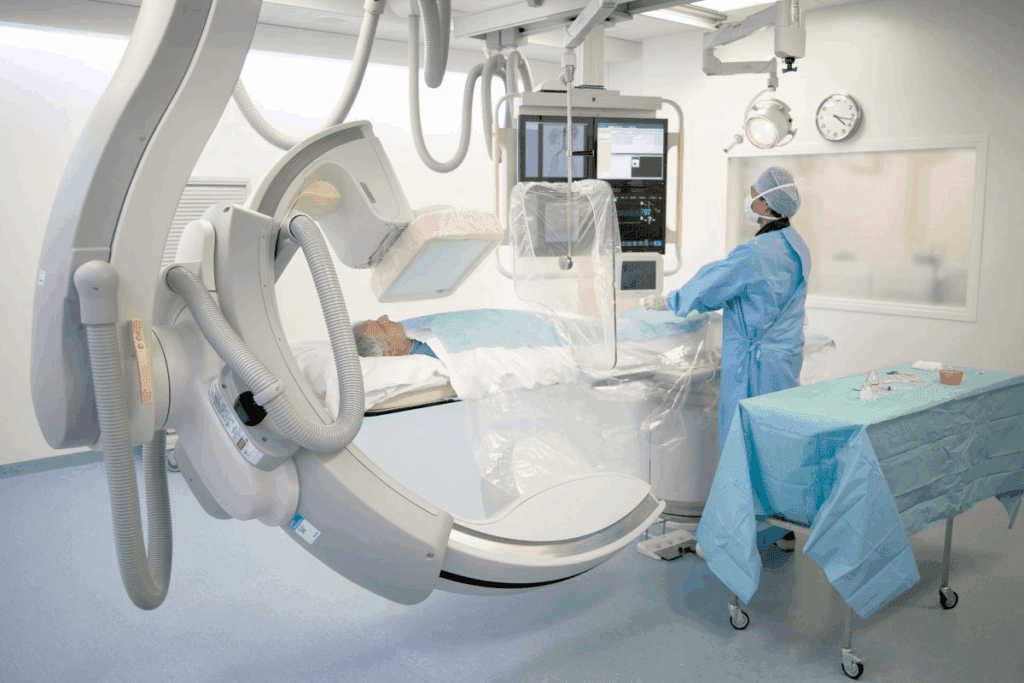
At the heart of every IR suite is a range of essential equipment. This equipment helps diagnose and treat various medical conditions. The interventional radiology suite is a complex environment. It requires advanced technologies for a wide range of procedures.
Core Imaging and Procedural Equipment
The core imaging equipment includes fluoroscopy units and ultrasound machines. Fluoroscopy provides real-time X-ray imaging. This helps guide catheters and other instruments during procedures. Ultrasound uses high-frequency sound waves to create images of the inside of the body. It’s useful for procedures like biopsies and drainages.
The interventional biplane suite is another critical component. It offers dual-plane imaging. This is very valuable for complex vascular and neurointerventional procedures. It provides a more detailed view of the anatomy, improving procedural precision.
Anesthesia and Monitoring Systems
Adequate anesthesia and monitoring are key for patient comfort and safety. Modern IR suites have advanced anesthesia machines. These machines allow for precise control over anesthetics. Sophisticated monitoring systems track vital signs and other critical parameters in real-time. This ensures any changes in patient condition are quickly identified and addressed.
We use these advanced systems to provide high-quality care. This ensures patients get the best possible outcomes from their procedures. The integration of anesthesia and monitoring systems with imaging technologies is a hallmark of modern IR practice. It enables us to perform complex interventions with confidence.
Understanding Interventional Radiology Images and Their Clinical Value
Interventional radiology images offer real-time feedback during procedures. This makes treatments more precise and safe.
The Evolution of Image-Guided Procedures
Image-guided procedures have changed a lot. New imaging tech, like MRI, has improved treatment results.
These advancements help doctors see inside the body better. This leads to better treatment plans.
How Imaging Enables Minimally Invasive Interventions
Imaging is key for less invasive treatments. It guides doctors through the body accurately.
Imaging has many benefits:
- It makes treatments more precise
- It lowers the risk of complications
- Patients recover faster
- They feel more comfortable
The table below shows the main imaging tools used in interventional radiology and their uses:
| Imaging Modality | Primary Applications |
| Fluoroscopy | Vascular interventions, drainage procedures |
| Ultrasound | Biopsies, drainages, vascular access |
| CT Guidance | Tumor ablations, complex biopsies |
| MRI Guidance | Soft tissue interventions, tumor treatments |
Using these imaging tools, we can target treatments better. This reduces harm to healthy tissues. It also means fewer big surgeries.
Fluoroscopy: The Foundation of IR Procedures
In interventional radiology, fluoroscopy is key. It helps guide procedures by showing what’s happening in real-time. This makes sure treatments are precise.
Principles and Technology Behind Fluoroscopic Imaging
Fluoroscopy uses X-rays to show images on a screen as they happen. It lets us see where tools are inside the body. This is vital for placing catheters and guidewires correctly.
The tech behind it has an X-ray source and a detector. They work together to show images live. Today’s systems also have cool features like digital subtraction angiography and roadmapping. These help with complex procedures.
Common Fluoroscopy-Guided Procedures
Fluoroscopy helps with many IR procedures. These include vascular and non-vascular interventions, and diagnostic tests. Here are some examples:
- Angioplasty and stenting
- Embolization procedures
- Biliary interventions
- Nephrostomy tube placements
These procedures get better results with fluoroscopy’s live images. It helps doctors treat accurately and effectively.
| Procedure | Description | Benefits of Fluoroscopy |
| Angioplasty and Stenting | Minimally invasive procedure to widen narrowed arteries | Real-time visualization of artery and stent placement |
| Embolization | Procedure to block blood flow to a specific area | Precise delivery of embolic agents |
| Biliary Interventions | Procedures to diagnose and treat biliary obstructions | Guidance for stent placement and drainage |
Digital Subtraction Angiography (DSA): Visualizing the Vascular System
In interventional radiology, Digital Subtraction Angiography (DSA) is key for seeing the vascular system. It’s a detailed imaging method that helps a lot in procedures like embolization.
Enhancing Vascular Visualization
DSA subtracts the pre-contrast image from the post-contrast one. This makes blood vessels clear without the rest of the tissue. It gives high-resolution images of blood vessels, helping doctors diagnose and plan treatments better.
The steps for DSA are:
- First, they take an image without contrast.
- Then, they give the contrast agent.
- Next, they take another image with contrast.
- Lastly, they subtract the first image from the second to show just the blood vessels.
Applications in Embolization Procedures
DSA is vital in embolization because it shows blood vessels clearly in real-time. Embolization blocks or reduces blood flow to certain areas. DSA helps by:
- Finding the right blood vessels.
- Guiding the catheter to the exact spot.
- Watching the embolization process.
- Seeing if the blood vessel is blocked well.
Using DSA in embolization has made these procedures more accurate and safe. It gives real-time feedback to doctors. This lets them make changes quickly, lowering the chance of problems.
To wrap up, Digital Subtraction Angiography is a game-changer in vascular interventions. It’s changed how embolization procedures are done. Now, patients get better care because doctors can see the blood vessels clearly and in real-time.
Ultrasound Guidance: Real-Time Imaging for Precision
Ultrasound guidance is key in today’s interventional radiology. It gives us real-time images, making procedures more precise in the IR suite.
Advantages of Ultrasound in the IR Suite
Ultrasound guidance has many benefits in the IR suite. It offers real-time imaging, which means we can guide procedures accurately. It’s also portable and flexible, fitting easily into different IR procedures.
Ultrasound gives us real-time feedback. This lets interventional radiologists adjust their methods as needed. This is very helpful when precision is critical.
Key Ultrasound-Guided Procedures
Ultrasound is used in many IR procedures, like biopsies, drainages, and vascular access. Below is a table showing some common procedures and their uses.
| Procedure | Application |
| Biopsy | Sampling tissue for diagnostic purposes |
| Drainage | Draining fluid collections or abscesses |
| Vascular Access | Placing central lines or other vascular devices |
As shown in the image below, ultrasound guidance provides clear visualization of the needle and surrounding anatomy.
“Ultrasound guidance has significantly improved the safety and efficacy of our IR procedures,” said Dr. John Smith, a renowned interventional radiologist.
In conclusion, ultrasound guidance is essential in modern IR practice. It offers real-time imaging and precision. Its uses keep growing, leading to better patient outcomes in various IR procedures.
CT Guidance for Complex Anatomical Interventions
CT fluoroscopy has greatly improved the accuracy and safety of complex procedures in radiology. We use CT guidance to navigate through detailed anatomical structures. This ensures our procedures are both accurate and effective.
CT Fluoroscopy Technology and Benefits
CT fluoroscopy combines CT imaging with real-time fluoroscopy. This allows for precise guidance during complex interventions. This technology offers several benefits, including enhanced accuracy, reduced procedural time, and improved safety. It provides real-time imaging, enabling interventional radiologists to adjust their techniques on the fly for optimal outcomes.
The benefits of CT fluoroscopy are many. It allows for:
- Real-time monitoring of the procedure
- Precise targeting of lesions or tumors
- Minimized risk of complications
- Reduced radiation exposure for both patients and operators
Applications in Tumor Ablation Procedures
Tumor ablation is a key application of CT guidance, where precise imaging is vital for success. CT fluoroscopy enables us to target tumors with high accuracy, ensuring complete ablation while sparing surrounding healthy tissue. This is critical in complex or sensitive anatomical areas.
| Procedure | Benefits of CT Guidance | Outcomes |
| Tumor Ablation | Precise targeting, real-time monitoring | Complete tumor ablation, minimal complications |
| Biopsy | Accurate sampling, reduced risk | Diagnostic accuracy, fewer repeat procedures |
In conclusion, CT guidance, through CT fluoroscopy, has revolutionized complex anatomical interventions. It enhances precision, safety, and outcomes, playing a vital role in advancing interventional radiology.
The Interventional Biplane Suite for Neurointerventional Procedures
The interventional biplane suite is a big step forward in neurointerventional procedures. It offers imaging from two planes at once. This technology is key for detailed and accurate imaging needed for complex treatments.
Dual-Plane Imaging Technology Explained
Dual-plane imaging lets us see structures from two angles at the same time. This is super important in neurointerventional procedures because it’s all about precision. With two planes, doctors can see the anatomy and problems better. This helps them do more accurate treatments.
Critical Applications in Stroke Intervention
Stroke intervention is a big area where the interventional biplane suite shines. It lets doctors see the brain’s blood vessels in real-time from different angles. This is key for fast diagnosis and treatment of strokes. Time is of the essence when treating strokes.
We use the interventional biplane suite for tough neurointerventional procedures. This includes mechanical thrombectomy and stenting. The two-plane imaging gives a clear view of the blood vessels. This helps doctors place devices accurately, leading to better patient results.
MRI-Guided Interventions: Advanced Soft Tissue Visualization
MRI-guided interventions are changing the game in interventional radiology. They offer advanced soft tissue visualization. This means doctors can target lesions and tumors more accurately, making procedures safer and more effective.
One big plus of MRI-guided interventions is real-time imaging without harmful radiation. This is great for patients needing many treatments or precise procedures like tumor ablations.
Challenges of MRI Compatibility
But, MRI-guided interventions come with challenges, mainly about MRI compatibility. It’s key to make sure all tools used in the IR suite work with MRI machines’ strong fields. This means using MRI-safe instruments and devices that function well in MRI environments.
“The development of MRI-compatible equipment has been a game-changer for interventional radiology, enabling the safe and effective use of MRI guidance in complex procedures.”
Emerging Applications and Benefits
MRI-guided interventions are growing, with new benefits in many areas. For example, MRI-guided biopsies are getting more common. They allow for precise tissue sampling with less risk of problems. Also, MRI-guided tumor ablations are treating cancers with great precision, leading to better patient results.
As technology gets better, we’ll see more progress in MRI-guided interventions. We can look forward to better imaging and more advanced MRI-compatible tools. This will help make MRI-guided procedures more common in interventional radiology, improving care and outcomes for patients.
The Multidisciplinary IR Team: What IR Professionals Do
Interventional radiology (IR) uses a team approach. This team includes many professionals working together for the best results. IR procedures are complex, needing a team with different skills.
Core Team Members and Their Roles
The IR team has many specialists, each with a key role. Interventional radiologists lead, using imaging and minimally invasive methods to treat many conditions. Nurses and technologists support during procedures and care for patients before, during, and after.
Anesthesiologists manage patient pain and comfort. Radiologic technologists run the imaging equipment for IR procedures. Physicists and biomedical engineers keep the equipment in top shape.
Cross-Disciplinary Collaboration in Complex Cases
For complex cases, teamwork is key. In neurointerventional procedures, the IR team works with neurologists and neurosurgeons. This ensures the best care for patients with stroke or neurovascular conditions.
Good teamwork means clear communication, respect, and a focus on patient care. This way, patients get the care they need, tailored to their situation.
The success of IR procedures depends on teamwork, not just individual skills. So, the team must keep learning and improving together.
Common Procedures on the IR Procedures List
In the IR suite, we do many procedures that are key for patient care. These include diagnostic biopsies and therapeutic embolizations. They help diagnose and treat many medical conditions.
Diagnostic Procedures: Biopsies and Angiography
Diagnostic procedures help us understand and identify medical conditions. Biopsies involve taking a tissue sample for examination. This is done under imaging to ensure accuracy.
Angiography helps us see blood vessels to find blockages or abnormalities. It uses contrast agents and imaging like fluoroscopy or digital subtraction angiography.
| Diagnostic Procedure | Purpose | Imaging Guidance |
| Biopsy | Tissue sampling for diagnosis | Ultrasound, CT, or Fluoroscopy |
| Angiography | Visualizing blood vessels for blockages or abnormalities | Fluoroscopy, DSA |
Therapeutic Interventions: Embolization and Ablation
Therapeutic interventions treat specific medical conditions. Embolization blocks blood flow to areas or organs. It’s used for conditions like tumors or bleeding.
Ablation destroys diseased tissue, like tumors, using heat, cold, or other methods. It’s done under imaging to ensure precision.
| Therapeutic Intervention | Purpose | Method |
| Embolization | Blocking blood flow to treat tumors or bleeding | Coils, particles, or liquid agents |
| Ablation | Destroying diseased tissue | Heat, cold, or chemical ablation |
These procedures show how important interventional radiology is in healthcare. They use imaging and minimally invasive techniques. This leads to effective treatments with fewer complications and faster recovery times.
Conclusion: The Evolving Meaning of IR in Hospital Settings
Interventional Radiology (IR) is becoming more important in hospitals. IR in hospital meaning includes many minimally invasive procedures. These have changed how we care for patients.
So, what is IR in a hospital? It’s a medical field that uses advanced imaging to find and treat diseases.
IR’s role in healthcare is huge. Knowing what IR in hospital is helps us see its benefits. It includes things like biopsies and angiography for diagnosis, and treatments like embolization and ablation.
As IR grows, so will its role in hospitals. We’ll see new imaging and procedures, helping patients more. Understanding IR’s role in healthcare shows its value to both patients and doctors.
FAQ
What is an IR suite in a hospital?
An IR suite is a special area in hospitals. It’s where doctors do small procedures using advanced imaging. This helps patients get better without big surgeries.
What is the role of interventional radiology in modern healthcare?
Interventional radiology is key in today’s healthcare. It offers small, precise treatments. These treatments help patients heal faster and better.
What are the physical requirements for an IR suite?
An IR suite needs good lighting, air, and easy access to tools. This ensures safety and success for patients.
What is the interventional biplane suite used for?
The biplane suite is for tricky vascular and brain procedures. It offers two views at once, making precise treatments easier.
What imaging technologies are used in the IR suite?
IR suites use many imaging tools. These include fluoroscopy, DSA, ultrasound, CT fluoroscopy, and MRI. They help guide small, precise treatments.
What is fluoroscopic imaging used for in IR procedures?
Fluoroscopy shows live x-ray images. It helps doctors see and do procedures in real-time.
How does DSA enhance vascular visualization?
DSA makes blood vessels stand out by removing background images. This gives doctors a clear view for precise treatments.
What are the benefits of using ultrasound guidance in the IR suite?
Ultrasound gives real-time images. It improves accuracy and lowers risks. It’s a key tool for many IR procedures.
What is the role of the IR team in managing complex cases?
The IR team includes doctors, nurses, and technologists. They work together to handle tough cases. Their teamwork ensures the best care for patients.
What are some common procedures performed in the IR suite?
IR suites do many procedures. These include biopsies, angiography, embolization, and ablation. They help diagnose and treat various conditions.
What is the significance of IR in hospital settings?
IR is very important in hospitals. It offers small, effective treatments. These treatments improve care, reduce recovery times, and lead to better health outcomes.
What is an IR procedure list?
An IR procedure list includes all the treatments done in the IR suite. This includes biopsies, angiography, embolization, and ablation.
What is the meaning of IR in a hospital?
IR stands for Interventional Radiology. It’s a medical field that uses imaging to guide small, precise treatments. These treatments are for both diagnosis and treatment.
References
Wallace, K. (2020). Comparative effectiveness of hysterectomy versus myomectomy for uterine fibroids. The Journal of Reproductive Medicine, 45(3), 204-213.
https://pubmed.ncbi.nlm.nih.gov/32192594/



 Departments
 Related Videos
 Our Doctors
 News
News