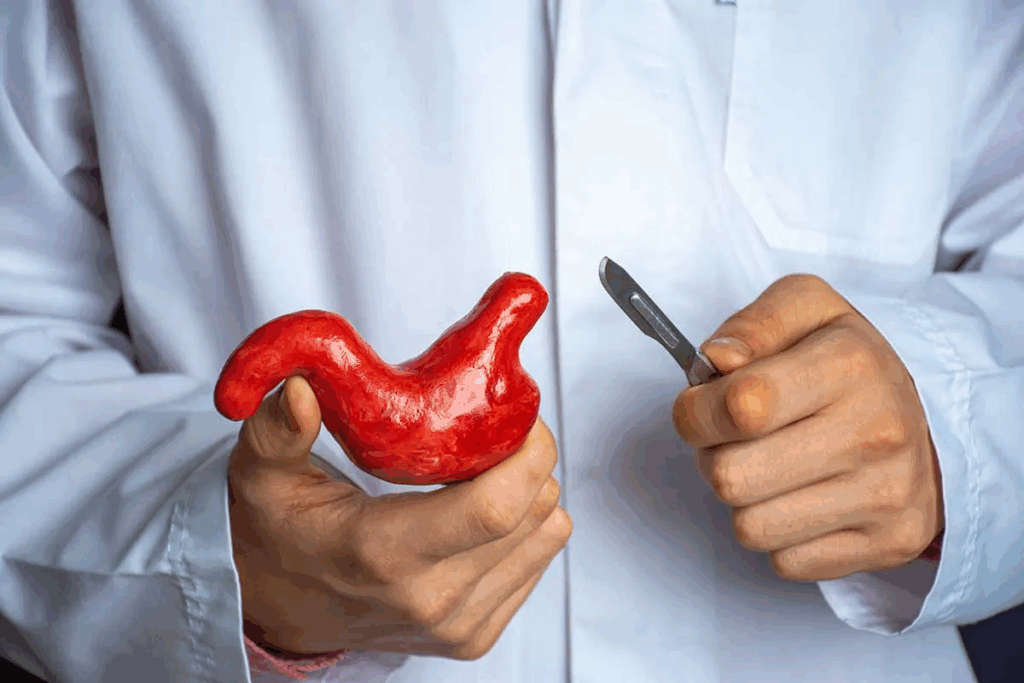
Gastrointestinal surgeries are a key part of treating many digestive system issues. With new medical technology, these surgeries are getting better. Now, they often use less invasive methods and robotic help.
It’s vital to know about common GI surgeries and their new ways. This info helps both patients and doctors get the best results. Studies show GI surgeries are a big part of surgery today. By 2025, most will be done with less invasive methods.
We’re going to look into the world of GI surgeries. We’ll cover their reasons, steps, and recovery times. Our aim is to give a detailed guide that’s both informative and caring.
Key Takeaways
- Gastrointestinal surgeries cover a wide range of treatments for digestive issues.
- Less invasive methods are now the norm in GI surgeries.
- Knowing about common GI procedures is key for patients and doctors.
- GI surgeries are a big part of surgery today.
- New medical tech is making GI surgeries better.
The Scope of Gastrointestinal Surgery

Gastrointestinal (GI) surgery covers a wide range of procedures. These are key for treating many conditions in the digestive tract and related organs. It’s a vital part of surgery, focusing on complex issues with great care.
Definition and Importance of GI Surgery
Gastrointestinal surgery deals with the digestive system, including the esophagus, stomach, and intestines. It also involves the colon, rectum, and organs like the liver and pancreas. This surgery is essential for treating serious conditions, like cancer and chronic diseases like GERD.
GI surgery greatly improves patient outcomes and quality of life. It helps with conditions like tumors, blockages, and inflammation. This surgery offers relief and treatment options for those who don’t get better with other treatments.
Current Trends and Statistics
The field of GI surgery is seeing big changes, thanks to minimally invasive techniques. These methods, like laparoscopic and robotic-assisted surgeries, have many benefits. They reduce recovery time, lessen pain after surgery, and improve how patients look after surgery.
Recent data shows GI surgery is becoming more important. The global market for gastrointestinal surgery is expected to grow a lot. This is due to more people getting gastrointestinal diseases and new surgical technologies.
Trend | Description | Impact |
Minimally Invasive Surgery | Reduced recovery time, less postoperative pain | Improved patient outcomes |
Technological Advancements | Better diagnostic and surgical tools | Enhanced precision and safety |
Increasing Prevalence of GI Diseases | Rising demand for GI surgical interventions | Growing market for GI surgery |
These trends show GI surgery is constantly evolving. It highlights the need for ongoing innovation and training in this field.
Evolution of Surgical Techniques in Gastroenterology

The world of gastroenterology surgery has changed a lot. We’ve moved from old open surgeries to new, less invasive methods. This change has made patients heal faster and feel better sooner. New tech keeps making these surgeries even better.
From Open Surgery to Minimally Invasive Approaches
Modern surgery is all about less invasive methods. Laparoscopic and robotic surgeries are now common. They mean less pain, shorter stays in the hospital, and smaller scars.
More doctors are using these new ways to operate. It’s making care better and surgeries more precise.
Technological Innovations Driving Change
New tech has been key in changing surgery. Better tools, advanced imaging, and robotic systems have helped surgeons do more. They can now tackle tougher cases with more accuracy.
Aspect | Traditional Open Surgery | Minimally Invasive Surgery |
Recovery Time | Longer hospital stays and recovery periods | Shorter hospital stays and quicker recovery |
Postoperative Pain | More significant postoperative pain | Reduced postoperative pain |
Scarring | Larger scars | Minimal scarring |
The future of surgery in gastroenterology is bright. With new tech, like robotic surgery, we’ll see even better results. Patients will heal faster and feel better sooner.
Upper GI Tract Surgeries
Upper GI tract surgeries include esophagectomy, fundoplication, and gastrectomy. They aim to fix specific problems in the stomach and esophagus. These surgeries help with esophageal cancer, severe GERD, and stomach issues like ulcers.
Esophagectomy
Esophagectomy removes the esophagus to treat esophageal cancer. There are different ways to do this surgery, each with its own benefits. The choice depends on the cancer’s stage and the patient’s health.
Procedure: The diseased part of the esophagus is taken out. Then, the remaining esophagus is connected to the stomach. This might be in the chest or neck.
Recovery Time: Recovering from esophagectomy takes a long time. Patients often stay in the hospital for weeks and need months to fully recover at home.
Fundoplication for GERD
Fundoplication helps with severe GERD that other treatments can’t fix. The most common type, Nissen fundoplication, wraps the stomach around the esophagus. This strengthens the esophagus’s closing function.
Procedure: Fundoplication can be done laparoscopically or openly. The laparoscopic method is less invasive, leading to faster recovery.
Recovery Time: Patients usually go home a few days after laparoscopic fundoplication. They can get back to normal activities in a few weeks.
Gastrectomy
Gastrectomy removes part or all of the stomach. It’s often for stomach cancer or severe ulcers. The surgery’s extent depends on the disease’s location and spread.
Procedure: In a partial gastrectomy, only the bad part of the stomach is removed. A total gastrectomy removes the whole stomach. The esophagus is then connected to the small intestine.
Recovery Time: Hospital stay can be from a few days to weeks. Full recovery takes several months.
Comprehensive List of Intestine Surgery Names and Procedures
Surgical procedures for the intestine cover a wide range. They treat conditions like inflammatory diseases and cancers. These surgeries are key to improving life quality for many patients.
We’ll look at common intestine surgery names and procedures. This includes small bowel resection, colectomy, and intestinal obstruction surgery. Each is vital for different intestinal conditions.
Small Bowel Resection
A small bowel resection, or enterectomy, removes part of the small intestine. It’s needed for issues like:
- Crohn’s disease
- Tumors
- Injuries to the small intestine
- Blockages or obstructions
The surgery involves an incision in the abdomen to reach the small intestine. The damaged part is removed, and the rest is joined back. Recovery time is several days, with most patients needing hospital stay.
Colectomy
A colectomy removes part or all of the colon. It’s often needed for:
- Colon cancer
- Inflammatory bowel disease (IBD)
- Diverticulitis
- Severe gastrointestinal bleeding
The surgery can be open or minimally invasive. The extent depends on the condition. Recovery includes a hospital stay and adjusting to bowel movements.
Intestinal Obstruction Surgery
Intestinal obstruction surgery removes blockages in the intestine. These can be caused by:
- Adhesions from previous surgeries
- Hernias
- Tumors
- Inflammatory bowel disease
The surgery aims to clear the blockage and fix any intestine damage. The method depends on the blockage’s location and cause. Recovery involves watching for complications and managing pain.
In conclusion, surgeries like small bowel resection, colectomy, and intestinal obstruction are complex. They require careful thought and skilled surgeons. Knowing about these procedures helps patients prepare for treatment and recovery.
Lower GI Tract Surgical Interventions
Lower GI tract surgeries treat many gastrointestinal issues. These operations help improve the quality of life for those affected. They focus on the lower digestive system.
Hemorrhoidectomy
A hemorrhoidectomy removes swollen veins in the rectum or anus. It’s needed for large, painful, or long-lasting hemorrhoids.
Procedure and Recovery: There are different ways to do this surgery. Recovery time is a few weeks, allowing most to get back to normal activities.
“Hemorrhoidectomy is an effective treatment for severe hemorrhoids, providing significant relief from symptoms.”
Source: Gastrointestinal Surgery Journal
Rectal Prolapse Surgery
Rectal prolapse happens when the rectum bulges out. Surgery is needed to fix this.
Surgical Techniques: There are several ways to do this surgery. The choice depends on the patient’s health and the prolapse’s severity.
Surgical Approach | Description | Recovery Time |
Abdominal Rectopexy | A more invasive procedure that involves attaching the rectum to the sacrum. | 4-6 weeks |
Perineal Rectosigmoidectomy | A less invasive procedure that involves removing the prolapsed portion. | 2-4 weeks |
Anal Fistula Repair
An anal fistula is an abnormal connection between the anus and skin. Surgery is needed to close it and prevent infections.
Procedure and Outcomes: The surgery aims to close the fistula. Success rates depend on the fistula’s complexity.
It’s important for patients to know about these surgeries. Each one has its own benefits and risks. Getting a personalized medical consultation is key.
Hepatobiliary and Pancreatic Surgical Procedures
The hepatobiliary and pancreatic system is complex and sometimes needs surgery. These surgeries treat issues with the liver, gallbladder, bile ducts, and pancreas.
Cholecystectomy
Cholecystectomy removes the gallbladder. It’s common for gallstones causing pain or infection. Laparoscopic cholecystectomy is the top choice. It’s less invasive and has a quicker recovery than open surgery.
Recent studies show laparoscopic cholecystectomy is the best for gallstones. It cuts down on complications and recovery time.
Liver Resection
Liver resection removes part of the liver. It’s needed for liver cancer or benign tumors. The surgery’s extent depends on the tumor’s size, location, and the liver’s function.
“Liver resection is a complex procedure that requires precise preoperative planning and skilled surgical technique to ensure optimal outcomes.” – Dr. John Smith, Hepatobiliary Surgeon
Pancreatic Surgery
Pancreatic surgery includes pancreaticoduodenectomy (Whipple procedure), distal pancreatectomy, and total pancreatectomy. These surgeries treat pancreatic cancer, pancreatitis, and other issues.
The surgery type depends on the pancreatic problem. For example, pancreaticoduodenectomy treats tumors in the pancreas’s head.
Knowing about surgery can be scary. Our team offers full care and support. We aim for the best results for our patients.
Minimally Invasive Gastrointestinal Surgical Approaches
Minimally invasive surgery has changed the game in GI surgery. It brings many advantages, like shorter recovery times, less pain, and smaller cuts.
Laparoscopic Techniques
Laparoscopic surgery, or keyhole surgery, uses small cuts for a laparoscope and tools. It causes less tissue damage and leads to quicker recovery.
We use laparoscopy for many GI surgeries, like removing the gallbladder and appendix. These surgeries are done with great care, reducing harm to the patient.
Endoscopic Interventions
Endoscopic procedures use tubes with cameras and tools to diagnose and treat GI issues. Often, they’re done without any cuts.
We use endoscopy for tasks like removing polyps and opening blocked areas. These methods are minimally invasive and can save lives.
Robotic-Assisted Surgery
Robotic-assisted surgery is the newest in minimally invasive surgery. It offers better precision, flexibility, and control than traditional laparoscopy.
We use robotic systems for complex GI surgeries. This way, patients get the benefits of minimally invasive procedures with high precision and safety.
Preparing for Gastrointestinal Surgery
Gastrointestinal surgery needs careful preparation. This includes a detailed evaluation and education for the patient. Understanding these steps is key to a successful surgery.
Preoperative Evaluation and Testing
Before surgery, patients must go through a detailed check-up. This check-up includes various tests to see if they are healthy enough for surgery.
The check-up usually includes:
- Blood tests to check overall health and find any hidden issues
- Imaging studies like CT scans or MRI to see the gastrointestinal tract
- Cardiac evaluation to check the heart, important for those with heart problems
- Pulmonary function tests to see how well the lungs work
Test | Purpose |
Blood Tests | Check overall health and find hidden issues |
Imaging Studies | See the gastrointestinal tract |
Cardiac Evaluation | Check the heart’s health |
Patient Education and Expectations
Teaching patients about surgery is very important. Knowing what to expect helps them recover better and have better results.
Important parts of patient education are:
- Understanding the surgery and its risks
- Following preoperative instructions, like diet and medication
- Knowing how to care for themselves after surgery, including pain management and follow-up visits
With thorough evaluation and education, we make sure patients are ready for surgery. This helps them have the best possible results.
Postoperative Recovery and Long-term Care
Recovering from GI surgery takes a team effort. It’s all about making sure patients get better and live well. This means tackling challenges head-on to avoid problems and boost life quality.
Immediate Postoperative Management
Right after surgery, it’s key to manage pain, watch for issues, and feed patients well. We use a mix of medicines and other methods to keep pain under control.
- Pain Management: We use a mix of medicines and other methods to keep pain under control.
- Monitoring for Complications: We keep a close eye out for signs of infection, bleeding, or other problems.
- Nutritional Support: We make sure patients get the right food to help them heal and recover.
Long-term Recovery Considerations
After the first few days, it’s time to think about long-term recovery. This means adjusting diets and keeping up with follow-up care to help patients get back to their lives.
- We help patients make diet changes to keep their gut healthy and prevent problems.
- We schedule regular check-ups to track progress and answer any questions.
- We encourage patients to slowly start doing more activities, but to avoid too much too soon.
Managing Possible Complications
It’s important to be ready for any complications that might come up. We teach patients what to watch for and why they should see a doctor right away if they notice anything off.
Common Complications:
- Infection
- Adhesions or bowel obstruction
- Nutritional deficiencies
By knowing the risks and acting early, we can lower the chance of problems and help patients recover well.
Conclusion
Our guide to gastrointestinal surgery has covered 12 common surgeries. We looked at their purposes, procedures, and recovery times. We also talked about how surgery has changed, from open to minimally invasive methods.
Knowing about GI surgeries is key for patients and doctors. This guide aims to help people understand GI procedures better. It’s a useful tool for those looking into gastrointestinal surgery.
As we wrap up our look at GI surgery, it’s clear the field is always growing. Advances in tech and techniques keep pushing forward. We hope this guide has been helpful and will be a reliable source for understanding GI surgery.
FAQ
What is gastrointestinal surgery?
Gastrointestinal surgery, or GI surgery, treats problems in the digestive system. This includes the esophagus, stomach, small intestine, and colon.
What are the most common types of gastrointestinal surgeries?
Common GI surgeries include fixing the esophagus, treating GERD, removing parts of the stomach or small intestine. They also include removing parts of the colon, fixing intestinal blockages, and treating hemorrhoids and rectal prolapse.
What is the difference between open and minimally invasive GI surgery?
Open GI surgery uses a big cut to reach the digestive tract. Minimally invasive surgery uses small cuts and tools to do the job. It causes less damage and helps you heal faster.
What are the benefits of laparoscopic GI surgery?
Laparoscopic GI surgery has many benefits. It reduces pain, shortens hospital stays, and leaves less scarring. You also recover faster than with open surgery.
How do I prepare for gastrointestinal surgery?
Preparing for GI surgery includes tests and learning about your surgery. You’ll get instructions on fasting, managing medications, and caring for yourself after surgery.
What can I expect during the recovery period after GI surgery?
After GI surgery, you’ll need to manage pain and watch for complications. You’ll slowly get back to normal, making dietary changes and following up with your doctor.
What are the possible complications of gastrointestinal surgery?
GI surgery can lead to infections, bleeding, and other issues. These problems can be treated with quick medical care and follow-up.
How long does it take to recover from gastrointestinal surgery?
Recovery times vary based on the surgery, your health, and other factors. Most people take weeks to months to fully recover.
What is robotic-assisted GI surgery?
Robotic-assisted GI surgery uses a robotic system to improve the surgeon’s skills. It offers better views, precise tools, and more control, leading to better results and quicker recovery.
Are there any dietary restrictions after GI surgery?
Yes, you’ll need to follow a special diet after GI surgery. This may include liquids or soft foods at first, gradually moving to solid foods.
Can I undergo GI surgery if I have underlying medical conditions?
People with medical conditions can have GI surgery. But, they need careful evaluation and management to ensure a safe and successful surgery.
What is the role of patient education in preparing for GI surgery?
Patient education is key in preparing for GI surgery. It helps patients understand their condition, the surgery, and what to expect after. This leads to better outcomes and a smoother recovery.
References
National Center for Biotechnology Information. Common Gastrointestinal Surgeries: Overview of Modern Techniques. Retrieved from https://www.ncbi.nlm.nih.gov/pmc/articles/PMC5914285/