Getting a diagnosis of hepatoblastoma can be scary. But it’s important to know it’s a malignant tumor that needs quick action. We, as a leading healthcare provider, are here to give top-notch care to patients from around the world.

Hepatoblastoma happens in almost 1.5 cases per million kids every year. It usually shows up before a child is three years old. Our team works hard to offer full support and the latest medical treatments. We aim to get the best results for our patients.
Key Takeaways
- Hepatoblastoma is a malignant tumor, not benign.
- It is the most common primary liver cancer in children.
- The incidence is approximately 1.5 cases per million annually.
- It typically manifests before the age of three.
- Advanced, multidisciplinary treatment approaches are necessary.
Understanding Hepatoblastoma: A Malignant Liver Tumor
Recent studies show a worrying increase in hepatoblastoma cases among kids worldwide. This is a serious liver tumor that mainly hits children. It’s crucial to catch it early and treat it right away. We’re here to give top-notch care to our young patients.
Hepatoblastoma is a rare liver cancer with a malignant nature. It needs a detailed treatment plan. Our team uses the latest methods and works together to meet each child’s needs. We aim for the best results by focusing on nurturing care and wisdom.
The number of kids getting liver cancer, including hepatoblastoma, is going up. We need to learn more about its causes and risk factors. Ongoing research into hepatocellular disease and liver cancer hopes to better diagnose and treat it.
We’re a top place for kids’ care, always looking to improve treatments for hepatoblastoma and hcc cancer. Our goal is to offer full support and cutting-edge treatments to patients from around the world.
Epidemiology of Hepatoblastoma
Understanding hepatoblastoma’s spread is key to finding risk factors and who gets it. This rare liver cancer mainly hits kids. Knowing who gets it helps us see its patterns and how common it is.
Age Distribution and Demographics
Hepatoblastoma often happens by chance, but some things raise the risk. Babies born early and kids with certain genetic conditions are more likely to get it. These factors are important in understanding who gets hepatoblastoma.
The disease mostly affects young kids, with most cases found in the first few years. This early start makes it crucial to catch it early in kids.
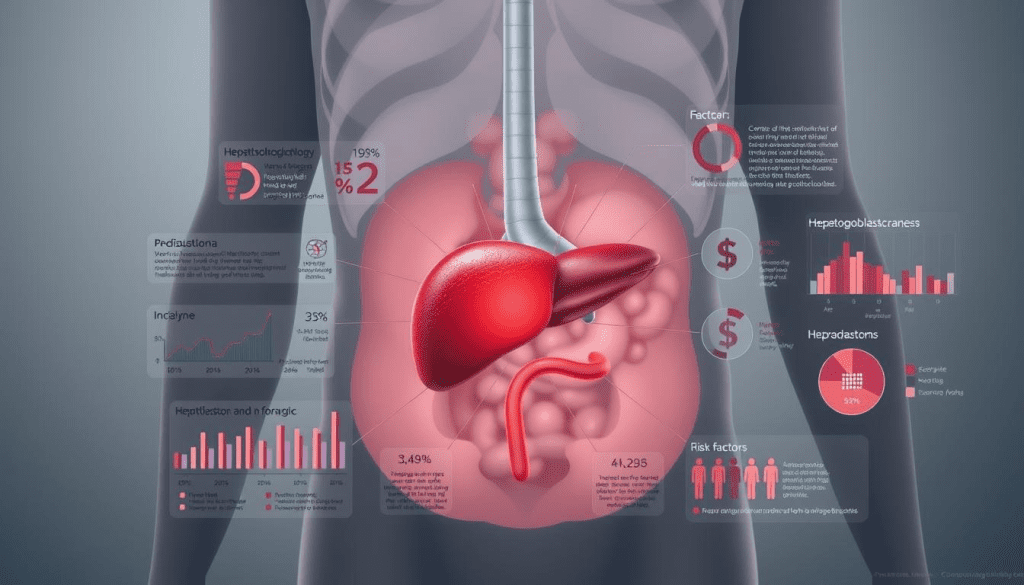
Demographically, more boys get hepatoblastoma. Knowing this helps us focus our care on the most affected groups.
We aim to give personalized care and support to families with hepatoblastoma. By knowing who gets it and when, we can tailor our care to meet the needs of our patients worldwide.
Key epidemiological features of hepatoblastoma include:
- Predominance in young children
- Increased risk in premature infants
- Association with certain genetic syndromes
- Slight male predominance
These points show how complex hepatoblastoma’s spread is. We need more research to understand its causes and risk factors.
Hepatoblastoma as the Primary Liver Cancer in Children
Hepatoblastoma is a major liver cancer in kids. It’s a serious tumor that needs quick and special care. Our doctors are experts in treating it, aiming for the best results for our young patients.
Comparison with Other Pediatric Liver Tumors
Hepatoblastoma is different from other liver tumors in kids. It’s a bad tumor that can spread. It’s not like benign tumors or other cancers like hepatocellular carcinoma.
Knowing the difference is key for the right treatment. Our team uses the latest tests to find the tumor type. Then, we create a treatment plan just for that patient.
Distinguishing Features from Adult Liver Malignancies
Hepatoblastoma is not like liver cancer in adults. It mainly affects kids under 3. Adult liver cancer often comes from liver disease or other risks.
The chance of survival with hepatoblastoma is good if caught early. We aim to give full care and support to our patients and their families during treatment.
| Characteristics | Hepatoblastoma | Adult Liver Cancer |
| Age of Onset | Typically under 3 years | More common in adults with risk factors |
| Tumor Type | Malignant, embryonal origin | Malignant, often associated with liver disease |
| Five-Year Survival Rate | 70-80% with early diagnosis and modern treatment | Varies based on stage and treatment response |
It’s important to know the differences between hepatoblastoma and other liver cancers. Our team works hard to keep up with the latest in medicine. We want to give our patients the best care possible.
Clinical Presentation and Symptoms
It’s important to know the signs of hepatoblastoma for early treatment. This hepatic cancer often shows symptoms that are not clear. This makes it hard to diagnose.
Systemic Effects and Paraneoplastic Syndromes
Hepatoblastoma patients may have many symptoms. These include fever, weight loss, and feeling tired. These are common in many cancers, like hcc disease.
These symptoms can make diagnosis tricky. They might seem like they come from other things.
Some patients may also have paraneoplastic syndromes. These are caused by the tumor and can lead to issues like too many platelets or early puberty. Knowing about these is key for good care.
Biopsy and Histopathological Classification
To confirm hepatoblastoma, a biopsy and histopathology are needed. We use the latest WHO guidelines to classify these tumors. This helps us understand the cancer better and plan treatment.
Hepatoblastoma is different from other liver cancer, like fibrolamellar carcinoma. It affects younger kids and has unique features. Knowing the exact type of cancer is crucial for the right treatment.
Modern Treatment Strategies for Liver Cancer in Children
Treating liver cancer in kids needs a team effort. We use the newest medical science. At our place, we focus on top care for kids with hepatoblastoma, a liver cancer type.
Liver Transplantation in Pediatric Liver Cancer
Liver transplants are an option for kids with liver cancer. This is especially true for those with big tumors orhepatoblastoma that doesn’t get better with other treatments. Our team knows when a transplant is right and what affects the outcome.
Prognostic Factors and Outcomes
The outlook for kids with liver cancer varies. It depends on the disease stage, how well they respond to treatment, and their liver health. We aim to improve their lives and give them the best chance against liver cancer.
FAQ
What is hepatoblastoma?
Hepatoblastoma is a cancer of the liver that mainly hits kids. It’s the top liver cancer in children.
Is hepatoblastoma benign or malignant?
Hepatoblastoma is a bad cancer, not a good one. It needs quick medical help and treatment.
What are the risk factors for developing hepatoblastoma?
Most cases of hepatoblastoma happen by chance. But, it’s more common in premature babies and those with certain genetic conditions.
How is hepatoblastoma diagnosed?
Doctors use imaging and biopsies to find it. They follow new WHO rules to figure out the type of cancer.
What are the treatment options for hepatoblastoma?
Doctors use surgery, chemo, and sometimes a liver transplant. The goal is to help patients live better.
What is the prognosis for hepatoblastoma?
How well a patient does depends on when the cancer is found. Early detection can lead to a 70-80% chance of survival.
How does hepatoblastoma differ from other pediatric liver tumors?
Hepatoblastoma is the main liver cancer in kids. Our doctors are experts at telling it apart from other cancers in children and adults.
What are the indications for liver transplantation in hepatoblastoma?
A liver transplant might be needed for tumors that can’t be removed or for those who don’t respond to other treatments. Our team knows when it’s the best choice.
What kind of care and support can patients with hepatoblastoma expect?
We offer full care and support to families with hepatoblastoma. This includes the latest treatments, team care, and a focus on ethical and new healthcare.
What is hepatocellular carcinoma (HCC), and how does it relate to hepatoblastoma?
HCC is a liver cancer that mostly affects adults. Hepatoblastoma, on the other hand, is a different cancer that mainly happens in kids.
Can adults develop hepatoblastoma?
Yes, though rare, adults can get hepatoblastoma. Our team is ready to help patients of all ages.
References
Centers for Disease Control and Prevention. (2024). Facts about birth defects.https://www.cdc.gov/ncbddd/birthdefects/facts.html
Hockenberry, M. J., Wilson, D., & Rodgers, C. C. (2019). Wong’s nursing care of infants and children (11th ed.). Mosby.https://www.elsevier.com/books/wongs-nursing-care-of-infants-and-children/hockenberry/978-0-323-54939-5
The Society of American Gastrointestinal and Endoscopic Surgeons (SAGES). (2023). Patient information on hernia repair.https://www.sages.org/publications/patient-information/patient-information-for-hernia-repair-from-sages/



 Departments
 Related Videos
 Our Doctors
 News
News