Patients often ask if cataract surgery with lasers is better than the old way. We’ll look at how these two methods compare for treating cataracts.
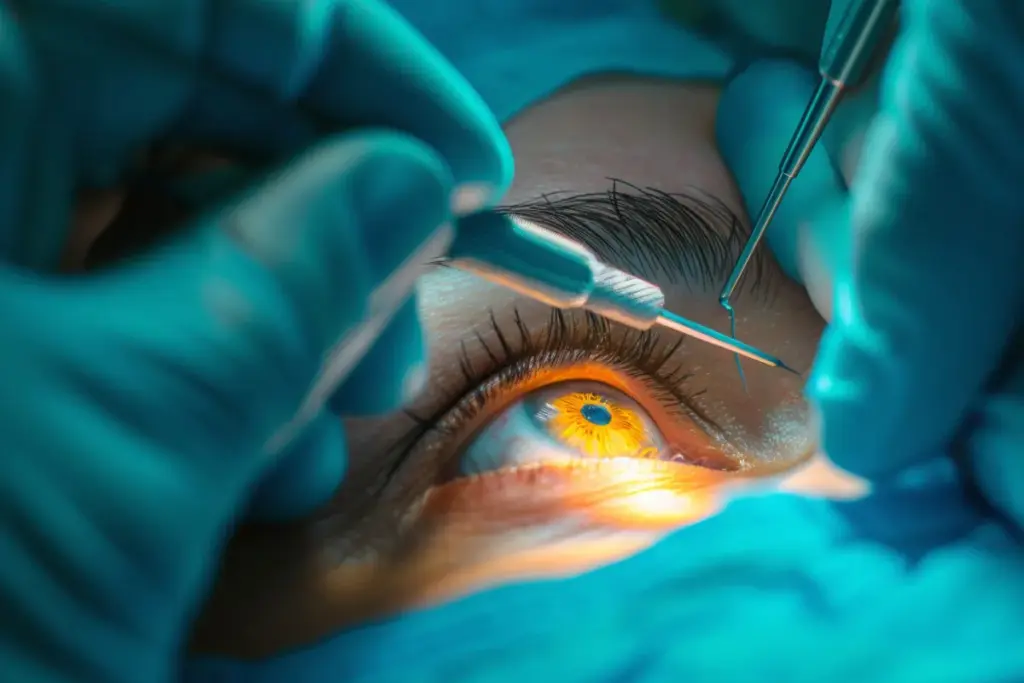
Both methods remove cataracts, but they use different tools. The laser-assisted method uses lasers for precise cuts and breaking up the lens.
We’ll see how lasers compare to the traditional cataract surgery that’s been around for years. Knowing the good and bad of each helps patients choose the right treatment.
Key Takeaways
- Both laser-assisted and traditional cataract surgeries deliver comparable visual outcomes.
- The laser-assisted method uses high-precision lasers for accurate incisions and lens fragmentation.
- Traditional cataract surgery has been the standard for decades, with a well-established safety profile.
- The choice between laser-assisted and traditional cataract surgery depends on individual patient needs.
- Laser-assisted cataract surgery may offer reduced complications due to its precision.
Understanding Cataract Surgery Basics
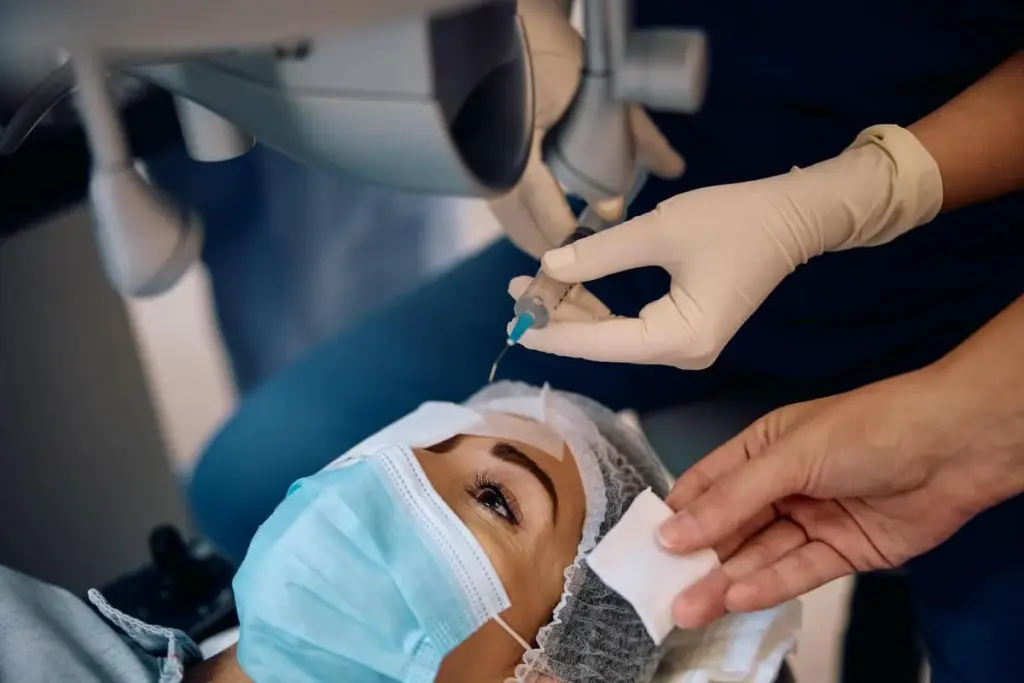
It’s important to know about cataract surgery to make good choices for your eyes. This surgery removes the cloudy lens, called a cataract, and puts in an artificial one.
What is Traditional Phacoemulsification?
Traditional cataract surgery, or phacoemulsification, starts with a small eye incision. An ultrasonic probe breaks up the cloudy lens. Then, it’s sucked out.
Next, an artificial intraocular lens (IOL) is put in to help you see clearly again.
This method has worked well for many years. But, it needs careful skill and uses ultrasound, which can affect results.
How Cataracts Affect Vision
Cataracts make the lens in your eye cloudy. This can blur your vision, cause double vision, or make colors seem faded. As cataracts get worse, they can make everyday tasks hard.
When thinking about cataract surgery, it’s key to consider the pros and cons of traditional and laser methods. Learn more about these options and find what’s best for you at Eye Medical Clinic.
Laser-Assisted Cataract Surgery: Technology and Process
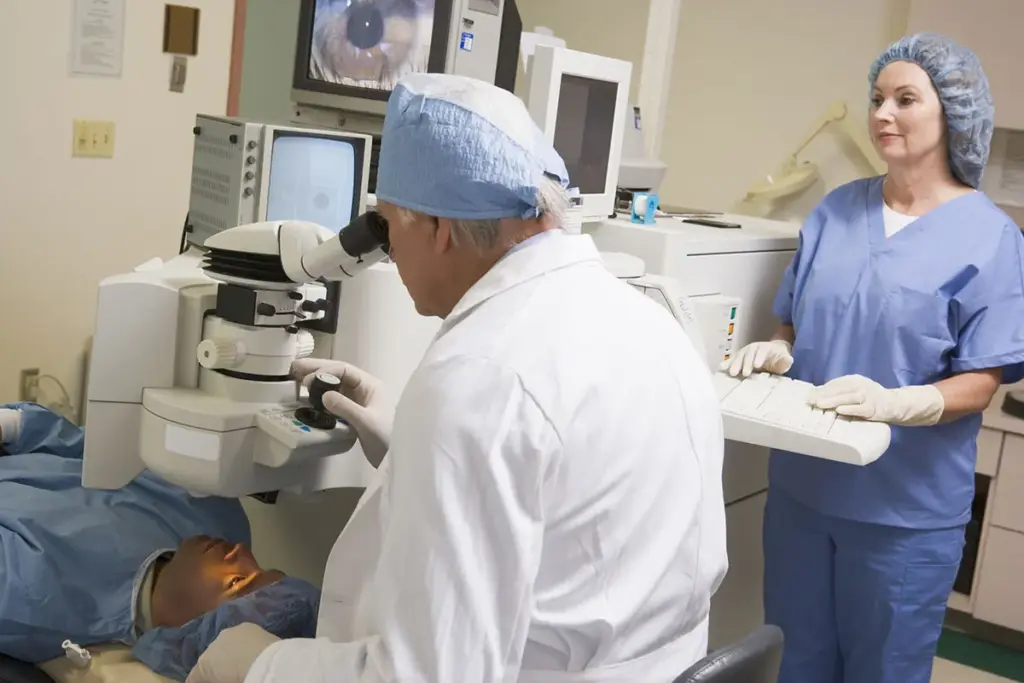
Laser-assisted cataract surgery is a big step forward in eye care. It brings better precision and possibly better results. This new method uses a femtosecond laser for key parts of the surgery.
Femtosecond Laser Technology
The femtosecond laser is key in laser-assisted cataract surgery. It makes precise cuts in the cornea. This lets doctors get to the cataract more easily. The laser also softens or breaks the cataract, making it simpler to take out.
Key benefits of femtosecond laser technology include:
- Enhanced precision in creating incisions and capsulotomies
- Reduced energy requirements for cataract removal
- Improved safety through more controlled procedures
The Role of 3D Imaging in Precision
3D imaging is vital for the accuracy of laser-assisted cataract surgery. It gives a detailed view of the eye’s structures. This helps the femtosecond laser work more accurately and tailor the treatment.
Reduced Ultrasound Energy Requirements
Laser-assisted cataract surgery needs less ultrasound energy. The femtosecond laser softens or breaks the cataract first. This means less ultrasound energy is used, which could lower the risk of problems.
| Feature | Laser-Assisted Cataract Surgery | Traditional Cataract Surgery |
| Incision Precision | Highly precise, guided by 3D imaging | Manual, dependent on surgeon skill |
| Ultrasound Energy | Reduced, due to laser pre-treatment | Higher, as all cataract removal is done manually |
| Recovery Time | Generally faster, due to precise incisions | Variable, dependent on incision size and technique |
By using advanced femtosecond laser technology and 3D imaging, laser-assisted cataract surgery is a safer and more precise option. It’s a big leap from traditional methods.
Conclusion: Comparing Outcomes and Making Your Decision
When looking at cataract surgery vs laser eye surgery, it’s key to think about the good and bad of each. Both methods can give you good vision, with studies showing little difference in results. They also have similar rates of complications.
Laser surgery uses less energy and causes less damage to your eyes. It’s a more precise method, which is great for people with astigmatism. On the other hand, traditional surgery is more common and often cheaper.
Choosing between manual and laser surgery depends on your needs. Laser surgery is more precise and can be better for certain eye issues. So, it’s about what’s best for you.
Talk to an eye doctor to figure out the best surgery for you. They can help you decide between laser and traditional cataract surgery.
FAQ
What is the difference between laser-assisted cataract surgery and traditional cataract surgery?
Laser-assisted cataract surgery uses a femtosecond laser. It makes precise incisions and softens the cataract. Traditional surgery uses manual incisions and ultrasound to break up the cataract.
Is laser cataract surgery better than traditional cataract surgery?
Laser surgery might be more accurate and have fewer complications. But, the best choice depends on your situation and the surgeon’s skill.
What are the benefits of laser-assisted cataract surgery?
It offers precise incisions and less ultrasound use. This can lead to better results and quicker recovery.
How does femtosecond laser technology work in cataract surgery?
It makes precise incisions and softens the cataract. This makes removal easier and reduces ultrasound need.
What is the role of 3D imaging in laser-assisted cataract surgery?
3D imaging gives detailed eye images. This helps the surgeon plan and perform the surgery more accurately.
Can laser eye surgery fix cataracts?
No, laser eye surgery corrects vision problems like nearsightedness. It’s not for cataracts.
What are the pros and cons of laser cataract surgery compared to traditional cataract surgery?
Laser surgery might be more precise and have fewer complications. But, it’s more expensive and not as common. Traditional surgery is cheaper and more available but might have more risks.
Is laser-assisted cataract surgery a significant advancement in cataract treatment?
Yes, it’s a big step forward. It offers better accuracy and fewer complications.
How do I choose between laser-assisted cataract surgery and traditional cataract surgery?
Your choice depends on your needs, the surgeon’s skill, and what you prefer. Talking to an eye doctor can help you decide.
References
National Center for Biotechnology Information. Evidence-Based Medical Insight. Retrieved from https://pubmed.ncbi.nlm.nih.gov/24479615/