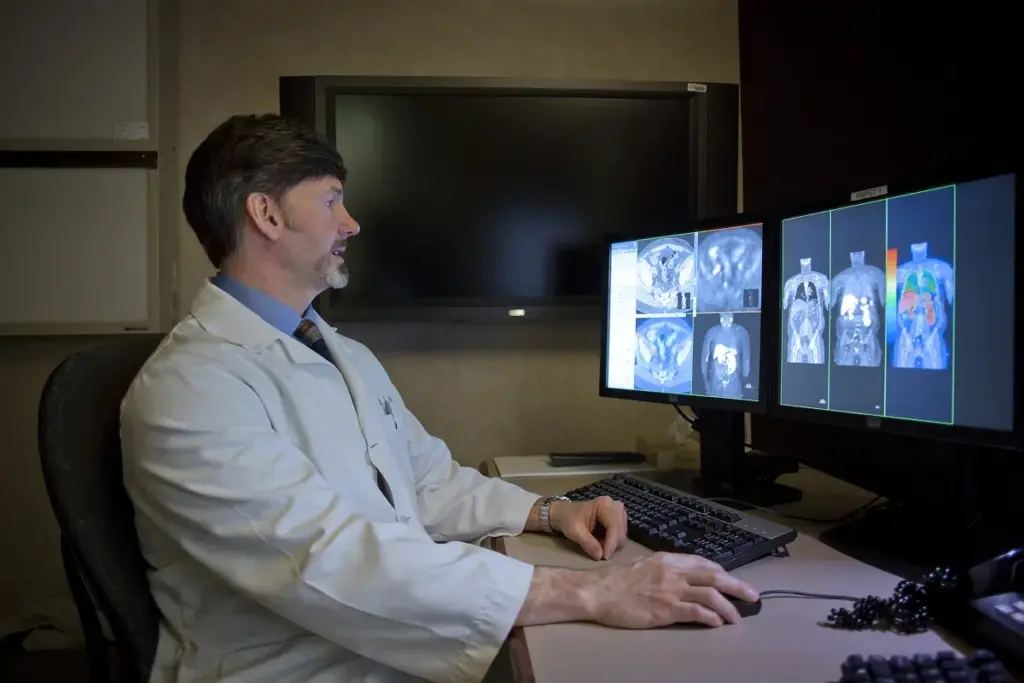
Recent studies have raised concerns about the cancer risk faced by interventional radiologists. This is due to radiation exposure during fluoroscopically guided procedures.
We are committed to understanding and mitigating these occupational hazards. A nationwide cohort study of over 90,000 U.S. radiologic technologists found a roughly twofold increase in brain cancer mortality. This was among those performing such procedures, as reported in a study available on .
Our commitment to patient safety and the well-being of medical professionals is key. We stress the importance of strict safety protocols. We also push for continuous improvement in healthcare environments to lessen risks from radiation exposure.
Key Takeaways
- Interventional radiologists face elevated cancer risk due to radiation exposure.
- Fluoroscopically guided procedures are associated with increased cancer risk.
- Strict safety protocols are essential to mitigate occupational hazards.
- Continuous organizational improvement is necessary in healthcare settings.
- Patient safety and medical professional well-being are top priorities.
The Growing Concern About Occupational Hazards in Radiology
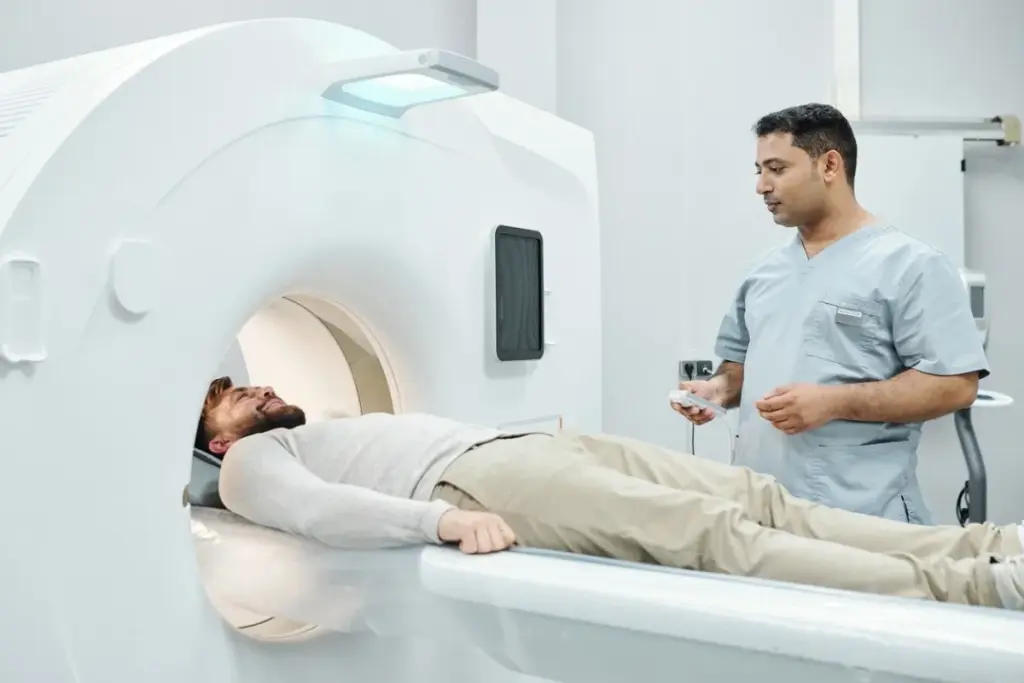
Medical imaging technology is getting better, but it’s making radiology jobs riskier. More imaging-guided procedures mean more radiation for medical staff. This is a big worry for their health.
Historical Perspective on Radiation Exposure in Medical Settings
Radiation has always been a danger in radiology. Early workers got sick from it, leading to safety rules. Now, we know radiation can harm us in many ways.
The helps set safety limits. They aim to keep doses low while considering costs and social factors.
Evolution of Safety Standards in Interventional Radiology
The ICRP’s ALARA principle has led to stricter safety rules in interventional radiology. Today, we use better equipment and follow safer procedures.
Knowing how safety has improved helps us tackle today’s challenges in radiology. It’s all about keeping workers safe from radiation.
Understanding Interventional Radiology and Its Unique Risks
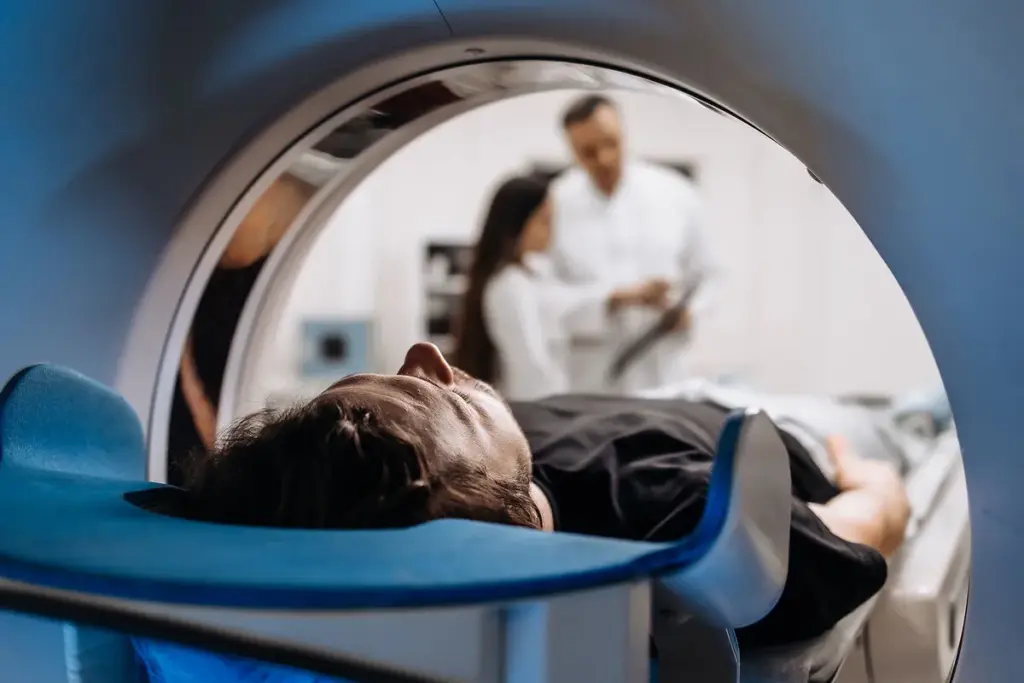
Interventional radiology is a key part of modern healthcare. It uses new ways to treat patients with less harm and quicker recovery. This shift is changing how we do medical procedures.
Definition and Scope of Interventional Radiology
Interventional radiology uses fluoroscopy to guide treatments. It helps diagnose and treat many health issues, like vascular diseases and some cancers. These treatments are often done with local anesthesia.
Imaging helps doctors target the right area. This makes treatments safer and more effective. Some common treatments include:
- Angioplasty and stenting for vascular diseases
- Embolization procedures to control bleeding or treat tumors
- Biopsies for diagnosing cancer and other conditions
- Ablation therapies for treating certain types of tumors
Comparison with Diagnostic Radiology Exposure Levels
Interventional radiology has a unique risk: radiation exposure. It uses more radiation than diagnostic imaging because treatments are longer and more complex.
A study showed interventional radiologists face higher radiation risks. This is because they use fluoroscopy for longer periods. This increased exposure can lead to health problems, like cancer.
It’s important to understand these risks to improve safety. By doing so, we can protect the health of doctors and patients alike.
The Nationwide Cohort Study: Key Findings
A nationwide study has warned the medical field about cancer risks for interventional radiologists. This research has given us important insights into the dangers they face.
Study Methodology and Population Demographics
The study aimed to find out if cancer is more common in radiologists who use X-rays. It looked at a big group of radiologists who used X-rays for their work. The study included people of different ages and with different amounts of experience.
The study looked back at cancer cases to see if there were any patterns. It also controlled for things like age, gender, and how long someone had been working to make sure the results were accurate.
Statistical Significance of Cancer Incidence Rates
The study found that radiologists were about twice as likely to die from brain cancer. There were also small increases in breast cancer and melanoma in those who used X-rays. The numbers showed these findings were real and important for safety.
To show the main points, we made a table:
|
Cancer Type |
Incidence Rate |
Hazard Ratio |
|---|---|---|
|
Brain Cancer |
Roughly twofold increase |
2.55 |
|
Breast Cancer |
Modest elevation |
1.16 |
|
Melanoma |
Modest elevation |
1.25 |
The study’s results highlight the need for better safety when using X-rays in radiology. By knowing the risks and taking steps to protect them, we can help lower cancer rates in these doctors.
Brain Cancer Risk: A Closer Look at the 2.55 Hazard Ratio
Interventional radiologists face a higher risk of brain cancer, with a hazard ratio of 2.55. This is a concern that needs a detailed look at the causes. We must analyze the factors that lead to radiation-induced brain tumors.
Mechanisms of Radiation-Induced Brain Tumors
Radiation exposure is associated with brain tumors through complex biological mechanisms. Ionizing radiation can damage DNA, leading to genetic mutations and tumor growth. Interventional radiologists are at risk due to scattered radiation during procedures.
A study found a 2.55 hazard ratio for brain cancer mortality among interventional radiologists. This shows the need to understand how radiation affects the brain. It also highlights the importance of strict safety protocols for these professionals.
Comparison with General Population Statistics
The brain cancer risk for interventional radiologists is much higher than for the general population. The general population is exposed to background radiation, but at lower levels. “The increased exposure to radiation among interventional radiologists translates into a higher risk of brain cancer, as evidenced by the 2.55 hazard ratio,” highlighting the need for targeted protective measures.
We must consider these findings in the context of occupational health and safety. By understanding the risks and implementing effective safety measures, we can work towards reducing the incidence of brain cancer among interventional radiologists.
Breast Cancer and Melanoma: Understanding the Elevated Risk
Research shows that interventional radiologists face a higher risk of breast cancer and melanoma. The study found a hazard ratio of 1.16 for breast cancer and 1.30 for melanoma. This is among those who do fluoroscopically guided procedures.
Analysis of the 1.16 Hazard Ratio for Breast Cancer
The risk of breast cancer for interventional radiologists is a big concern. The hazard ratio of 1.16 means a 16% higher risk than the general population. This is for those not exposed to the same levels of radiation.
Let’s look at why this risk might be higher:
- Prolonged exposure to low-dose radiation
- Inadequate use of protective measures
- Cumulative effect of radiation exposure over years of practice
Melanoma Risk Factors Among Interventional Radiologists
Melanoma, a skin cancer, is linked to UV radiation. For interventional radiologists, the hazard ratio of 1.30 for melanoma is a big increase in risk.
|
Risk Factor |
General Population |
Interventional Radiologists |
|---|---|---|
|
UV Radiation Exposure |
Moderate |
High (due to workplace exposure) |
|
Ionizing Radiation Exposure |
Low |
High (due to fluoroscopically guided procedures) |
Understanding the risks in interventional radiology is key. It’s vital to use proper protective measures and monitor regularly to reduce these risks.
Cancers Showing No Significant Increase
Interventional radiologists face many risks, but some cancers don’t show a big increase. The study found that certain cancers didn’t have a higher rate among these doctors. This is despite their exposure to radiation.
Thyroid, Lung, Prostate, and Colon Cancer Findings
The research showed that thyroid, lung, prostate, and colon cancers didn’t rise much in interventional radiologists. Here’s what was found:
- The incidence of thyroid cancer was not significantly higher than expected.
- Lung cancer rates were comparable to those in the general population.
- Prostate cancer incidence was not markedly different from the control group.
- Colon cancer rates were also within the expected range.
Possible Protective Factors or Study Limitations
Several factors might explain why these cancers didn’t increase much. Possible protective factors include protective equipment, better radiation safety, and how people react differently to radiation.
But, it’s also key to look at study limitations. These include the size of the group, how long they were followed, and any biases in the data. These can affect the findings and should be considered when looking at the results.
Is Radiologist a Doctor? Understanding the Medical Professional Behind the Lead Apron
Radiologists are doctors who use medical imaging to diagnose and treat diseases. They use X-rays, CT scans, MRI, and ultrasound to help doctors make diagnoses and plan treatments.
Educational Requirements and Medical Training
To become a radiologist, one needs a bachelor’s degree in a science field. Then, they attend four years of medical school to get an M.D. or D.O. After that, they do a residency in radiology for four to five years. This training includes learning to read imaging studies and do procedures.
After residency, many radiologists do a fellowship program for one to two years. These programs focus on specific areas like interventional radiology or pediatric radiology.
Specialization Pathways to Interventional Radiology
Interventional radiology involves using imaging to do minimally invasive procedures. To become an interventional radiologist, one must complete a fellowship after their radiology residency. This training prepares them for complex procedures like vascular treatments.
Becoming a radiologist is a lengthy and challenging journey, reflecting the critical importance and expertise of these professionals in healthcare. Their training is a testament to their expertise in patient care.
|
Educational Step |
Duration |
Description |
|---|---|---|
|
Bachelor’s Degree |
4 years |
Typically in a science-related field |
|
Medical School |
4 years |
Earns an M.D. or D.O. degree |
|
Radiology Residency |
4-5 years |
Hands-on training in radiology |
|
Fellowship Program |
1-2 years |
Specialized training in areas like interventional radiology |
Radiation Exposure Pathways in Interventional Procedures
Radiation exposure is a big risk in interventional radiology. It affects both patients and doctors. Doctors in this field face radiation through different ways during procedures.
Primary vs. Scattered Radiation Concerns
The main worry is the direct beam, the main source of radiation. But, scattered radiation is also a big concern. It can hit both the patient and medical staff.
Scattered radiation happens when the primary X-ray beam hits the body. This causes radiation to scatter in all directions.
We must think about both primary and scattered radiation. The primary beam targets the area of interest. But scattered radiation can hit other parts of the body and the medical team.
Cumulative Exposure Effects Over a Career
The long-term effects of radiation exposure are a big worry for doctors. Cumulative exposure means the total dose of radiation over time. As doctors do more procedures, their exposure goes up.
This can lead to health problems from radiation. It’s important to find ways to lower exposure. Using lead aprons, adjusting equipment, and following safety rules are key.
The ALARA Principle: As Low As Reasonably Achievable
In interventional radiology, the ALARA principle is key. It helps balance the need for good images with keeping radiation low. This is important for both patients and healthcare workers.
Implementation Strategies in Clinical Settings
There are several ways to follow the ALARA principle:
- Optimizing equipment settings to reduce radiation dose
- Using alternative imaging techniques when possible
- Ensuring proper training for personnel on radiation safety
- Regularly monitoring and maintaining equipment
These steps help lower radiation exposure in healthcare settings.
Balancing Diagnostic Quality with Safety Concerns
Finding the right balance is a challenge. It’s about getting good images without too much radiation. This is done by:
|
Strategy |
Description |
Benefit |
|---|---|---|
|
Collimation |
Limiting the X-ray beam to the area of interest |
Reduces scatter radiation and dose to patient and staff |
|
Pulse Rate Reduction |
Lowering the number of X-ray pulses per second |
Decreases radiation exposure while maintaining image quality |
|
Shielding |
Using protective barriers to shield from radiation |
Protects staff from scatter radiation |
These actions help follow the ALARA principle. They ensure both quality images and safety.
Personal Protective Equipment: Beyond the Lead Apron
Modern personal protective equipment has grown beyond the traditional lead apron. New materials and technologies have made it possible to reduce radiation exposure for medical professionals. This is a big step forward in protecting those who work with X-rays.
Evolution of Radiation Shielding Technology
The technology for shielding against radiation has seen huge improvements. Thanks to advances in materials science, we now have lighter, more effective protective gear. Modern lead aprons are made with composite materials that offer better protection without being too heavy.
Thyroid shields, lead glasses, and protective drapes are now part of the standard equipment. These items help ensure that medical professionals are fully protected during procedures.
Proper Usage Techniques and Common Mistakes
Using personal protective equipment correctly is key to its effectiveness. Many people make mistakes, like wearing the wrong size or not checking the equipment often enough. It’s also important to store it properly.
To get the most out of your PPE, follow the manufacturer’s guidelines and your workplace’s rules. This will help you stay safe and avoid common errors.
|
PPE Component |
Proper Usage |
Common Mistakes |
|---|---|---|
|
Lead Apron |
Wear correctly sized, inspect regularly |
Incorrect sizing, cracks or damage |
|
Thyroid Shield |
Position correctly, use with lead apron |
Omitting or misplacing the shield |
|
Lead Glasses |
Use with correct lens thickness |
Insufficient lens thickness, poor fit |
Understanding the latest in personal protective equipment and using it right can greatly reduce radiation exposure. It’s important to keep up with training and quality checks. This ensures that PPE works as it should.
Monitoring Radiation Exposure: Dosimetry Best Practices
Monitoring radiation exposure is key in interventional radiology. It ensures doctors aren’t exposed to harmful radiation. This helps lower the risk of radiation-induced cancers.
Types of Dosimeters and Their Applications
There are many dosimeters for measuring radiation. Thermoluminescent dosimeters (TLDs) are known for their accuracy. Optically stimulated luminescence (OSL) dosimeters offer detailed exposure info. The right dosimeter depends on the procedure and the hospital’s needs.
Interpreting Dosimetry Reports
Understanding dosimetry reports is vital. They show the dose a radiologist gets during a procedure. Accurate interpretation helps in reducing future exposure. Knowing metrics like deep dose equivalent (DDE) and shallow dose equivalent (SDE) is important.
By following dosimetry best practices, radiologists can lower their radiation exposure. This improves their safety and promotes a safe work environment in medicine.
Procedural Modifications to Reduce Exposure Risk
Interventional radiologists can lower their radiation exposure by making some changes. These steps not only keep doctors safe but also ensure patients get the best care.
Equipment Positioning Strategies
Optimizing equipment placement is key to cutting down radiation exposure. Proper alignment of the X-ray beam, patient, and detector reduces scattered radiation. This is done by correctly positioning the X-ray tube relative to the patient and the detector.
Using oblique projections wisely also helps lower exposure for both patients and doctors. Choosing the right angles allows us to get the needed info without overexposing.
Pulse Rate and Frame Rate Optimization
Optimizing pulse and frame rates during fluoroscopy is another way to reduce exposure. Lowering the frame rate cuts down radiation, as it reduces X-ray pulses per second.
We can also adjust the pulse rate for each procedure, reducing unnecessary radiation. These changes help us balance image quality and safety.
These steps, including better equipment placement and pulse/frame rate optimization, are essential for reducing radiation risk. By following these practices, we ensure a safer work environment and top-notch patient care.
Institutional Responsibility and Safety Culture
The role of institutional responsibility in radiation safety is vital. As we face the challenges of interventional radiology, a strong safety culture is key. It helps reduce risks from radiation exposure.
Institutions are key in building this culture. They do this by creating and enforcing detailed radiation safety programs. These programs cover the technical side of safety and encourage a safety-first mindset among staff.
Developing Comprehensive Radiation Safety Programs
A solid radiation safety program is the heart of a strong safety culture. It involves regular checks, strict safety rules, and constant monitoring of radiation levels. This ensures staff safety and compliance with rules.
Key parts of a complete radiation safety program are:
- Regular training for staff on safety protocols
- Following the ALARA principle for radiation exposure
- Monitoring radiation levels among staff
Training Requirements and Continuing Education
Training is essential for radiation safety. Institutions must make sure staff get regular training and updates. This keeps their skills sharp and emphasizes the importance of safety.
A leading expert says, “Continuous education is vital for keeping safety awareness high among healthcare workers.” Institutions should invest in ongoing training that meets their staff’s evolving needs.
By focusing on institutional responsibility and building a strong safety culture, we can lower radiation risks in interventional radiology. It’s a team effort that needs dedication, awareness, and ongoing improvement.
‘s Approach to Radiation Safety
At , we take radiation safety very seriously. We follow strict academic protocols and care pathways. This ensures our patients and staff are safe from radiation.
Implementation of Academic Protocols and Care Pathways
We have set up detailed academic protocols and care pathways at . These guide our radiation safety practices. They make sure all radiation procedures are done carefully and follow the latest research.
Key components of our radiation safety protocols include:
- Regular training for medical staff on radiation safety best practices
- Continuous monitoring of radiation exposure levels
- Implementation of dose reduction strategies where feasible
Continuous Improvement in Multidisciplinary Healthcare
We always look to improve our radiation safety protocols. Our team works together to find ways to make things better. We make changes to keep our patients and staff safe.
“Radiation safety is not just a regulatory requirement; it’s a moral imperative for healthcare providers. At , we’re committed to setting a high standard for radiation safety.”
By focusing on both academic rigor and continuous improvement, we aim to create a safe healthcare environment. This is for the benefit of our patients and staff at .
Conclusion: Balancing Professional Responsibilities with Personal Health
Interventional radiologists deal with unique risks, like more radiation, which can lead to cancer. The average yearly dose from fluoroscopy-guided procedures is 0.65 mSv. This dose can go up with closer patient contact, more procedures, and high-dose procedures.
To lower these risks, it’s key for radiologists to focus on . They should use protective gear, keep an eye on doses, and change procedures to cut down exposure. This way, they can protect themselves from harm caused by radiation.
Creating a safe work space needs a team effort. It involves the hospital’s role, training, and a shared awareness among staff. Together, we can make a safer place for radiologists to care for patients well.
FAQ
What is interventional radiology, and how does it differ from diagnostic radiology?
Interventional radiology is a field that uses small procedures to diagnose and treat diseases. It’s different from diagnostic radiology because it uses imaging to guide treatments. This can expose medical staff to more radiation.
Are interventional radiologists at a higher risk of developing cancer due to radiation exposure?
Yes, studies show that interventional radiologists face a higher risk of cancer. This includes brain, breast, and melanoma cancers due to long-term radiation exposure.
What is the ALARA principle, and how is it applied in interventional radiology?
The ALARA principle aims to lower radiation exposure for patients and staff. It’s applied by improving imaging, using protective gear, and making procedure changes to cut down doses.
What kind of medical training do radiologists receive, and how do they specialize in interventional radiology?
Radiologists get a lot of training, including a medical degree and a radiology residency. For interventional radiology, they do extra fellowship training.
How can radiation exposure be minimized during interventional procedures?
To lower radiation, use protective gear, adjust equipment, and slow down fluoroscopy. Also, make procedural changes to reduce doses.
What is the role of dosimeters in monitoring radiation exposure?
Dosimeters measure radiation exposure. Medical staff wear them to track their exposure and stay within safe levels.
How do institutions promote a culture of radiation safety?
Institutions foster safety by creating detailed safety programs. They also offer training, encourage following safety rules, and provide ongoing education.
What is the significance of the nationwide cohort study on cancer incidence among interventional radiologists?
The study sheds light on cancer risks for interventional radiologists from radiation. It shows the importance of improving safety practices.
How can interventional radiologists balance their professional responsibilities with personal health concerns related to radiation exposure?
Radiologists can manage their work and health by following safety guidelines. They should use protective gear and stay updated on safety best practices.
References
National Center for Biotechnology Information. Evidence-Based Medical Insight. Retrieved from https://pmc.ncbi.nlm.nih.gov/articles/PMC12581486