Get the definitive answer: is type 1 diabetes reversible? Learn what science says about remission (honeymoon phase) and a permanent cure clearly. For those with type 1 diabetes, finding a cure is a top goal. New medical research brings hope, showing reversal might be near. Though a complete cure is not yet found, big steps forward in stem cell and immunotherapy are changing diabetes treatment.
We’re seeing a big change in how we understand and treat diabetes. A 2024 case in China showed the power of stem cell transplants. A woman with type 1 diabetes stopped needing insulin just months later. This breakthrough is exciting and shows how fast research is moving.
Key Takeaways
- Recent advancements in stem cell therapies show promise for diabetes cure.
- Immunotherapies and beta cell regeneration are key areas of research.
- A landmark 2024 case demonstrated the potentia for patients to become insulin-free.
- Ongoing research is rapidly changing the landscape of diabetes management.
- New therapeutic approaches are giving hope to those with type 1 diabetes.
Understanding Type 1 Diabetes: An Autoimmune Condition

Type 1 diabetes, also known as ‘juvenile diabetes,’ happens when the immune system attacks the pancreas’s insulin-making beta cells. This attack stops insulin production, forcing people to take insulin shots to control blood sugar.
The Pathophysiology of Type 1 Diabetes
Type 1 diabetes is caused by a mix of genetics and environmental factors. These factors lead to the immune system destroying the pancreas’s beta cells. This destruction means less insulin, a hormone needed for cells to take up glucose, leading to high blood sugar.
Studies show that people with type 1 diabetes often have certain genes that make them more likely to get it. But, what exactly starts the immune system’s attack is not yet fully understood.
Distinguishing Type 1 from Type 2 Diabetes
Type 1 and type 2 diabetes are different in how they start and how they are treated. Type 2 diabetes is linked to insulin resistance and lifestyle choices. On the other hand, type 1 diabetes is an autoimmune disease where the body attacks the insulin-making cells.
Characteristics | Type 1 Diabetes | Type 2 Diabetes |
Primary Cause | Autoimmune destruction of beta cells | Insulin resistance and impaired insulin secretion |
Typical Age of Onset | Children and young adults | Adults, often after age 45 |
Insulin Requirement | Lifelong insulin therapy | May require insulin, but often managed through lifestyle changes or oral medications initially |
“The distinction between type 1 and type 2 diabetes is key for proper treatment. Knowing the cause can greatly improve patient care.”
Medical Expert, Endocrinologist
Why Traditional Management Requires Lifelong Insulin
Managing type 1 diabetes usually means taking insulin for life because the body can’t make it. This insulin can be given through shots or an insulin pump. People also use devices to track their blood sugar levels closely.
Because of the immune system’s attack on the pancreas, insulin is needed to let glucose into cells. Without it, blood sugar levels get too high, which can lead to serious health problems if not controlled.
The Current Standard of Care for Type 1 Diabetes

The standard care for type 1 diabetes includes insulin therapy and continuous glucose monitoring. This approach tries to mimic the body’s natural insulin production. It helps keep blood glucose levels in a safe range.
Insulin Therapy: Types and Administration Methods
Insulin therapy is key for managing type 1 diabetes. There are different types of insulin, like rapid-acting and long-acting. The choice depends on the patient’s lifestyle and preferences.
Insulin can be given through syringes, pens, or pumps. Insulin pumps offer continuous insulin delivery. They allow for adjustments to basal rates and bolus doses, improving glucose control and lowering hypoglycemia risk.
- Rapid-acting insulin: Taken before meals to manage postprandial glucose spikes.
- Long-acting insulin: Provides a basal insulin level throughout the day or night.
- Insulin pens: Convenient and portable, making insulin administration easier.
Continuous Glucose Monitoring and Insulin Pumps
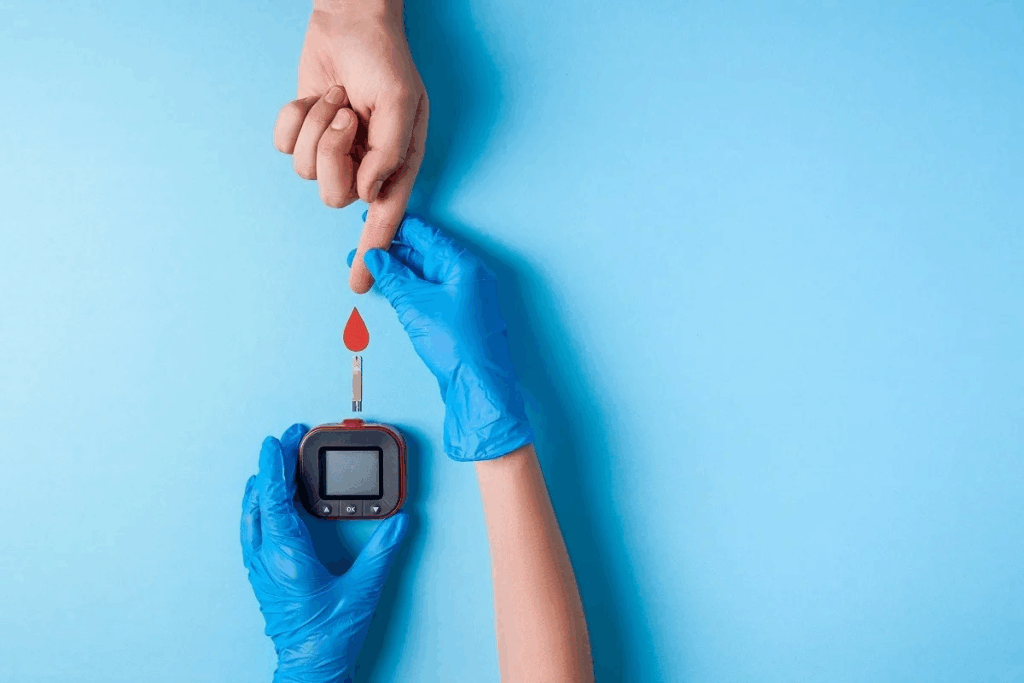
Continuous glucose monitoring (CGM) systems have changed type 1 diabetes management. They measure glucose levels all day, giving real-time data for insulin adjustments. Used with insulin pumps, they help control glucose and prevent hypoglycemia.
Some CGM systems can forecast glucose trends, warning of highs or lows. This predictive feature helps make proactive insulin adjustments, improving glucose management.
Limitations of Current Treatment Approaches
Current treatments for type 1 diabetes have greatly improved outcomes. Yet, they face challenges. One major issue is balancing glucose control with avoiding hypoglycemia. The constant need for monitoring and insulin can also affect patients’ quality of life.
“The current treatment paradigm for type 1 diabetes, while effective, is not without its challenges. There is a pressing need for innovative solutions that can simplify treatment regimens and improve patient outcomes.”
Researchers and healthcare providers are looking for new technologies and strategies. Advances in insulin delivery, glucose monitoring, and regenerative therapies could improve type 1 diabetes management.
Is Type 1 Diabetes Reversible? Defining “Cure” vs. “Remission”
The idea of reversing type 1 diabetes is a hot topic. Doctors and patients are both curious about it. It’s important to know the difference between a “cure” and “remission” as we look into new treatments.
What Would Constitute a True Cure?
A true cure for type 1 diabetes means the body can make insulin again. The immune system would stop attacking the insulin-making cells. These cells would then grow back or be replaced.
Researchers are exploring many ways to make this happen. They’re looking into cell-based therapies and immunotherapies.
Stem cell therapy is a promising area of research. Scientists are working on making insulin-producing cells from stem cells. If it works, it could help people with type 1 diabetes manage their blood sugar better.
The Concept of Functional Remission
Functional remission is also important, even if a complete cure is the goal. It means being able to control blood sugar without insulin. It doesn’t mean the disease is gone, but it means managing it without insulin.
New treatments aim to help people reach functional remission. For example, Teplizumab is being tested to see if it can delay type 1 diabetes in people at high risk.
Setting Realistic Expectations for Treatment Outcomes
When we talk about reversing type 1 diabetes, we need to be realistic. While progress is being made, most treatments are not yet proven. Patients and doctors need to understand the current limits and risks of new treatments.
We should keep an eye on clinical trials and wait for more evidence. But the work being done gives us hope for better management and maybe even a cure in the future.
Common Misconceptions About Reversing Type 1 Diabetes
Many people think type 1 diabetes can be cured with simple lifestyle changes. They believe certain diets or habits can reverse the condition. But, this is not backed by science.
Debunking Diet and Lifestyle “Cures”
Many diets and lifestyle programs claim to reverse type 1 diabetes. They often involve strict diets or untested supplements. For example, some say cutting down on sugar or following a certain diet can cure it. But, type 1 diabetes is an autoimmune condition where the body attacks insulin-producing cells.
Medical Expert, a top endocrinologist, says,
“Type 1 diabetes is not something you can diet or exercise your way out of. It’s an autoimmune condition that requires medical management.”
Understanding Why Type 1 Differs from Type 2 in Reversibility
Type 2 diabetes can sometimes be managed or even reversed with weight loss, diet changes, and more exercise. But, type 1 diabetes is different. It’s not caused by lifestyle choices but by an autoimmune attack. So, what works for type 2 doesn’t work for type 1.
- Type 1 diabetes is an autoimmune condition.
- It requires insulin therapy for management.
- Lifestyle changes cannot reverse the condition.
Recognizing Predatory Marketing of Unproven Treatments
The desire to manage or reverse type 1 diabetes has led to a rise in false marketing. Companies sell untested supplements or devices claiming to cure or improve type 1 diabetes. It’s important for patients to be careful and talk to doctors before trying any new treatments.
For example, “Sugar Reverse” has been marketed with false claims about managing or reversing diabetes. It’s essential to scrutinize such claims critically and look for evidence from reputable clinical trials.
We must stay alert and informed to avoid these scams. By understanding type 1 diabetes and the limits of current treatments, we can better manage it.
Breakthrough Stem Cell Therapies Showing Promise
Recent advancements in stem cell therapies have brought new hope to patients with type 1 diabetes. These innovative treatments could revolutionize diabetes management. Several promising developments are on the horizon.
The 2024 China Case Study: A Woman Producing Her Own Insulin
In 2024, a landmark case in China marked a significant milestone. A woman with type 1 diabetes started producing her own insulin after a transplant of stem cell-derived islet cells. This breakthrough came from extensive research in regenerative medicine.
The patient’s ability to produce insulin naturally was clear. This reduced her need for external insulin. This case has sparked a lot of interest in the medical community. It shows the promise of breakthrough treatments for type 1 diabetes.
How Stem Cell-Derived Islet Cell Transplantation Works
Islet cell transplantation replaces damaged islet cells in the pancreas with healthy ones from stem cells. The process starts with turning stem cells into islet cells. These cells are then transplanted into the liver or pancreas.
After transplantation, these new cells can produce insulin based on blood glucose levels. This could eliminate the need for external insulin. This approach is very promising for type 1 diabetes, as it targets the root cause: the loss of beta cells.
Current Limitations and Challenges of Stem Cell Approaches
Despite promising results, there are significant challenges. One major concern is the risk of immune rejection of the transplanted cells. This could lead to treatment failure.
Also, the long-term safety and effectiveness of these treatments are not fully understood. Researchers are working hard to overcome these challenges. They aim to improve outcomes for patients undergoing stem cell therapies.
As we explore stem cell therapies further, we remember that there’s a long way to go. The question of why is there no cure for diabetes is complex. It involves new treatments and a deeper understanding of the disease’s causes.
Vertex Pharmaceuticals’ Zimislecel: A Possible Game-Changer
Vertex Pharmaceuticals is close to a big breakthrough with Zimislecel. This new therapy could change how we treat Type 1 Diabetes. It uses lab-grown insulin cells from donor stem cells, giving hope to those who use insulin every day.
Phase 3 Clinical Trials: Design and Objectives
The phase 3 trial for Zimislecel is checking if it’s safe and works for Type 1 Diabetes patients. The main goal is to see if patients can make their own insulin. This could mean they don’t need insulin shots anymore.
The trial is very detailed. It picks participants carefully to match the Type 1 Diabetes community. This ensures the results are accurate and helpful.
Impressive Early Results: 10 of 12 Participants Achieving Insulin Independence
The early trial results are very promising. Ten out of 12 patients can now make their own insulin. This shows Zimislecel could be a game-changer for Type 1 Diabetes treatment.
These patients no longer need insulin shots. Their blood sugar levels are normal, improving their lives a lot.
Medical Expert, the lead researcher, said, “These results show Vertex Pharmaceuticals’ innovative work on Zimislecel. It could greatly improve the lives of Type 1 Diabetes patients.”
“The development of Zimislecel represents a major breakthrough in the field of regenerative medicine and offers new hope for patients with Type 1 Diabetes.”
Timeline for Possible FDA Approval and Availability
With the trial’s good results, Vertex Pharmaceuticals plans to ask the FDA for approval soon. If approved, Zimislecel could be available to patients in about two years. This would be a big step forward in treating Type 1 Diabetes.
Everyone is excited about Zimislecel’s approval. It could be a key treatment for Type 1 Diabetes. Its innovative method and promising trial results make it a hopeful solution for many.
Immunotherapy Approaches to Preserve Beta Cell Function
Immunotherapy is a new hope for Type 1 Diabetes patients. It works by changing how the immune system acts. This could stop the damage to insulin-making beta cells, changing the disease’s path.
Teplizumab: The First FDA-Approved Preventive Treatment
In 2022, the FDA approved Teplizumab, a big step in Type 1 Diabetes treatment. This antibody helps keep beta cells safe from the immune system. Clinical trials showed Teplizumab can slow Type 1 Diabetes by 2-3 years.
Teplizumab works by attaching to T cells, key players in the immune attack on beta cells. This action reduces the immune system’s attack on pancreatic islet cells. This helps keep beta cells working.
Johns Hopkins Research on Experimental Immunotherapies
At Johns Hopkins, scientists are looking into new immunotherapies for Type 1 Diabetes. They’re working on treatments that reset the immune system or block the attack on beta cells.
Immunotherapy Approach | Mechanism of Action | Potential Benefit |
Teplizumab | Binds to CD3 receptor on T cells | Delays Type 1 Diabetes onset |
Experimental Therapies | Resets or suppresses autoimmune response | Preserves beta cell function |
Combining Immunotherapy with Other Treatment Approaches
Using immunotherapy with other treatments, like stem cell therapy or islet cell transplant, could make it even better. Research is exploring how these methods can work together to help Type 1 Diabetes patients.
Immunotherapy gives hope for better lives for those with Type 1 Diabetes. As research grows, we might see even better treatments and results for patients.
Additional Research Frontiers in Type 1 Diabetes Treatment
New research is opening up new ways to manage and possibly cure type 1 diabetes. This includes stem cell and immunotherapy, as well as other innovative methods. Scientists are working hard to find better treatments for this complex disease.
Advancements in Artificial Pancreas Technology
Artificial pancreas technology is a key area of research. It aims to make insulin delivery and glucose monitoring automatic. This technology uses advanced algorithms to adjust insulin doses in real-time.
Key advancements include:
- Improved accuracy of continuous glucose monitors
- More sophisticated control algorithms
- Integration with other health monitoring systems
As Medical Expert, an endocrinologist at Massachusetts General Hospital, noted, “The artificial pancreas is a game-changer for people with type 1 diabetes, giving them more freedom and reducing the risk of low blood sugar.”
Gene Editing and CRISPR Applications
Gene editing, like CRISPR/Cas9, is being studied for its ability to fix genes linked to type 1 diabetes. Researchers aim to use CRISPR to fix genetic problems that harm pancreatic beta cells.
“CRISPR technology holds immense promise for treating genetic diseases, and its application in type 1 diabetes is an exciting area of research,” said
Medical Expert, a researcher at Harvard Stem Cell Institute.
Microbiome Research and Autoimmune Prevention
Studies suggest the gut microbiome might play a role in autoimmune diseases, including type 1 diabetes. Researchers are looking into how changes in the microbiome could trigger or prevent the destruction of beta cells.
Key areas of investigation include:
- Identifying specific microbial signatures associated with type 1 diabetes risk
- Exploring the possibility of microbiome modulation to prevent disease onset
- Understanding the interactions between the microbiome, immune system, and pancreatic function
These new research areas are promising but are in early stages. As Medical Expert, a leading researcher in diabetes, emphasized, “These emerging technologies and research areas represent the future of type 1 diabetes treatment. But it’s vital to keep up with rigorous scientific research to ensure they are safe and effective.”
Conclusion: The Future of Type 1 Diabetes Treatment
Type 1 diabetes is a tough condition to cure. But, the future looks bright with new treatments coming up. From stem cell therapies to immunotherapies, how we manage type 1 diabetes is changing fast.
We’re entering a new era in type 1 diabetes treatment with new hope for patients. While finding a diabetes cure is a goal, researchers are making big steps. They’re working on treatments that could change lives for those with type 1 diabetes.
Can we get rid of diabetes? It’s a tough question, but the progress shows we’re getting closer to better management. Scientists and doctors are working hard to find answers to this question.
As research keeps moving forward, people with type 1 diabetes have reason to be hopeful. They can look forward to better care and maybe even life-changing treatments. We’re excited about the future where people with type 1 diabetes can live healthier, happier lives.
FAQ
Is type 1 diabetes reversible?
Type 1 diabetes is not reversible like type 2 diabetes. It’s caused by the body attacking insulin-making cells. But, scientists are looking into new treatments like stem cell therapy and immunotherapy. These might help restore insulin production or lead to a functional remission.
Can diet and lifestyle changes cure type 1 diabetes?
No, diet and lifestyle changes can’t cure type 1 diabetes. It’s an autoimmune disease that needs insulin to manage. A healthy diet and exercise are good for health, but they don’t fix the autoimmune issue.
What is the difference between a “cure” and “remission” in type 1 diabetes?
A “cure” means insulin production and glucose control are back to normal. “Remission,” like “functional remission,” means blood sugar levels are normal without insulin. Researchers aim for both.
What are stem cell therapies, and how do they work for type 1 diabetes?
Stem cell therapies use stem cells to make insulin-producing islet cells. These cells are then transplanted into patients. This method aims to help the body make insulin again. Recent studies show promising results.
What is Zimislecel, and how does it work?
Zimislecel is a new treatment by Vertex Pharmaceuticals. It involves transplanting insulin-producing cells made from donor stem cells. Early phase 3 trial results show it’s effective, with many participants not needing insulin.
What is Teplizumab, and how does it work?
Teplizumab is the first FDA-approved treatment to prevent type 1 diabetes. It helps by controlling the immune system to delay the disease onset. It’s a form of immunotherapy, showing promise in preserving beta cell function.
Are there other promising research frontiers in type 1 diabetes treatment?
Yes, there’s more research like stem cell and immunotherapies. Also, advancements in artificial pancreas tech, CRISPR gene editing, and microbiome research are underway. These could lead to new treatments.
Can type 1 diabetes be managed without insulin therapy?
Currently, insulin therapy is key for managing type 1 diabetes. Researchers are exploring alternatives like stem cell therapies. But, these are not yet widely available or proven.
Is there a cure for type 1 diabetes?
There’s no cure for type 1 diabetes yet. But, research is making progress. This offers hope for better management and possibly life-changing treatments in the future.
Can diabetes be reversed with diet and exercise?
This is more true for type 2 diabetes. Type 1 diabetes is an autoimmune condition that can’t be reversed with diet and exercise alone.
Is type 1 diabetes permanent?
Type 1 diabetes is seen as a lifelong condition. But, ongoing research into new treatments might change this outlook.
Why is there no cure for type 1 diabetes yet?
Finding a cure for type 1 diabetes is complex. It’s an autoimmune disease, and restoring insulin production is a big challenge. But, researchers are making progress in understanding and treating it.
National Center for Biotechnology Information. Evidence-Based Medical Guidance. Retrieved from https://pmc.ncbi.nlm.nih.gov/articles/PMC12305139/