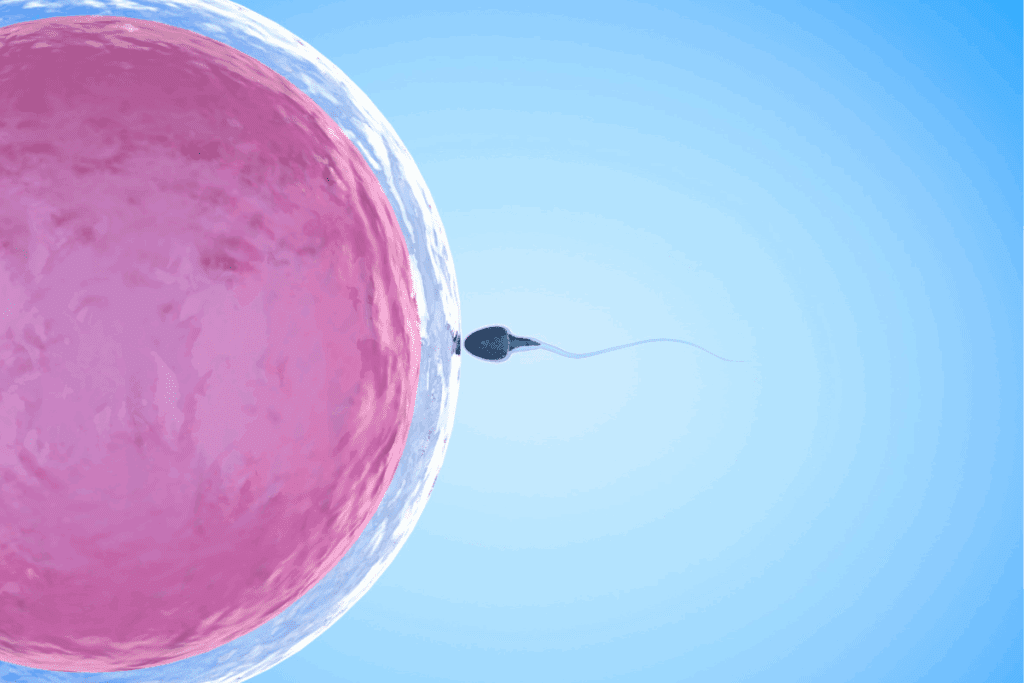
Understanding the success rates of Intrauterine Insemination (IUI) on the first try is key for couples. They need to know how likely it is to succeed in the first attempt. The success rates can vary a lot, from 10% to 20% for women under 35. What is the real IUI probability of pregnancy? This ultimate guide breaks down the data, success rates, and what to expect.
At Liv Hospital, we use international medical standards and tailor treatments for each patient. This helps you understand what to expect and boosts your chances of getting pregnant. Generally, IUI success rates are between 5% to 15% per cycle. This depends on your age, sperm quality, and any fertility problems you might have.
Key Takeaways
- First-cycle IUI success rates range from 10% to 20% for women under 35.
- Overall IUI success rates typically range from 5% to 15% per cycle.
- Age, sperm quality, and underlying fertility issues influence IUI success rates.
- Personalized treatment protocols can help maximize the chances of pregnancy.
- Liv Hospital’s patient-centered approach combines international medical standards with tailored care.
Understanding IUI Treatment
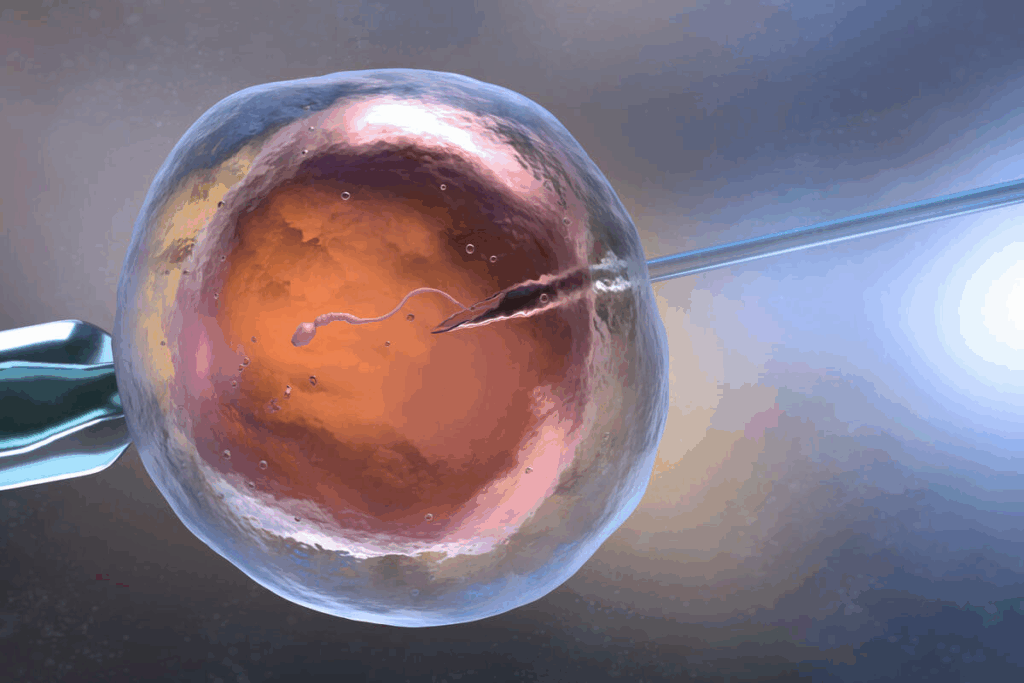
IUI, or intrauterine insemination, is a non-invasive fertility treatment. It involves placing healthy sperm directly into the uterus. This method helps fertilization by overcoming some natural barriers to conception.
What is Intrauterine Insemination?
Intrauterine insemination (IUI) is a fertility treatment. It involves placing sperm into the uterus during ovulation. This technique helps with mild male factor infertility, unexplained infertility, and cervical issues.
IUI is recommended for couples trying to conceive without success. It’s also an option for single women or same-sex couples.
When IUI is Recommended
IUI is suggested for couples facing specific fertility challenges. These include:
- Mild male factor infertility, where the male partner has low sperm count or motility issues.
- Unexplained infertility, where no clear cause for infertility has been identified.
- Cervical factor issues, where the cervix produces hostile mucus that hinders sperm passage.
The decision to undergo IUI comes after a thorough fertility evaluation. This may include semen analysis, ovulation assessment, and other tests.
The IUI Procedure Explained
The IUI procedure is straightforward and takes place in a fertility clinic. Here’s what happens:
- Monitoring: The woman’s cycle is monitored to determine the optimal time for insemination.
- Sperm Preparation: A semen sample is prepared in the laboratory to isolate healthy, motile sperm.
- Insemination: The prepared sperm is then inserted into the uterus using a catheter.
The process is quick and usually painless. Some women might feel mild cramping during or after the procedure.
Category | Success Rate |
Women under 35 | 10-15% per cycle |
Women between 35-40 | 5-10% per cycle |
Women over 40 | Less than 5% per cycle |
These statistics show the importance of individual factors in IUI success rates.
Average IUI Success Rates for First-Time Attempts
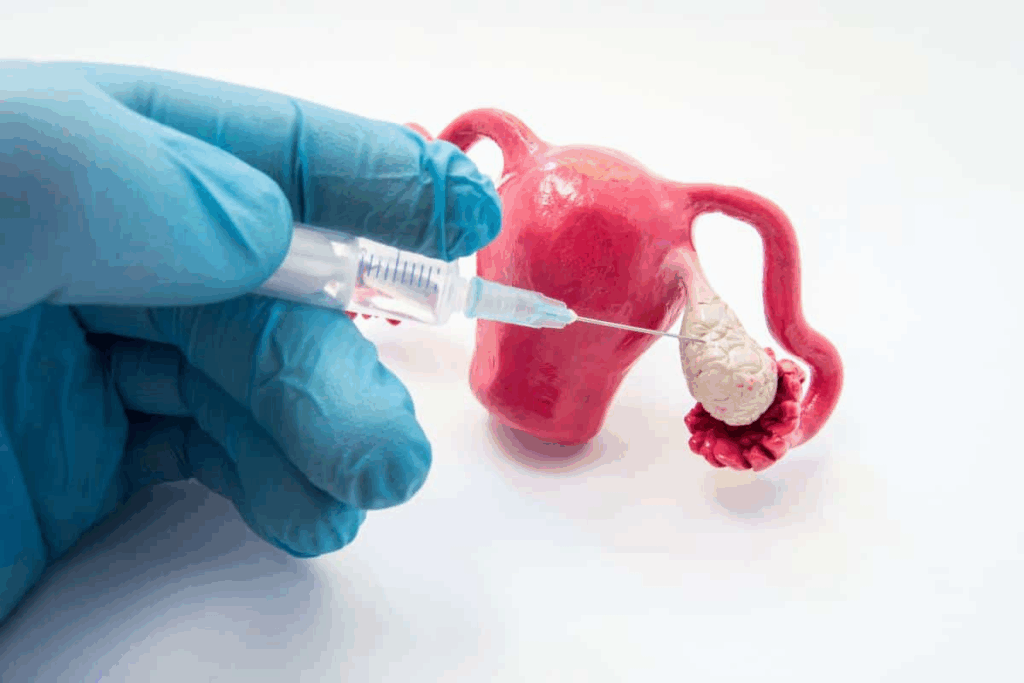
Couples thinking about IUI often wonder about their first try success. The first attempt success rate is key to knowing how well IUI works. We’ll look at the average success rates for first-time IUI attempts and what affects these rates.
General Success Statistics for First Cycles
Studies show first-cycle IUI success rates are 10% to 20% for couples under 35. These numbers give a general idea, but success can vary a lot.
Success rates drop with age, with women over 40 seeing rates of 3-9% per cycle. This drop is mainly because egg quality and quantity decrease with age.
Factors That Influence First-Cycle Success
Many things can affect the success of the first IUI cycle, including:
- Age of the female partner: Age plays a big role in success rates.
- Fertility medications: Medications like Clomid or Letrozole can help by stimulating ovulation.
- Quality of sperm: Better sperm quality means higher success rates.
- Underlying fertility issues: Conditions like endometriosis or male factor infertility can lower success rates.
Using Clomid or Letrozole with IUI can boost success rates. Clomid IUI success rates and IUI success rates with Letrozole are important. These meds can help stimulate ovulation and increase pregnancy chances.
Setting Realistic Expectations
Knowing what affects IUI success rates helps set realistic goals. While first-cycle success rates are a starting point, looking at success over multiple cycles gives a fuller picture.
It’s vital for couples to talk to their healthcare provider about their specific situation. This way, they can understand their unique chances of success with IUI.
Age-Related Factors Affecting IUI Success
Age is a key factor in Intrauterine Insemination (IUI) success. As women get older, their eggs quality and number go down. This affects the chances of a successful IUI treatment. We’ll look at how age impacts IUI success rates and share statistics for different age groups.
Success Rates for Women Under 35
Women under 35 have better IUI success rates. This is because their eggs are healthier and they have more eggs. Studies show they have a higher chance of getting pregnant with IUI than older women.
- Higher Egg Quality: Younger women have healthier eggs, increasing the chances of successful fertilization.
- Better Ovarian Reserve: Women under 35 typically have a more robust ovarian reserve, contributing to higher success rates.
Success Rates for Women 35-40
Women between 35 and 40 see their IUI success rates drop. This is because their egg quality and ovarian reserve start to decline. Even so, they can achieve reasonable success with IUI.
- The decline in egg quality starts to become more pronounced.
- Ovarian reserve begins to decrease, affecting IUI outcomes.
Success Rates for Women Over 40
Women over 40 face lower IUI success rates. This is because their egg quality and ovarian reserve have dropped a lot. The chances of getting pregnant with IUI are much lower in this age group.
It’s essential for women over 40 to discuss their individual circumstances with a fertility specialist. This way, they can understand their chances and explore other options if needed.
Age Group | IUI Success Rate |
Under 35 | Higher success rates due to better egg quality and ovarian reserve. |
35-40 | Success rates decline as egg quality and ovarian reserve decrease. |
Over 40 | Significantly lower success rates due to poor egg quality and reduced ovarian reserve. |
IUI Probability of Pregnancy Across Multiple Cycles
Many couples face multiple cycles of IUI on their path to parenthood. Each cycle has its own chance of success. Knowing how these chances change can help manage hopes and make smart choices about treatment.
First Cycle vs. Subsequent Cycles
The success rate of IUI changes a lot from the first cycle to later ones. Studies show the best chances of pregnancy often happen in the first few cycles. The first cycle is key, setting the stage for success. Yet, many find success in later cycles too.
A study shows success rates peak in the first three cycles. After that, they might level off. This info is key for couples to understand their chances and plan.
Cumulative Success Rates
Cumulative success rates give a wider view of IUI’s effectiveness over time. Cumulative rates count all pregnancies achieved over several cycles. This offers a clearer picture of the treatment’s success.
Data shows 88-95% of IUI pregnancies happen in the first 3-4 cycles. This means early success is likely, but continuing treatment can boost overall chances.
- Cumulative success rate after 1 cycle: 10-15%
- Cumulative success rate after 3 cycles: 30-45%
- Cumulative success rate after 6 cycles: 50-60%
When Success Rates Plateau
Knowing when IUI success rates start to drop is key. While results vary, rates often decrease after 3-4 cycles. This doesn’t mean success is impossible, but chances may drop.
It’s vital for couples to talk with their healthcare provider about their situation. Age, fertility issues, and health can affect success chances across cycles.
Understanding IUI success trends helps couples make better decisions about fertility treatment. While it may take several tries, the cumulative effect can greatly increase their chances of getting pregnant.
Impact of Fertility Medications on First IUI Cycle
Fertility medications can greatly affect the first IUI cycle’s success. These medications help the ovaries produce more eggs. This increases the chances of getting pregnant.
Natural Cycle vs. Medicated Cycle Outcomes
In a natural cycle IUI, no fertility medications are used. It relies on natural ovulation. On the other hand, medicated cycles use drugs to boost egg production.
Research shows medicated cycles have better success rates than natural cycles. Drugs like Clomid and Letrozole help by releasing more eggs.
Clomid-Based IUI Protocols
Clomid is a common fertility drug for IUI. It boosts hormone levels to help an egg mature and release.
Clomid-based treatments see about 8% monthly success rates. Women usually take 50mg or 100mg daily for 5-10 days, starting on day 3-5 of their cycle.
- Clomid helps release more eggs, boosting fertilization chances.
- Monitoring is key to avoid too many pregnancies.
- Most women find Clomid tolerable, but some may get side effects like hot flashes.
Letrozole-Based IUI Protocols
Letrozole is used in IUI for women not responding to Clomid or with certain health issues. It stops estrogen production, which then triggers the release of eggs.
Letrozole regimens may offer better success rates than Clomid, with some studies showing a higher pregnancy rate per cycle. Women usually take 2.5mg to 5mg daily for 5 days.
- Letrozole is often for women with PCOS or at risk of multiple pregnancies.
- It starts on day 3-5 of the menstrual cycle.
- Monitoring is needed to time IUI perfectly.
Both Clomid and Letrozole have their benefits. They’re chosen based on the patient’s needs and medical history. Knowing how these drugs affect IUI success rates helps in making treatment decisions.
IUI with Trigger Shot Success Rates
Trigger shots in IUI treatment boost success rates by perfecting the timing of insemination. They are key in many fertility treatments, including IUI. They help in precisely timing ovulation.
How Trigger Shots Improve Timing
Trigger shots contain hormones like human chorionic gonadotropin (hCG) that help eggs release from follicles. By using a trigger shot, doctors can control when ovulation happens. This ensures IUI is done when the egg is most fertile.
This timing is key because it increases the chance of sperm meeting the egg in the fallopian tube. Studies show that matching sperm introduction with ovulation boosts IUI success rates.
First-Cycle Success Statistics
Research shows IUI with trigger shots has success rates from 11.7% to 38.1%. Success depends on age, sperm quality, and any fertility issues.
Age Group | Success Rate with Trigger Shot |
Under 35 | 25-38.1% |
35-40 | 15-25% |
Over 40 | 11.7-15% |
Trigger Shot Options and Their Effectiveness
There are different trigger shots, like hCG and GnRH agonists. Each is chosen based on the patient’s needs and medical history.
hCG Trigger Shots: These are often used because they mimic the natural hormone that triggers ovulation. They are effective in releasing eggs.
GnRH Agonist Trigger Shots: These are used in some cases, like when there’s a risk of OHSS. They work by stimulating the pituitary gland to release hormones that trigger ovulation.
The choice between these options depends on the patient’s medical history and the fertility treatment plan.
IUI Success Rates Based on Infertility Diagnosis
Knowing how well IUI works for different infertility reasons is key for couples thinking about it. The cause of infertility greatly affects how likely IUI will work.
Unexplained Infertility Success Rates
Couples with unexplained infertility see varying success with IUI. The success rate per cycle is usually 7% to 10%. This can change based on the woman’s age and sperm quality.
Male Factor Infertility Success Rates
For couples facing male factor infertility, IUI can be a good choice. Research shows a success rate of 16.9% per cycle. Using special sperm preparation techniques can help improve these chances.
Female Factor Infertility Success Rates
Female factor infertility includes issues like ovulation problems, tubal damage, and endometriosis. Success rates for IUI vary based on the condition. For example, women with ovulation issues might see better results than those with tubal damage.
Here are some key factors that influence IUI success rates based on infertility diagnosis:
- Cause of Infertility: The specific diagnosis affects the success rate.
- Age of the Woman: Age is a critical factor in determining IUI success.
- Sperm Quality: The quality of the sperm is key for IUI success.
By understanding these factors and the specific success rates for different infertility diagnoses, couples can make better choices about their treatment.
Second and Third IUI Attempt Success Rates
For couples trying IUI, knowing the success rates of later attempts is key. The first cycle is a big step, but the results of the second and third cycles are just as important. They show how well the treatment works overall.
Success Rate of Second IUI
The success rate for a second IUI is encouraging. Studies say the chances of getting pregnant are similar to the first cycle. The success rate of second IUI can change based on several things. These include the cause of infertility, the woman’s age, and the sperm quality.
Our observations show that the second IUI cycle can be just as successful as the first. Some studies say the success rate might slightly drop, but others find it stays the same for the first two cycles.
Success Rate of Third IUI
For those going to a third IUI cycle, the success rate of third IUI offers hope. Even though the success rates might go down with each cycle, trying multiple times can really up your chances of getting pregnant.
Deciding to try a third IUI should be based on your personal situation. This includes how you did in previous cycles and any fertility issues you might have.
Cumulative Success After Multiple Cycles
Research shows that 88-95% of IUI pregnancies happen in the first 3-4 cycles. This highlights the importance of not giving up and the benefits of trying for a few cycles.
To show the cumulative success rates, let’s look at a table:
IUI Cycle | Cumulative Success Rate |
1st Cycle | 10-15% |
2nd Cycle | 20-25% |
3rd Cycle | 30-40% |
4th Cycle | 40-50% |
The cumulative success rates show that while each cycle’s success can vary, trying multiple times can increase your chances. This info is key for couples deciding on their fertility treatment.
In conclusion, knowing the 2nd IUI success rate and 3rd IUI success rate is critical for couples going through IUI. By looking at the success after multiple cycles, couples can better understand their chances and make informed choices about continuing treatment.
Maximizing Your Chances of First-Cycle IUI Success
To increase your chances of IUI success on the first try, you need to prepare well and time it right. Understanding what affects IUI success can help a lot. This knowledge can make a big difference.
Pre-Treatment Preparation
Before starting IUI, there are steps you can take to boost your chances. These include:
- Medical Evaluation: Getting a full check-up to find any fertility problems.
- Optimizing Sperm Quality
- : Making sure the sperm is top-notch through the right collection and prep.
- Fertility Medications: Taking meds to help with ovulation and egg quality.
Lifestyle Factors That Improve Outcomes
What you do every day can also affect IUI success. Eating well, staying active, and managing stress are all important. They can help improve your fertility.
Here are some lifestyle changes to consider:
- Balanced Diet: Eating lots of fruits, veggies, and whole grains.
- Regular Exercise: Doing some exercise to keep your body healthy.
- Stress Reduction: Using methods like meditation or yoga to reduce stress.
Timing Optimization Strategies
Timing is key in IUI treatment. Getting the timing right with ovulation can really help your chances.
Here are some ways to improve timing:
- Tracking Ovulation: Using kits or apps to track when you’re ovulating.
- Trigger Shots: Getting a shot to time ovulation perfectly with the IUI.
By preparing well before treatment, living a healthy lifestyle, and timing the IUI just right, you can increase your chances of getting pregnant on the first try.
Comparing IUI Success to Other Fertility Treatments
When looking at fertility treatments, knowing the success rates is key. This helps people make smart choices. We’ll compare the success rates of different treatments to guide you.
IUI vs. Timed Intercourse
IUI, or intrauterine insemination, is often compared to timed intercourse. Timed intercourse is more natural but has lower success rates. IUI is more effective, even for those with fertility challenges.
Key differences between IUI and timed intercourse include:
- Invasiveness and cost: IUI is more invasive and costly due to the medical procedure involved.
- Success rates: IUI typically offers higher success rates, even for those with certain fertility issues.
- Medical supervision: IUI is performed under medical supervision, potentially increasing the chances of successful conception.
IUI vs. IVF First-Cycle Success Rates
IVF, or in vitro fertilization, involves fertilizing an egg outside the body. Then, the embryo is transferred to the uterus. IVF usually has higher success rates, which is important for some fertility conditions.
Consider the following when comparing IUI and IVF:
- IVF is recommended for complex fertility issues or when IUI fails.
- IVF’s success rate is generally higher, even in the first cycle, for many patients.
- IVF is more invasive and expensive than IUI, with more complex procedures and risks.
Cost-Benefit Analysis of Different Treatments
When evaluating fertility treatments, cost and benefits are key. IUI is cheaper but has lower success rates. A cost-benefit analysis helps understand the value of treatments based on individual needs.
Choosing between IUI, IVF, and other treatments depends on success rates, costs, and personal factors. Knowing these helps make informed decisions about fertility.
Conclusion
Knowing the success rates of Intrauterine Insemination (IUI) is key for couples thinking about fertility treatments. We’ve looked at how different things affect IUI success, like age, fertility meds, and health issues.
IUI success rates change a lot based on several factors. Women under 35 usually see better results, while those over 40 might face lower chances. Using fertility meds and trigger shots can also affect success.
Our study gives a clear view of IUI success rates. It shows how important it is to have a treatment plan that fits each couple. By knowing the chances of getting pregnant with IUI, couples can choose the right treatment for them.
In the end, IUI is a good and less invasive way to try to get pregnant. We suggest couples talk to fertility experts to find the best treatment for their situation.
FAQ
What is the overall success rate of IUI on the first try?
The success rate of IUI on the first try can vary. It depends on age, sperm quality, and fertility issues. On average, the first cycle success rate is about 10-15%.
How does age affect IUI success rates?
Age plays a big role in IUI success rates. Women under 35 usually see success rates of 15-20% per cycle. But, women over 40 see much lower rates, often around 5% or less.
Do fertility medications improve IUI success rates?
Yes, fertility meds can boost IUI success rates. Clomid and Letrozole help by stimulating ovulation and improving egg quality.
What is the success rate of IUI with a trigger shot?
Using a trigger shot with IUI can increase success rates. Studies show it can reach 15-25% per cycle.
How do different infertility diagnoses affect IUI success rates?
Infertility diagnoses impact IUI success rates differently. Women with unexplained infertility often see success rates of 15-20% per cycle. But, those with male or female factor infertility may see lower rates.
What are the success rates for second and third IUI attempts?
Success rates for second and third IUI attempts vary. The second attempt usually sees a 10-15% success rate. The third attempt is around 5-10%. But, cumulative success rates after multiple cycles can be higher.
How can I maximize my chances of first-cycle IUI success?
To increase your chances of first-cycle IUI success, focus on pre-treatment preparation and lifestyle. Maintain a healthy weight, reduce stress, and ensure proper timing of the IUI procedure.
How does IUI compare to other fertility treatments like IVF?
IUI is less expensive and less invasive than IVF. While IVF has higher success rates per cycle, IUI is more cost-effective for many couples, even with less complex fertility issues.
What are the chances of getting pregnant with IUI and Clomid?
The chances of getting pregnant with IUI and Clomid vary. Clomid-based IUI protocols usually see success rates of 10-20% per cycle.
What is the success rate of IUI with Letrozole?
Letrozole-based IUI success rates are similar to Clomid, ranging from 10-20% per cycle. It’s often used for women with PCOS or those sensitive to Clomid.
How many IUI cycles should I try before considering IVF?
The number of IUI cycles before considering IVF varies. It depends on age, fertility diagnosis, and previous IUI outcomes. Generally, 3-6 cycles are recommended before moving to IVF.
References
National Center for Biotechnology Information. IUI Success Rates: First Attempt Variation. Retrieved from https://www.ncbi.nlm.nih.gov/pmc/articles/PMC4658703/