
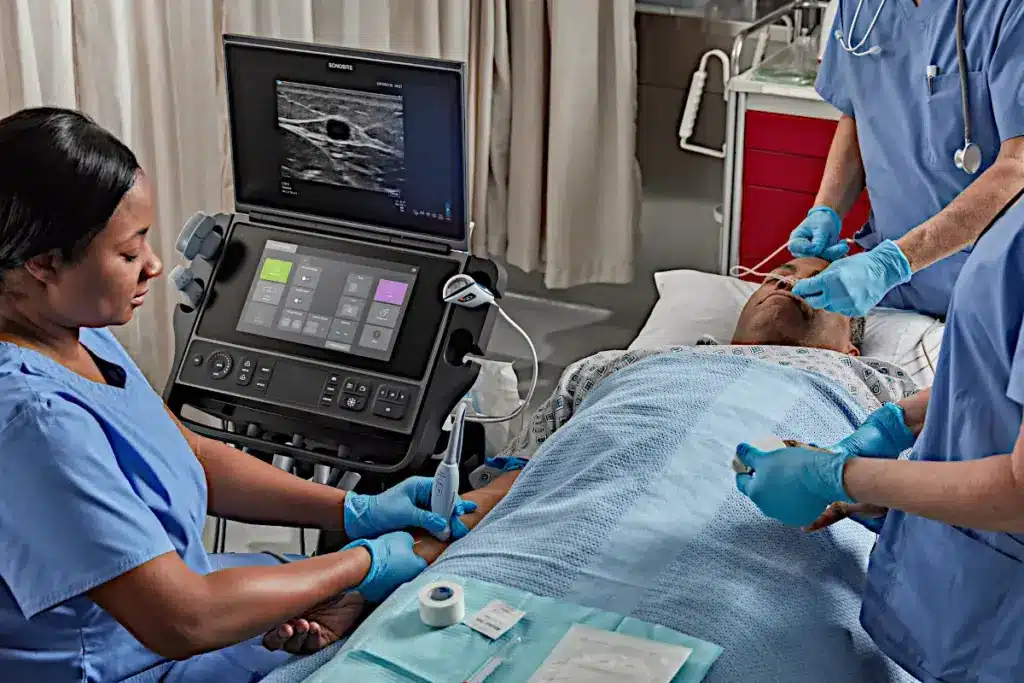
Heart failure affects over 26 million people worldwide. Accurate diagnosis is key for effective treatment. We use advanced tools like IVUS ultrasound and angiography to check cardiovascular health.
These tools are vital for spotting heart failure and cardiovascular disease. Both have their own strengths but differ in how they work and what they show. We’ll look at the differences between IVUS ultrasound and angiography, focusing on their roles in medical diagnosis. IVUS ultrasound vs angiography: Get the facts. Discover why IVUS is often the best choice for seeing the full picture of your heart health.
Key Takeaways
- IVUS ultrasound and angiography are both used to diagnose cardiovascular disease.
- Accurate diagnosis is critical for effective treatment of heart failure.
- The choice between IVUS ultrasound and angiography should be guided by the specific needs of each patient.
- Understanding the strengths and limitations of each diagnostic tool is essential.
- Advanced diagnostic techniques improve patient outcomes in cardiovascular care.
Understanding IVUS Ultrasound Technology
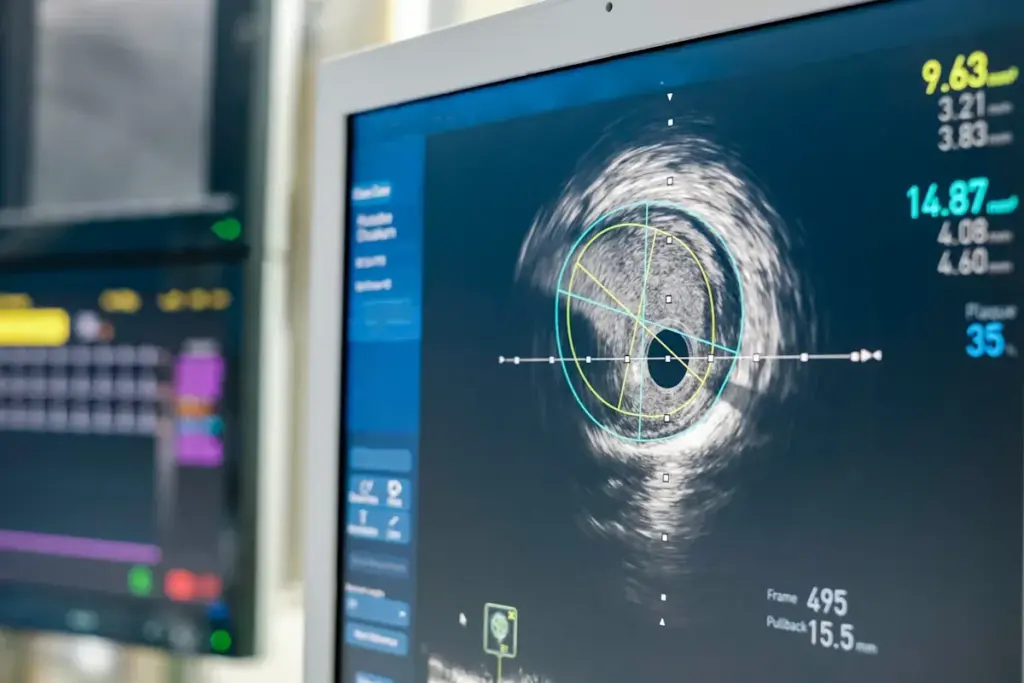
IVUS ultrasound technology is key in diagnosing and treating heart diseases. It’s vital for doctors and patients to understand IVUS as cardiology advances.
What is IVUS Ultrasound?
Intravascular Ultrasound (IVUS) is a medical imaging method. It uses a catheter with a small ultrasound probe. This probe is put into blood vessels to show detailed images of the inside.
How Does IVUS Work?
The IVUS process involves guiding the catheter through blood vessels. Once in place, the probe sends sound waves that bounce off walls. These waves create detailed images for doctors to see.
Applications of IVUS in Medical Imaging
IVUS is used a lot in medical imaging, mainly for heart diseases. It helps in cardiac labs to check for artery disease and guide treatments. It also helps in monitoring other vascular conditions.
IVUS gives doctors clear images of blood vessels. This helps in making accurate diagnoses and treatment plans. Using advanced tools like IVUS improves patient care and outcomes in heart medicine.
Overview of Angiography
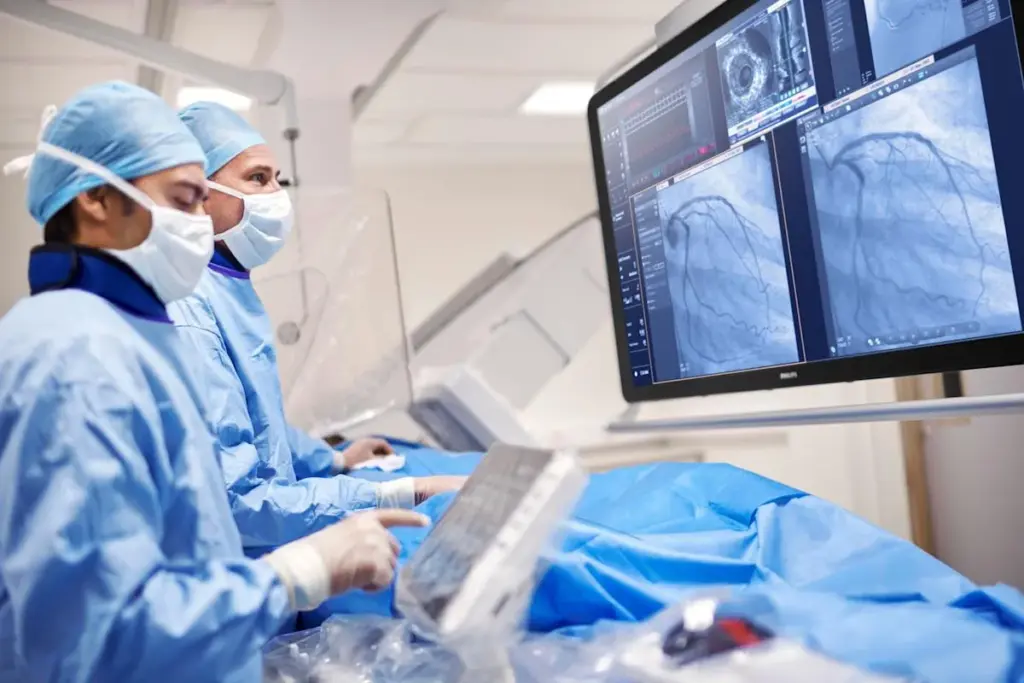
Angiography lets us see inside blood vessels. It’s a key tool in healthcare. This technique is vital for diagnosing and treating vascular diseases.
What is Angiography?
Angiography uses a contrast agent to make blood vessels visible. It’s great for spotting blockages or other issues. It helps doctors diagnose coronary artery disease and peripheral artery disease.
A leading cardiologist says, “Angiography is key in diagnosing heart diseases. It gives us a clear view of the vascular system.”
“The clarity and detail provided by angiography are unparalleled, allowing for precise diagnosis and treatment planning.”
Types of Angiography Techniques
There are many angiography techniques, each for different uses:
- Coronary Angiography: Looks at the heart’s arteries to spot disease.
- Cerebral Angiography: Checks the brain’s blood vessels for problems.
- Peripheral Angiography: Examines blood vessels outside the heart and brain.
|
Type of Angiography |
Application |
|---|---|
|
Coronary Angiography |
Diagnosing coronary artery disease |
|
Cerebral Angiography |
Examining blood vessels in the brain |
|
Peripheral Angiography |
Diagnosing peripheral artery disease |
Typical Uses of Angiography in Healthcare
Angiography is used a lot in healthcare. It’s great for:
- Spotting congestive heart failure by checking the heart’s arteries.
- Helping with treatments like angioplasty and stenting.
- Seeing how far vascular disease has spread.
Understanding angiography’s role in healthcare shows its importance. It helps manage heart diseases and improves patient care.
Key Differences Between IVUS and Angiography
Understanding the differences between IVUS and angiography is key for diagnosing heart conditions. Both tools are important, but they have different uses and benefits.
Imaging Techniques Compared
IVUS ultrasound and angiography use different methods to see inside blood vessels. IVUS uses a probe to get detailed images of the vessel walls. Angiography uses X-rays and contrast to see blood vessels, focusing on blockages and blood flow.
Key differences in imaging techniques include:
- IVUS gives cross-section images for precise measurements of plaque and lumen.
- Angiography shows a two-dimensional view of the vascular lumen, sometimes missing details.
Diagnostic Accuracy
Choosing between IVUS and angiography depends on accuracy. IVUS is known for precise measurements of vessel and plaque details. This is key for planning treatments like stenting. Angiography is good for seeing the big picture of blood vessels but lacks the detail of IVUS.
IVUS shines in complex cases, such as:
- Measuring the severity of coronary artery disease.
- Guiding coronary interventions.
Visualization Capabilities
IVUS and angiography show different things. IVUS gives detailed views of the vessel wall and lumen. This helps doctors see plaque and vessel sizes accurately. Angiography shows the bigger picture of blood vessel anatomy, spotting large blockages.
Visualization capabilities affect how doctors make decisions in several ways:
- IVUS helps place stents correctly by showing how they expand and fit.
- Angiography checks if vascular interventions were successful and if there are complications.
Advantages of IVUS Over Angiography
IVUS has changed vascular imaging in cardiac labs. It offers big advantages over angiography. Let’s look at why IVUS is better.
Enhanced Detail of Vascular Structures
IVUS gives a clearer view of blood vessels than angiography. It makes detailed images from inside the vessels. This enhanced detail helps doctors see the vascular walls better and spot problems early.
- High-resolution images of the vascular lumen and walls
- Better visualization of plaque characteristics and burden
- More accurate assessment of vessel diameter and area
Real-time Imaging Benefits
IVUS is great for real-time imaging. This is super useful during procedures. It lets doctors see what’s happening as they work.
IVUS’s real-time benefits include:
- Immediate feedback during interventions
- Enhanced precision in stent placement and other procedures
- Better handling of complications as they arise
Ability to Guide Interventions
IVUS gives detailed images and guides procedures. It shows the vascular anatomy and where devices are. This is key for precise stent placement in complex cases.
Using IVUS in cardiac labs meets AHA standards. It helps improve patient care and outcomes.
Limitations of IVUS Compared to Angiography
IVUS ultrasound has many benefits but also some drawbacks. It’s important to know these challenges when comparing it to angiography.
Potential Challenges in Accessibility
One big issue with IVUS is getting access to it. It needs special equipment and trained people to work well. This can be hard in places with few resources or advanced tech.
Accessibility challenges might delay getting a diagnosis or treatment. This could affect how well patients do. Also, finding the right catheter size and type can be tricky, making procedures harder in some cases.
Interpretation Complexity
Reading IVUS images is tricky and needs a lot of skill. The details of blood vessels and ultrasound images can make it hard to spot problems. Doctors need a lot of training to get good at it.
The interpretation complexity gets even harder with things like artifacts or figuring out different types of plaque. This shows why constant learning in IVUS is key.
Cost Considerations
IVUS is also expensive. The tech, equipment, and staff needed add up, making it pricier than some other tests. This can make it hard for some patients to get it, mainly in places with tight budgets or poor insurance.
When looking at cost considerations, we must think about what IVUS offers. It might give clearer images and better results in some cases. But, we must also think about the money it takes.
In short, IVUS is a great tool for heart disease but has its limits. We must think about its challenges in getting it, understanding it, and the cost. Knowing these helps doctors make better choices for their patients.
Clinical Applications of IVUS
IVUS ultrasound has changed cardiology with its detailed images. It helps us understand the heart better. This leads to better diagnoses and treatments.
Role of IVUS in Cardiology
In cardiology, IVUS is key for checking the coronary arteries. It shows how much plaque is there and other issues. This info helps us choose the right treatment.
IVUS in cardiology has many advantages, including:
- It shows coronary artery disease better
- It helps place stents correctly
- It tells us about plaque types
IVUS Use in Peripheral Vascular Disease
IVUS is also great for PVD. It gives clear images of the peripheral arteries. This helps us find blockages and plan treatments.
|
Application |
Benefits |
|---|---|
|
Diagnosis of PVD |
Accurate visualization of peripheral arteries |
|
Guiding interventions |
Precise placement of stents and angioplasty balloons |
IVUS for Assessing Coronary Arteries
IVUS gives us important info about coronary arteries. It shows how much disease is there. It also tells us about plaque, vessel size, and calcium.
With IVUS, we can:
- See how bad coronary stenosis is
- Plan and guide coronary interventions
- Check if treatments are working
Overall, IVUS ultrasound is a key tool in heart disease diagnosis and treatment. It gives us deep insights that help us make better choices.
Clinical Applications of Angiography
Angiography is a key tool in medicine. It lets doctors see inside blood vessels. This is vital for many medical fields.
Angiography in Cardiac Procedures
In heart care, angiography is essential. It helps doctors see coronary arteries and find blockages. This is key for treating heart disease.
It’s also used in heart surgeries. This improves treatment success and patient outcomes.
Use in Vascular Surgery
Vascular surgery uses angiography to plan and do surgeries. It shows blood vessel problems. This helps surgeons plan treatments.
Angiography checks if surgeries work. It helps surgeons make changes if needed.
Angiography for Trauma Patients
Angiography helps with trauma care. It finds vascular injuries quickly. This guides treatments to stop bleeding or fix vessels.
It helps save lives by avoiding unnecessary surgeries. It’s a key tool for trauma care.
Angiography is also used for heart failure diagnosis. It shows the heart’s blood vessels. This helps doctors understand heart function.
Patient Safety and Risks
When we talk about using imaging for vascular diseases, safety is key. It’s important to know the risks of IVUS and angiography. These methods have changed cardiology and vascular medicine a lot. But, like any medical procedure, they have risks and possible problems.
Risks Associated with IVUS
IVUS ultrasound is great for detailed images of blood vessels. But, it has some risks. There’s a small chance of damage to the blood vessel during the procedure. There’s also a risk of blood clots, mainly if the procedure takes a long time or if the catheter moves a lot inside the vessel.
Also, reading IVUS images needs a lot of skill. If the person doing it isn’t well-trained, there could be mistakes. But, when done by experts, IVUS is usually safe and very helpful.
Risks Associated with Angiography
Angiography, which uses contrast agents, has its own risks. Allergic reactions to the dye can be mild or severe. It can also harm the kidneys, which is worse for people with kidney problems. Plus, it involves radiation, which, while mostly safe, can be a problem over time.
There are also risks like bleeding, swelling, or abnormal connections in the blood vessels. But, these can be lessened with the right technique and care after the procedure.
Comparing Safety Profiles of Both Techniques
Looking at the safety of IVUS and angiography, we must think about the patient and the situation. IVUS and angiography are often used together. They give a full view of the blood vessels and any problems.
Both methods have risks, but they are usually safe. This is true when done by skilled doctors in the right places, like cardiac and CHF labs. Choosing between IVUS and angiography depends on the patient’s needs, the goals of the test, and the risks and benefits of each.
Economic Considerations
It’s important for healthcare providers and patients to understand the costs of IVUS and angiography. These costs can affect medical practices and patient care.
Cost-Effectiveness of IVUS
IVUS ultrasound technology may seem expensive at first. But, it can save money in the long run. It gives detailed images of blood vessels, helping doctors make accurate diagnoses. This can lead to shorter hospital stays and fewer follow-up procedures.
A study showed IVUS is more cost-effective than angiography alone. It saves money by reducing complications and the need for more tests.
Cost Analysis of Angiography
Angiography is a common test with various costs. These include the test itself, hospital stay, and result analysis. The cost can change a lot based on the type of angiography, where it’s done, and the location.
|
Procedure |
Average Cost |
Factors Influencing Cost |
|---|---|---|
|
Angiography |
$5,000 – $10,000 |
Facility, location, type of angiography |
|
IVUS |
$2,000 – $5,000 |
Technology, operator expertise |
Insurance Coverage for Both Procedures
Insurance for IVUS and angiography varies. Most plans cover them when they’re needed. Knowing what’s covered is key to avoid surprise bills.
We suggest patients check with their insurance to see what’s covered for these tests.
Expertise and Training Required
To get the most out of IVUS and angiography, doctors need a lot of training. These methods are complex. They require a deep understanding of blood vessels, imaging tech, and how to use them in medicine.
Technological Proficiency for IVUS
IVUS ultrasound tech needs a lot of skill. Doctors must know how to use the equipment and read the images. Good training for IVUS should include practice and lessons on how to analyze images. This helps doctors make accurate diagnoses and guide treatments.
Training Requirements for Angiography
Angiography, with its complex blood vessel work, needs special training. Doctors must learn about angiography, like how to use catheters and read images. Training with simulations and guidance from experts is key to mastering angiography safely.
Importance of Skilled Practitioners
Skilled doctors are key to successful IVUS and angiography. Their knowledge affects how well patients are diagnosed and treated. Keeping up with new tech and best practices through training is vital. This way, hospitals can improve care and patient results.
We know that the skills and training of doctors are vital for IVUS and angiography. So, we stress the need for thorough training and ongoing learning in these advanced tests.
Future Trends in Vascular Imaging
Vascular imaging is set to change with new IVUS tech, angiography methods, and AI. These changes will help doctors diagnose and treat heart diseases better. This will lead to better health for patients.
Advancements in IVUS Technology
IVUS ultrasound is getting better, with clearer images and new features like virtual histology and chrominance. These help doctors see plaque and blood vessels more accurately.
New, smaller IVUS catheters are making procedures safer and easier. This lets doctors do more complex tasks with less risk.
Evolution of Angiography Techniques
Angiography is getting better, thanks to digital subtraction angiography and new contrast agents. These updates help doctors see blood vessels better. This leads to more accurate diagnoses and treatments.
3D reconstruction is becoming common too. It gives a detailed view of blood vessels. This helps with complex treatments.
The Role of Artificial Intelligence in Imaging
Artificial intelligence (AI) is starting to help in vascular imaging. It’s used for analyzing images, finding plaque, and predicting outcomes. AI can spot things humans might miss, helping diagnose diseases earlier.
AI will likely play a bigger role in vascular imaging. It will make diagnoses more accurate and treatments more tailored to each patient.
As these trends grow, vascular imaging will get even more advanced. This will lead to better health for patients and a deeper understanding of heart diseases.
Conclusion: Choosing Between IVUS and Angiography
Looking at IVUS ultrasound and angiography, we see they serve different needs. The right choice depends on the situation, the patient’s health, and the doctor’s skills.
Factors to Consider
Doctors must weigh several things when picking between IVUS and angiography. They need to think about how accurate the diagnosis must be. They also consider the complexity of the blood vessel and the risks of each method.
Getting the diagnosis right is key, like in heart failure cases. Quick and right treatment can greatly help patients.
Future Directions
The future of seeing inside blood vessels will likely get better with new tech. Advances in IVUS and angiography, plus AI, will help doctors make better choices. This could lead to better care for heart and blood vessel diseases.
In the end, choosing between IVUS and angiography is about knowing their strengths and weaknesses. It’s also about focusing on the best care for each patient.
FAQ
What is IVUS ultrasound and how is it used in diagnosing heart conditions?
IVUS stands for Intravascular Ultrasound. It uses a tiny ultrasound probe inside a catheter to see inside blood vessels. This helps doctors diagnose and treat heart diseases, like checking coronary arteries.
How does IVUS compare to angiography in diagnosing heart failure?
IVUS gives detailed images and live views, helping doctors diagnose heart issues better. Angiography shows a wider view but might not be as detailed as IVUS.
What are the advantages of IVUS over angiography?
IVUS shows more detail, offers live views, and helps guide treatments. These benefits make it a key tool in cardiology and vascular medicine.
What are the limitations of IVUS compared to angiography?
IVUS might face challenges like access issues, complex interpretation, and cost. These can affect its use in diagnosing heart failure and diseases.
How is congestive heart failure diagnosed using IVUS or angiography?
Doctors use IVUS or angiography to check the coronary arteries and other blood vessels. IVUS shows detailed views, while angiography gives a broader look.
What blood tests are used to diagnose heart failure?
Tests like BNP and NT-proBNP measure proteins in the blood. These tests help diagnose heart failure by checking for certain protein levels.
What is the role of electrocardiogram (ECG) in diagnosing heart failure?
An ECG measures the heart’s electrical activity. It can spot abnormal rhythms or signs of heart problems, helping diagnose heart failure.
How is chest X-ray used in diagnosing congestive heart failure?
Chest X-rays check the heart’s size and shape and look for lung fluid. This can show signs of congestive heart failure.
What is the safety profile of IVUS and angiography?
Both IVUS and angiography are generally safe but carry risks like bleeding and allergic reactions. The safety of each should be weighed when choosing.
How do economic considerations impact the choice between IVUS and angiography?
Cost and insurance coverage can influence the choice between IVUS and angiography. It’s important to consider both the cost and benefits of each procedure.
References
National Institutes of Health. Evidence-Based Medical Insight. Retrieved from https://pmc.ncbi.nlm.nih.nlm.nih.gov/articles/PMC11468466/