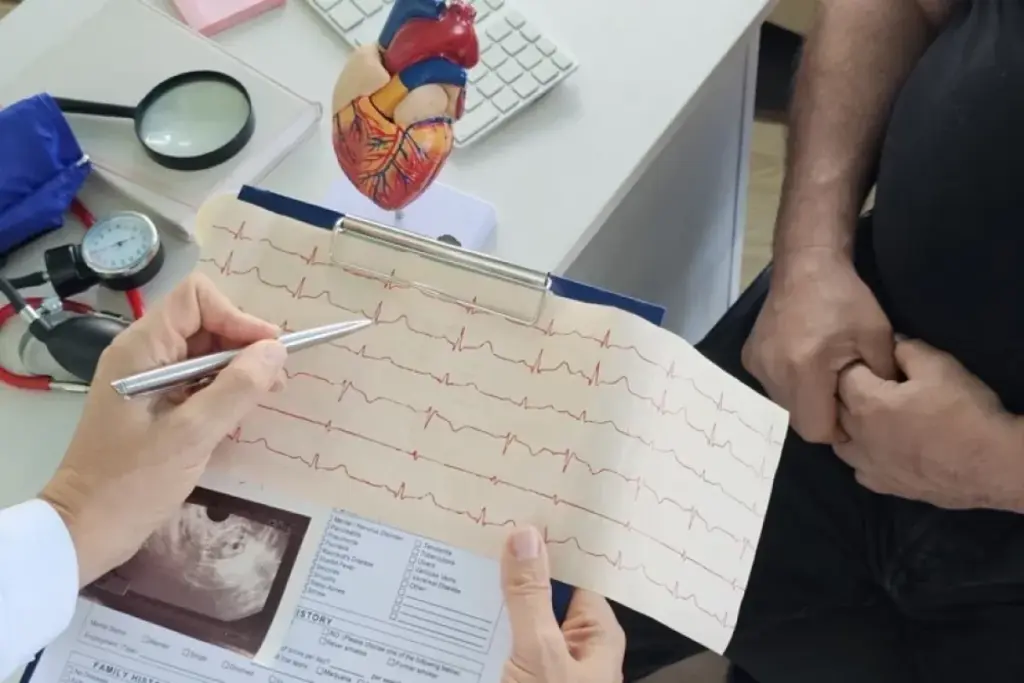
Nearly 1 in 5 adults in the United States have heart disease. Tests like the King of Hearts cardiology test are key for checking heart health.
The King of Hearts cardiology test is a way to watch the heart over 30 days. It helps find heart problems like irregular beats or fainting. It records the heart’s electrical signals.
Patients can move around while wearing a portable heart monitor. This gives doctors important info to treat heart issues well.
Key Takeaways
- Monitors heart activity for up to 30 days.
- Detects arrhythmias, palpitations, and syncope.
- Portable and non-invasive.
- Provides valuable data for cardiologists.
- Helps in diagnosing and managing heart conditions.
The Evolution of Cardiac Monitoring in Modern Medicine
Cardiac monitoring has seen big changes, changing how we diagnose and treat heart issues. The field of cardiology has moved towards better and more precise monitoring systems. This has greatly improved patient care.
The Need for Extended Cardiac Observation
Old cardiac monitoring systems had short monitoring times. They often missed rare or occasional heart problems. This made it hard to catch these issues early.
Extended cardiac monitoring helps understand a patient’s heart better over time. It’s key in spotting conditions that don’t show up in short monitoring sessions.
From Traditional to Advanced Monitoring Systems
The move to new monitoring systems has brought big tech leaps. Modern systems, like the King of Hearts monitor, can watch the heart for longer. They collect more accurate data and are more comfortable for patients.
|
Feature |
Traditional Monitoring Systems |
Advanced Monitoring Systems |
|---|---|---|
|
Monitoring Duration |
Typically 24-48 hours |
Up to 30 days or more |
|
Data Accuracy |
Limited by technology |
High accuracy with advanced sensors |
|
Patient Comfort |
Often cumbersome and restrictive |
More compact and user-friendly |
New tech in cardiac monitoring has led to better diagnosis and treatment of heart issues.
As cardiac monitoring keeps evolving, we can expect even better systems. These will likely offer real-time data and more tailored care for patients.
What is the King of the Hearts Cardiac Monitoring System
The King of Hearts cardiac monitoring system uses advanced technology to give deep insights into heart health. It’s a top-notch device for long-term heart activity monitoring.
Definition and Core Technology
This system is a high-tech device that tracks the heart’s electrical signals. It helps doctors spot and manage heart issues. It’s all about using cardiac monitoring technology to watch heart rhythms and find any problems.
The device has sensors that record the heart’s activity. This data is then analyzed. This extended monitoring capability gives a detailed look at the heart’s function over time, not just during a quick visit.
Historical Development and Advancements
Over time, the King of Hearts cardiac monitoring system has seen big improvements. These changes have made it more effective and comfortable for patients. The growth of heart monitoring systems like the King of Hearts has changed how we care for hearts, leading to better diagnoses and treatments.
The King of Hearts monitor is now a key tool in cardiology. It’s a reliable way to monitor heart activity for a long time. Its role in improving patient care and accuracy in diagnosis is huge, making it essential in cardiology.
How the King of Hearts Monitor Functions
The King of Hearts monitor continuously records the heart’s electrical activity. It uses advanced technology and data recording systems to do this.
Technical Components and Design
The King of Hearts monitor is small and can be worn. It has electrodes to catch the heart’s electrical signals. It also has a recording device to save the data and a transmission system for sending the heart info.
The design makes it comfortable to wear for a long time. This lets people keep monitoring their heart without it getting in the way of their day.
Data Recording Mechanisms
The King of Hearts monitor’s data recording is top-notch. It can take detailed electrocardiogram (ECG) readings for a long time. This is key for finding heart problems that only show up sometimes.
It records the heart’s electrical signals very accurately. This means even small changes in heart rhythm are caught. Then, doctors can look at this info later.
Transmission and Storage of Cardiac Information
The monitor has a system to send the heart data safely to a database or to doctors. This lets doctors check and analyze the heart activity quickly.
The heart data is kept safe and follows all health data protection rules. It’s stored in a way that makes it easy for doctors to access and study.
|
Feature |
Description |
Benefit |
|---|---|---|
|
Continuous Monitoring |
Records heart activity over an extended period |
Captures intermittent conditions |
|
Advanced Electrodes |
Captures detailed ECG readings |
High fidelity data for accurate diagnosis |
|
Secure Data Transmission |
Transfers data securely to healthcare providers |
Timely review and analysis by healthcare professionals |
A leading cardiologist says, “The King of Hearts monitor is a big step forward in heart monitoring. It gives both patients and doctors important insights into heart health.”
“The King of Hearts monitor has changed how we find and treat heart problems. It gives us a deeper look at heart activity over time.”
The Clinical Testing Procedure
The King of Hearts monitor’s clinical testing is all about precision. It involves careful device placement and monitoring. This is key to getting accurate and reliable cardiac data.
Initial Setup and Device Placement
Setting up the King of Hearts monitor starts with attaching it to the patient’s chest. Proper device placement is vital for quality signal capture. The healthcare provider cleans the skin area and secures the device with adhesives or straps.
Patients get instructions on wearing the device. They learn how to keep it dry and what activities to avoid. The device is user-friendly and doesn’t get in the way of daily routines.
Monitoring Protocol and Duration
The monitoring protocol for the King of Hearts device aims to capture detailed cardiac data over time. The monitoring usually lasts 30 days. During this time, the device records heart activity continuously, giving insights into cardiac function.
|
Monitoring Aspect |
Description |
Duration |
|---|---|---|
|
Continuous Monitoring |
Records heart activity 24/7 |
Up to 30 days |
|
Data Storage |
Securely stores cardiac data |
Throughout the monitoring period |
|
Patient Diary |
Patients record symptoms and activities |
Concurrent with monitoring |
The data from the monitoring period is analyzed by cardiologists. This helps diagnose various heart conditions. The long monitoring time of the King of Hearts allows for accurate diagnosis of intermittent cardiac issues.
Medical Conditions Diagnosed Using the King of Hearts Test

The King of Hearts test is a key tool in cardiac monitoring. It helps find many heart conditions. This tool is great for spotting heart issues that don’t show up in short tests.
Arrhythmias and Heart Rhythm Disorders
The King of Hearts test is top-notch for finding arrhythmias and heart rhythm problems. These issues happen when the heart beats too slow, too fast, or not right. It watches the heart’s electrical activity for a long time. This way, doctors can spot conditions like atrial fibrillation and ventricular tachycardia.
Arrhythmias can be there but not show symptoms. Long monitoring is key for a correct diagnosis. The test gives a detailed look at the heart’s rhythm, linking symptoms to heart activity.
Syncope and Unexplained Fainting Episodes
Syncope, or fainting, can be caused by heart rhythm problems. The King of Hearts test is great for finding why people faint without reason. It watches the heart during daily life and for a long time. This catches episodes that might not show up in short visits.
The data from the King of Hearts monitor helps doctors figure out if fainting is due to heart rhythm issues. This guides the right treatment.
Post-Cardiac Event Monitoring
After a heart attack or ablation, post-cardiac event monitoring is vital. The King of Hearts test keeps an eye on the heart’s recovery. It lets doctors see how the heart works over time and decide on care.
This monitoring is key for spotting arrhythmias or other issues after a heart event. It ensures quick action if needed.
|
Condition |
Description |
Diagnostic Benefit of King of Hearts Test |
|---|---|---|
|
Arrhythmias |
Irregular heartbeats that can be too fast, too slow, or irregular |
Long-term monitoring captures intermittent arrhythmias, providing a complete view of heart activity |
|
Syncope |
Unexplained fainting episodes |
Extended monitoring finds heart rhythm issues that may cause fainting, linking symptoms to heart activity |
|
Post-Cardiac Event Monitoring |
Monitoring after cardiac events like heart attacks or ablation procedures |
Continuous check of heart function post-event, spotting complications early |
Differences Between King of Hearts and Traditional Holter Monitors
The King of Hearts monitor is different from traditional Holter monitors. It has longer monitoring times and newer technology. This makes it better for checking and managing heart problems.
Duration Capabilities: 30-Day Monitoring vs. Standard Options
The King of Hearts monitor can watch your heart for up to 30 days. Traditional Holter monitors only last 24 to 48 hours.
This longer time lets doctors see more about your heart health. It’s great for catching heart issues that only happen sometimes.
|
Feature |
King of Hearts Monitor |
Traditional Holter Monitors |
|---|---|---|
|
Monitoring Duration |
Up to 30 days |
24 to 48 hours |
|
Data Recording Mechanism |
Advanced digital recording |
Traditional digital or analog recording |
|
Data Transmission |
Automated wireless transmission |
Manual download or wired transmission |
Technological Advantages and Limitations
The King of Hearts monitor has new tech that traditional Holter monitors don’t. It records data better and sends it wirelessly. This makes monitoring your heart more accurate and easier.
Advantages of the King of Hearts Monitor:
- Longer monitoring lets doctors get more data
- New tech means more accurate data
- Wireless data sends means no hassle for patients
Limitations of Traditional Holter Monitors:
- Short monitoring might miss heart issues
- Older tech might not be as good
- Downloading data manually can be a hassle
In short, the King of Hearts monitor is better than traditional Holter monitors. It’s great for longer monitoring and new tech. Doctors should think about these points when choosing a heart monitor for patients.
The Patient Experience: Living with the King of Hearts Monitor
Wearing a King of Hearts monitor means making some lifestyle changes. These changes help you get more heart monitoring time. The device is meant to be worn all the time. This way, it can always watch your heart’s activity.
Daily Activities and Lifestyle Adjustments
People with the King of Hearts monitor need to adjust their daily life a bit. They learn how to wear and take care of the device. They also learn how to do daily tasks without messing up the monitoring.
- Keep doing your usual things like work, hanging out with friends, and light workouts.
- Don’t put the device in water, like when swimming or taking a bath.
- Be careful when getting dressed or undressed to avoid damaging the device.
Sleeping, Bathing, and Exercise Considerations
The King of Hearts monitor is okay to wear while you sleep. But, there are things to think about when it comes to bathing and exercising.
Key considerations include:
- Sleeping: The device is made to be comfy while you sleep. You might need to adjust how you sleep a bit.
- Bathing: Don’t get the device wet. You can shower, but avoid baths or swimming.
- Exercise: You can do light to moderate exercise. But, always check with your doctor first.
Managing the Device Throughout the Testing Period
To make sure the cardiac monitoring works well, you need to take care of the King of Hearts device. This is important during the whole testing time.
Tips for managing the device:
- Make sure to charge the device as told.
- Write down any symptoms or strange happenings in a diary or log.
- Follow your doctor’s advice for any extra steps or changes.
Preparing for Your King of Hearts Monitoring Period
Getting ready for the King of Hearts cardiac monitoring test is important. It involves several steps that patients need to follow. This helps ensure the results are accurate.
Pre-Test Instructions and Preparations
Before the test, patients get specific instructions. These include:
- Keeping a diary or log of activities and any symptoms during the monitoring period
- Avoiding certain medications or substances that could affect the test results
- Ensuring the device is properly fitted and understanding how to use it
Following these instructions carefully is key. It helps make sure the data collected is accurate and useful for diagnosis.
What to Expect During the Monitoring Period
During the monitoring period, patients wear the King of Hearts device all the time. Here’s what to expect:
- The device records heart activity over the monitoring period, which could be up to 30 days.
- Patients should keep doing their normal daily activities unless told not to by their healthcare provider.
- It’s important to keep the device charged and follow any maintenance guidelines provided.
Patients may need to adjust their daily routine. But the device is designed to be as unobtrusive as possible.
Understanding what to expect and how to prepare is important. It helps patients get the most out of their King of Hearts monitoring experience. This preparation is key to getting accurate and reliable data. Healthcare providers use this data to make informed decisions about patient care.
Data Analysis and Interpretation of Results
Looking at the data from the King of Hearts monitor is key to knowing about heart health. It helps doctors figure out the best treatment. The data collected over time gives a full view of the heart’s activity.
How Cardiologists Review the Collected Information
Cardiologists carefully look at the data from the King of Hearts monitor. They search for patterns or oddities that might show heart problems. They check the heart’s rhythm, rate, and other important signs.
Key aspects of the review process include:
- Identifying arrhythmias and other rhythm disorders
- Analyzing the frequency and duration of symptoms
- Correlating symptoms with daily activities and events
Understanding Your Test Results and Reports
Patients get detailed reports of their test results. These reports explain the data from the monitoring period. They aim to be clear, giving insights into the heart’s state and what to do next.
|
Report Component |
Description |
Clinical Significance |
|---|---|---|
|
Summary of Findings |
Overview of the key observations from the monitoring period |
Highlights significant events or patterns detected |
|
Detailed Rhythm Analysis |
In-depth examination of heart rhythms recorded during the monitoring |
Essential for diagnosing arrhythmias and other rhythm disorders |
|
Correlating Symptoms with Activities |
Analysis of how symptoms correlate with patient activities and events |
Helps in understanding triggers and patterns |
It’s important for patients to understand these reports. They help patients know their heart health and what treatment means. Doctors are there to talk about the findings and answer any questions.
Benefits of Extended Cardiac Monitoring with King of Hearts

Extended cardiac monitoring with the King of Hearts device has changed how cardiologists diagnose and manage heart conditions. It provides continuous monitoring over a long time. This system offers big advantages in cardiac care.
Improved Diagnostic Accuracy for Intermittent Conditions
The King of Hearts monitor is great for diagnosing heart conditions that only show up sometimes. It can record heart activity for weeks. This gives a full picture of a patient’s heart health.
Key benefits include:
- Detection of arrhythmias and other intermittent conditions
- Improved correlation between symptoms and cardiac activity
- Enhanced diagnostic accuracy due to prolonged monitoring
Patient Comfort and Compliance Advantages
The King of Hearts monitor is designed with patient comfort in mind. It lets people keep up with their daily activities without much trouble. This comfort makes patients more likely to stick with the monitoring, leading to more accurate data.
|
Feature |
Benefit |
Impact on Patient |
|---|---|---|
|
Long-term monitoring |
Improved diagnostic accuracy |
Better understanding of heart conditions |
|
Comfortable design |
Higher patient compliance |
More accurate data collection |
|
Advanced data analysis |
Timely diagnosis and treatment |
Improved patient outcomes |
The King of Hearts monitor combines advanced technology with a focus on the patient. It’s a powerful tool for diagnosing and managing heart conditions.
Potential Challenges and Limitations of the Test
The King of Hearts test is very effective but faces challenges. Like any advanced tech, it has its own limits and technical problems. These can affect how well it works.
Technical Issues and Data Quality Concerns
One big worry is technical problems that can mess up the data. Signal interference or device malfunction can cause wrong or missing data. It’s key to keep the device in good shape and teach patients how to use it right.
Good data quality is essential for correct diagnoses. Poor data quality can come from bad electrode placement or skin issues. To fix this, patients get clear instructions on how to care for the device.
Patient Compliance Challenges and Solutions
Getting patients to stick to the test is also a big deal. Patient education is key to making them see why they must wear the device and follow the rules.
To help with this, doctors give detailed advice on using the device while doing everyday things. This includes bathing, exercising, and sleeping. By making it easier to fit into daily life, patients are more likely to follow the plan.
“The key to successful cardiac monitoring lies not just in the technology itself, but in how well patients can integrate it into their daily lives.”
Knowing the challenges and limits of the King of Hearts test helps doctors support patients better. This leads to more accurate diagnoses and better treatment plans.
Comparing King of Hearts with Other Extended Monitoring Options
The King of Hearts is just one tool for long-term heart monitoring. The right device depends on the patient’s health, lifestyle, and what they need to diagnose.
Implantable Loop Recorders
Implantable Loop Recorders (ILRs) are tiny devices put under the skin. They watch heart rhythms for years, unlike the King of Hearts, which is worn outside the body. ILRs keep monitoring without needing the patient to do anything or recharge the device.
ILRs are great for catching rare heart issues. But, they need surgery to put in and might scare some patients off.
Mobile Cardiac Telemetry Systems
Mobile Cardiac Telemetry (MCT) Systems also monitor hearts for a long time. They send heart data live to a center. MCTs are good for spotting serious heart problems fast and alerting doctors and patients.
MCTs offer quick updates but might be harder to set up and cost more than the King of Hearts. The right choice depends on the patient’s situation and needs.
Patch Monitors and Wearable Technology
Patch monitors and wearable tech are becoming more common. They’re easy to wear and can track heart activity for weeks. This makes them a good choice for long-term monitoring without being too much.
The King of Hearts can monitor for 30 days, which is great for catching rare heart issues. But, new patch monitors and wearables are getting better at what they do, making them more appealing.
In summary, the King of Hearts is a good tool for heart monitoring, but there are other options too. ILRs, MCT Systems, and patch monitors each have their own benefits. The best choice depends on the patient’s needs, like how long they need monitoring and if they want updates in real-time.
Conclusion: The Impact of King of Hearts Testing on Cardiac Care
The King of Hearts test has changed cardiac care for the better. It gives a clearer picture of heart health. This is thanks to its advanced tech and ability to monitor for longer.
This test has a big impact on heart care. It lets doctors watch patients closely for longer. This helps catch problems that might not show up with usual tests. It makes managing heart issues more effective.
More and more doctors are using the King of Hearts test. This is good news for patients and doctors. It helps find and treat heart problems better. This leads to better health for patients and better care overall.
FAQ
What is the King of Hearts cardiology test?
The King of Hearts cardiology test is a tool to watch the heart’s activity for a long time. It records the heart’s electrical signals to find and treat heart problems.
How long does the King of Hearts monitoring period last?
The King of Hearts monitor can track the heart for up to 30 days. This helps find rare heart issues and gives cardiologists important info.
What are the benefits of using the King of Hearts monitor?
The King of Hearts monitor is better at finding heart issues that don’t happen often. It’s also more comfortable for patients. This helps doctors make better choices for treatment.
How does the King of Hearts monitor compare to traditional Holter monitors?
The King of Hearts monitor can track the heart for longer and gives more accurate data than Holter monitors. It’s a more advanced tool for heart care.
What are the technical components of the King of Hearts monitor?
The King of Hearts monitor has electrodes, a recorder, and a way to send data. It’s made to record the heart’s electrical signals for a long time.
How do patients prepare for the King of Hearts monitoring period?
Patients get instructions on how to get ready for the test. They have to wear the device all the time during the monitoring period.
What are the other extended monitoring options available beside the King of Hearts monitor?
Other options include implantable loop recorders, mobile cardiac telemetry systems, and patch monitors. Each has its own benefits and drawbacks.
How does the King of Hearts monitor impact cardiac care?
The King of Hearts monitor has greatly improved heart care. It helps doctors diagnose and manage heart issues better, leading to better patient outcomes.
Can I exercise or bathe while wearing the King of Hearts monitor?
Patients learn how to wear and care for the device. This includes tips for exercising and bathing to get accurate data.
How do I understand my test results and reports from the King of Hearts monitor?
Patients get their test results and reports. They can use this info to understand their condition and treatment options. Doctors are there to explain the results in detail.
Reference
JAMA Network. Evidence-Based Medical Insight. Retrieved from https://jamanetwork.com/journals/jamacardiology/fullarticle/2702434)