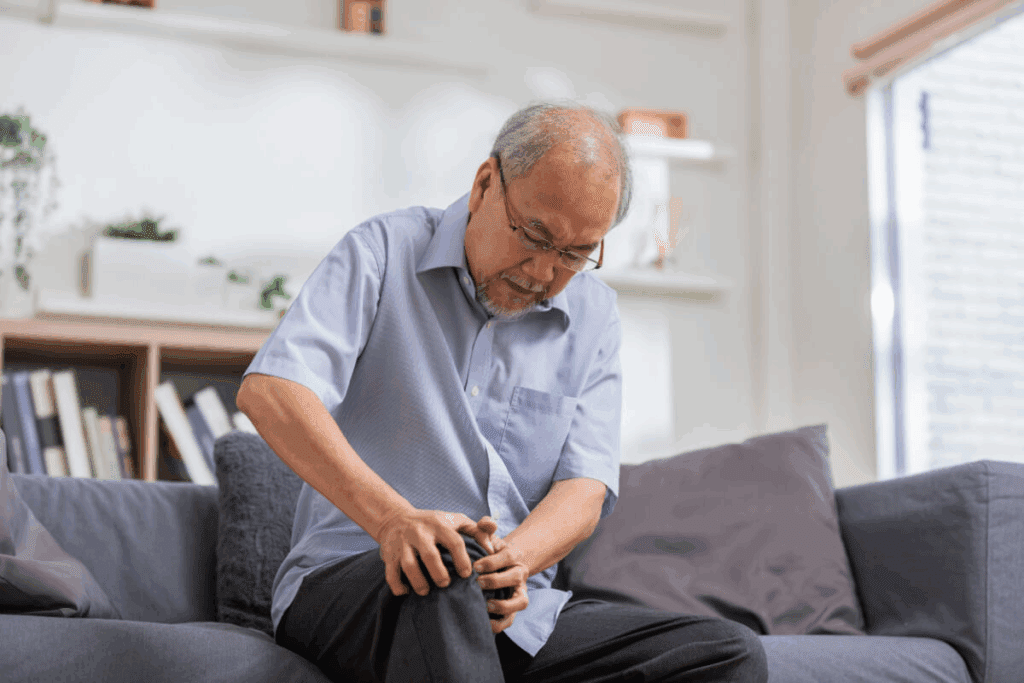
Nearly 25% of adults over 55 deal with knee pain. This greatly affects their life quality. As we get older, knee pain becomes more common. It impacts not just how we move but also our overall health.
Taking a comprehensive approach to addressing knee pain in older adults is crucial.
Key Takeaways
- Knowing why knee pain happens is key to handling it well.
- There are many ways to treat knee pain, from meds to physical therapy.
- Simple steps you can take at home can really help lessen knee pain and make life better.
- Taking a comprehensive approach to addressing knee pain in older adults is crucial.
- Changing your lifestyle can also help ease knee pain.
Understanding the Aging Knee

The aging process changes our knee joints, leading to pain and stiffness. As we get older, our knees wear down more. It’s key to understand these changes to keep our knees healthy.
How Age Affects Knee Joint Structure
Aging impacts the knee joint in many ways. The cartilage that cushions the joints wears down. This makes it harder for the joints to absorb shock, causing pain and stiffness.
The ligaments and tendons around the knee also lose flexibility and are more likely to get hurt. The synovial fluid that lubricates the knee joint decreases with age. This adds to the stiffness and discomfort.
Taking a comprehensive approach to addressing knee pain in older adults is crucial.
Risk Factors for Developing Knee Problems
Several factors increase the risk of knee problems in older adults. Being obese puts extra stress on the knees. Previous injuries can also cause long-term damage.
Other factors like genetics, gender, and lifestyle choices (like how active you are) also matter. Research, like the study in The BMJ Open on cerebral palsy and musculoskeletal health, shows why knowing these changes is important.
This knowledge helps spot who’s at higher risk. It also helps in taking steps to prevent knee problems from getting worse as we age.
Effectively managing knee pain in older adults is essential for maintaining mobility and enhancing quality of life.

Knee pain is common as we get older. It comes from many causes. Knowing these causes helps in treating it effectively.
Osteoarthritis and Degenerative Changes
Osteoarthritis (OA) is a big reason for knee pain in older people. It happens when cartilage in the knee joint breaks down. This leads to bone rubbing against bone, causing pain.
OA also causes bone spurs and weakens ligaments and tendons around the knee. It gets worse over time. Age, being overweight, past knee injuries, and family history can make OA worse.
Rheumatoid Arthritis in Seniors
Taking a comprehensive approach to addressing knee pain in older adults is crucial.
Managing RA includes medicines to fight inflammation and slow the disease. Lifestyle changes also help keep joints working well.
Meniscus Tears and Ligament Issues
Meniscus tears and ligament injuries are common too. The meniscus is a cartilage that cushions the knee. Tears can happen due to wear and tear or injury. Ligament injuries, like to the ACL, can also cause pain and instability.
Treatment for these issues might include physical therapy, bracing, or sometimes surgery to fix or remove damaged tissue.
| Condition | Common Symptoms | Typical Treatments |
| Osteoarthritis | Pain, stiffness, limited mobility | Medications, physical therapy, lifestyle changes |
| Rheumatoid Arthritis | Pain, swelling, stiffness, systemic symptoms | Disease-modifying antirheumatic drugs (DMARDs), biologics, lifestyle modifications |
| Meniscus Tears | Pain, clicking, locking of the knee | Physical therapy, arthroscopic surgery, pain management |
Knowing why you have knee pain is key to finding the right treatment. By treating the cause, older adults can feel better and live better lives.
Recognizing Symptoms That Require Medical Attention
Spotting serious knee problems early can really help seniors get better faster. Some knee pain can be handled on your own. But, there are times when you need to see a doctor.
Warning Signs of Serious Knee Conditions
Some signs mean you should see a doctor right away. These include:
- Severe pain that doesn’t get better with rest
- Swelling or redness around the knee
- Instability or feeling of the knee giving way
- Deformity or unusual shape of the knee
- Taking a comprehensive approach to addressing knee pain in older adults is crucial.
If you notice any of these signs, you should get medical help. Getting a diagnosis early can stop problems from getting worse and help you feel better.
When to Consult a Healthcare Professional
Taking a comprehensive approach to addressing knee pain in older adults is crucial.
Before you go, write down your symptoms. Include when they happen and what makes them better or worse. This info helps your doctor understand what’s going on with you.
Taking a comprehensive approach to addressing knee pain in older adults is crucial.
Non-Surgical Treatment Options for Senior Knee Pain
Taking a comprehensive approach to addressing knee pain in older adults is crucial.
Over-the-Counter Pain Medications
OTC pain meds are often the first choice for knee pain. Nonsteroidal anti-inflammatory drugs (NSAIDs) like ibuprofen and naproxen can lessen pain and swelling. Always talk to a doctor before starting any medication to make sure it’s safe and right for you.
Acetaminophen is another OTC pain reliever. It’s not an anti-inflammatory but can help with mild to moderate pain. But, it’s important to only take the amount recommended to avoid liver problems.
Topical Treatments and Creams
Topical treatments, like creams and patches, are applied directly to the knee. They contain ingredients like capsaicin, menthol, or NSAIDs to help with pain and swelling. They’re great for those who can’t take oral NSAIDs or want a targeted treatment.
Some topical creams and gels you can buy without a prescription. But, it’s best to talk to a doctor to find the right one for you.
Heat and Cold Therapy Techniques
Heat and cold therapy are easy ways to manage knee pain. Heat can relax muscles and improve blood flow, making it easier to move. Cold therapy can reduce swelling and numb the pain. Switching between heat and cold might work best for some people.
When using heat or cold, it’s important to do it right to avoid skin problems. Use a towel or cloth between your skin and the heat or cold. Also, don’t apply it for more than 15-20 minutes.
Physical Therapy Approaches for Elderly Knee Pain
Physical therapy is a great help for older adults with knee pain. As we get older, our knees wear out, causing pain and stiffness. Physical therapy can really help with these problems.
Benefits for Older Adults
Physical therapy is very beneficial for older adults with knee pain. It makes moving easier, reduces pain, and improves life quality. Physical therapists create special exercise plans to strengthen knee muscles, improve flexibility, and keep joints healthy.
Key benefits include:
- Improved knee function and mobility
- Reduced pain through targeted exercises
- Enhanced strength and flexibility
- Better balance and reduced risk of falls
What to Expect in Physical Therapy Sessions
At physical therapy for knee pain, you’ll get a detailed check-up and a tailored plan. First, the therapist will look at your knee, checking pain, movement, and strength. Then, they’ll make a special exercise plan just for you.
Physical therapy sessions for knee pain usually include:
- Stretching exercises to improve flexibility
- Strengthening exercises for the muscles around the knee
- Balance and coordination training
- Modalities such as heat, cold, or electrical stimulation to reduce pain and inflammation
Here’s an example of what a physical therapy regimen might look like, structured in a table format for clarity:
| Exercise Type | Description | Frequency |
| Straight Leg Raises | Lifting the leg straight out while lying down | 3 sets of 10 reps, daily |
| Quad Sets | Tightening the quadriceps muscles while seated | 3 sets of 10 reps, daily |
| Wall Squats | Standing with back against the wall, sliding down into a squat | 3 sets of 10 reps, daily |
Taking a comprehensive approach to addressing knee pain in older adults is crucial.
Effectively managing knee pain in older adults is essential for maintaining mobility and enhancing quality of life.
Older adults with knee pain can find relief through exercise. Regular activity not only eases knee pain but also boosts health and mobility. We’ll look at safe exercises that help.
Low-Impact Aerobic Activities
Low-impact aerobic exercises are great for the heart without harming the knees. Brisk walking, swimming, and cycling are top choices. They help keep a healthy weight, which is key for knee health.
Brisk walking is easy to do anywhere and boosts circulation and muscle strength. Swimming works the whole body without the stress of running or jumping. Cycling, whether on a bike or outdoors, is another low-impact option that can be adjusted for fitness levels.
Strength Training for Knee Support
Strengthening the knee muscles is essential for support and pain relief. Quadriceps and hamstring exercises are very helpful. Simple moves like leg lifts, squats, and lunges can be adapted for seniors, focusing on safe form.
Leg lifts can be done while seated or lying down, making them great for those with mobility issues. Start with fewer reps and increase as strength grows.
Flexibility and Range of Motion Exercises
Keeping the knee flexible and mobile is key. Gentle stretching and yoga are excellent for this. They improve joint movement and reduce stiffness.
Daily gentle stretching targets the knee muscles. Yoga, with a skilled teacher, combines stretching, strengthening, and relaxation.
Assistive Devices and Mobility Aids for Seniors
Older adults with knee pain can find relief with various mobility aids. These tools not only ease pain but also boost mobility and independence.
Knee Braces and Supports
Knee braces and supports are key in managing knee pain. They offer stability and lessen knee joint stress.
Types of Knee Braces:
- Prophylactic knee braces: Designed to prevent injuries, these braces are often used by athletes.
- Functional knee braces: These provide support for knees that have been injured or surgically repaired.
- Rehabilitative knee braces: Used during the recovery phase after a knee injury or surgery, these braces help in the healing process.
- Unloader knee braces: These braces are designed to redistribute weight and alleviate pressure on the knee joint.
Walking Aids: Canes, Walkers, and Rollators
Walking aids are vital for seniors with knee pain. They spread out body weight, easing knee pressure.
| Device | Benefits | Best For |
| Canes | Lightweight, easy to use, provides minimal support | Individuals with mild balance issues or minor knee pain |
| Walkers | Provides more support than canes, helps with balance | Those who need significant assistance with walking or balance |
| Rollators | Offers support and has wheels for easier movement | Seniors who need help with walking but want to maintain independence |
Home Modifications for Safety and Accessibility
Home modifications can greatly improve safety and accessibility for seniors with knee pain. Simple changes can prevent falls and reduce knee strain.
Home Modification Ideas:
- Installing handrails in strategic locations, such as bathrooms and stairways.
- Removing tripping hazards like loose rugs and clutter.
- Improving lighting, specially in hallways and staircases.
- Creating a clear path for walking through the home.
By using these assistive devices and making home changes, seniors can find significant knee pain relief. They can enjoy a more active and independent life.
Weight Management Strategies for Reducing Knee Stress
Effectively managing knee pain in older adults is essential for maintaining mobility and enhancing quality of life.
Impact of Weight on Knee Health
Extra weight really affects our knees. For every pound we carry, our knees take on more stress. This can lead to wear and tear, and even osteoarthritis. Keeping a healthy weight is vital to avoid knee problems.
Senior-Friendly Approaches to Weight Loss
Weight loss can be tough for seniors, with slower metabolisms and mobility issues. But, there are ways to lose weight that are gentle on the knees. Swimming or short walks are great for burning calories without hurting the knees. Also, eating a balanced diet with lots of fruits, veggies, and lean proteins helps with weight loss and health.
Here are some tips for seniors to lose weight safely:
- Eat smaller meals more often to boost metabolism
- Do strength training to build muscle
- Use assistive devices to make exercising safer and easier
By following these tips, seniors can reach a healthy weight. This reduces knee pain and improves their overall health and happiness.
Dietary Considerations for Joint Health in Aging Adults
Effectively managing knee pain in older adults is essential for maintaining mobility and enhancing quality of life.
Anti-Inflammatory Foods for Knee Pain Relief
Eating foods that fight inflammation can help with knee pain. These foods cut down on swelling, which is a big part of arthritis, a common problem for seniors.
- Fatty Fish: Full of omega-3s, salmon and sardines are great for fighting inflammation.
- Turmeric: It has curcumin, a strong fighter against inflammation and damage.
- Ginger: Gingerols in ginger can help lessen pain and swelling.
- Leafy Greens: Spinach and kale are packed with antioxidants and nutrients that boost health.
- Nuts and Seeds: They’re full of healthy fats and antioxidants, which help fight inflammation.
Supplements That May Help with Joint Pain
Some supplements can also help with joint health and knee pain. They shouldn’t be the only thing you do, but they can be part of a bigger plan to manage knee pain.
- Glucosamine and Chondroitin: These two are often taken together to help keep cartilage healthy and reduce pain.
- Omega-3 Supplements: If you don’t eat enough fatty fish, supplements can give you the anti-inflammatory benefits.
- Vitamin D: It’s vital for bone health, and a lack of it can lead to muscle and bone problems.
- Turmeric/Curcumin Supplements: Supplements can give you a strong dose of curcumin, which is good for fighting inflammation.
Seniors should talk to their doctor before taking any new supplements. This makes sure they’re safe and right for their health.
Advanced Medical Interventions for Persistent Knee Pain
When simple treatments don’t work, older adults can try advanced medical options. These are for those who haven’t seen results from earlier treatments. They aim to offer more effective solutions.
Injections: Corticosteroids and Hyaluronic Acid
Injections are a common treatment for knee pain. Corticosteroid injections help reduce inflammation and ease pain. They’re often used during bad pain episodes.
Hyaluronic acid injections work to improve joint lubrication. This can help reduce pain and improve movement.
Regenerative Medicine Options for Seniors
Regenerative medicine offers new ways to treat knee pain. Platelet-rich plasma (PRP) therapy uses the patient’s own blood to stimulate healing. Another choice is stem cell therapy, which tries to grow new tissue in the knee.
Surgical Options for Severe Cases
For those with severe knee pain, surgery might be needed. Knee replacement surgery replaces the damaged joint with an artificial one. Arthroscopic surgery uses a small camera and tools to fix or remove damaged tissue.
Taking a comprehensive approach to addressing knee pain in older adults is crucial.
Alternative and Complementary Therapies for Elderly Knee Pain
Taking a comprehensive approach to addressing knee pain in older adults is crucial.
Acupuncture and Acupressure Benefits
Acupuncture and acupressure come from traditional Chinese medicine. They’re known for helping with knee pain. These methods use body points to help heal and lessen pain.
Studies show acupuncture can ease knee pain by releasing pain-relievers and boosting blood flow. Acupressure, which uses pressure without needles, also offers relief.
Massage Therapy for Seniors
Massage therapy is a great way to manage knee pain. It gently works on muscles and soft tissues around the knee. This can reduce tension, improve blood flow, and help relax.
Seniors should look for a massage therapist who knows how to work with older adults. This ensures the therapy fits their needs and health.
Mind-Body Approaches: Gentle Yoga and Tai Chi
Mind-body exercises like gentle yoga and tai chi are good for seniors with knee pain. They improve flexibility, balance, and reduce stress. They also boost overall well-being.
Gentle yoga strengthens muscles around the knee, adding support and stability. Tai chi, with its slow movements, helps balance and lowers fall risks.
| Therapy | Benefits | Considerations |
| Acupuncture | Reduces pain, improves blood flow | Ensure practitioner is licensed |
| Massage Therapy | Reduces muscle tension, improves circulation | Find a therapist experienced with seniors |
| Gentle Yoga and Tai Chi | Improves flexibility, balance, and reduces stress | Choose classes designed for seniors |
Adding these alternative and complementary therapies to their care plan can help seniors with knee pain. It can also improve their overall life quality.
Effectively managing knee pain in older adults is essential for maintaining mobility and enhancing quality of life.
Effectively managing knee pain in older adults is essential for maintaining mobility and enhancing quality of life.s we age, our knees naturally wear out, causing pain and stiffness. Simple changes in our daily habits can help reduce knee pain.
Proper Body Mechanics for Knee Protection
Keeping the right body mechanics is vital for knee protection. This means:
- Standing straight to spread out weight evenly
- Bending knees when lifting to avoid straining
- Avoiding twists that stress the knees
These habits can help older adults lessen knee strain and pain.
Adapting Household Tasks to Reduce Knee Strain
Household tasks can worsen knee pain if not done right. To make these tasks easier:
- Use ergonomic tools to ease knee strain
- Take breaks to stretch and rest
- Ask for help with hard tasks
Small changes, like using a long-handled mop or adjustable vacuum, can help a lot.
Sleep Positioning for Knee Pain Relief
How you sleep can affect knee pain. To ease pain at night:
- Sleep on your back with a pillow under your knees
- Choose a supportive mattress for spine alignment
- Avoid stomach sleeping to prevent bent knees
These adjustments can help older adults sleep better and wake up with less pain.
Conclusion
Taking a comprehensive approach to addressing knee pain in older adults is crucial.
We’ve shared ways to handle knee pain, like safe exercises and using devices to help. Eating right and trying other therapies can also help. By adding these to their routine, seniors can feel better and stay independent.
Being proactive about knee pain can lead to a healthier, more active life for older adults. We’re here to help those looking to manage knee pain and live better.
FAQ
What are the most common causes of knee pain in older adults?
Common causes of knee pain in older adults include osteoarthritis, rheumatoid arthritis, meniscus tears, and ligament injuries. Knowing the cause helps pick the right treatment.
How does age affect the knee joint structure?
As we get older, our knee joints change a lot. Cartilage wears down, and ligaments and tendons get less flexible. This makes them more likely to get hurt.
What are the warning signs of serious knee conditions that require medical attention?
Look out for severe pain, swelling, redness, warmth, or if your knee feels unstable. If you see these signs, see a doctor right away.
What non-surgical treatment options are available for managing knee pain in older adults?
You can try over-the-counter pain meds, topical treatments, and heat or cold therapy. Physical therapy and using knee braces or walking aids also help.
How can physical therapy help manage knee pain in older adults?
Physical therapy can make your knee more mobile, reduce pain, and strengthen the muscles around it. A good physical therapy plan can really help with knee pain.
What exercises are safe for managing knee pain in old age?
Safe exercises include low-impact aerobics, strength training, and flexibility exercises. Regular exercise can make your knee work better and improve your health.
How can I adapt daily activities to reduce knee strain and alleviate pain?
To reduce knee strain, use proper body mechanics and adapt tasks. Using assistive devices can also help. Simple changes can make a big difference in your life.
What dietary considerations can help alleviate knee pain?
Eating anti-inflammatory foods and supplements can help with knee pain. A diet rich in omega-3s, antioxidants, and fiber is good for your joints.
When is surgery considered for knee pain in older adults?
Surgery is an option for severe knee pain that doesn’t get better with other treatments. It might include joint replacement or repairing damaged tissues.
Can alternative therapies like acupuncture and massage help with knee pain?
Yes, acupuncture, massage, and gentle yoga or tai chi can help with knee pain. They can work alongside traditional treatments to improve your overall well-being.
How can maintaining a healthy weight help alleviate knee pain?
Keeping a healthy weight can ease knee pain by reducing stress on the joint. Losing weight safely through diet and exercise can help you stay at a healthy weight.
Reference:
- Imani, A., Alibabayee, S., Golestani, A., & Dalal, K. (2022). Key indicators affecting hospital efficiency: A systematic review. BMC Health Services Research, (open access). https://pubmed.ncbi.nlm.nih.gov/35359774/