
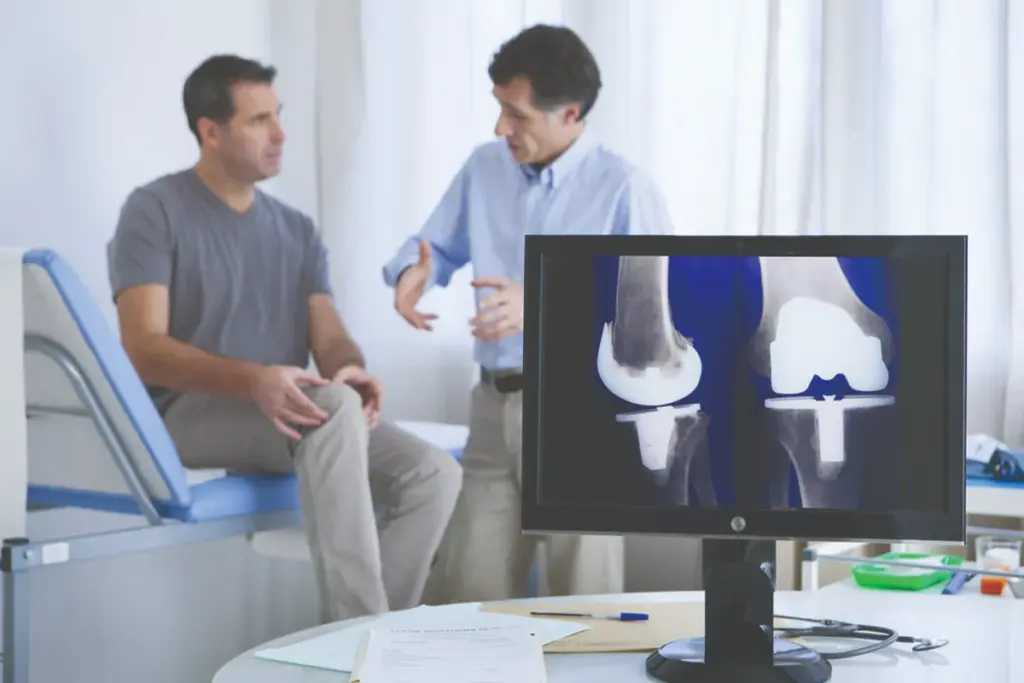
It’s shocking to learn that up to 20% of knee surgeries don’t meet patient hopes. This leads to many people dealing with ongoing pain or feeling unhappy after the surgery.
Deciding to have knee replacement surgery is a big choice. The fear of failure can be overwhelming. Such failures can greatly impact a person’s life and the healthcare system too.
Looking into why knee replacements fail shows us how important it is to know the reasons. Both patients and doctors need to understand this to improve results.
Key Takeaways
- Understanding the risks associated with knee replacement surgery is vital.
- The failure rate of knee replacements can have significant implications.
- Identifying the causes of failure can help in improving outcomes.
- Patients and healthcare providers must work together to mitigate risks.
- A thorough approach is needed to tackle the complexities of knee replacement failure.
Understanding Knee Replacement Surgery

Knee replacement, also known as knee arthroplasty, is a surgical procedure aimed at alleviating pain and enhancing knee functionality. It’s for knees that are damaged or diseased. We’ll look into this surgery to help patients understand it better.
Types of Knee Replacement Procedures
There are many knee replacement procedures, each for different needs. The main ones are:
- Total Knee Replacement: This replaces the whole knee joint with artificial parts.
- Partial Knee Replacement: Only the damaged part is replaced, keeping the healthy parts.
- Revision Knee Replacement: This is a second surgery to fix or replace a previous artificial knee joint.
Materials Used in Knee Implants
Knee implants are made from various materials. Each is chosen for its strength and how well it works with the body. Common materials are:
- Metal Alloys: Known for their strength and ability to resist wear.
- High-Density Polyethylene: Used as a spacer to reduce friction between metal parts.
- Ceramic: Some implants use ceramic for its low wear rate and safety for the body.
Expected Lifespan of Knee Implants
The life of knee implants depends on the material, how active the patient is, and their health. Modern implants can last:
- 15 to 20 years or more for older, less active patients.
- 10 to 15 years for more active or younger patients.
It’s important to see an orthopedic specialist regularly. This helps check the implant’s condition and fix any problems early.
Knee Replacement Failure Rates: The Statistics

Looking into knee replacement failure rates gives us important insights. It shows how well this surgery works over time. The rates change based on how long it’s been and who the patient is.
Short-Term Failure Rates (1-5 years)
In the first five years, failure rates are low. Studies say they range from 1% to 3%. These failures often happen due to infection, wrong implant placement, or instability.
Mid-Term Failure Rates (5-10 years)
Failure rates go up in the middle term. Between 5 to 10 years, they can be 3% to 5%. Wear and tear, and aseptic loosening are common reasons for failure here.
Long-Term Failure Rates (10+ years)
Long-term failure rates are a big worry. They show how long the knee replacement lasts. After 10 years, rates can be 5% to 7% or more. Implant wear, bone loss, and loosening are main causes.
Variation in Failure Rates by Patient Demographics
Failure rates differ based on patient demographics. Younger, more active people have higher rates due to more wear. Older people, who are less active, have lower rates. NHS data backs this up, showing the need to consider demographics when looking at outcomes.
How Success and Failure are Defined in Knee Replacements
Understanding knee replacement success and failure needs a detailed look at both medical and personal aspects. It’s not just about how well the surgery works. It also looks at how happy the patient is with the results.
Clinical Definitions of Knee Replacement Success
Doctors say a knee replacement is successful if there are no big problems, the patient can move better, and they don’t hurt as much. They check things like:
- How well the knee moves and feels stable
- How much pain the patient has after surgery
- If the patient can do everyday tasks
These checks help doctors see how well the surgery worked right away and over time.
Patient-Reported Outcome Measures
PROMs are key for seeing how a patient feels about their knee replacement. They use surveys and questionnaires to find out things like:
- If the patient’s pain and symptoms got better
- If they can do things they want to do
- If they’re happy with the surgery
These help doctors know how the patient feels and if the surgery helped them.
The Gap Between Clinical Success and Patient Satisfaction
There can be a big difference between how well a knee replacement works and how happy the patient is. Some patients might feel better but not be happy because they’re not pain-free or can’t do everything they want. On the other hand, some patients might be happy even if they don’t meet all the medical success criteria.
|
Criteria |
Clinical Success |
Patient Satisfaction |
|---|---|---|
|
Pain Relief |
Significant reduction |
Variable, depends on patient expectations |
|
Functional Ability |
Improved range of motion and stability |
Ability to perform desired activities |
|
Overall Outcome |
Based on clinical metrics |
Subjective, based on patient experience |
Knowing about this gap is key to making knee replacement surgery better for patients.
Common Causes of Knee Replacement Failure
Knee replacement failure is a complex issue with many factors at play. While surgery is often successful, knowing why it might fail is key for both patients and doctors.
Infection and Septic Loosening
Infection is a big reason for knee replacement failure. Bacteria in the knee can cause the implant to loosen. Prompt treatment of infection is critical to prevent implant failure. To lower the risk of infection, proper surgical techniques and post-operative care are essential.
Aseptic Loosening and Implant Wear
Aseptic loosening happens without infection and is another common failure reason. It occurs when the bond between the implant and bone weakens. Implant wear also causes loosening, as debris from worn parts can lead to inflammation and bone loss.
Instability and Malalignment
Instability and malalignment can cause abnormal wear and stress. This stress can harm the bone and soft tissues, leading to failure. It’s important to have proper surgical technique and implant positioning to avoid these issues.
Periprosthetic Fractures
Periprosthetic fractures occur around the implant due to trauma, osteoporosis, or other factors. These fractures can destabilize the implant and lead to failure if not managed correctly.
|
Cause of Failure |
Description |
Prevention Strategies |
|---|---|---|
|
Infection |
Bacterial infection leading to septic loosening |
Proper surgical technique, post-operative care |
|
Aseptic Loosening |
Weakening of the bond between implant and bone |
Regular follow-up, monitoring for signs of loosening |
|
Instability/Malalignment |
Abnormal stress on surrounding bone and tissues |
Proper implant positioning, surgical technique |
|
Periprosthetic Fractures |
Fractures around the implant due to trauma or osteoporosis |
Managing osteoporosis, fall prevention |
Knowing the common causes of knee replacement failure helps in finding ways to reduce these risks. This can improve the implant’s lifespan.
Early vs. Late Knee Replacement Failure
Knee replacement failure can happen early or late, each with its own reasons and effects. Knowing these differences helps us better care for our patients and improve their results.
Immediate Post-Operative Complications
Right after knee replacement surgery, some problems can pop up. These include infections, bleeding, and reactions to anesthesia. It’s key to spot and fix these issues quickly to avoid early failure. For example, infections might need antibiotics, and bleeding could need more surgery.
Infections are a big worry right after surgery. We watch for signs like fever, redness, and swelling around the surgery area.
Short-Term Failures (Within First Year)
Failures in the first year can happen due to many reasons. These include wrong implant placement, soft tissue issues, and patient factors like being overweight or very active. By identifying at-risk patients and preparing them before surgery, we can lower these risks.
Instability and stiffness are common problems early on. We make sure the implant is right and the soft tissues are balanced to avoid these issues.
Long-Term Wear and Tear Issues
Over time, the knee implant faces wear and tear. This can cause loosening, bone loss, and eventually, the implant can fail. New materials and designs help knee replacements last longer.
Regular check-ups are vital to keep an eye on the implant. We advise patients to stay healthy and avoid hard activities to make their knee replacement last.
Recognizing Symptoms of a Failed Knee Replacement
It’s important to know the signs of a failed knee replacement early. This can greatly affect a patient’s life. So, it’s key to spot the symptoms quickly.
Persistent or New-Onset Pain
Persistent or new-onset pain is a big sign of a failed knee replacement. This pain can come from many things like infection or wear and tear. Remember, some pain is normal after surgery. But if it doesn’t go away or gets worse, it might mean there’s a problem.
Swelling and Inflammation
Swelling and inflammation around the knee can also be a sign. Some swelling is okay after surgery. But too much or lasting swelling could mean there’s an infection or a bad reaction to the implant.
Instability and Limited Range of Motion
Feeling like your knee is unstable or having trouble moving can be a sign. You might feel like your knee is giving way or have trouble doing everyday things because of stiffness or limited movement.
Unusual Sounds from the Knee Joint
Heard any unusual sounds like grinding, clicking, or clunking from your knee? These sounds could mean your knee replacement has failed. They might be because the implant is loose or the artificial joint is wearing down.
If you notice any of these symptoms, it’s important to see a doctor right away. Catching a problem early can make a big difference in how well you recover from a failed knee replacement.
Diagnosing Knee Replacement Failure
Diagnosing knee replacement failure requires a few steps. We use clinical evaluation, imaging studies, and lab tests. Let’s dive into how these methods help find the reasons behind knee replacement failure.
Physical Examination Techniques
A detailed physical exam is the first step. We check the knee for instability, swelling, or limited movement. We also look for signs like ligament laxity or implant loosening.
Key aspects of the physical examination include:
- Inspecting the knee for signs of infection or inflammation
- Assessing the range of motion and stability
- Evaluating pain upon movement or palpation
Imaging Studies (X-rays, CT, MRI)
Imaging studies are key in diagnosing knee replacement failure. X-rays check the implant’s alignment and look for loosening or wear. CT scans give more detailed images, spotting small changes in the bone-implant interface.
“Radiographic evaluation is essential for assessing the success of knee replacement surgery and identifying possible complications early.”
|
Imaging Modality |
Primary Use in Diagnosing Knee Replacement Failure |
|---|---|
|
X-ray |
Assessing implant alignment and detecting loosening or wear |
|
CT Scan |
Detailed evaluation of bone-implant interface and detecting subtle changes |
|
MRI |
Evaluating soft tissue complications and assessing for infection or inflammation |
Laboratory Tests for Infection
Laboratory tests are vital for spotting infections, a common reason for knee replacement failure. We check blood for inflammatory markers like CRP and ESR, signs of infection.
Laboratory tests may include:
- C-reactive protein (CRP) test
- Erythrocyte sedimentation rate (ESR) test
- Complete blood count (CBC) to assess for signs of infection
Aspiration and Tissue Sampling
In some cases, we need to take a sample from the knee joint. This can confirm an infection or find the cause. These steps involve getting fluid or tissue from the knee for analysis.
By using these methods together, we can find the cause of knee replacement failure. Then, we can plan the best treatment.
Knee Revision Surgery: What to Expect
If a knee replacement fails, patients might need knee revision surgery. This surgery aims to fix the problems. It’s a worrying time, and knowing what to expect is key.
Indications for Revision Surgery
Revision surgery is needed for several reasons. These include infection, implant loosening, wear and tear, instability, or malalignment. We carefully check each patient to see if surgery is right for them.
We make the decision to have revision surgery after a detailed check-up. This includes imaging and a clinical evaluation. We talk about the benefits and risks with our patients to make sure they understand.
Surgical Approaches and Techniques
The surgery method for knee revision can change based on the reason and case complexity. We use the latest techniques and technology for the best results.
Our surgeons are skilled in handling complex cases. We customize our approach for each patient. Our goal is to improve the knee’s function and reduce pain.
Recovery Timeline and Rehabilitation
Recovery from knee revision surgery takes longer than a first-time knee replacement. We create a detailed plan to help patients regain strength and mobility.
Our rehabilitation includes physical therapy, pain management, and regular check-ups. We’re here to support our patients every step of the way.
Success Rates of Revision Surgeries
Revision surgery can be very successful, but it’s not always as certain as a first-time replacement. We talk about the possible success rates with our patients, based on their situation.
|
Outcome Measure |
Primary Knee Replacement |
Revision Knee Surgery |
|---|---|---|
|
Pain Relief |
90-95% |
80-85% |
|
Functional Improvement |
85-90% |
75-80% |
|
Patient Satisfaction |
95% |
85% |
It’s important for patients to understand what to expect from knee revision surgery. We’re committed to giving personalized care and support every step of the way.
Risk Factors That Increase Chances of Knee Replacement Failure
Knowing the risks of knee replacement failure is key for patients and doctors. We can take steps to lower these risks and get better results.
Patient-Related Factors
Things about the patient can affect knee replacement success. Age, weight, and how active you are matter a lot. Younger people might wear out implants faster because they’re more active. Older people might face more risks because of health problems.
Being at a healthy weight is important. Too much weight can stress the implant and cause it to fail sooner. Also, doing high-impact activities can make the implant wear out faster.
Surgical Technique and Surgeon Experience
The surgeon’s skill and the surgery method are very important. How well the implant is placed affects how long it lasts. More experienced surgeons usually do better because they handle complex cases better.
Implant Design and Material Considerations
The type of implant and its materials also matter. Newer materials and designs are more durable. But, the right choice depends on the patient’s needs and body.
Pre-existing Medical Conditions
Medical conditions like diabetes or arthritis can affect surgery success. These conditions can slow healing, increase infection risk, or cause other problems. It’s important to manage these conditions before and after surgery.
By understanding and tackling these risks, patients and doctors can improve knee replacement surgery results.
Preventing Knee Replacement Failure
Knee replacement failure can be prevented by optimizing before surgery, taking good care after surgery, and making lifestyle changes. Understanding and using these methods can greatly improve the success and longevity of the knee replacement.
Pre-Surgery Optimization Strategies
Before knee replacement surgery, several steps can be taken to lower the risk of failure. These include:
- Maintaining a healthy weight to reduce the load on the new knee joint
- Engaging in regular exercise to strengthen the muscles around the knee
- Managing any underlying medical conditions, such as diabetes or hypertension, to minimize surgical risks
- Quitting smoking, as smoking can impair healing and increase the risk of complications
Post-Surgery Care and Rehabilitation
Proper care and rehabilitation after surgery are key to preventing knee replacement failure. This involves:
- Following a structured rehabilitation program to ensure proper healing and regain strength and mobility
- Adhering to medication regimens as prescribed by healthcare providers to manage pain and prevent infection
- Monitoring for signs of complications, such as infection or reaction to the implant
Lifestyle Modifications for Implant Longevity
Changing your lifestyle can also help your knee replacement last longer. These include:
- Avoiding high-impact activities that can put excessive stress on the knee joint
- Maintaining a healthy lifestyle, including a balanced diet and regular, low-impact exercise
- Being mindful of the risk of falls and taking preventive measures, such as improving home safety
Regular Follow-up and Monitoring
Regular check-ups with healthcare providers are vital for monitoring the knee replacement. This proactive approach helps in identifying and managing problems early, preventing failure.
By following these strategies, patients can greatly reduce the risk of knee replacement failure. This leads to a better quality of life with their prosthetic knee.
Legal Aspects of Knee Replacement Failure
Knee replacement failure can lead to a complex legal situation. This involves product liability and medical malpractice. Patients may seek legal recourse to get compensation for their suffering and financial losses.
Product Liability and Recalled Implants
Product liability is a big concern in knee replacement failures. If the implant is defective or recalled, patients may have a lawsuit. We will look into product liability claims and recalled implants.
|
Year |
Number of Recalls |
Cases Related to Knee Replacements |
|---|---|---|
|
2018 |
15 |
5 |
|
2019 |
20 |
7 |
|
2020 |
25 |
10 |
Medical Malpractice Considerations
Medical malpractice is key when discussing knee replacement failure. If the failure is due to surgical errors or negligence, patients may file a medical malpractice claim. We will discuss what’s needed to prove medical malpractice in these cases.
Navigating the Legal Process for Compensation
Going through the legal process for compensation can be tough for patients with knee replacement failure. We will explain the steps to file a lawsuit. This includes gathering evidence, consulting with legal experts, and understanding possible outcomes.
Statute of Limitations for Knee Replacement Lawsuits
The statute of limitations is important in knee replacement lawsuits. It sets a time limit for filing a claim. We will look at how the statute of limitations varies by place and its impact on patients seeking legal action.
In conclusion, knee replacement failure has significant legal implications. It’s important for patients to understand the legal aspects, including product liability, medical malpractice, and the legal process. We hope this information helps patients navigate the complex legal landscape after a knee replacement failure.
Advances in Technology Reducing Knee Replacement Failure Rates
Medical technology has made big strides in knee replacement surgery. We see better implants that last longer and work better. This means patients get better results and fewer failures.
Enhanced Materials and Design
New materials and designs are key in knee replacement tech. Modern implants use strong materials like advanced polyethylene and ceramic. These materials make implants last longer and reduce problems.
For example, improved materials have cut down on osteolysis. This is when bone dissolves around the implant.
Designs have also improved, making the knee move more naturally. This is thanks to computer-aided design and manufacturing. It lets us create implants that fit each patient’s knee perfectly.
Patient-Specific Implants
Patient-specific implants are a big change in knee surgery. These implants are made just for each patient, based on their knee’s shape. This means a better fit, better function, and maybe fewer surgeries later.
Studies show these implants lead to better results. They make the knee feel more natural after surgery. This makes patients happier with their results.
Computer-Assisted and Robotic Surgery
Computer-assisted and robotic surgery are new ways to improve knee surgery. These tools help surgeons be more precise. Robotic systems help plan and do surgeries with less chance of mistakes.
Using these tools can make implants fit better and last longer. They’re not perfect yet, but they’re getting better. They promise to lower failure rates even more.
Biological Approaches to Joint Replacement
There are also new ways to make knee replacements work better. This includes using biologic materials and coatings. These help the implant stick to bone and last longer.
Researchers are also looking at using growth factors and stem cells. These might help the implant fit better with the body. The goal is to make the implant last longer and work better.
Conclusion
Understanding knee replacement failure is key for both patients and doctors. We’ve looked at knee surgery types, materials, and implant lifespan. This helps us see why failures happen.
We’ve also talked about failure rates, causes, and symptoms. We’ve covered how to diagnose problems and what to do next. Revision surgery is an option when needed.
In summary, knee surgery is mostly successful but comes with risks. Knowing these risks helps patients avoid failure. By being informed, they can take steps to protect their knee implants.
Our institution is dedicated to top-notch healthcare. We aim to give our patients the best care and results from their treatments.
FAQ
What are the common causes of knee replacement failure?
Knee replacement failure can happen for many reasons. These include infection, loosening of the implant, wear and tear, instability, and fractures around the implant. Knowing these causes helps in preventing and managing the issue.
How is knee replacement failure diagnosed?
Doctors use several methods to diagnose knee replacement failure. They perform physical exams, take X-rays, CT scans, and MRIs. They also do lab tests for infection and take tissue samples. A detailed diagnosis is key to figuring out why the knee replacement failed.
What are the symptoms of a failed knee replacement?
Signs of a failed knee replacement include ongoing pain, swelling, and instability. You might also notice a limited range of motion and unusual sounds from the knee. Spotting these symptoms early is important for getting the right treatment.
What is knee revision surgery, and when is it necessary?
Knee revision surgery is needed when a knee replacement fails. It’s done to replace or fix the failed implant. The decision to have this surgery depends on the reason for failure and how severe it is.
What are the risk factors that increase the likelihood of knee replacement failure?
Several factors can increase the risk of knee replacement failure. These include the patient’s age, weight, and activity level. The surgical technique, the design and material of the implant, and any pre-existing medical conditions also play a role. Understanding these factors helps in preventing and managing the issue.
How can knee replacement failure be prevented?
To prevent knee replacement failure, several steps can be taken. These include optimizing before surgery, proper care and rehabilitation after surgery, making lifestyle changes, and regular follow-ups. Taking proactive measures can greatly reduce the risk of failure.
What are the legal aspects of knee replacement failure?
Legal issues related to knee replacement failure include product liability and recalled implants. There are also medical malpractice concerns, navigating the legal process for compensation, and knowing the statute of limitations for lawsuits. Patients should be aware of their legal rights and options.
How are advances in technology reducing knee replacement failure rates?
New technologies are helping to lower knee replacement failure rates. These include better materials and designs, implants made for individual patients, and advanced surgical techniques. These advancements offer hope for better outcomes.
What is the expected lifespan of a knee replacement?
The lifespan of a knee replacement varies. It depends on the type of implant, the patient’s demographics, and their activity level. Modern implants are designed to last 15 to 20 years or more.
Can knee replacement failure be treated without surgery?
Sometimes, knee replacement failure can be managed without surgery. This can include using medication, physical therapy, and making lifestyle changes. But often, surgery is needed to fix the underlying problem.
References
https://advanced.onlinelibrary.wiley.com/doi/full/10.1002/aisy.202300039