Knee surgery how long to recover? Find the essential timeline and proven tips to understand knee surgery how long to recover for work.
Arthroscopic knee surgery is a common way to find and fix knee problems, like meniscus tears.
In the United States, almost 1 million of these surgeries happen every year. It’s a big help for knee injuries.
The recovery time after this surgery can change a lot. It depends on how big the surgery was and how healthy you are.
Key Takeaways
- Arthroscopic procedures are less invasive than traditional surgery.
- Recovery time varies based on the surgery’s extent and individual health.
- Meniscus tear recovery time back to work can range from a few days to several weeks.
- Post-operative care plays a critical role in how fast you recover.
- Things like age and how fit you are can also affect your recovery.
Understanding Arthroscopic Knee Surgery
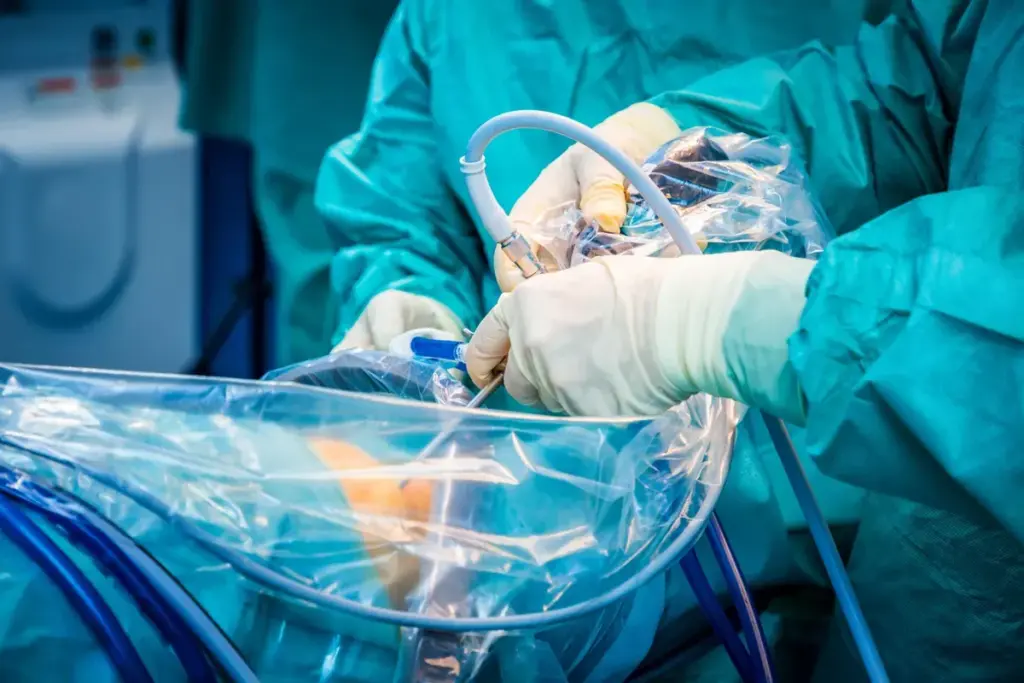
Arthroscopic knee surgery is a new way to fix knee problems without big cuts. It’s less invasive than old surgeries, making recovery faster and less painful.
What is Arthroscopic Knee Surgery?
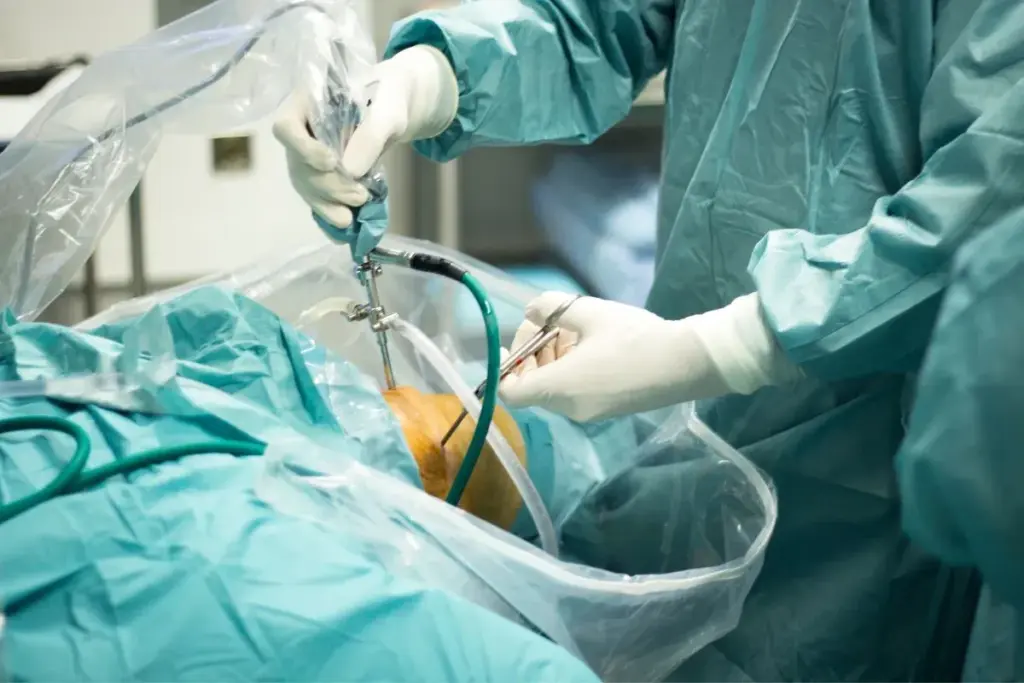
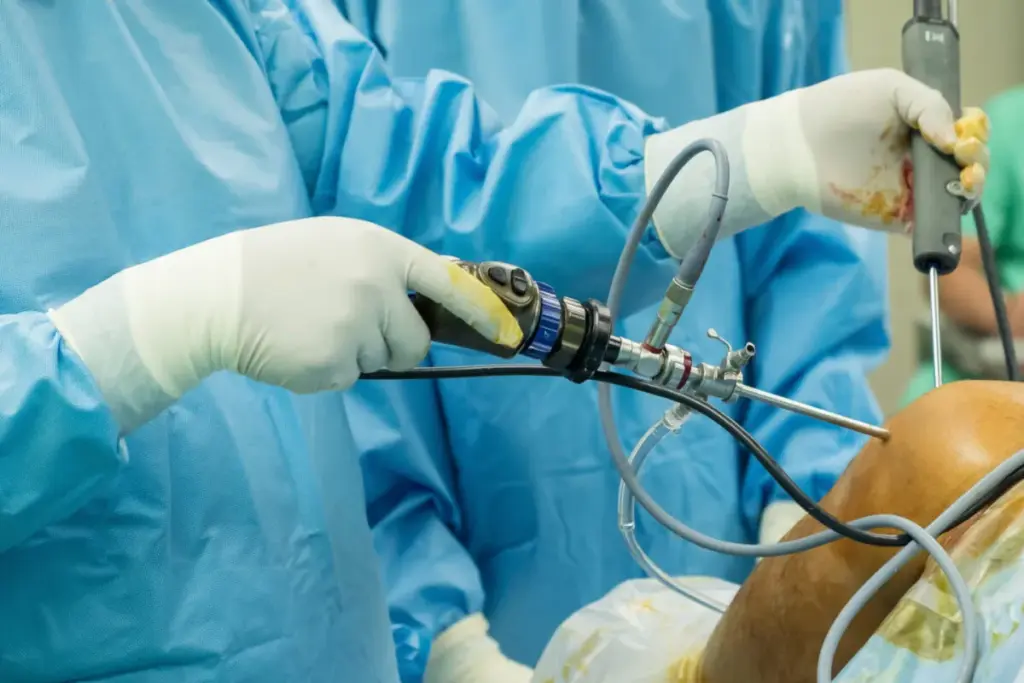
Also known as knee arthroscopy, this surgery uses a tiny camera and tools to see and fix knee issues. The camera shows the knee on a screen, helping doctors make precise repairs.
The surgery is done with the patient awake or asleep, keeping them comfortable. It uses small cuts, causing less damage and helping the knee heal quicker.
Common Conditions Treated with Knee Arthroscopy
Knee arthroscopy helps with many knee problems, including:
- Torn meniscus
- Anterior cruciate ligament (ACL) injuries
- Osteoarthritis
- Loose fragments of bone or cartilage
- Synovitis (inflammation of the synovial membrane)
By fixing these issues with arthroscopy, patients often skip more serious surgeries.
|
Condition |
Description |
Treatment via Arthroscopy |
|---|---|---|
|
Torn Meniscus |
A tear in the cartilage cushioning the knee joint. |
Repair or removal of the damaged meniscus. |
|
ACL Injuries |
Damage to the ligament connecting the thigh bone to the shin bone. |
Reconstruction using a graft. |
|
Osteoarthritis |
Wear and tear on the joint cartilage. |
Removal of loose fragments, smoothing of cartilage. |
Benefits Over Traditional Open Surgery
Arthroscopic knee surgery has many advantages over old surgeries, including:
“Arthroscopy has revolutionized the treatment of knee disorders, providing a less invasive option with quicker recovery times.” – Orthopedic Surgeon
- Smaller incisions, resulting in less scarring
- Reduced risk of infection and complications
- Less post-operative pain
- Faster recovery and return to normal activities
- Shorter hospital stays, often allowing for outpatient procedures
These benefits make arthroscopic knee surgery a great choice for those needing knee surgery. It helps patients get back to their daily lives and sports faster.
Types of Arthroscopic Knee Procedures
Arthroscopic knee surgery treats many knee problems. It lets doctors choose the best treatment for each patient. This way, they can fix different knee issues effectively.
Meniscus Repair or Meniscectomy
Meniscus tears are common and treated with arthroscopic surgery. The surgery might repair the tear or remove the damaged part (meniscectomy). The choice depends on the tear’s size, location, and the knee’s health.
Meniscus repair is chosen when possible. It keeps more of the natural tissue.
ACL Reconstruction
ACL injuries are common, often in athletes. ACL reconstruction rebuilds the ACL with a graft. This graft can come from the patient or a donor. Arthroscopic methods make the surgery less invasive, leading to faster recovery and less scarring.
Cartilage Repair Procedures
Cartilage damage can cause a lot of pain and trouble moving. Arthroscopic cartilage repair tries to fix the damage. It uses microfracture to grow new cartilage and osteochondral grafting to transplant healthy tissue.
Synovectomy and Other Procedures
A synovectomy removes inflamed tissue, helping those with rheumatoid arthritis. Other surgeries include removing loose bodies and treating plica syndrome. Arthroscopic surgery’s flexibility means it can treat many different knee problems.
What Happens During a Knee Scoping Procedure
Arthroscopic knee surgery lets doctors check and fix knee problems without a big cut. It’s a quick way to treat knee issues, helping patients heal faster than open surgery.
The Surgical Process Explained
To start, a few small cuts are made around the knee. A tiny camera, called an arthroscope, is put in through these cuts. It shows the inside of the knee on a screen.
Then, special tools are used to fix the knee. This might include removing damaged tissue or cleaning out the joint.
The steps are:
- Preparation of the knee area
- Insertion of the arthroscope and visualization of the knee joint
- Use of surgical instruments to treat the diagnosed condition
- Removal of damaged or inflamed tissue if necessary
- Closure of the incisions
Anesthesia Options
Before the surgery, the patient talks about anesthesia options. The choice can be local, regional, or general anesthesia. It depends on the patient’s health and the surgery’s needs.
The right anesthesia is key for comfort during the surgery. The patient’s medical history and the surgery’s specifics guide the choice.
Typical Duration of the Procedure
The surgery usually lasts 30 to 45 minutes. But, it can take longer if the case is complex.
Knowing what to expect can make patients feel more at ease. It helps them prepare for a smooth recovery.
The Immediate Post-Surgery Period
Knowing what to expect right after arthroscopic knee surgery is key to a smooth recovery. The first days after surgery are very important. They set the stage for a successful and quick recovery.
First 24-48 hours after surgery
The first 24-48 hours after surgery are very important. Doctors tell patients to rest and keep their leg up to reduce swelling. Using ice packs as told by your doctor can help with pain and swelling.
Key actions during this period include:
- Resting the knee to avoid unnecessary strain
- Elevating the leg above the level of the heart to reduce swelling
- Using ice packs as recommended to manage pain and swelling
- Taking prescribed pain medication as directed
Initial mobility restrictions
Right after surgery, you’ll have to limit how much you move. This lets your knee start healing. How much you can move will depend on your surgery.
|
Activity |
Immediate Post-Surgery Recommendation |
|---|---|
|
Weight-bearing |
May be limited; crutches or a walker might be necessary |
|
Bending the knee |
Should be done cautiously and within a limited range |
|
Straightening the knee |
Full extension might be encouraged to maintain range of motion |
Pain management strategies
Managing pain well right after surgery is very important. This can include medicines and other methods.
Pain management tips:
- Follow the prescribed medication regimen
- Use ice therapy as directed
- Elevate the knee to reduce swelling and pain
- Consider relaxation techniques such as deep breathing or meditation
Knee Surgery How Long To Recover: General Timeline
Knowing how long it takes to recover from knee surgery is key. The usual recovery time is 4-6 weeks. But, this can change based on the surgery’s extent and personal factors.
First Week Recovery Milestones
The first week is vital for recovery. Patients often feel swelling, pain, and can’t move much. Pain management is a top priority, with medication and rest being essential. It’s also important to follow the doctor’s post-operative care and start physical therapy to improve knee mobility.
Weeks 2-4 Expectations
Weeks 2-4 see big improvements. Swelling goes down, and pain eases. Physical therapy is key, helping to build strength and flexibility. Patients are encouraged to slowly increase their activity, like walking.
1-3 Months Post-Surgery Progress
By 1-3 months, patients have made a lot of progress. They can do daily activities and may even start more intense activities or sports. Continued physical therapy is recommended to keep the knee strong.
Long-term Recovery Considerations
Long-term care is important for knee health. This includes regular exercise, keeping a healthy weight, and avoiding injury. Regular check-ups with healthcare providers are also key.
Recovering from knee surgery needs patience and following instructions. Understanding the recovery timeline helps patients manage their journey better.
Meniscus Surgery Recovery Time
How long it takes to get back to work after meniscus tear surgery depends on the type of surgery. If the meniscus was repaired or removed, the recovery time varies. This affects how quickly you can return to your daily activities.
Partial vs. Complete Meniscectomy Recovery Differences
A partial meniscectomy removes only the damaged part of the meniscus. Recovery from this is generally faster because more tissue is left intact.
People who have a partial meniscectomy often feel less pain and swelling. This means they can get back to their usual activities sooner.
Meniscus Repair vs. Removal Recovery Comparison
Meniscus repair surgery, where the torn meniscus is stitched, takes longer to recover from than removal.
The healing process for meniscus repair is more complex. It requires the meniscus to heal properly.
Typical Timeline for Returning to Daily Activities
The time it takes to get back to daily activities after meniscus surgery varies. It depends on the surgery type and individual factors.
|
Procedure Type |
Typical Recovery Time |
Return to Work Timeline |
|---|---|---|
|
Partial Meniscectomy |
2-4 weeks |
1-3 weeks |
|
Complete Meniscectomy |
4-6 weeks |
3-6 weeks |
|
Meniscus Repair |
6-12 weeks |
6-12 weeks |
It’s important for patients to follow their surgeon’s instructions and rehabilitation plan. This ensures a smooth recovery.
Torn Meniscus Surgery and Recovery Time Back to Work
The time it takes to recover from torn meniscus surgery varies a lot. It depends on what kind of job you have. Some people can go back to work in a few days. Others might need weeks or even months.
Sedentary Jobs: When You Can Return
If you have a job that mostly involves sitting, you might be able to go back sooner. Usually, people can start working again in 1-2 weeks. But, you must listen to your doctor and avoid hard activities.
Active Jobs: Modified Duties and Considerations
If your job requires standing, walking, or light work, it might take longer to go back. This time is usually 4-6 weeks. Talk to your boss about doing lighter tasks to help you get back without hurting your injury.
Physical Labor: Extended Recovery Needs
If you have a job that’s very physically demanding, like heavy lifting, it will take even longer to recover. It could be 8-12 weeks or more before you can do your usual job again.
Driving After Meniscus Surgery
Being able to drive after surgery is also important. You should wait until you’re off pain meds and can drive safely. For most, this is 1-3 weeks after surgery. Always check with your doctor and follow local laws about driving with medical conditions.
Going back to work after surgery needs careful planning. Talk to your doctor and employer about your recovery and job needs. This way, you can safely and successfully get back to work.
- Discuss recovery expectations with your doctor.
- Explore modified duties or temporary adjustments with your employer.
- Follow a structured rehabilitation program.
- Gradually increase activity levels.
Recovery Timelines Based on Job Requirements
Knowing how job demands affect recovery after meniscus surgery is key. The type of job you have can change how long it takes to get better. Different jobs need different amounts of time to recover.
Desk Jobs and Sedentary Work
People with desk jobs or sedentary work usually recover faster. Most can go back to work in 1-2 weeks after surgery. This is if their job doesn’t need a lot of physical activity.
Jobs Requiring Standing or Walking
Jobs that make you stand or walk a lot need more time to recover. Usually, people in these jobs can go back to work in 2-4 weeks after surgery. This depends on how big the surgery was and their health.
Physical Labor and Demanding Occupations
Jobs that are physically demanding take longer to recover from. It might take 6-8 weeks or more before you can safely go back to work. This is to avoid getting hurt again.
Special Considerations for Specific Professions
Some jobs, like sports or jobs that need a lot of strength, take longer to recover. Jobs that involve lifting, bending, or twisting might need you to do lighter work or take more time off.
|
Job Type |
Typical Recovery Time |
Notes |
|---|---|---|
|
Desk/Sedentary |
1-2 weeks |
Limited physical activity required |
|
Standing/Walking |
2-4 weeks |
Moderate physical demands |
|
Physical Labor |
6-8 weeks or more |
High physical demands, possible modified duties |
Talking to your doctor about your job is important. This helps figure out how long you’ll need to recover. Knowing your job’s demands and the surgery’s details helps plan when you can go back to work.
Factors That Affect Recovery Time
Many things can change how long it takes to recover after arthroscopic knee surgery. Knowing these can help patients get ready for their recovery.
Age and Overall Health
How fast you recover depends a lot on your age and health. Younger people with no major health problems usually heal faster. Older folks or those with long-term health issues like diabetes or heart disease might take longer.
Type and Extent of the Procedure
The kind and how big the surgery is also matters. For example, ACL reconstruction takes longer to recover from than a simple meniscus trimming.
Pre-Surgery Fitness Level
Being in good shape before surgery helps you recover faster. It makes moving around easier and lowers the chance of problems.
Compliance with Rehabilitation Protocols
Following your rehab plan is key to a good recovery. Sticking to your physical therapy and doctor’s orders leads to better results and quicker healing.
Knowing these factors helps patients prepare better for their recovery from arthroscopic knee surgery.
Physical Therapy and Rehabilitation Process
Physical therapy is key for patients to get back their strength and mobility after knee surgery. A good rehabilitation plan is vital for a full recovery. It helps people get back to their daily life and sports.
Initial Rehabilitation Exercises
The first part of rehab aims to lessen pain and swelling. It also works on knee movement and muscle strength. Simple exercises like straight leg raises, heel slides, and wall squats are used at this stage.
- Straight leg raises to strengthen the quadriceps
- Heel slides to improve knee flexion
- Wall squats to strengthen the quadriceps and hamstrings
Progressive Strengthening Program
As the knee gets better, the exercises get tougher. They focus on making the muscles around the knee stronger. This might include:
- Resistance band exercises
- Leg press and leg extension machines
- Balance and proprioception training
Balance and Proprioception Training
Balance and proprioception exercises are vital for the knee’s function. They include single-leg squats, balance boards, and special training devices.
Key benefits: Better balance, improved proprioception, and lower risk of injury.
Return to Sport and Work Protocols
The last part of rehab is about slowly getting back to sports or work. It involves functional training, agility drills, and tasks specific to the job. This ensures a safe and successful return.
Following a structured rehab plan is critical to avoid problems and ensure a quick recovery.
Why Is My Knee So Tight After Meniscus Surgery?
Knee stiffness after meniscus surgery is common. It happens due to swelling, scar tissue, and the body’s injury response.
Normal Post-Surgical Swelling and Stiffness
Swelling after surgery makes the knee stiff. It’s hard to move the knee fully. Elevating the leg and applying ice help reduce swelling.
Scar Tissue Formation
Scar tissue forms during healing. It can make the knee feel tight. Physical therapy helps by improving movement and strengthening.
Techniques to Improve Knee Mobility
There are ways to make the knee more mobile after surgery. These include:
- Gentle stretching exercises
- Strengthening the muscles around the knee
- Using a stationary bike or other low-impact exercises
|
Technique |
Description |
Benefits |
|---|---|---|
|
Gentle Stretching |
Slow, controlled movements to stretch the knee |
Improves flexibility, reduces stiffness |
|
Strengthening Exercises |
Exercises targeting the muscles around the knee |
Enhances stability, supports recovery |
|
Low-Impact Exercises |
Activities like cycling or swimming |
Promotes healing, maintains range of motion |
When Stiffness Indicates a Problem
Some stiffness is okay, but severe stiffness is not. See a doctor if it hurts, swells, or stops you from doing daily things.
Potential Complications That May Delay Return to Work
Complications after knee surgery are rare but can delay your return to work. Arthroscopic knee surgery is generally safe. But, knowing about possible complications helps ensure a smooth recovery.
Infection Signs and Treatment
Infection is a rare but possible complication after knee surgery. Signs include redness, swelling, warmth, fever, and pain. If you notice these symptoms, contact your doctor right away.
Treating infection after meniscus surgery usually involves antibiotics. Sometimes, more surgery is needed to clean the infected area.
Persistent Pain or Swelling
Some people may have ongoing pain or swelling after surgery. This could be due to incomplete healing, scar tissue, or untreated conditions.
Dealing with persistent pain or swelling often requires a mix of treatments. This includes physical therapy, pain meds, and sometimes more treatments.
Blood Clots and Prevention Strategies
Blood clots are a risk after knee surgery, like meniscus surgery. To prevent them, early movement, compression stockings, and sometimes blood thinners are used.
|
Prevention Method |
Description |
Benefits |
|---|---|---|
|
Early Mobilization |
Moving the knee and leg soon after surgery |
Reduces risk of blood clots, improves circulation |
|
Compression Stockings |
Special stockings that compress the leg |
Helps prevent blood from pooling in the legs |
|
Anticoagulant Medications |
Medications that thin the blood |
Reduces the risk of clot formation |
Failed or Incomplete Healing
Not all knee surgeries achieve the desired results. This can be due to the initial condition, surgery technique, or post-op care.
Revision surgery might be needed for failed or incomplete healing. It’s important to talk about this with your healthcare provider.
Strategies to Speed Up Recovery
Recovering from arthroscopic knee surgery needs a mix of good nutrition, enough rest, and slow activity increases. Focusing on these areas can help patients recover faster and get back to their usual activities sooner.
Proper Nutrition for Healing
Nutrition is key in healing after surgery. Eating foods rich in important nutrients helps the body fix itself. Key nutrients include:
- Protein: Essential for tissue repair and regeneration
- Vitamin C: Important for collagen synthesis and wound healing
- Omega-3 fatty acids: Helps reduce inflammation
- Zinc: Supports immune function and wound healing
Eating a balanced diet with fruits, vegetables, lean proteins, and whole grains gives the body what it needs to heal well.
|
Nutrient |
Food Sources |
Benefit |
|---|---|---|
|
Protein |
Lean meats, fish, eggs, dairy |
Tissue repair |
|
Vitamin C |
Citrus fruits, berries, leafy greens |
Collagen synthesis |
|
Omega-3 |
Fatty fish, nuts, seeds |
Reduces inflammation |
Sleep and Rest Importance
Getting enough rest and sleep is vital for healing. Sleep helps the body fix damaged cells, build bone and muscle, and boost the immune system. Getting enough sleep and avoiding too much activity can help recovery speed up.
“Rest is not idleness, and to lie sometimes on the grass under trees on a summer’s day, listening quietly to the song of the birds, or the murmur of the water, or watching the clouds float across the sky, is by no means a waste of time.”
— John Lubbock
Appropriate Activity Progression
Slowly increasing physical activity is key to getting strong and mobile again after knee surgery. A good rehab program, led by a physical therapist, helps patients move from simple to more complex exercises. This ensures a safe and effective return to full activity.
Assistive Devices and Workplace Modifications
Using assistive devices and making workplace changes can greatly help in recovery. Devices like crutches or knee braces reduce knee strain. Workplace changes, like ergonomic adjustments, make returning to work easier.
By using these strategies, patients can create a supportive recovery environment. This can speed up recovery and improve results.
Working With Your Employer During Recovery
Talking to your employer is key when you’re coming back to work after knee surgery. You need to share your needs and any work changes you might need. This helps you smoothly get back to your job.
Discussing Accommodations and Modified Duties
It’s important to talk about work changes with your employer when you return. You might need a lighter workload, changes to your workspace, or flexible hours for doctor’s visits.
Key points to discuss with your employer:
- Temporary changes to your job
- Changes to your workspace for comfort
- Flexible hours for doctor’s visits
- Slowly getting back to full duties
Documentation Needed from Healthcare Providers
Your doctor is a big help in getting back to work. They can write a note about your limits and what work changes you might need.
Make sure you get the right paperwork for your employer.
Gradual Return-to-Work Programs
A slow return to work is safer for your knee. You might start with part-time hours or easier tasks. Then, you can take on more as you get stronger.
Legal Protections During Recovery
There are laws like the ADA and FMLA that protect you while you recover. Knowing your rights helps you navigate coming back to work.
Key legal protections include:
- Reasonable work changes for disabilities
- Protection from job bias because of health issues
- Eligibility for medical leave
Working with your employer and doctor makes coming back to work after knee surgery easier.
When to Contact Your Doctor During Recovery
Knowing when to reach out to your doctor after knee surgery is key. It helps ensure a smooth healing process. Some discomfort and swelling are normal. But, there are times when you need to see a doctor right away.
Warning Signs of Complications
After knee surgery, watch out for signs of trouble. These include:
- Increasing pain not relieved by prescribed medication
- Swelling that worsens over time
- Redness or warmth around the knee
- Fever over 101.5°F (38.6°C)
- Drainage or pus from the surgical site
- Instability or buckling of the knee
If you see any of these signs, call your doctor fast.
Unexpected Pain or Swelling
Some pain and swelling are okay after knee surgery. But, if pain or swelling gets worse, act fast. Unexpected pain or swelling could mean a problem that needs fixing.
Recovery Plateaus or Setbacks
Recovery can slow down or hit a bump. If you’re not moving forward or feel new symptoms, talk to your doctor. They can help you get back on track.
Follow-up Appointment Expectations
Seeing your doctor after surgery is important. These visits help your doctor check on your healing. They also remove stitches or staples and answer your questions. Usually, you’ll see your doctor a few weeks after surgery.
|
Follow-up Appointment Timeline |
Purpose |
|---|---|
|
1-2 weeks post-surgery |
Initial assessment, suture removal |
|
4-6 weeks post-surgery |
Progress evaluation, physical therapy assessment |
|
3 months post-surgery |
Final assessment, return to full activities |
By knowing when to call your doctor and what to expect at follow-ups, you can recover confidently. This way, you can avoid serious problems.
Conclusion
Recovering from arthroscopic knee surgery, like meniscus surgery, needs a careful plan. This plan includes patience, sticking to the rehab plan, and knowing what affects recovery.
A good recovery is key to getting back to normal life and work. Knowing how long it takes, possible issues, and ways to recover faster helps a lot. This way, people can handle their recovery better.
Talking well with doctors and bosses is also important. It helps make sure work changes are made to help with getting back to work smoothly. Understanding how to recover from knee surgery helps people make smart choices and take action for a good recovery.
FAQ
How long does it take to recover from arthroscopic knee surgery?
Recovery time for arthroscopic knee surgery varies. It depends on the procedure type and individual factors. Generally, it takes a few weeks to a few months to fully recover.
What is the typical recovery time for meniscus surgery?
Meniscus surgery recovery time varies. It’s 2-6 weeks for partial meniscectomy. Meniscus repair takes 3-6 months, based on the procedure and health.
How long are you off work after meniscus tear surgery?
Time off work after meniscus tear surgery varies. It’s 1-6 weeks for sedentary jobs. Physically demanding jobs may need 6-12 weeks or more.
Why is my knee so tight after meniscus surgery?
Tightness after meniscus surgery is common. It’s due to swelling, stiffness, and scar tissue. Physical therapy, stretching, and strengthening exercises can help.
How long does it take to recover from a torn meniscus surgery?
Recovery from torn meniscus surgery varies. It’s 2-6 weeks for partial meniscectomy. Meniscus repair takes 3-6 months.
What are the benefits of arthroscopic knee surgery over traditional open surgery?
Arthroscopic knee surgery has benefits. It has smaller incisions, less tissue damage, and less pain. Recovery times are faster than traditional open surgery.
How long does a knee scoping procedure take?
A knee scoping procedure takes 30-60 minutes. It depends on the procedure’s complexity and the individual’s condition.
When can I return to work after arthroscopic knee surgery?
Return to work after arthroscopic knee surgery varies. It depends on the job type, procedure extent, and individual factors. Sedentary jobs may need 1-6 weeks. Physically demanding jobs may need 6-12 weeks or more.
What are the signs of complications after arthroscopic knee surgery?
Signs of complications include increased pain, swelling, redness, warmth, or pus. Fever and difficulty moving the knee are also signs. Report these to the doctor immediately.
How can I speed up my recovery after arthroscopic knee surgery?
To speed up recovery, follow the doctor’s instructions. Attend physical therapy, eat healthily, rest well, and gradually increase activities.
Reference
National Center for Biotechnology Information. Evidence-Based Medical Insight. Retrieved from https://pmc.ncbi.nlm.nih.gov/articles/PMC5867409/