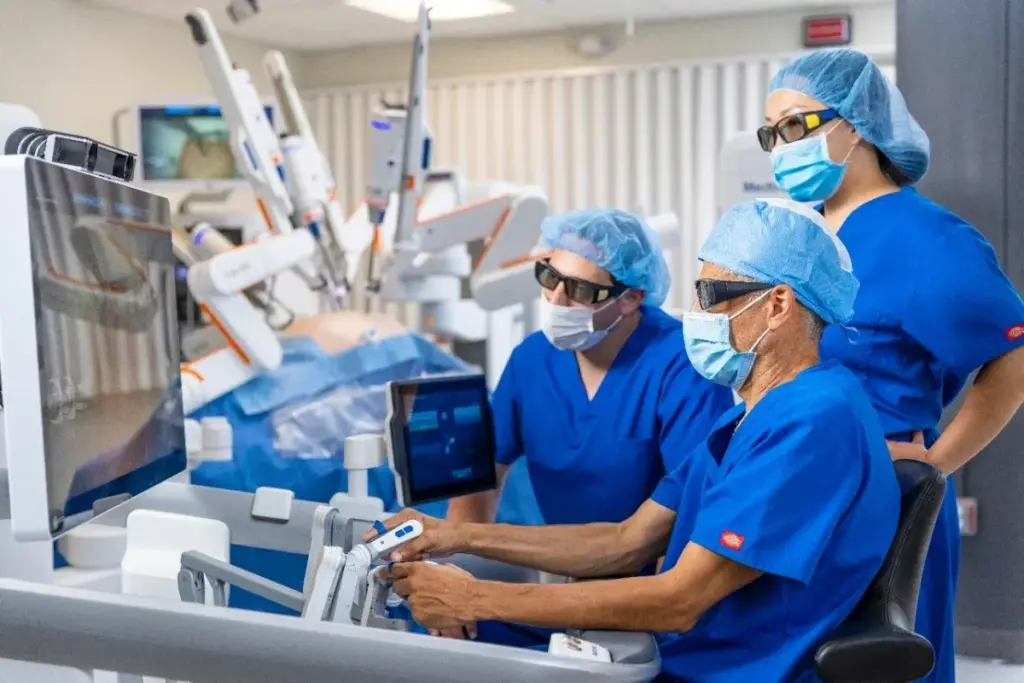
Hernia repair is a common surgery, with over 1 million done in the U.S. each year. Choosing between laparoscopic surgery and robotic hernia surgery is important for both doctors and patients. Comparing laparoscopy and robotic hernia surgery? Discover the incredible elite benefits of robot-assisted care for an amazing recovery.
Studies have looked at the results of robotic and laparoscopic inguinal hernia repair. They show the good and bad of each method. It’s clear that picking the right surgery is key for the best results in hernia repair.
Key Takeaways
- Understanding the differences between laparoscopic and robotic hernia surgery is key for making good choices.
- Recent studies compare the outcomes of robotic and laparoscopic inguinal hernia repair.
- The choice of surgical technique can greatly affect patient recovery and results.
- Both laparoscopic and robotic surgeries have their benefits and drawbacks.
- Choosing the right surgical approach is essential for the best hernia repair results.
Understanding Hernia Surgery: The Evolution of Techniques
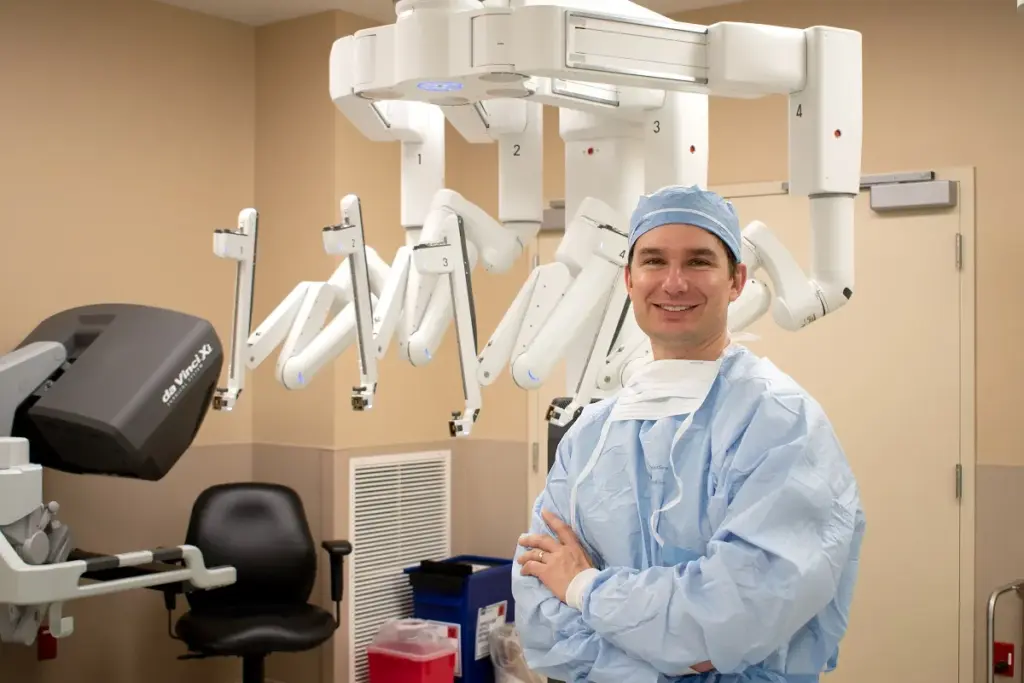
Medical technology has changed hernia surgery a lot. Now, we use laparoscopic and robotic methods instead of open surgery. It’s important to know what a hernia is and why surgery is often needed.
What is a hernia and why does it require surgery?
A hernia happens when an organ bulges through a weak spot in the muscle. This can cause pain and serious problems if not treated. Surgery fixes the weak spot, stops the bulge, and relieves pain.
Common types of hernias are inguinal and umbilical. The choice to have surgery depends on the hernia’s size and symptoms.
From open surgery to minimally invasive approaches
Oldly, hernia repair was done with open surgery, a big incision. It works but takes longer to heal and hurts more tissue.
New methods like laparoscopy and robotic surgery have changed hernia repair. They use small cuts and cameras, causing less damage and faster healing.
|
Surgical Approach |
Description |
Benefits |
|---|---|---|
|
Open Surgery |
Traditional method involving a large incision |
Effective for complex cases, established technique |
|
Laparoscopic Surgery |
Minimally invasive, using small incisions and a camera |
Less tissue trauma, quicker recovery |
|
Robotic Surgery |
Advanced laparoscopic technique with enhanced precision |
Improved dexterity, better visualization |
The evolution of hernia surgery has led to significant improvements in surgical outcomes. Knowing about these changes helps both doctors and patients understand hernia repair better.
The Basics of Laparoscopic Hernia Repair
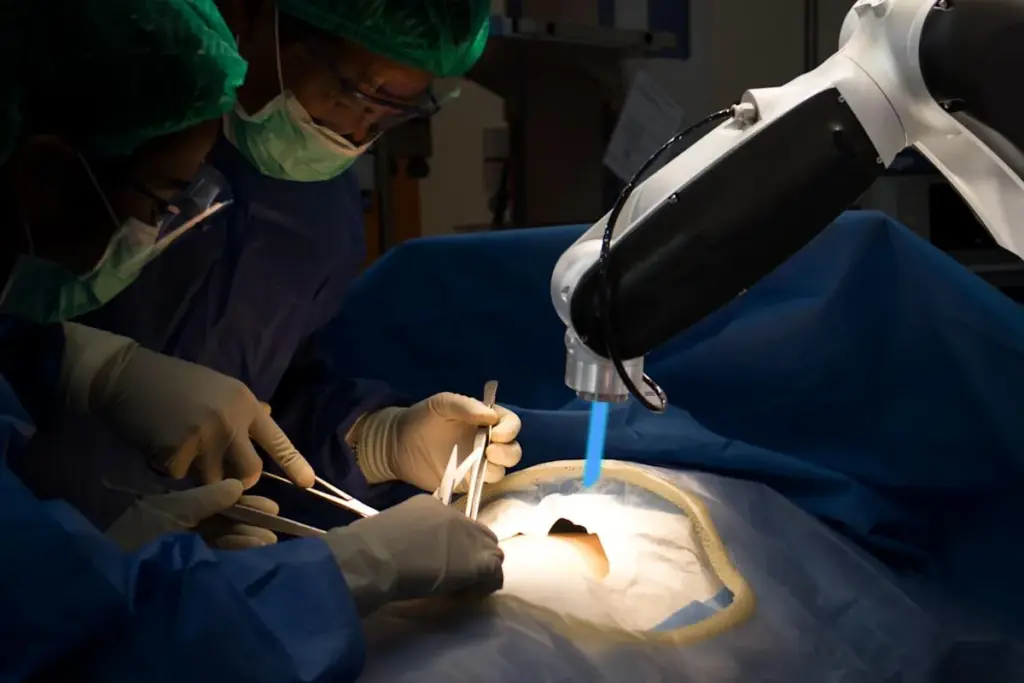
Laparoscopic hernia repair is a new way to fix hernias. It uses small cuts and special tools to fix the problem. This method is less invasive than old ways.
How Laparoscopic Surgery Works
Laparoscopic surgery, or laparoscopy, is done under general anesthesia. This makes sure the patient is comfortable. The surgeon makes small cuts, about 0.5 to 1 cm, to put in tools and a camera.
The camera shows images on a screen, helping the surgeon see the hernia clearly. This way, the surgeon can fix the hernia without a big cut. The use of carbon dioxide gas helps the surgeon see better.
Types of Laparoscopic Hernia Repairs
There are two main types of laparoscopic hernia repairs. They are the Totally Extraperitoneal (TEP) repair and the Transabdominal Preperitoneal (TAPP) repair. Both use a mesh to strengthen the area where the hernia is.
- TEP Repair: This method goes outside the abdominal cavity. It’s harder because of less space.
- TAPP Repair: This method goes inside the cavity first. It’s easier because it’s more familiar.
Equipment and Setup Requirements
Laparoscopic hernia repair needs special tools. These include a high-definition laparoscope, laparoscopic instruments, and a device to keep the area inflated. The room is set up to show everything clearly to the surgical team.
|
Equipment |
Description |
Purpose |
|---|---|---|
|
Laparoscope |
A thin, lighted tube with a camera |
Visualize the hernia and surrounding anatomy |
|
Surgical Instruments |
Specialized tools for laparoscopic surgery |
Manipulate tissue and repair the hernia |
|
Insufflator |
Device to inflate the abdominal cavity with CO2 |
Create a clear operating field |
Robotic Hernia Surgery: An Advanced Approach
Robotic systems have changed hernia repair, making it more precise and controlled. This new method is a big step forward in surgery, giving doctors better control and a clearer view.
The da Vinci Surgical System and Other Robotic Platforms
The da Vinci Surgical System is a top choice for hernia repair. It lets surgeons do complex tasks with more precision and control. Other systems are coming out, giving more options for robotic hernia surgery.
Key Features of the da Vinci Surgical System:
- High-definition 3D visualization
- Enhanced dexterity with wristed instruments
- Improved precision and control
- Reduced tremor and fatigue
How Robotic-Assisted Hernia Repair Works
Robotic-assisted hernia repair uses a robotic system to help with the surgery. The surgeon controls the robotic arms, which have surgical tools, from a console. This setup makes precise work like dissection and suturing easier.
The steps are:
- Preparation and positioning of the robotic system
- Insertion of robotic arms and instruments through small incisions
- Performance of the hernia repair under the guidance of the robotic system
- Removal of the robotic instruments and closure of the incisions
Technological Advantages of Robotic Systems
Robotic systems have big advantages over traditional surgery. They offer better vision, more control, and precision. Using robots can also lower the risk of problems and help patients recover faster.
|
Technological Feature |
Benefit |
|---|---|
|
High-definition 3D visualization |
Enhanced view of the surgical site |
|
Wristed instruments |
Improved dexterity and precision |
|
Tremor filtration |
Reduced risk of complications |
Laparoscopy and Robotic Surgery: Comparing Mesh Placement Techniques
Mesh placement is key in hernia surgery. Laparoscopic and robotic methods each have their own benefits. The method chosen can greatly affect the surgery’s success.
Mesh Types and Selection Considerations
Different meshes are used for hernia repair. Synthetic meshes are common, but biological meshes are used in some cases.
Surgeons pick a mesh based on the hernia size, patient health, and possible complications.
Fixation Methods in Both Approaches
Securing the mesh is vital. Laparoscopic surgery uses tacks or staples. Robotic surgery, with its precision, allows for better suturing.
“The precision offered by robotic systems can lead to more secure fixation and potentially fewer complications,” says a leading surgeon in the field.
Precision of Mesh Positioning and Deployment
How well the mesh is placed and deployed is critical. Robotic surgery’s better visualization and dexterity give it an edge.
- Robotic systems provide 3D visualization, allowing for more accurate placement.
- Laparoscopic techniques, while effective, may have limitations in terms of visual clarity and instrument flexibility.
The choice between laparoscopic and robotic mesh placement depends on the surgeon’s skill and the patient’s needs.
Precision and Control: Robotic vs. Laparoscopic Methods
Robotic surgery is changing hernia repair with its precision and control. Let’s look at the benefits and challenges of robotic and laparoscopic methods.
3D Visualization Advantages in Robotic Surgery
Robotic surgery’s 3D visualization is a big plus. It gives surgeons a clear, detailed view of the area they’re working on. This is key in hernia repair, where placing mesh correctly is essential.
Dexterity and Range of Motion Comparison
Robotic systems have a greater range of motion and dexterity than traditional laparoscopic tools. This makes it easier to do detailed work in tight spaces. It also helps with precise suturing and mesh placement, which can lower complication risks.
Stability and Tremor Filtration Benefits
Robotic surgery also filters out tremors, giving surgeons a steadier hand. This stability, along with the precision of robotic tools, can lead to better results and fewer complications after surgery.
Patient Outcomes: Comparing Recovery and Results
Looking at patient results after laparoscopic and robotic hernia surgery shows big differences. These differences matter a lot for patients and doctors when picking the best surgery.
Pain Levels and Management Post-Surgery
Both laparoscopic and robotic hernia repairs cause less pain than open surgery. But, robotic surgery might manage pain a bit better. This is because it’s more precise and causes less tissue damage.
A study found robotic surgery patients had lower pain scores right after surgery. This is thanks to the improved dexterity and 3D visualization of robotic systems. They allow for gentler handling of tissues.
Hospital Stay Duration Differences
How long you stay in the hospital is also important. Both laparoscopic and robotic hernia surgeries mean shorter stays than open repair. Our data shows robotic surgery might lead to a slightly shorter stay.
- Robotic surgery: Average stay of 1.2 days
- Laparoscopic surgery: Average stay of 1.5 days
Even small differences in stay time can affect how happy patients are and how well hospitals use resources.
Return to Normal Activities Timeframe
Going back to normal activities is a key sign of recovery. Both laparoscopic and robotic hernia repairs let patients get back to their lives in a few weeks. But, robotic surgery’s enhanced precision might mean a quicker return.
A study showed robotic surgery patients got back to normal 5-7 days faster than laparoscopic patients. This might be important for people with busy lives.
In summary, both laparoscopic and robotic hernia surgeries have good outcomes for pain, hospital stay, and getting back to normal. But, the choice depends on the patient’s needs and the surgeon’s skills.
Complication Rates and Safety Profiles
When we talk about hernia surgery, we look at how safe and effective it is. Laparoscopic and robotic surgery are two modern ways to fix hernias without big cuts. Knowing how often problems happen and how safe these methods are helps us choose the best option.
Common Complications in Both Approaches
Both laparoscopic and robotic hernia repairs can have similar issues. These include infections, bleeding, and damage to nearby tissues or organs. These problems are not common but can affect how well a patient recovers.
For example, infections might mean longer hospital stays and extra treatments. Damage to nearby areas could cause long-term pain or need more surgery.
Both methods can also cause pain after surgery. The level of pain can differ based on how well the mesh is placed and how much surgery is needed.
Unique Risks for Each Surgical Method
Laparoscopic surgery has its own risks, like getting a hernia at the site where the surgeon makes a cut. It also has risks from the gas used during surgery, like gas bubbles in the blood or heart problems.
Robotic surgery, with its better control and view, has its own challenges. These include possible mechanical issues and higher costs, making it less accessible to some.
Also, learning to use robotic surgery takes more time than laparoscopic. This can affect how often problems happen when a surgeon is just starting out.
Long-term Outcomes and Recurrence Rates
Looking at how well a surgery works over time is important. Both laparoscopic and robotic surgeries have low rates of coming back if done by skilled surgeons. Robotic surgery might even do better in tricky cases, but we need more studies to be sure.
Choosing the right patient, using the right technique, and picking the right mesh are key. These factors help make sure the surgery works well in the long run, for both laparoscopic and robotic repairs.
Evidence-Based Comparison: What Research Shows
Comparing laparoscopic and robotic hernia repair is key. Research shows the good and bad of each method. Studies have looked into how well these surgeries work.
Systematic Reviews and Meta-Analyses Findings
Systematic reviews and meta-analyses give us important info. They compare laparoscopic and robotic hernia repair. A big meta-analysis showed the ups and downs of each method.
Key findings from these analyses include:
- Comparative complication rates between laparoscopic and robotic techniques
- Recovery time and return to normal activities
- Pain management outcomes
Randomized Controlled Trials Comparing Techniques
Randomized controlled trials (RCTs) are top-notch in research. They compare laparoscopic and robotic hernia repair. RCTs are fair because they randomize participants.
Recent RCTs have focused on:
- Operative time and efficiency
- Post-operative pain and analgesic use
- Long-term recurrence rates
Limitations in Current Research
Research has its limits. Study designs vary, and surgeon skills differ. Surgical tech also keeps changing.
We must keep these limits in mind when looking at studies. Future research should fill these gaps. This will help surgeons and patients make better choices.
Cost Considerations: Laparoscopic vs. Robotic Hernia Repair
It’s important to understand the costs of laparoscopic and robotic hernia repair. These costs can affect both patients and healthcare systems.
Equipment and Operational Costs
The costs of these surgeries include equipment, operational, and maintenance fees. Robotic systems, like the da Vinci Surgical System, are pricier. This is because of their advanced technology and the costs of buying and keeping them up.
- Initial Investment: Buying robotic systems costs a lot, often millions of dollars.
- Operational Costs: Robotic surgeries might cost more to run. This is because of the use of disposable tools and longer surgery times.
- Maintenance Fees: Keeping robotic systems in good shape adds to their overall cost.
Insurance Coverage and Patient Financial Impact
Insurance coverage for hernia repair surgeries can vary. It’s key for patients to know what their insurance covers and what they might have to pay out of pocket.
- Insurance Coverage: Find out if your insurance covers both laparoscopic and robotic hernia repair. Some insurers might have special rules for robotic surgery.
- Out-of-Pocket Costs: Know about deductibles, copays, and any extra fees not covered by insurance.
- Financial Assistance: Some hospitals and surgical centers offer help with costs or payment plans.
Cost-Effectiveness Analysis
Looking at the cost-effectiveness of laparoscopic versus robotic hernia repair means considering more than just upfront costs. It’s also about long-term results and any complications.
- Short-Term Costs: Costs for the hospital stay, surgery, and immediate care after surgery.
- Long-Term Outcomes: How often the hernia comes back, the need for more surgeries, and managing chronic pain can affect costs over time.
- Quality of Life: How well a patient feels and can do things again can also impact the value of the surgery chosen.
By looking at these factors, healthcare providers and patients can make better choices about the most cost-effective surgery for hernia repair.
Surgeon Perspective: Training and Skill Development
Hernia surgery techniques are getting more complex. This means surgeons need thorough training. Both laparoscopic and robotic repairs require skill and precision. Good training programs are key for success.
Learning Curve Differences Between Techniques
Laparoscopic hernia repair is very challenging. Surgeons need a lot of experience to get good at it. Robotic surgery, with its advanced tech, adds more complexity. It might make the learning curve even longer.
Surgeons who know laparoscopic surgery can learn robotic faster. But, starting out is hard. They need to get used to the new tech.
Robotic systems, like the da Vinci Surgical System, have cool features. They offer 3D views and better control. But, they need special training to use right.
Switching from laparoscopic to robotic surgery needs a good training plan. It must cover the unique parts of robotic surgery.
Training Requirements and Certification
Surgeons doing laparoscopic and robotic hernia surgery must get a lot of training. They need to pass certification tests. For laparoscopic, this means a residency and extra courses on hernia repair.
Robotic surgery training includes special courses and being watched by experts. This ensures they know how to use the robotic system well.
Certification rules change by country and place. But, it usually involves learning, practice, and being watched. For example, SAGES has a program for laparoscopic training. Robotic training is offered by the makers of robotic systems and surgical groups.
Surgeon Preference Factors
Surgeons might choose laparoscopic or robotic hernia repair for different reasons. Their training, experience, and patient needs play a big part. Some like the feel of laparoscopic, while others prefer robotic’s better view.
The choice also depends on the surgeon’s comfort with the tech and what their hospital offers. As these methods improve, surgeons must keep learning to use the latest techniques.
Patient Selection: Who Benefits Most from Each Approach
Choosing the right surgery for hernias is key for good treatment. The choice between laparoscopic and robotic surgery depends on many things. These include the patient’s health, the size and type of hernia, and the surgeon’s skills.
Ideal Candidates for Laparoscopic Repair
Laparoscopic surgery is best for smaller hernias or those at risk for big surgery problems. Patients with a history of previous abdominal surgery also do well with this method. It’s less invasive, which lowers the risk of open surgery issues.
It’s also good for those who need to get back to work fast. Laparoscopic surgery uses small cuts, which means less damage and quicker healing.
When Robotic Surgery Offers Clear Advantages
Robotic surgery is better for complex cases or big hernias. It gives surgeons better control and 3D views. This is great for patients with big or hard-to-fix hernias.
Patients with obesity or previous hernia repairs also get benefits. Robotic surgery can handle tough tissues and stitch accurately.
Contraindications for Minimally Invasive Approaches
Both laparoscopic and robotic surgeries are safe for many. But, some patients might not be good candidates. For example, those with serious heart or lung issues might face risks from the gas used in these surgeries.
Also, some patients’ bodies or past surgeries might need a special plan. Surgeons must look at each case carefully to pick the best surgery.
Post-Operative Considerations and Follow-Up Care
Good care after surgery is key for patients with hernias. This care is vital whether the surgery is laparoscopic or robotic. How well a patient recovers, their pain, and the chance of problems depend on this care.
Immediate Post-Operative Management Differences
The first days after surgery are different for laparoscopic and robotic repairs. Robotic surgery might cause less pain because it’s more precise. Laparoscopic surgery is also small but might cause a bit more damage. Yet, both are quicker to recover from than open surgery.
Patients who have robotic surgery might stay in the hospital a bit less. But, how long they stay can depend on many things, like their health and the surgery.
Pain Control Strategies for Each Approach
Managing pain is a big part of care after surgery. For both types of hernia repairs, doctors use a mix of pain medicines and sometimes local anesthesia. Multimodal pain management helps avoid opioid side effects.
Research shows robotic surgery might need less pain medicine than laparoscopic. This could be because it hurts the belly less.
Follow-Up Protocols and Long-Term Monitoring
Checking in after surgery is important. It helps see how healing is going and spots problems early. Doctors plan visits based on how each patient is doing.
Watching patients over time is also key. It helps see if the repair is lasting and catches any late issues. A clear follow-up plan helps patients get the best results.
The Future of Hernia Surgery: Technological Advancements
Technological innovations are changing hernia surgery for the better. Laparoscopic and robotic techniques are getting better. This means better results and faster healing for patients.
Emerging Technologies in Laparoscopic Surgery
Laparoscopic surgery has made hernia repair less invasive. New technologies are making it even better. For example, better imaging lets surgeons see more clearly during surgery.
New materials and mesh technologies are also improving. They make repairs last longer and work better.
New laparoscopic tools are more precise and flexible. This makes it easier to do complex repairs. Augmented reality and 3D visualization are also helping. They let surgeons see and navigate the body better.
Next-Generation Robotic Systems
Robotic hernia surgery is getting a big upgrade. New systems will be more precise and easier to use. This will help surgeons learn faster and improve patient care.
Artificial intelligence is coming to robotic systems. It will help plan and execute repairs with great accuracy. AI can analyze data to find the best approach for each patient.
Artificial Intelligence and Surgical Planning
Artificial intelligence is key to the future of hernia surgery. It will help surgeons plan better for each patient. This could lead to better results and faster healing.
AI will also help during surgery. It will give surgeons important information and advice. This teamwork between humans and AI will raise the bar for hernia surgery.
|
Technological Advancement |
Impact on Hernia Surgery |
Potential Benefits |
|---|---|---|
|
Improved Laparoscopic Instrumentation |
Enhanced precision and flexibility |
Reduced complications, faster recovery |
|
Next-Generation Robotic Systems |
Greater dexterity, improved visualization |
Better outcomes, reduced learning curve |
|
Artificial Intelligence Integration |
Personalized surgical planning, real-time assistance |
Improved precision, reduced recovery times |
Making the Decision: Questions to Ask Your Surgeon
Choosing between laparoscopic and robotic hernia surgery is a big decision. It’s important to know the right questions to ask your surgeon. This will help you make the best choice for your health.
Experience and Expertise Considerations
First, think about your surgeon’s experience and skills. You should ask about their experience with both types of surgery. Here are some questions to consider:
- How many laparoscopic and robotic hernia surgeries have you performed?
- What training have you received for robotic surgery?
- Can you share outcomes or complication rates for both methods?
Knowing your surgeon’s background can give you confidence in their recommendation.
Hospital Capabilities and Equipment
The hospital’s equipment and staff are also important. Ask about the following:
- Is the hospital equipped with the latest technology for both laparoscopic and robotic surgery?
- Are there dedicated teams for robotic surgeries?
- What support staff will be available during my recovery?
Having a well-equipped facility and skilled staff can greatly improve your surgery and recovery.
Personal Health Factors Affecting Surgical Choice
Your health also plays a big role in choosing the right surgery. Talk to your surgeon about your medical history and current health. Ask these questions:
- How might my previous surgeries affect the choice between laparoscopic and robotic surgery?
- Are there any health conditions that could make one method preferable over the other?
- How will my overall health impact the recovery process?
Understanding how your health affects your options will help you make a better decision.
In conclusion, making a good decision about hernia surgery involves talking to your surgeon. Discuss their experience, the hospital’s capabilities, and your health. By asking the right questions, you can get the best care for your needs.
Conclusion
Laparoscopic and robotic hernia surgery are both minimally invasive. They have their own benefits and things to think about. Laparoscopic surgery is well-known and available in many places. It’s a good choice for many patients.
Robotic hernia surgery, though, offers more precision and skill in the operating room. This could lead to better results for patients.
Choosing between these methods depends on several things. These include the patient’s condition, the surgeon’s skills, and the hospital’s setup. It’s important to understand both laparoscopic and robotic surgery well.
Deciding on a surgery should be done with a healthcare expert. They will consider what’s best for each patient. By weighing the pros and cons of each method, patients can choose wisely. This leads to the best care and recovery.
FAQ
What is the difference between laparoscopic and robotic hernia surgery?
Laparoscopic surgery uses a laparoscope and tools through small cuts. Robotic surgery uses a system like the da Vinci to improve precision.
What are the benefits of minimally invasive hernia surgery?
These surgeries are less painful and you can go home sooner. You also get back to your daily life faster than with open surgery.
How is mesh placed during laparoscopic and robotic hernia surgery?
Mesh is used to strengthen the weak area. It’s placed carefully with robotic surgery giving more precision.
What are the advantages of 3D visualization in robotic hernia surgery?
The 3D view helps the surgeon see clearly. This makes it easier to work in complex areas and do precise cuts.
How do recovery outcomes compare between laparoscopic and robotic hernia surgery?
Both are quicker to recover from than open surgery. Robotic surgery might lead to less pain and faster recovery for some.
What are the common complications associated with laparoscopic and robotic hernia surgery?
Issues like infection and bleeding can happen. Robotic surgery might have unique problems like system malfunctions.
Is robotic hernia surgery more expensive than laparoscopic hernia surgery?
Yes, robotic surgery costs more due to the equipment. But prices can vary based on where you are and your insurance.
What factors determine whether a patient is a good candidate for laparoscopic or robotic hernia surgery?
The size and location of the hernia matter. So does your health and past surgeries.
How do surgeons develop the skills needed for laparoscopic and robotic hernia surgery?
Surgeons get special training and must be certified. Robotic surgery is harder to learn than laparoscopic.
What is the role of artificial intelligence in the future of hernia surgery?
Artificial intelligence will help plan and do surgeries. It could make both types of surgery more precise and effective.
What questions should I ask my surgeon when deciding between laparoscopic and robotic hernia surgery?
Ask about your surgeon’s experience and the hospital’s setup. Also, how your health will affect the choice of surgery.
References
National Center for Biotechnology Information. Evidence-Based Medical Insight. Retrieved from https://pmc.ncbi.nlm.nih.gov/articles/PMC9314304/