
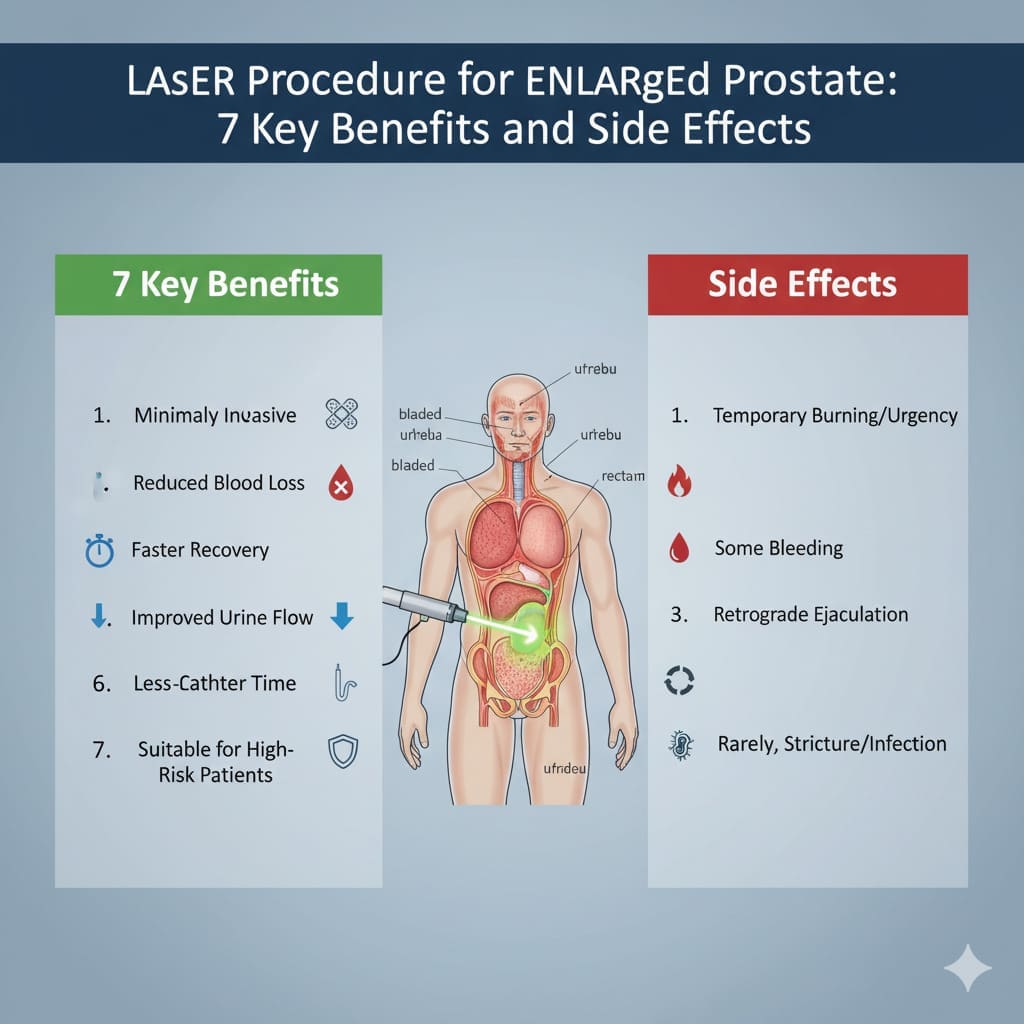
Benign prostatic hyperplasia (BPH) is a common issue for men as they get older. It makes the prostate gland grow bigger. This can cause problems like a weak flow, needing to pee a lot, and waking up to pee at night.
Laser therapy is a new and effective way to help with BPH. It uses light energy to remove or vaporize extra prostate tissue. This makes it easier to pee and helps with symptoms.
We will look into the good and bad sides of this therapy. We’ll also talk about what to expect when recovering. This will give you a full picture of how well it works.
Key Takeaways
- Laser therapy is a minimally invasive solution for BPH.
- It removes or vaporizes excess prostate tissue to improve urinary flow.
- This therapy alleviates symptoms such as weak flow and frequent urination.
- Laser treatment is a highly effective solution for BPH.
- Understanding the benefits, risks, and recovery facts is important.
Understanding Benign Prostatic Hyperplasia (BPH)
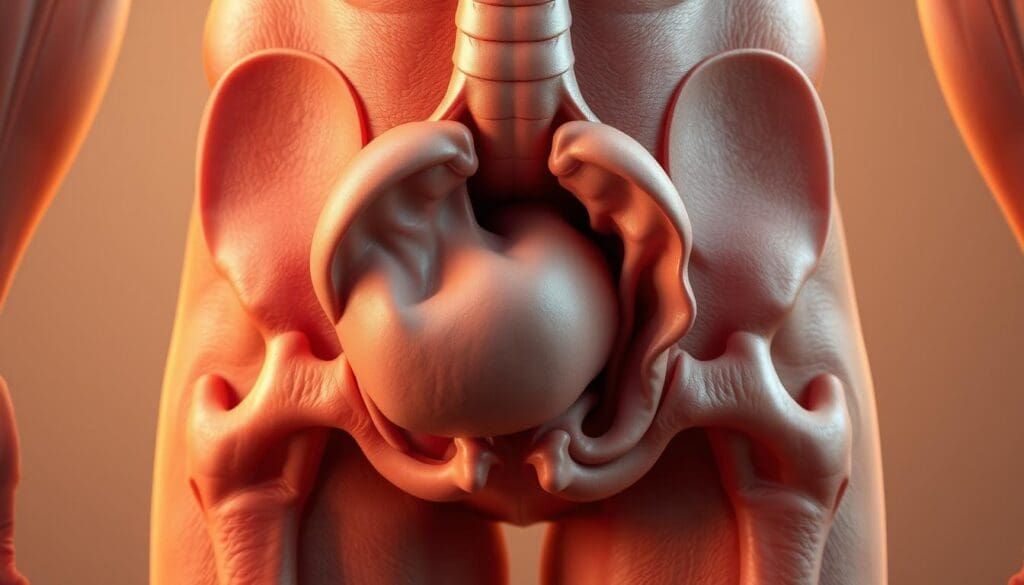
Benign Prostatic Hyperplasia (BPH) is common in men over 50. It’s important to know about it and its effects. BPH makes the prostate gland grow, causing urinary problems.
What Causes Prostate Enlargement
The exact reason for prostate growth in BPH is not known. Hormonal changes and cell factors play a role as men age. This growth can block the urethra, causing urinary issues.
Common Symptoms of BPH
Men with BPH face urinary problems like weak flow and frequent need to urinate. They may also wake up to use the bathroom and struggle to start urinating. These symptoms can really affect a man’s life, so seeing a doctor is key.
When Treatment Becomes Necessary
Treatment for BPH is needed when symptoms worsen a man’s life or cause complications. Options include minimally invasive BPH treatment like prostate laser ablation and BPH laser therapy. These methods help with symptoms and have fewer side effects than old surgeries.
Knowing about BPH’s causes and symptoms helps find the right treatment. Recognizing when to get treatment can help men feel better and live better lives.
What is Laser Treatment for BPH?
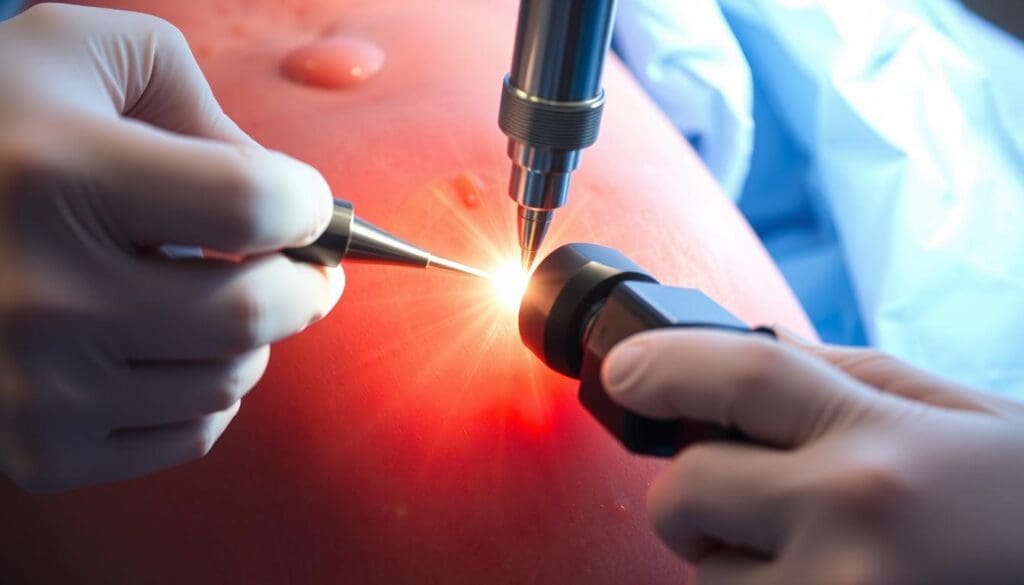
We use laser technology for a safe and effective BPH treatment. It removes the enlarged prostate tissue that blocks urine flow. This is done with the latest medical science advancements.
The Science Behind Laser Therapy
Laser therapy for BPH works by applying precise energy to the prostate tissue. We use different lasers, like Green Light and Holmium, based on the patient’s needs. Green Light laser therapy is great at vaporizing tissue. Holmium laser enucleation of the prostate (HoLEP) is precise in removing tissue.
How Laser Energy Removes Prostate Tissue
A special fiber delivers laser energy through the urethra. It targets and removes the enlarged prostate tissue. This method is controlled to avoid damage to other tissues.
Improvement of Urinary Flow Mechanics
Removing excess prostate tissue improves urine flow. Patients often see a big drop in symptoms like a weak stream and frequent urination. This relief is usually quick, helping patients feel better right away.
| Laser Technology | Primary Use | Benefits |
|---|---|---|
| Green Light Laser | Vaporization of prostate tissue | Effective vaporization, minimal bleeding |
| Holmium Laser | Enucleation of prostate tissue | High precision, effective for larger prostates |
| Thulium Laser | Vaporization and enucleation | Versatile, precise, and efficient |
Types of Laser Procedures for Prostate Treatment
Prostate laser treatment comes in different forms, like HoLEP, PVP, and Thulium Laser Prostatectomy. We’ll dive into each to see what makes them special and when they’re best used.
Holmium Laser Enucleation of the Prostate (HoLEP)
HoLEP is great for treating BPH, mainly for men with big prostates. It uses a holmium laser to remove prostate tissue. This method can handle larger prostates without open surgery, cutting down on surgery risks.
Photoselective Vaporization of the Prostate (PVP/Green Light)
PVP, or Green Light laser therapy, is a top choice for BPH. It uses a strong laser to vaporize extra prostate tissue, helping with urine flow. PVP is precise, causing little damage to nearby tissue, making it popular among patients.
Thulium Laser Prostatectomy
Thulium Laser Prostatectomy is a newer laser treatment. It uses a thulium laser to remove or vaporize prostate tissue. It’s known for being efficient and having less bleeding risk, good for those on blood thinners.
Comparing Laser Technologies
When looking at laser treatments, we consider how well they work, how safe they are, and who they’re best for. For example:
- HoLEP is often chosen for bigger prostates.
- PVP/Green Light is praised for its accuracy and low bleeding risk.
- Thulium Laser Prostatectomy strikes a balance between being effective and safe.
Our experts will pick the best laser treatment for you, based on your needs and health history.
Key Benefit #1: Minimally Invasive Approach
Laser treatment for BPH is a big plus because it’s not very invasive. This means less need for big surgeries. It also helps avoid a lot of tissue damage and makes it easier to target the right areas.
We use the latest laser tech for a treatment that works well and has fewer side effects. The laser’s precision lets us remove extra prostate tissue carefully. This way, we don’t harm the healthy parts around it.
Reduced Tissue Trauma
Laser treatment for BPH is gentle on the body. It uses laser energy to find and fix the prostate issues without hurting too much of the surrounding tissue. This leads to less pain after the treatment and a quicker recovery for our patients.
Precision Targeting of Excess Tissue
Laser tech is great at removing or vaporizing extra prostate tissue. This is key to keeping the prostate and nearby areas in good shape. It helps our patients keep their normal urine and sex functions. Plus, it makes the treatment safer.
| Benefits | Description |
|---|---|
| Reduced Tissue Trauma | Minimizes damage to surrounding healthy tissue, resulting in less post-operative discomfort. |
| Precision Targeting | Allows for accurate removal or vaporization of excess prostate tissue, preserving normal urinary and sexual functions. |
| Quicker Recovery | Patients experience a faster return to normal activities due to the minimally invasive nature of the treatment. |
Choosing laser treatment for BPH means getting a minimally invasive BPH treatment. It offers relief from symptoms with fewer side effects and a quicker recovery. This method is a big step forward in treating BPH, making it safer and more efficient than old-school surgeries.
Key Benefit #2: Reduced Blood Loss and Complications
Laser energy in BPH treatment cuts down on blood loss and complications. This is a big plus, mainly for those at high risk of bleeding.
Hemostatic Properties of Laser Energy
Laser energy seals blood vessels as it removes prostate tissue. This greatly lowers the chance of bleeding during and after treatment. The precision of laser therapy targets specific areas without harming nearby tissues.
A study in the Journal of Urology found laser treatment for BPH cuts down on bleeding complications. This is compared to traditional surgery.
“The use of laser technology in BPH treatment has revolutionized the field by minimizing the risk of bleeding and promoting faster recovery times.”
Safety for Patients on Blood Thinners
Patients on blood thinners face higher bleeding risks with traditional surgery. But, laser treatment for BPH is safer. Laser’s hemostatic properties add safety, allowing patients on anticoagulants to have the procedure with less risk.
| Benefits | Laser Treatment | Traditional Surgery |
|---|---|---|
| Bleeding Risk | Low | Moderate to High |
| Safety for Patients on Blood Thinners | Safer | Risks Complications |
| Recovery Time | Faster | Variable |
In summary, laser treatment for BPH is appealing due to its low risk of blood loss and complications. It uses laser energy’s hemostatic properties for a safer and more effective treatment.
Key Benefit #3: Shorter Hospital Stays and Recovery Time
Patients who get laser treatment for BPH often stay in the hospital less and recover faster. This is a big plus of laser prostate surgery. It’s great for men who want to feel better without messing up their daily lives too much.
Outpatient Procedure Possibilities
Laser treatment for BPH is often done without needing to stay overnight. This means patients can go home the same day. It’s good for people with tight schedules or who like to recover at home. The laser’s precision helps avoid problems and makes recovery easier.
Whether you can have laser prostate treatment as an outpatient depends on a few things:
- Your health and medical history
- The laser technology used
- The surgeon’s opinion based on the procedure’s details
Return to Normal Activities Timeline
One of the best things about laser treatment for BPH is how quickly you can get back to normal. Most people can start their usual activities in just a few days to a week. But, it’s key to listen to your doctor’s advice to make sure you heal well.
Here’s a rough idea of when you can get back to normal:
- Right after the procedure (0-2 days): Rest and relax. You might feel some pain or need to pee a lot.
- Short-term recovery (2-7 days): Start doing normal things again, but don’t lift heavy or do hard exercise.
- Full recovery (1-3 weeks): You should be back to your usual self, including work and exercise, in a few weeks.
Keep in mind, everyone recovers differently. Your age, health, and the laser technology used can affect how fast you heal. Always listen to your doctor for the best results.
Key Benefit #4: Rapid Symptom Relief
BPH laser therapy offers rapid symptom relief, greatly improving patients’ lives. We’ve seen patients with enlarged prostate see a big drop in symptoms right after treatment.
Timeline for Improvement
How fast patients see improvement varies, but most notice changes in a few weeks. Studies show most patients feel better from symptoms like weak urine flow and frequent need to urinate in 4 to 6 weeks after treatment.
It’s important for patients to follow their doctor’s post-procedure care advice. This helps ensure they recover well and get the most relief from symptoms. They should also keep up with follow-up appointments and any lifestyle changes suggested by their urologist.
Long-term Effectiveness Data
Long-term data on BPH laser therapy looks good, with many patients staying symptom-free for years. Research shows laser treatment can offer lasting relief, with some studies showing benefits lasting up to 5 years or more after treatment.
Success with BPH laser therapy over time depends on several things. These include the patient’s health, how severe their BPH symptoms are, and how well they follow post-procedure care. Regular check-ups with a healthcare provider are key to keeping an eye on the condition and handling any issues that come up.
Key Benefit #5: Lower Risk of Sexual Side Effects
Laser therapy for prostate enlargement has a big advantage. It helps avoid sexual side effects. This is because laser treatment is precise. It targets the enlarged prostate without harming nearby areas important for sex.
Reduced Risk of Erectile Dysfunction
Research shows laser treatment for BPH lowers the risk of erectile dysfunction. This is because laser energy is controlled. It avoids damaging nerves and blood vessels needed for an erection.
Lower Incidence of Retrograde Ejaculation
Laser treatment also reduces the risk of retrograde ejaculation. It does this by keeping the bladder neck and prostatic urethra intact. This helps maintain normal ejaculation.
| Treatment Method | Risk of Erectile Dysfunction | Incidence of Retrograde Ejaculation |
|---|---|---|
| Laser Treatment | Low | Lower |
| Traditional Surgery | Moderate to High | Higher |
Laser treatment for BPH is appealing because it lowers the risk of sexual side effects. It’s safer than traditional surgery. This is because it causes less damage to tissues around the prostate.
Key Benefit #6: Reduced Catheterization Time
Green light laser therapy for BPH cuts down on the time needed for catheter use. This is a big win for patient comfort and recovery. Let’s dive into how laser treatment makes this possible.
Brief Catheter Requirements
Laser prostate surgery causes less damage to the prostate. This leads to less swelling and a shorter need for catheters. Studies show laser treatment patients need catheters for less time than those who have traditional surgery.
The laser’s precision helps remove extra prostate tissue carefully. This reduces the chance of complications that could make catheter use longer.
Improved Patient Comfort
Less time with a catheter means patients are more comfortable. It also lowers the risk of urinary tract infections. Laser treatment makes recovery smoother and more comfortable.
| Procedure | Average Catheterization Time | Complication Rate |
|---|---|---|
| Laser Prostate Surgery | Less than 24 hours | Low |
| Traditional TURP | 24-48 hours | Moderate |
The table shows laser prostate surgery has shorter catheter times and fewer complications than TURP. This backs up the benefits of laser treatment for BPH.
Choosing laser therapy means better comfort and less invasiveness for patients. It shows our dedication to top-notch healthcare.
Key Benefit #7: Decreased Risk of Infections
Laser therapy for prostate enlargement has a big advantage: it lowers the chance of infections after surgery. This method is popular because it’s less invasive and has fewer risks, like infections.
Reducing Infection Risk with Laser Technology
Laser technology is key in lowering infection risks during and after BPH treatment. The precision of laser energy helps remove extra prostate tissue carefully. This careful approach speeds up healing and lowers the chance of infection.
Here are some ways laser tech cuts down infection risks:
- Minimal tissue trauma: Laser energy is precise, causing less damage to surrounding tissue.
- Reduced bleeding: The hemostatic properties of laser energy minimize bleeding, reducing the need for blood transfusions and lowering infection risk.
- Sealing of lymphatic vessels: Laser treatment can seal lymphatic vessels, potentially reducing the risk of infection spread.
Preventing Infections After the Procedure
While laser tech greatly lowers infection risks, post-procedure care is also key. We advise patients to stick to a specific care plan to keep risks low.
Important steps to prevent infections after include:
- Following the prescribed antibiotic regimen, if any, to prevent bacterial infections.
- Maintaining good hygiene practices, such as keeping the catheter clean (if used) and following proper wound care instructions.
- Attending follow-up appointments to monitor healing and address any concerns or signs of infection early.
By using laser tech and careful post-procedure care, patients can greatly lower their infection risk after BPH treatment. This approach makes laser treatment a great choice for many men.
Potential Risks and Recovery Process
Laser treatment for BPH is usually safe. But, it’s important to know the possible risks and how to recover. Like any medical procedure, there are side effects and complications to be aware of.
Common Temporary Side Effects
After laser surgery for an enlarged prostate, patients might face some temporary side effects. These can include:
- Temporary urinary incontinence
- Increased frequency or urgency
- Dysuria (painful urination)
- Hematuria (blood in the urine)
These side effects are usually short-lived and get better as the patient heals.
Rare Complications
Though less common, there are possible complications with laser treatment for BPH. These can include:
- Infection
- Bladder neck contracture
- Erectile dysfunction
- Retrograde ejaculation
Talking to your healthcare provider about these complications is key. This helps understand the risks and benefits for your situation.
Post-Procedure Care Instructions
Proper care after the procedure is important for a smooth recovery. Patients are usually told to:
- Stay hydrated
- Avoid heavy lifting or strenuous activities
- Follow a healthy diet
- Attend follow-up appointments
| Care Instruction | Description | Benefit |
|---|---|---|
| Stay Hydrated | Drink plenty of water | Helps flush out the system |
| Avoid Heavy Lifting | Refrain from strenuous activities | Reduces risk of complications |
| Follow a Healthy Diet | Eat nutritious food | Supports healing process |
When to Contact Your Doctor
Knowing when to seek medical attention is important during recovery. Contact your doctor if you experience:
- Severe pain
- Heavy bleeding
- Fever or chills
- Difficulty urinating
Being aware of these signs can help prevent complications and ensure a successful recovery from laser treatment for BPH.
Conclusion: Is Laser Treatment Right for Your BPH?
Laser treatment for BPH is a safe and effective choice for men with an enlarged prostate. It offers a minimally invasive method, less blood loss, and quick relief from symptoms. This treatment has been shown to improve urinary flow and quality of life.
Even though laser treatment has many benefits, it’s important to think about the risks and side effects. Every medical procedure can have complications. It’s key to talk to a healthcare professional to see if this treatment is right for you.
Men should carefully consider the pros and cons before deciding on laser treatment for BPH. Talking to a urologist about your situation can help determine if prostate laser ablation is the best choice for you.
What is Benign Prostatic Hyperplasia (BPH) and how is it treated with laser therapy?
BPH is when the prostate gland gets too big, causing trouble with urination. Laser therapy uses light energy to remove extra tissue. This helps improve urine flow and eases symptoms.
What are the different types of laser procedures available for treating BPH?
There are several laser treatments for BPH. These include Holmium Laser Enucleation of the Prostate (HoLEP), Photoselective Vaporization of the Prostate (PVP/Green Light), and Thulium Laser Prostatectomy. Each has its own benefits and is best for different patients.
How does laser treatment for BPH reduce the risk of bleeding and complications?
Laser energy helps stop bleeding during and after treatment. This makes it safer for patients, even those taking blood thinners.
What are the benefits of a minimally invasive approach in laser treatment for BPH?
This approach causes less damage and targets the right tissue. It offers effective relief from BPH symptoms with fewer complications.
How long does it take to recover from laser treatment for BPH?
Recovery times vary. But laser treatment often means you can go home the same day. You might recover faster than with traditional surgery.
When can patients expect to experience relief from BPH symptoms after laser treatment?
Symptoms often improve quickly after laser treatment. How fast depends on the person and the procedure used.
Does laser treatment for BPH reduce the risk of sexual side effects?
Yes, laser treatment aims to avoid harming nearby tissues. This reduces the chance of problems like erectile dysfunction and retrograde ejaculation.
Are there any other risks or complications with laser treatment for BPH?
While safe, laser treatment can cause side effects like urinary incontinence or infection. Rare complications can happen. Following post-procedure care helps lower risks.
How does laser treatment for BPH reduce the risk of infections?
Laser technology causes less tissue damage and promotes a clean environment. This lowers infection risk. Proper post-procedure care is also key.
Is laser treatment for BPH suitable for all patients?
Laser treatment works well for many with BPH. But it depends on each patient’s needs and health. Always talk to a healthcare professional to decide the best treatment.
What is the long-term effectiveness of laser treatment for BPH?
Studies show laser treatment can offer lasting relief from BPH symptoms. But results can vary from person to person.
Can laser treatment for BPH be performed on an outpatient basis?
Yes, many BPH laser treatments are done on an outpatient basis. This means you don’t have to stay in the hospital. It helps you recover faster.
References
Potent Medical: Benefits of Prostate Laser Surgery
National Institute for Health and Care Research (NIHR) Evidence: Laser surgery for an enlarged prostate is no more effective than standard surgery



 Departments
 Related Videos
 Our Doctors
 News
News