

Women often have subtle symptoms of lateral hernias without clear signs. This makes it key to spot them early for the best treatment. Unlike common hernias, lateral ones might not show a visible bulge, making it hard to diagnose by yourself. Discover 15 criticallateral hernia symptoms and signs. Learn how to identify and check for these specific symptoms, especially in women.
Femoral hernias happen when fatty tissue or part of the intestine pushes through an opening in the abdominal wall. This opening is near the groin in the upper thigh. Activities that strain or exert you can make these hernias pop up suddenly. They can cause aching, sharp, or burning pains.
It’s important to know these subtle indicators to get medical help on time. Liv Hospital is great at patient-focused, expert care. They help women spot and deal with these symptoms for better health.
Key Takeaways
- Subtle symptoms can indicate lateral hernias in women.
- A visible bulge is not always present.
- Strain or exertion can cause femoral hernias to emerge.
- Aching, sharp, or burning pains are common symptoms.
- Early identification is key to effective treatment.
- Liv Hospital provides expert care for hernia diagnosis and treatment.
Understanding Lateral Hernias in Women
Lateral hernias in women are a specific type of hernia. They happen in the abdominal or groin area. These hernias can be hard to spot because they show up in different ways.
What Is a Lateral Hernia?
A lateral hernia occurs when part of the belly bulges out through a weak spot. It often happens on the sides. Things like pregnancy, obesity, chronic coughing, and heavy lifting can cause it. These activities make the pressure inside the belly go up, leading to a hernia.
Common Types of Lateral Hernias in Women
Women can get different kinds of hernias. For example, femoral, umbilical, incisional, and hiatal hernias are common. Femoral hernias happen just below the inguinal ligament and are more common in women because of their wider pelvis.
- Femoral hernias: Occur in the femoral canal, more common in women.
- Umbilical hernias: Occur around the belly button, often due to obesity or multiple pregnancies.
- Incisional hernias: Result from previous surgical incisions.
- Hiatal hernias: Occur when part of the stomach bulges into the chest through an opening in the diaphragm.
Why Women Experience Different Symptoms
The symptoms of lateral hernias can differ a lot among women. This is because of differences in body shape, health, and risk factors like obesity or previous surgeries. For example, women who have been pregnant may get hernias because of the strain on their abdominal muscles.
Women need to know the risk factors and symptoms. This way, they can get medical help quickly. Knowing about these things can help in managing and treating lateral hernias better.
Lateral Hernia Symptoms: Pain Patterns and Sensations
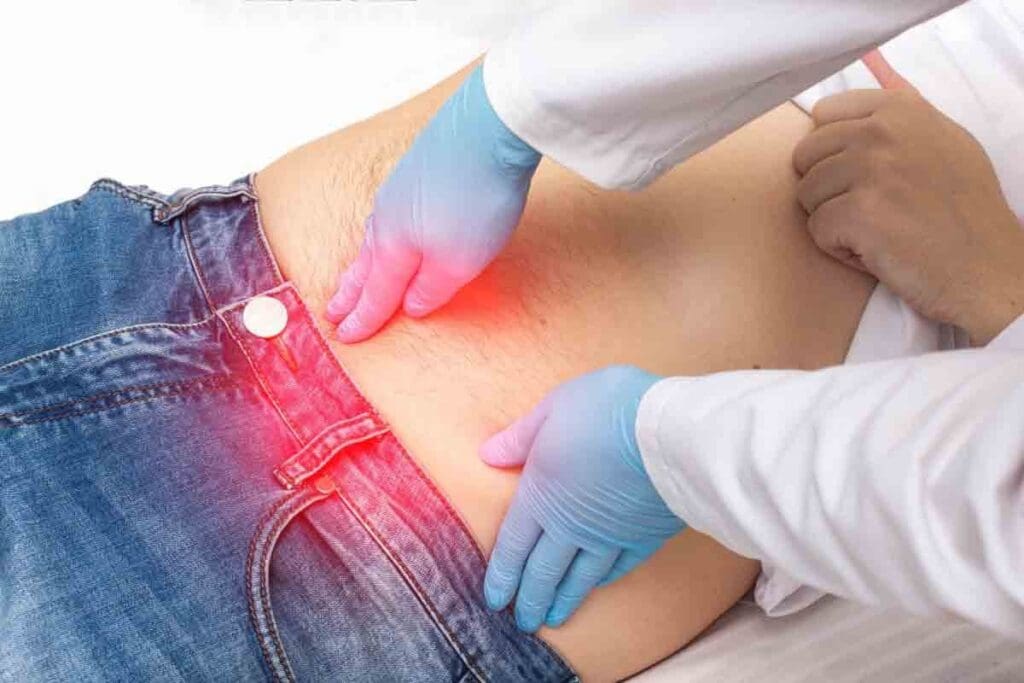
Lateral hernias have unique pain patterns and sensations. Women should know about these symptoms. They can include aching, sharp pain, and burning feelings.
Symptom 1: Aching or Discomfort in the Abdominal or Groin Area
A common symptom is aching or discomfort in the abdominal or groin area. This pain can start mild but get worse over time. It feels like a dull ache in the lower abdomen or groin.
Symptom 2: Sharp Pain That Increases with Activity
Sharp pain that gets worse with activity is another sign. This pain can be sudden and severe. It often happens when lifting heavy things, bending, or straining. The pain may go away when you rest, but comes back with more activity.
Symptom 3: Burning Sensation at the Hernia Site
Some women feel a burning sensation at the hernia site. This symptom is concerning and can be uncomfortable. The burning can be constant or change based on what you’re doing and how you’re sitting.
To understand how activities affect hernia symptoms, look at this table:
| Activity | Common Hernia Symptoms |
| Lifting heavy objects | Sharp pain, discomfort |
| Bending or straining | Sharp pain, aching |
| Coughing or sneezing | Sharp pain, discomfort |
| Prolonged standing or sitting | Aching, discomfort |
The severity and type of symptoms can differ a lot from person to person. If you’re feeling any of these symptoms, seeing a healthcare professional is key. They can help diagnose and treat the issue.
Visual and Physical Signs of Lateral Hernias
Signs like visible bulges and swelling are key to spotting lateral hernias. They help people get medical help fast. These signs differ from person to person, but doctors know what to look for.
Visible Bulge or Swelling
A visible bulge or swelling is a clear sign of a lateral hernia. This bulge gets bigger when you stand or strain.
Changes in Bulge Size with Activity or Position
The bulge size can change with what you do or how you sit. For example, it gets bigger when you stand or cough. It gets smaller when you lie down.
Texture and Consistency Variations
Hernias can feel different to the touch. Some are hard, while others are soft. The feel can tell doctors a lot about the hernia.
Knowing these signs is key to spotting lateral hernias. If you think you have one, see a doctor right away. They can give you the right diagnosis and treatment.
Digestive and Internal Symptoms
Digestive discomfort and feelings of fullness or pressure can signal a lateral hernia. These symptoms are not just about external bulges or pain. They can also show up in internal ways that are often missed.
Changes in Bowel Habits
One sign of a lateral hernia is changes in bowel habits. This might mean constipation, diarrhea, or feeling like you didn’t finish going.
The hernia can press on the intestines, messing with their work. It’s key to remember that many things can cause bowel habit changes. But if they keep happening, see a doctor.
Nausea or Digestive Discomfort
Nausea or general stomach discomfort can also point to a lateral hernia. This discomfort can be mild or quite severe. “The American Hernia Society” says, “Nausea and vomiting can happen if the hernia blocks the intestines a lot.”
This symptom can be confused with other stomach problems. So, it’s important to look at all symptoms when trying to figure out if you have a hernia.
Feeling of Fullness or Pressure
A feeling of fullness or pressure in the belly is common with lateral hernias. This feeling can be there all the time or change with what you’re doing or how you’re sitting.
This symptom can really affect your daily life and how well you feel. So, if you keep feeling this way, you should get checked by a doctor.
In summary, symptoms like changes in bowel habits, nausea, and feeling full or pressured can mean you have a lateral hernia. Spotting these signs early is key to getting the right treatment.
Atypical Lateral Hernia Presentations in Women
Lateral hernias in women can show up in unusual ways, making it hard to diagnose. While common symptoms like pain and visible bulges are seen, some women may have atypical signs. These signs can make it harder to find and treat the problem on time.
Hernias Without Pain
One unusual sign of lateral hernias is when there’s no pain. Some women might have a hernia without feeling much pain or discomfort. This can cause them to wait longer to see a doctor.
Not feeling pain doesn’t mean the hernia is not serious. The severity of a hernia isn’t tied to whether or not it hurts.
- No Pain: Hernias can be asymptomatic in terms of pain.
- Variable Symptoms: Symptoms can vary widely among individuals.
Hernias Without Visible Bulges
Another unusual sign is when there’s no visible bulge. Some lateral hernias might not show up as a bulge, even if they’re small. This makes it harder to spot them by looking or during a physical check-up.
Not seeing a bulge doesn’t mean the hernia is not serious. Women should watch for other symptoms and see a doctor if they think they might have a hernia.
Referred Pain to Other Areas
Referred pain is another unusual sign of lateral hernias. The pain from a hernia can sometimes be felt in other parts of the body, not just where the hernia is. This happens because of how our nervous system handles pain.
- Pain can be referred to the lower back.
- It can also be felt in the groin or thigh area.
- In some cases, the pain may radiate to the abdomen.
Both doctors and women need to know about these unusual signs. This helps in spotting lateral hernias, even when they don’t show up like usual. Getting checked out quickly is key to getting the right treatment.
Advanced Warning Signs and Complications
It’s important to know the warning signs of lateral hernia complications. Lateral hernias can usually be treated well. But sometimes they can cause serious and even life-threatening problems.
Severe Pain or Tenderness
Severe pain or tenderness at the hernia site is a big warning sign. This pain might mean the hernia has cut off blood to the tissue.
It’s key to tell normal discomfort from severe pain that needs quick help. If the pain is very bad, getting worse, or with other symptoms, get medical help fast.
Redness or Discoloration
Redness or discoloration around the hernia is another warning. It could mean inflammation, infection, or strangulation of the hernia.
Watching the hernia site for color or texture changes is important. Redness with warmth, swelling, or pain needs a quick medical check-up.
Fever or Systemic Symptoms
Fever or other systemic symptoms like nausea, vomiting, or feeling unwell can mean serious issues. This could be an infection or bowel obstruction.
Fever is a big warning sign. It means the body is fighting an infection, possibly from the hernia.
| Symptom | Possible Complication | Action Required |
| Severe Pain or Tenderness | Incarceration or Strangulation | Immediate Medical Attention |
| Redness or Discoloration | Inflammation, Infection, or Strangulation | Urgent Medical Evaluation |
| Fever or Systemic Symptoms | Infection or Bowel Obstruction | Immediate Medical Help |
In summary, knowing these warning signs and what they mean is very important. Quick action to these symptoms can prevent serious problems with lateral hernias.
How to Check Yourself for a Lateral Hernia
A lateral hernia can be found through a self-examination. You need to know the symptoms and how to look for them.
Self-Examination Techniques for Women
To find a lateral hernia, start by finding the area of discomfort. Self-examination includes looking and feeling. First, look for any bulges or swelling.
Then, lie down and press your fingers on the area. Coughing or straining can make a hernia more visible.
When Standing vs. When Lying Down
The body’s position changes how you see and feel a hernia. It’s best to check when standing and lying down.
| Position | What to Look For |
| Standing | Visible bulge or swelling that may be more pronounced |
| Lying Down | Bulge may be less visible or disappear; use fingers to feel for abnormalities |
Common Mistakes in Self-Diagnosis
Many people mistake other issues for a hernia.
“Many women mistake other abdominal issues for hernias, or vice versa.”
Knowing what a lateral hernia looks like is key.
- Not considering other possible causes of symptoms
- Failing to check for hernias in the correct locations
- Ignoring the need for professional medical evaluation
What Does a Hernia Feel Like in Women?
Hernias can feel different in women, making it key to know the various sensations. They can cause anything from mild discomfort to severe pain. Knowing these feelings is important for catching and treating hernias early.
Texture and Consistency: Is a Hernia Hard?
The feel of a hernia can change a lot. Some feel hard, while others are soft or squishy. This depends on the hernia’s type, size, and where it is.
An incarcerated hernia, for example, feels hard because it’s trapped. It can’t be pushed back into the belly.
Characteristics of Hernia Texture:
| Hernia Type | Typical Texture | Description |
| Reducible Hernia | Soft | Can be pushed back into the abdomen |
| Incarcerated Hernia | Hard | Cannot be pushed back; may be painful |
| Strangulated Hernia | Very Hard, Tender | Cut off blood supply; requires emergency surgery |
Sensations and Discomfort Patterns
Hernias can cause many different feelings in women. You might feel a heavy or pressured feeling in your belly or groin. Or, you might have aching or discomfort that gets worse when you move.
Some women might feel sharp pains suddenly. The pain can be constant or come and go, depending on the hernia and what you’re doing.
Differences in Sensation Based on Hernia Type
Each type of hernia can cause different feelings. For instance, an inguinal hernia might hurt in the groin and thigh. An umbilical hernia might hurt near the belly button.
Knowing what a hernia feels like can help women take care of their health. They can look for medical help if they notice unusual or ongoing symptoms.
How to Identify a Hernia: Professional Diagnosis
Doctors use many ways to find hernias. They need to be sure what kind of hernia it is. This helps them tell it apart from other problems that might look the same.
Physical Examination Techniques
The first thing doctors do is a physical check. They look for a bulge or swelling in the area. They might ask you to cough or strain to see it better.
“Coughing or straining can help reveal the presence of a hernia by increasing intra-abdominal pressure.” They also press on the area to see how big it is and if it hurts.
Imaging Studies and Their Importance
Sometimes, doctors need pictures to be sure. They use:
- Ultrasound
- Computed Tomography (CT) scan
- Magnetic Resonance Imaging (MRI)
These pictures help doctors see the hernia and what’s around it. This is key for planning how to treat it.
Differential Diagnosis: Conditions That Mimic Hernias
Not every bulge is a hernia. Other things can look the same. Doctors have to rule out these other conditions, like:
- Muscle strain
- Lymphadenopathy
- Other abdominal pathologies
Getting a correct diagnosis is important. It makes sure you get the right treatment for your problem.
“Accurate differential diagnosis is critical to avoid unnecessary surgery or delayed treatment.”
Treatment Options for Lateral Hernias in Women
The treatment for lateral hernias in women varies based on the hernia’s size and symptoms. A good treatment plan considers the patient’s unique needs and the hernia’s specifics.
Conservative Management Approaches
For small, symptom-free lateral hernias, conservative management is often suggested. This means watching the hernia for any changes or symptoms. Making lifestyle changes, like not lifting heavy things and staying at a healthy weight, can help manage it.
“Watchful waiting is a good option for those with few symptoms,” say doctors. This method allows for action if the hernia starts to cause problems or grows.
Surgical Interventions
For bigger or symptomatic lateral hernias, surgical intervention is usually needed. There are two main surgical options: open repair and laparoscopic surgery. Each has its own benefits and considerations.
- Laparoscopic surgery uses smaller cuts and might lead to faster recovery times.
- Open repair might be better for some hernias or when laparoscopic surgery isn’t possible.
The choice between these surgeries depends on the hernia’s size, location, and the patient’s health.
Recovery and Post-Treatment Care
After surgery, recovery and post-treatment care are key for the best results. Patients are usually told to avoid hard activities for weeks and to follow a care plan made just for them.
As a medical expert points out, “Good post-surgery care can greatly affect the surgery’s success and how quickly the patient can get back to normal.”
Important parts of recovery care include managing pain, taking care of the wound, and regular check-ups with healthcare providers to track healing.
Conclusion
Women need to know the signs of lateral hernias. This knowledge helps them get medical help early. Symptoms include pain, visible bulges, and stomach issues.
Doctors use physical exams and imaging to diagnose hernias. These steps help find hernias and rule out other problems. Knowing how doctors diagnose can help women understand their treatment better.
Women have many treatment choices for hernias. These range from non-surgical methods to surgery. The best option depends on the severity of symptoms and overall health. Exploring these options helps women make informed decisions about their care.
Getting a hernia diagnosed and treated early is key. Being informed and proactive can help women manage their health better. This way, they can get the medical care they need.
FAQ
What does a hernia feel like in a female?
A hernia in a female can feel like a bulge or swelling in the abdominal or groin area. It can also cause aching, sharp pain, or a burning sensation. The feeling can change based on the type of hernia and where it is.
Can you have a hernia without a bulge?
Yes, it’s possible to have a hernia without seeing a bulge, at least not at first. This is more common in small hernias or in the early stages. You might only feel discomfort or internal symptoms.
Are hernias hard to the touch?
Hernias can feel different. Some are soft and can go back in, while others are firm or tender. The feel can change based on the hernia type and if it’s stuck or strangulated.
Do hernias always have a bulge?
No, not all hernias are visible. Some, like internal or small ones, might not show up when you look. They can only be felt.
How to check yourself for a hernia?
To check for a hernia, lie down and press gently on your belly or groin. Look for a bulge that goes away when you lie down. Standing and coughing can also help find a hernia. But always see a doctor for a proper check.
What are the symptoms of an abdominal hernia in females?
Abdominal hernias in females can cause a bulge, aching, sharp pain, or changes in bowel habits. You might also feel nausea, fullness, or pressure. Symptoms vary based on the hernia’s size and location.
Can a hernia cause digestive symptoms?
Yes, hernias can lead to digestive issues like changes in bowel habits, nausea, vomiting, or feeling full. This is more likely if the hernia is stuck or strangulated.
How is a hernia diagnosed?
A healthcare professional diagnoses a hernia through physical exams, medical history, and imaging, like ultrasound or CT scans. They can tell if you have a hernia and what type it is.
What are the treatment options for lateral hernias?
Treatment for lateral hernias can include watching it, making lifestyle changes, or using supportive devices. Surgery might be needed for bigger or more painful hernias. The right treatment depends on the hernia’s size, location, and symptoms.
Can a hernia be treated without surgery?
Yes, some hernias can be treated without surgery, like small and painless ones. But surgery might be needed for larger or painful hernias to avoid complications.
How to know if you have a hernia?
To know if you have a hernia, look for symptoms like a bulge, pain, changes in bowel habits, or digestive issues. A doctor can do a physical exam and imaging to confirm if you have a hernia.
Is a hernia a serious condition?
A hernia can be serious if it’s stuck or strangulated. This can cause bowel obstruction, ischemia, or other complications. Seek medical help right away if you have severe symptoms.
References
Shrestha, G. (2023). Spigelian hernia: A rare case presentation and review of literature. Journal of Surgical Case Reports. Retrieved from https://www.sciencedirect.com/science/article/pii/S2210261223002079



 Departments
 Related Videos
 Our Doctors
 News
News