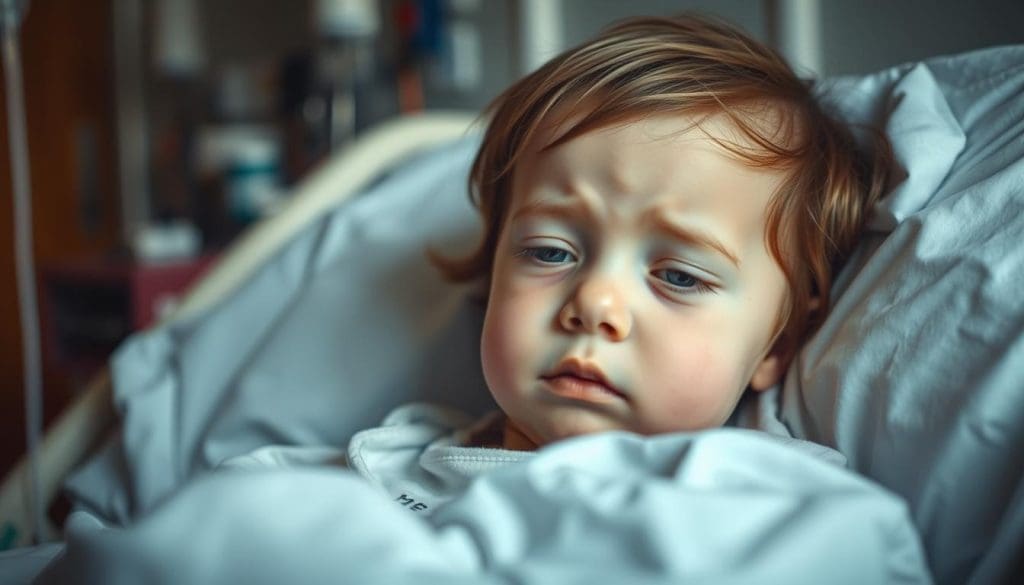
Leukemia is a cancer that affe cts the blood and bone marrow. It’s the most common cancer in kids. About 4,000 children in the United States get leukemia every year.
Childhood leukemia, like acute lymphoblastic leukemia (ALL), hits kids most between 1 and 4 years old. Knowing the risks and symptoms is key for catching it early and treating it well.
Key Takeaways
- Leukemia is the most common cancer in children.
- Approximately 4,000 children are diagnosed with leukemia each year in the U.S.
- Childhood leukemia, like ALL, mostly affects kids between 1 and 4 years old.
- Early detection and treatment are critical for improving outcomes.
- Understanding leukemia symptoms is essential for parents and caregivers.
Understanding Childhood Leukemia
It’s key to understand childhood leukemia to make better treatment plans. Leukemia is a blood cancer that’s the most common in kids. It affects the blood and bone marrow, making it hard for the body to fight off infections and make healthy blood cells.

Types of Childhood Leukemia
There are three main types of leukemia in kids: Acute Lymphoblastic Leukemia (ALL), Acute Myelogenous Leukemia (AML), and Chronic Myelogenous Leukemia (CML). ALL is the most common, making up about 80% of cases. It needs quick treatment because it can progress fast.
AML affects the myeloid cells in the bone marrow and is less common. It’s aggressive and a big threat, mainly to young kids. CML is rare in children and grows slowly.
How Leukemia Affects Children Differently Than Adults
Leukemia in kids is different from adults in many ways. Kids often show symptoms like pale skin, fatigue, and frequent infections. These can look like other common childhood illnesses.
The average age when kids get leukemia is about 6 years old. Most cases happen in kids aged 2“5 years. This shows we need treatments that fit the age of the child.
Peak Age Range for Childhood Leukemia
Research shows that childhood leukemia peaks in a specific age range. It’s most common in kids aged 1 to 4. This group faces the highest risk of getting the disease.

The 1-4 Age Group: Highest Risk Period
Children aged 1 to 4 are more likely to get acute lymphoblastic leukemia (ALL). This is the top leukemia type in kids. Most ALL cases happen in kids aged 2 to 4, making this age critical to watch.
Parents and caregivers should know the signs of leukemia in kids. Look out for constant tiredness, pale skin, and often getting sick. Spotting these cancer childhood symptoms early can lead to quick medical help.
Median Age of Diagnosis
The median age for ALL diagnosis is about 2 years. This shows that very young kids are at the biggest risk. Knowing the age risks helps in catching leukemia early and treating it effectively.
By knowing the peak age and symptoms, parents and doctors can spot leukemia early. This boosts the chances of successful treatment.
Age Distribution of Pediatric Leukemia Cases
Pediatric leukemia cases show a clear age pattern. It’s most common in kids aged 2 to 6 years. Knowing this helps doctors diagnose and treat it better.

Infants (Under 1 Year)
Infants under one year have their own leukemia patterns. Acute lymphoblastic leukemia (ALL) is common here, with a unique genetic profile. Studies suggest genetics and pregnancy factors play a role.
Toddlers and Preschoolers (2-5 Years)
Kids aged 2 to 5 are at the highest risk for leukemia. ALL is the main type in this age. Spotting leukemia symptoms early is key, as symptoms can be hard to identify.
School-Age Children (6-12 Years)
School kids are also at risk, though the rate drops a bit after the peak. ALL is the most common type here too. It’s important to think about leukemia in adults for long-term survival and treatment effects.
Adolescents (13-19 Years)
Teenagers face unique challenges with leukemia. Acute myeloid leukemia (AML) is more common in teens. The question of is leukemia genetic is more pressing, with more family cases found, and genetic counseling advised.
Childhood leukemia’s global burden is mainly in low- and middle-income areas. It’s vital to understand the age patterns to improve treatment and outcomes for all ages.
U.S. Statistics on Childhood Leukemia
Leukemia is a big concern for kids in the U.S. Every year, about 4,000 children get leukemia. This means 4.8 out of every 100,000 kids between 0 and 19 years old get it.

Annual Incidence Rate of 4.8 per 100,000
The rate of 4.8 per 100,000 kids aged 0-19 shows how common leukemia is in kids. It shows we need to keep learning and spreading the word about it.
Key statistics include:
- Every year, about 4,000 kids in the U.S. are diagnosed with leukemia.
- The number of new cases hasn’t changed much in recent years.
- Leukemia is the main type of cancer in kids, making up about 30% of all cases.
Age-Specific Trends in American Children
Leukemia happens more often in certain age groups. The most common time for a diagnosis is between 2 and 5 years old. Kids under 5 are at the highest risk.
Notable age-specific trends include:
- Babies under 1 year face a higher risk because of their genes.
- Kids from 2 to 5 years old are most often diagnosed.
- Older kids and teens have different risks and outcomes.
Regional Variations Within the United States
There are differences in leukemia rates across the U.S. These differences are linked to things like where kids live, their genes, and their family’s income.
Some areas have more cases of leukemia. This might be because of things in the environment, like radiation or chemicals. Knowing these differences helps us focus our efforts to help kids.
Risk Factors for Leukemia in Different Age Groups
Leukemia risk in kids is shaped by genetics, environment, and age. Knowing these factors helps catch the disease early and manage it well.
Genetic Predispositions
Some kids are more likely to get leukemia because of their genes. For example, Down syndrome greatly raises this risk. The National Center for Biotechnology Information says some genetic syndromes also increase leukemia risk in children.
- Down syndrome
- Li-Fraumeni syndrome
- Neurofibromatosis type 1
- Ataxia-telangiectasia
Environmental Factors
Some environmental factors can also raise leukemia risk in kids. This includes ionizing radiation and certain chemicals. Kids who have had chemotherapy or radiation therapy for other cancers are at higher risk too.
- Exposure to ionizing radiation
- Chemical exposure (e.g., benzene)
- Previous cancer treatment
Age-Specific Vulnerabilities
Leukemia risk changes with age in kids. Infants under one are more at risk due to genetics. Older kids might be more affected by environmental factors. Knowing these age-specific risks helps in creating better prevention and treatment plans.
By understanding leukemia risk factors in different age groups, doctors can give more tailored care. This could lead to better outcomes for kids with leukemia.
Gender Differences in Childhood Leukemia
Childhood leukemia shows a clear gender gap, with boys more often affected. This difference is key to understanding the disease’s spread.
Higher Incidence in Boys
Studies have found that leukemia is more common in boys than in girls. The reasons for this are complex, involving genetics, environment, and hormones.
The exact reasons for boys getting leukemia more often are being studied. It’s thought that genetics and environmental factors might be involved.
Age and Gender Correlations
The gender gap in leukemia changes with age. For example, boys most often get leukemia between 2-5 years old. This matches the peak age for leukemia in kids.
Knowing how age and gender affect leukemia is vital. It helps doctors find and help high-risk groups. They should watch for clinical features of leukemia and cancer childhood symptoms in boys at these ages.
By understanding these gender differences, doctors can tailor care better. This helps improve treatment outcomes for their patients.
Global Burden of Childhood Leukemia
There’s been a big change in the global burden of childhood leukemia. Medical science and healthcare have improved a lot. This has changed how often and how many kids get sick and die from it.
Reduction in Incidence of Leukemia
Research shows a drop in childhood leukemia cases worldwide. This is thanks to better ways to find and treat the disease.
Key factors contributing to the reduction include:
- Advancements in chemotherapy and targeted therapies
- Enhanced supportive care for patients
- Better understanding and management of risk factors
The 67% Drop in DALYs for Ages 2-4
A big win in fighting childhood leukemia is the 67% drop in Disability-Adjusted Life Years (DALYs) for kids aged 2-4. This shows how much progress has been made in this age group.
The drop in DALYs shows early diagnosis and treatment work well. Studies say kids in this age group have seen a lot of benefits from better medical care.
Disparities Between High and Low-Income Countries
Even with progress, there’s a big gap in how well kids do with leukemia in rich and poor countries.
Some of the challenges faced by low-income countries include:
- Limited access to advanced diagnostic and treatment facilities
- Shortages of skilled healthcare professionals
- Higher incidence of infections and other complicating factors
It’s important to work on these gaps to make healthcare fair for all kids with leukemia.
Conclusion: Advancements in Understanding and Treating Childhood Leukemia
Childhood leukemia is a complex disease that affects children differently than adults. Knowing the peak age range and risk factors is key for early detection and effective treatment. Institutions like Livhospital.com are committed to helping address the challenges posed by childhood leukemia.
New methods are continually being discovered to improve treatment and decrease the side effects of the disease. Recognizing leukemia symptoms in kids is vital for prompt medical attention. While leukemia in adults and children shares some similarities, the disease manifests differently across age groups. It is essential to acknowledge that leukemia is, in fact, a type of cancer that requires timely and appropriate treatment.
As research advances, the medical community continues to uncover more about leukemia symptoms, risk factors, and effective treatment strategies. By staying informed and supporting ongoing research, we can work towards improving outcomes for children diagnosed with leukemia.
FAQ
What are the common symptoms of leukemia in children?
Symptoms of leukemia in kids include feeling very tired and pale skin. They might also get sick a lot, bruise easily, and have swollen lymph nodes. Other signs are bone or joint pain, not wanting to eat, and losing weight.
What is the most common type of leukemia in children?
Acute Lymphoblastic Leukemia (ALL) is the most common leukemia in kids. It makes up about 80% of all childhood leukemia cases.
Is leukemia in children genetic?
Some genetic mutations can raise the risk of leukemia. But most cases aren’t directly caused by inherited genes. Certain conditions, like Down syndrome, can increase the risk.
What are the risk factors for leukemia in children?
Risk factors include exposure to ionizing radiation and certain genetic conditions. Previous chemotherapy or radiation treatment also increases the risk. Exposure to chemicals like benzene and infections, like Epstein-Barr virus, are other possible risk factors.
Can leukemia in children be cured?
Yes, most children with leukemia can be cured today. The cure rate depends on the leukemia type, the child’s age, and other factors. For ALL, the five-year survival rate is about 90%.
What is the peak age range for childhood leukemia?
The peak age range for childhood leukemia is 1-4 years. The highest incidence rate is around 2-3 years old.
Are boys more likely to develop leukemia than girls?
Yes, boys are slightly more likely to get leukemia than girls. The male-to-female ratio is about 1.2:1.
How does leukemia affect children differently than adults?
Leukemia in kids is more aggressive and fast-growing. But kids also respond better to treatment. Children may have different symptoms and need different treatments than adults.
What are the long-term effects of leukemia treatment in children?
Treatment for leukemia can have long-term effects. Kids might face growth and development problems, fertility issues, and a higher risk of secondary cancers. Yet, many survivors lead healthy, normal lives.
References:
- Lambert, P. C., et al. (2023). Leukemia. StatPearls Publishing. https://www.ncbi.nlm.nih.gov/books/NBK560490/