
Lung cancer is highly aggressive and can progress rapidly. At Liv Hospital, we understand the importance of early detection in improving patient outcomes. The 5-year relative survival rate for lung cancer is about 28-29%. But this rate drops a lot with later-stage diagnosis.
The speed at which lung cancer progresses varies. But it’s key to know the different stages of lung cancer to give timely and effective care. We are committed to delivering world-class healthcare with full support for our patients.
Key Takeaways
- Early detection is key to improving lung cancer survival rates.
- Lung cancer progression can be fast, making timely medical help essential.
- Knowing the stages of lung cancer helps in giving the right care.
- Liv Hospital is dedicated to providing advanced medical care for lung cancer patients.
- The 5-year relative survival rate for lung cancer shows how vital early diagnosis is.
Understanding Lung Cancer: A Brief Overview
It’s important to know about lung cancer to catch it early and treat it well. Lung cancer is a big cause of cancer deaths around the world. So, it’s key to learn about it.
What is Lung Cancer?
Lung cancer starts in the lungs. It happens when lung cells grow too much and don’t stop. This disease is very dangerous because it often doesn’t show symptoms early.
Lung cancer is not just one disease. It’s a group of different cancers, each with its own treatment.
Common Types of Lung Cancer
Lung cancer is mainly divided into two types: non-small cell lung cancer (NSCLC) and small cell lung cancer (SCLC). NSCLC makes up about 85% of cases and includes subtypes like adenocarcinoma and squamous cell carcinoma. SCLC is more aggressive and linked to smoking.
Experts say knowing the difference between NSCLC and SCLC is key. This is because the treatment and outlook for each type are different.
|
Type of Lung Cancer |
Characteristics |
Prevalence |
|---|---|---|
|
Non-Small Cell Lung Cancer (NSCLC) |
Grows and spreads slower than SCLC |
About 85% |
|
Small Cell Lung Cancer (SCLC) |
More aggressive, closely linked to smoking |
About 15% |
Knowing these differences helps doctors create better treatment plans. This can lead to better results for patients.
The Prevalence and Impact of Lung Cancer in the United States
Lung cancer is a big health issue in the U.S. We need to look at the latest numbers and trends. It affects a lot of people.
In 2022, 218,893 new lung cancer diagnoses were recorded in the U.S. The death rate is also high. 131,584 deaths from lung cancer were reported in 2023. This shows we need more research and awareness about lung cancer. .
Current Statistics and Trends
Lung cancer is a big worry in the U.S. It’s the top cause of cancer deaths for both men and women. The numbers have changed due to smoking, environmental factors, and better testing.
The five-year survival rate for lung cancer patients has gotten better. This is thanks to finding cancer early and new treatments. But, lung cancer survival rates are lower than other cancers. We need better ways to screen and treat it.
Demographics Most Affected
Lung cancer hits some groups harder than others. Men used to get it more than women, but the gap is getting smaller. Most cases are in people over 65.
Money and health care access also matter. Poorer communities face higher death rates because they can’t get the care they need. We must work on these issues to help more people.
How Does Lung Cancer Start? Initial Development and Risk Factors
Lung cancer starts with a mix of genetic and environmental factors. Knowing how it begins helps us find ways to stop it early.
Initial Cellular Changes
Lung cancer starts with small changes in lung cells. These changes come from genetic mutations. Carcinogens in tobacco smoke can cause these mutations.
Genetic mutations make cells grow out of control. This is a key sign of cancer. We’ll look at how these changes lead to lung cancer.
How Long Does Lung Cancer Take to Develop?
Lung cancer can take years or even decades to develop. The exact time depends on several factors.
These factors include the type of lung cancer, risk factors, and genetics. We’ll dive into these details.
Risk Factors Accelerating Development
Many things can make lung cancer develop faster. Smoking is the biggest risk, as it exposes lungs to harmful substances. Other risks include radon, asbestos, and chemicals, plus a family history of lung cancer.
Knowing these risks is key to preventing and catching lung cancer early. We’ll talk about how avoiding these risks can help.
Lung Cancer Stages: From Stage1 to Stage4
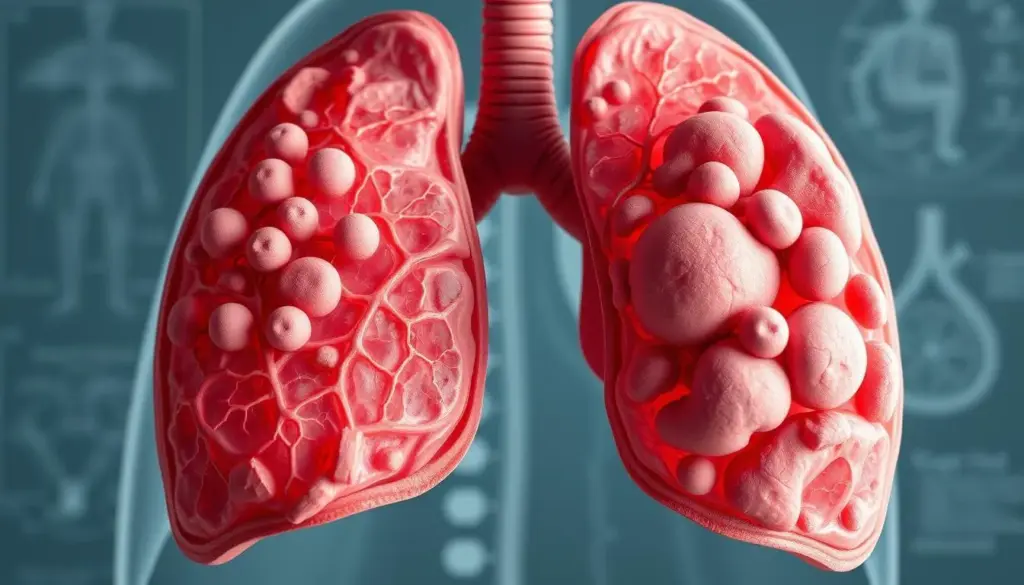
Lung cancer changes a lot as it moves from Stage 1 to Stage 4. Knowing these stages helps patients and doctors make better choices about treatment.
Stage 1: Localized Disease
Stage 1 lung cancer is small and only in the lungs. It hasn’t spread to lymph nodes or other places. At this point, the cancer might not cause symptoms, and treatments work well.
Stage 2: Limited Spread
Stage 2 lung cancer is bigger and might have reached nearby lymph nodes. You might start to feel symptoms like coughing or trouble breathing. Treatment gets more complicated as the disease grows.
Stage 3: Regional Advancement
Stage 3 lung cancer has spread to lymph nodes on the same side of the chest or to other chest structures. Symptoms get worse, and treatment often involves more than one therapy.
Stage 4: Distant Metastasis
Stage 4 lung cancer has spread to distant parts of the body, like the brain, bones, or liver. This is an advanced stage, and treatment aims to manage symptoms and improve life quality.
Understanding lung cancer’s progression through these stages is key. Early detection and timely treatment are vital. We’ll look at each stage in more detail.
|
Stage |
Tumor Size and Spread |
Typical Symptoms |
Treatment Options |
|---|---|---|---|
|
Stage 1 |
Small, localized to lungs |
Often asymptomatic |
Surgery, radiation |
|
Stage 2 |
Larger, may spread to nearby lymph nodes |
Coughing, difficulty breathing |
Surgery, chemotherapy, radiation |
|
Stage 3 |
Spread to lymph nodes or other chest structures |
More pronounced respiratory symptoms |
Combination therapy: chemotherapy, radiation, surgery |
|
Stage 4 |
Distant metastasis |
Varied, depending on metastasis location |
Palliative care, targeted therapy, immunotherapy |
Knowing the stage of lung cancer is essential for choosing the right treatment. As research improves, managing lung cancer at each stage gets better.
How Fast Does Lung Cancer Grow? Progression Rates Explained
Lung cancer grows at different rates in different people. It’s important to know what affects its growth. This knowledge helps in planning treatment and understanding the disease’s impact.
Average Timeline of Progression
Lung cancer’s growth rate varies based on its type. There are two main types: Non-Small Cell Lung Cancer (NSCLC) and Small Cell Lung Cancer (SCLC). NSCLC grows slower than SCLC.
NSCLC Progression: NSCLC makes up about 85% of lung cancers. It grows over years. Its growth rate depends on the stage and genetic mutations.
SCLC Progression: SCLC is more aggressive. It grows and spreads quickly. It can change from early-stage to extensive-stage in months.
Factors Affecting Progression Speed
Several factors can change how fast lung cancer grows. These include:
- Genetic Mutations: Certain genetic changes can slow down lung cancer growth. For example, some EGFR mutations do.
- Stage at Diagnosis: The cancer’s stage at diagnosis affects its growth. Early-stage cancers grow slower than later-stage ones.
- Overall Health: A person’s overall health and any other health issues can also affect lung cancer growth.
- Treatment Response: How well the cancer responds to treatment can slow down its growth.
Differences Between Cancer Types
NSCLC and SCLC grow at different rates. NSCLC is slower, while SCLC is aggressive. Knowing these differences helps in choosing the right treatment.
|
Lung Cancer Type |
Typical Growth Rate |
Average Progression Time |
|---|---|---|
|
NSCLC |
Slow to Moderate |
Years |
|
SCLC |
Rapid |
Months |
Knowing how lung cancer grows and what affects it helps in making better treatment choices. It’s important for both patients and healthcare providers.
Early Stages of Lung Cancer: Recognizing Warning Signs
Lung cancer in its early stages can be tricky to spot because its symptoms are not clear-cut. It’s a complex disease, and catching it early is key to treating it effectively.
Common and Uncommon Early Symptoms
Early lung cancer symptoms can be mild and easily confused with other, less serious issues. Common signs include a persistent cough, coughing up blood, and feeling short of breath. Less common symptoms might include pain in the chest, back, or shoulders, or frequent respiratory infections like bronchitis or pneumonia.
Key early symptoms to watch out for:
- Coughing that doesn’t go away or gets worse
- Coughing up blood or rust-colored sputum
- Chest pain that worsens with deep breathing, coughing, or laughing
- Recurring respiratory infections
Challenges in Early Detection
Finding lung cancer early is tough because its early symptoms are not specific. Many people don’t notice symptoms until the disease has spread. Also, lung cancer often affects smokers, who might also have COPD, making it harder to spot early.
Screening Recommendations
Screening for lung cancer is advised for those at high risk, like heavy smokers. The best test is low-dose computed tomography (LDCT). It’s better at finding lung cancer early, when it’s easier to treat.
Screening guidelines typically recommend LDCT for:
- Adults aged 50 to 80 years
- Those who have a 20 pack-year smoking history
- Current smokers or those who have quit within the past 15 years
How Long From Stage1 to Stage4 Cancer? Progression Timeline
The journey from Stage 1 to Stage 4 lung cancer is complex and varies among individuals. It’s key for patients and doctors to understand this to make the best treatment choices.
Typical Progression Timelines
Lung cancer progression timelines vary widely. It can take from a few months to several years to go from Stage 1 to Stage 4. Early-stage lung cancer grows slowly, but it speeds up once it reaches a later stage.
A study in the Journal of Thoracic Oncology showed the average time to progress from Stage 1 to Stage 4 is about 2-3 years. But, this time can change based on the cancer type, the patient’s health, and treatment success.
Individual Variation Factors
Many factors affect how fast lung cancer progresses. These include:
- Genetic mutations: Some genetic changes can speed up or slow down cancer growth.
- Tumor biology: How aggressive the tumor is can also impact progression speed.
- Patient’s overall health: Existing health issues can affect the body’s fight against cancer.
- Treatment response: How well treatments like surgery, chemotherapy, and radiation work can greatly influence the timeline.
Case Studies and Research Findings
Case studies and research offer insights into lung cancer progression. For example, a study on Stage 1 NSCLC found that surgery slowed down progression significantly compared to not having surgery.
Another study showed the importance of early detection with lung cancer CT scans. Early detection through screening led to better outcomes and slower progression.
These studies highlight the complexity of lung cancer progression. They show the need for personalized treatment plans that consider individual factors.
Diagnostic Methods: From Lung Cancer CT Scan to Stage4 Confirmation
Lung cancer diagnosis uses several key methods. These include CT scans, biopsies, and biomarker tests. These steps are vital for finding out if you have lung cancer, what type it is, and how far it has spread. This information helps doctors decide on the best treatment.
Imaging Technologies
Imaging technologies are key in diagnosing and staging lung cancer. The most used tool is the CT scan. It gives detailed images of the lungs, helping spot tumors and understand their size and location.
CT scans are great for finding lung nodules and seeing if cancer has spread to lymph nodes or other organs. Sometimes, a PET scan is added to a CT scan. This helps show how active the tumors are.
Biopsy and Pathology Reports
A biopsy takes a tissue sample from a tumor for examination. It’s the best way to confirm lung cancer and find out its type. This could be adenocarcinoma, squamous cell carcinoma, or small cell carcinoma.
Pathology reports give detailed info on the tumor. They tell about its type, grade, and molecular features. This info is key for choosing the right treatment.
Biomarkers and Blood Tests
Biomarkers are molecules in blood or tissues that show if something is wrong. In lung cancer, certain biomarkers help find patients who can benefit from specific treatments.
Blood tests, or liquid biopsies, can find tumor DNA or biomarkers in the blood. This gives insight into the tumor’s genetics. It helps doctors make treatment plans and check how well treatments are working.
We combine these methods to accurately diagnose and stage lung cancer. This ensures patients get the right care for their condition.
Survival Rates Across Different Lung Cancer Stages
Knowing survival rates is key for lung cancer patients. It gives them a glimpse of their future. Survival rates show how many people live for 5 years after being diagnosed with cancer.
5-Year Survival Statistics by Stage
The 5-year survival rate for lung cancer changes with the stage. For stage 1, it’s about 64.7%. But, it falls to 35.7% for stages 2 and 3. And for stage 4, it’s just 9.7%. These numbers highlight the need for early detection.
Factors Influencing Survival Rates
Many things affect lung cancer survival rates. The stage at diagnosis is very important. Early stages are easier to treat. Other factors include the patient’s health, the type of lung cancer, and the treatment plan.
For example, people with non-small cell lung cancer (NSCLC) often do better than those with small cell lung cancer (SCLC).
Recent Improvements in Outcomes
Lately, lung cancer survival rates have gotten better. New treatments like targeted therapies and immunotherapies are helping. These treatments are showing great promise, even for advanced cases.
Also, better surgery and radiation techniques are leading to more survivors. We’re dedicated to giving our patients the best care. By using the latest treatments, we aim to improve life for lung cancer patients.
Treatment Approaches and Their Impact on Disease Progression
Effective treatments are key in managing lung cancer and slowing its growth. We will look at the different treatments available, their good points, and their limits.
Surgery and Radiation Therapy
Surgery and radiation are main treatments for lung cancer, mainly in early stages. Surgical resection is the best hope for cure in localized disease. New surgical methods, like video-assisted thoracic surgery (VATS), have made recovery faster and outcomes better. For those not fit for surgery or with advanced disease, stereotactic body radiation therapy (SBRT) is used.
Chemotherapy Protocols
Chemotherapy is a key part of lung cancer treatment, mainly for advanced stages. Many chemotherapy plans are used, often with other treatments. The choice of chemotherapy depends on the lung cancer type, patient health, and other factors.
Targeted Therapies and Immunotherapy
Targeted therapies and immunotherapy have changed lung cancer treatment. Targeted therapies target specific cancer drivers, like EGFR mutations or ALK rearrangements. Immunotherapy, including checkpoint inhibitors, boosts the immune system against cancer. These treatments have greatly improved survival and quality of life for many.
Multidisciplinary Treatment Teams
A multidisciplinary treatment team is vital in lung cancer management. A team of thoracic surgeons, medical oncologists, radiation oncologists, radiologists, and pathologists work together. They create a treatment plan that fits the patient’s needs. This teamwork ensures a well-rounded approach to treating the disease.
Stage4 Lung Cancer Final Weeks: What to Expect
Knowing what happens in the final weeks of Stage 4 lung cancer is key. It helps in giving the best care and support to patients and their families. As the disease gets worse, patients face many physical symptoms and changes.
Physical Symptoms and Changes
In the final weeks, patients go through big physical changes. They might feel more tired, have trouble breathing, feel pain, and lose their appetite. It’s very important to manage these symptoms well to keep the patient comfortable and improve their quality of life.
Some common symptoms include:
- Dyspnea (shortness of breath)
- Pain in the chest, back, or other areas
- Fatigue or extreme weakness
- Coughing or changes in cough
- Loss of appetite or weight loss
Palliative Care Approaches
Palliative care is very important in the final weeks of Stage 4 lung cancer. It focuses on easing symptoms, pain, and stress. Palliative care teams work closely with patients and their families to create a care plan that meets their needs and priorities.
Palliative care includes:
- Symptom management through medication and other interventions
- Emotional and spiritual support
- Assistance with decision-making and advance care planning
- Coordination of care among different healthcare providers
Supporting Patients and Families
Supporting patients and their families in the final weeks is a big challenge. It involves medical care, emotional, practical, and sometimes spiritual support. Families are very important in making care decisions, providing emotional support, and helping with daily tasks.
Ways to support include:
- Encouraging open communication about needs and fears
- Providing practical help with daily tasks
- Ensuring access to palliative care services
- Offering emotional and spiritual support
By understanding what to expect in the final weeks of Stage 4 lung cancer and using palliative care and support, patients and their families can face this tough time more easily and with compassion.
Slowing the Deterioration: Strategies to Extend Survival
To slow lung cancer’s decline, a mix of treatments, lifestyle changes, and therapies is needed. These methods can help patients live longer and feel better.
Medical Interventions
Medical treatments are key in fighting lung cancer. They include:
- Targeted Therapies: Drugs that target cancer cells’ genetic mutations, like EGFR and ALK inhibitors.
- Immunotherapy: Treatments that boost the immune system to fight cancer, including checkpoint inhibitors like pembrolizumab.
- Chemotherapy: Traditional treatment that kills cancer cells, often used with other therapies.
These treatments can be customized for each patient, helping slow the cancer’s growth.
Lifestyle Modifications
Changing your lifestyle can also help slow lung cancer. Key changes include:
- Quitting Smoking: Stopping smoking greatly improves lung cancer patients’ outcomes.
- Dietary Changes: Eating a balanced diet with fruits, vegetables, and whole grains supports health.
- Regular Exercise: Physical activity helps manage symptoms and improves life quality.
By making these lifestyle changes, patients can improve their treatment results and overall health.
Complementary Therapies
Complementary therapies offer extra support for lung cancer patients. They include:
- Acupuncture: A technique that uses thin needles to manage symptoms like pain and nausea.
- Mindfulness and Meditation: Practices that reduce stress and improve mental health.
- Nutritional Supplements: Some supplements may help with treatment side effects, but always talk to a doctor first.
Adding these therapies to a treatment plan helps patients deal with the disease and its treatment better.
By using medical treatments, lifestyle changes, and complementary therapies together, lung cancer patients can slow disease progression. This can improve their survival and quality of life.
Conclusion: Navigating Lung Cancer’s Challenging Journey
Lung cancer is a tough disease to deal with. It needs a deep understanding of its stages and treatment choices. This article has covered the basics of lung cancer, from the start to the later stages. It also stressed the importance of catching it early and getting the right treatment.
At Liv Hospital, we aim to give top-notch healthcare to international patients. Our team creates custom treatment plans for each patient. This ensures they get the best care all along their lung cancer journey.
Knowing about lung cancer and its treatments helps patients deal with their diagnosis better. We’re here to offer quality care and support to those fighting lung cancer. Our goal is to help them face this tough journey with hope and kindness.
FAQ
How quickly does lung cancer progress from Stage1 to Stage4?
Lung cancer’s progression from Stage1 to Stage4 varies. It depends on the cancer type, the person’s health, and other factors. It can take from a few months to a few years.
What are the early symptoms of lung cancer?
Early lung cancer symptoms include a persistent cough and chest pain. You might also cough up blood or feel short of breath. Fatigue, weight loss, and recurring infections are less common signs.
How is lung cancer diagnosed and staged?
Doctors use CT scans, biopsy, and pathology reports to diagnose lung cancer. Biomarkers and blood tests help too. Staging shows how far the disease has spread, from local to widespread.
What are the treatment options for lung cancer?
Treatments include surgery, radiation, chemotherapy, targeted therapies, and immunotherapy. The right treatment depends on the cancer stage, type, and the patient’s health.
How can the progression of lung cancer be slowed?
Slowing lung cancer progression involves targeted therapies and immunotherapy. Quitting smoking and eating healthy are also key. Acupuncture and meditation can help too.
What can be expected in the final weeks of Stage4 lung cancer?
In the last weeks of Stage4 lung cancer, symptoms worsen. You might feel more pain, fatigue, and have trouble breathing. Palliative care is vital in managing these symptoms and supporting patients and their families.
What is the difference between NSCLC and SCLC?
NSCLC and SCLC are lung cancer types. NSCLC is more common and grows slower. SCLC is aggressive and often linked to smoking.
How does lung cancer start and develop?
Lung cancer begins with changes in lung cells, often due to smoking or genetic mutations. It grows over time, influenced by smoking, environmental factors, and genetics.
What are the survival rates for lung cancer by stage?
Survival rates vary by stage. Early stages have better survival rates, while advanced stages have poorer ones. New treatments have improved survival rates across all stages.
How long does lung cancer take to develop?
Lung cancer can take years or even decades to develop. The speed of progression depends on risk factors and individual health.
References
National Center for Biotechnology Information. Performance-Status Deterioration during Sequential Chemo-Radiotherapy as a Predictive Factor in Locally Advanced Non-Small Cell Lung Cancer. Retrieved from https://pubmed.ncbi.nlm.nih.gov/36826120/



 Departments
 Related Videos
 Our Doctors
 News
News