
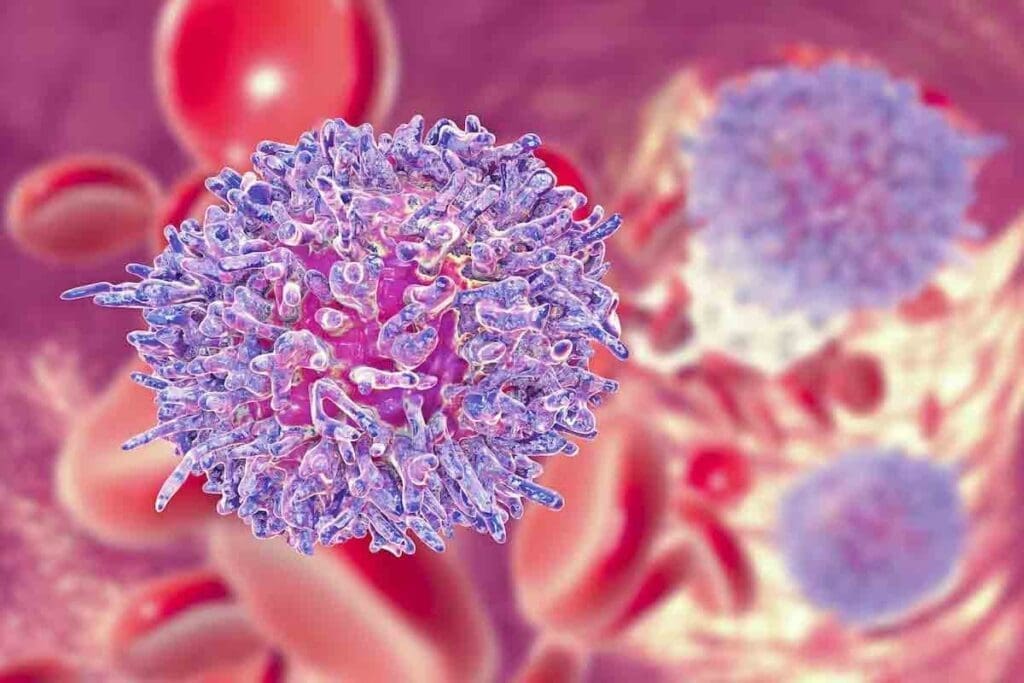
Chronic Lymphocytic Leukemia (CLL) is a blood and bone marrow cancer. Knowing about CLL life expectancy is key for patients and their families. Thanks to new treatments, the CLL survival rate has gotten better, giving hope to those diagnosed.Learn lymphocytic leukemia survival rate facts and what to expect for CLL patients.
The 5-year relative survival rate for CLL patients is about 88-89%. This shows CLL has a high survival rate compared to other cancers. Life expectancy depends on age, health, and how well treatment works. At Liv Hospital, we use our expertise and care to help CLL patients live better.
Key Takeaways
- CLL has a relatively high 5-year relative survival rate.
- Recent advances in treatment have improved CLL life expectancy.
- Factors such as age and overall health influence CLL survival.
- Liv Hospital offers internationally recognized expertise in CLL care.
- Patient-centered care is key for better CLL outcomes.
Understanding Chronic Lymphocytic Leukemia (CLL)

CLL, or Chronic Lymphocytic Leukemia, is a cancer that makes too many lymphocytes in the body. These cells build up in the blood and bone marrow. This leads to an overproduction of abnormal white blood cells.
What Is CLL and How It Develops
CLL happens when the bone marrow makes too many lymphocytes. These are white blood cells important for the immune system.
Having too many of these cells can cause problems like anemia, infections, and bleeding issues. Knowing how CLL develops helps with early detection and treatment.
Distinguishing CLL from Other Leukemias
CLL is different from other leukemias because it grows slowly over years. It’s not like acute leukemias. It also differs from Chronic Myeloid Leukemia (CML) in the cells it affects and how it shows up clinically.
To diagnose CLL, doctors use blood tests and bone marrow exams. These help find abnormal lymphocytes. Knowing these differences is key for the right diagnosis and treatment plan.
Current Lymphocytic Leukemia Survival Rate Statistics

Knowing the survival rates for Chronic Lymphocytic Leukemia (CLL) is key for patients and doctors. Recent stats give us insights into CLL’s prognosis and treatment success.
5-Year Relative Survival Rates of 88-89%
The 5-year relative survival rate is a key indicator for CLL patients. Recent data shows CLL patients have a 88-89% chance of survival for 5 years after diagnosis. a hematologist, notes, “This is a big improvement from before, thanks to better treatments.”
10-Year Survival Outlook
The 5-year survival rate gives us a quick look at prognosis. But the 10-year outlook shows long-term survival chances. A recent study published in the Journal of Clinical Oncology found CLL patients have a 65-70% chance of survival for 10 years. This shows modern treatments can lead to long-term survival for many CLL patients.
“The improvement in CLL survival rates is a testament to the advancements in targeted therapies and immunotherapy approaches.” –
Oncologist
Comparing CLL Survival to Other Cancers
CLL survival rates are generally better than some other cancers and leukemias. For example, CLL’s 5-year survival rate (88-89%) is higher than AML’s (40%). It’s important to consider age, health, and genetic markers when comparing CLL to other cancers. Here’s a comparison:
| Cancer Type | 5-Year Relative Survival Rate |
| CLL | 88-89% |
| AML | 40% |
| Diffuse Large B-Cell Lymphoma | 63-70% |
This comparison shows CLL patients have a relatively good prognosis. It stresses the need for personalized treatment plans and ongoing CLL research.
Key Fact #1: CLL Survival Rates Have Improved Significantly
In recent years, CLL survival rates have seen a big jump. This is thanks to new treatments. These advances have greatly improved how we manage Chronic Lymphocytic Leukemia.
Historical Survival Trends
Key statistics highlighting this trend include:
- The 5-year survival rate is now about 88-89%.
- Survival rates have improved for all ages, but older patients face more challenges.
- New treatments like targeted therapies and immunotherapies have led to better results.
Factors Driving Improved Outcomes
Several things have helped improve CLL survival rates. These include:
- Advancements in Targeted Therapies: New treatments like BTK and BCL-2 inhibitors have changed CLL care. They are more effective and have fewer side effects.
- Personalized Medicine: Tailored treatments based on each patient’s needs and genetics have made care better.
- Improvements in Supportive Care: Better supportive care has also helped patients do better.
, the trend is clearly positive. Ongoing research and development will likely keep improving CLL survival rates.
Key Fact #2: CLL Is Rarely Considered Terminal at Diagnosis
CLL patients now have a better outlook. This is thanks to new treatments and a deeper understanding of the disease. Most CLL cases are not seen as terminal at diagnosis anymore.
When CLL May Become Life-Threatening
Even though CLL is not usually fatal at first, it can become serious. This happens when CLL gets worse, affecting lymph nodes, organs, or causing severe blood issues. Also, certain genetic changes can make CLL more aggressive.
CLL can sometimes turn into a more aggressive lymphoma, known as Richter’s transformation. This change is linked to a worse prognosis. Knowing these risks helps doctors choose the best treatments for patients.
Refractory CLL and Its Implications
Refractory CLL is when the disease doesn’t respond to treatment or comes back quickly. This makes treatment harder. But, new drugs like BTK and BCL-2 inhibitors have helped some patients.
Despite these advances, managing refractory CLL is complex. Doctors need to tailor treatments to each patient. Ongoing research aims to find better ways to help these patients.
Key Fact #3: Understanding CLL Cure Rate vs. Remission
It’s important for CLL patients to know the difference between a cure and remission. CLL, or Chronic Lymphocytic Leukemia, is a complex disease with different treatment results. The terms “cure” and “remission” mean different things in CLL.
Is CLL Ever Considered Curable?
The idea of a “cure” for CLL is complex. Right now, CLL is rarely considered curable with standard treatments. This is because CLL often has hidden disease that current tests can’t find. But, new treatments have made things better for patients.
“The goal of treatment has shifted from just controlling the disease to getting deep and lasting remissions,” a study on CLL treatment says. This change shows how important long-term remission is.
Long-Term Remission Possibilities
Long-term remission is a real goal for many CLL patients. With the right treatment, patients can live without detectable disease or with much less disease. This improves their quality of life. How likely a patient is to get long-term remission depends on their health, genetic markers, and CLL stage.
A hematologist, says, “Getting long-term remission is not just about the treatment. It’s also about how well the patient responds and manages side effects.”
Measuring Treatment Success
Success in CLL treatment is measured in several ways. These include how deep the remission is, how long the disease doesn’t get worse, and how long the patient lives. New tests and imaging studies help see how well treatment is working.
- Depth of remission: How much the cancer has been reduced.
- Progression-free survival: The length of time during which the disease does not progress.
- Overall survival: The duration of time from diagnosis or treatment initiation that a patient is alive.
Understanding these measures helps doctors make treatment plans that fit each patient’s needs. This can lead to better results.
Key Fact #4: Life Expectancy with Chronic Lymphocytic Leukemia by Stage
CLL life expectancy depends a lot on the disease stage. Early stages usually have a better outlook. The Rai staging system helps classify CLL into stages. This helps predict how well a patient will do and what treatment they might need.
Stage 0 CLL Life Expectancy
Stage 0 CLL means cancer cells are in the blood but no other signs of the disease are present. People with this stage often live 10-20 years or more without needing treatment.
Stage I and II Prognosis
When CLL moves to Stage I and II, lymph nodes or the spleen might get bigger. At these stages, the disease is more manageable. Life expectancy is usually over a decade, depending on other health issues.
Advanced Stage (III and IV) Outlook
Advanced CLL (Stages III and IV) means the disease has spread more. This includes anemia, low platelet count, and bigger lymph nodes or spleen. The outlook is less good, with a shorter life expectancy than earlier stages.
The table below shows life expectancy for different CLL stages, based on the Rai system.
| CLL Stage | Characteristics | Median Life Expectancy |
| Stage 0 | Cancerous cells in blood only | 10-20+ years |
| Stage I | Enlarged lymph nodes | 8-15 years |
| Stage II | Enlarged spleen or liver | 6-12 years |
| Stage III | Anemia present | 3-6 years |
| Stage IV | Low platelet count | 2-5 years |
It’s important to remember these are just estimates. Actual outcomes can vary a lot. This depends on genetic markers, overall health, and how well a patient responds to treatment.
Key Fact #5: Age and Genetic Factors Significantly Impact Prognosis
Age and certain genetic markers greatly affect CLL patients’ outcomes. CLL is a complex disease. Knowing these factors helps doctors choose the best treatment.
CLL Survival Rates by Age Group
Age is a big factor in CLL prognosis. Younger patients usually have better survival rates than older ones. Studies show that CLL patients under 50 have a better outlook.
- Patients under 50: 5-year relative survival rate is approximately 92%
- Patients between 50-69: 5-year relative survival rate is around 85%
- Patients 70 and above: 5-year relative survival rate is about 70%
These numbers show how age affects CLL survival rates. But, other factors like health and genetics also matter for a full understanding of a patient’s prognosis.
Important Genetic Markers
Genetics are key in CLL prognosis. Certain mutations can change how the disease progresses and responds to treatment. Important genetic markers include:
- Deletion 13q14: Often associated with a favorable prognosis
- Deletion 11q: Linked to a more aggressive disease course
- TP53 mutation: Associated with poor prognosis and resistance to certain treatments
- IGHV mutation status: Mutated IGHV is generally associated with better outcomes
Understanding these genetic markers helps doctors create personalized treatment plans. This can lead to better outcomes for patients.
By looking at both age and genetics, doctors can better understand CLL prognosis. This leads to more effective disease management.
Key Fact #6: Modern Treatments Have Transformed CLL Management
Chronic Lymphocytic Leukemia (CLL) treatment has changed a lot with new treatments. CLL is a complex disease. Over the last ten years, how we treat it has changed a lot.
Shift from Chemotherapy to Targeted Therapies
Oldly, chemotherapy was key in treating CLL. But now, targeted therapies are more common and work better. These therapies target specific parts of CLL cells, helping to protect normal cells.
Targeted therapies have improved patient outcomes by being easier to handle and less harmful than old treatments. This change has greatly improved CLL patients’ lives.
BTK Inhibitors and BCL-2 Inhibitors
Two types of targeted therapies are making a big difference: BTK inhibitors and BCL-2 inhibitors. BTK inhibitors, like ibrutinib and acalabrutinib, block an important enzyme for CLL cells. This stops them from growing and living.
| BTK Inhibitor | Response Rate | Progression-Free Survival |
| Ibrutinib | 80-90% | 5-year PFS: 70-80% |
| Acalabrutinib | 85-95% | 4-year PFS: 80-90% |
BCL-2 inhibitors, like venetoclax, target a protein that helps CLL cells live too long. When used with BTK inhibitors, they work even better. This leads to deeper and longer-lasting remissions.
Immunotherapy Approaches
Immunotherapy is also a new and promising way to treat CLL. Monoclonal antibodies, like rituximab and obinutuzumab, mark CLL cells for the immune system to destroy.
By combining targeted therapies and immunotherapy, CLL treatment has gotten much better. Patients now have more effective and easier-to-take treatments. Researchers are always looking for new ways to help CLL patients even more.
Key Fact #7: Early Intervention Isn’t Always Necessary
CLL treatment doesn’t start right away after diagnosis. Often, doctors choose a watch and wait approach. This means they keep a close eye on the patient without starting treatment right away.
Watch and Wait Approach Explained
The watch and wait approach is for CLL patients with mild symptoms. It involves regular check-ups and tests to watch the disease. This strategy helps doctors see how the disease is progressing.
Key components of the watch and wait approach include:
- Regular blood tests to monitor lymphocyte counts
- Physical examinations to check for enlarged lymph nodes or spleen
- Imaging tests as needed
- Monitoring for symptoms that may indicate disease progression
When Treatment Should Begin
Treatment for CLL starts when symptoms appear or the disease gets worse. The decision to start treatment depends on several factors. These include:
| Indicator | Description |
| Significant anemia | Low red blood cell count |
| Thrombocytopenia | Low platelet count |
| Symptomatic lymphadenopathy | Enlarged lymph nodes causing discomfort |
| Splenomegaly | Enlarged spleen |
Impact on Long-Term Outcomes
The watch and wait approach is effective for many CLL patients. It allows them to delay treatment and its side effects. Research shows that early treatment doesn’t always improve survival for patients without symptoms.
A study published in the Journal of Clinical Oncology found that:
“Immediate treatment with chlorambucil did not improve overall survival compared with a watch and wait approach in patients with early-stage CLL.”
This approach highlights the need for personalized care. It ensures treatment starts when it’s most beneficial for the patient.
Additional Prognostic Factors Affecting CLL Outcomes
Knowing the extra factors that affect CLL outcomes is key. The stage at diagnosis is important, but other factors also play a big role. These factors help predict how the disease will progress and how well it will respond to treatment.
Lymphocyte Doubling Time
The lymphocyte doubling time (LDT) is a key factor in CLL. It shows how fast the lymphocytes in the blood double. A quicker doubling time means a more aggressive disease.
Research shows that those with a doubling time under 12 months face a tougher prognosis. This is compared to those with a longer doubling time.
Beta-2 Microglobulin Levels
Beta-2 microglobulin (B2M) is a protein on many cells, including lymphocytes. High B2M levels in the blood are linked to a worse CLL prognosis. This is because high levels suggest a bigger tumor burden and more advanced disease.
Comorbidities and Overall Health
Comorbidities and the patient’s overall health also affect CLL outcomes. Patients with serious health issues, like heart disease or diabetes, may face a poorer prognosis. This is because they may not handle treatments well and are at higher risk for complications.
| Prognostic Factor | Description | Impact on CLL Outcome |
| Lymphocyte Doubling Time | Measures how quickly lymphocytes double in number | Shorter LDT associated with poorer prognosis |
| Beta-2 Microglobulin Levels | Protein levels indicating tumor burden | Elevated levels associated with worse prognosis |
| Comorbidities | Presence of other health conditions | Significant comorbidities associated with poorer outcomes |
These extra factors give doctors valuable insights. They help assess the risk and choose the best treatment for CLL patients. By looking at these factors, doctors can tailor care and improve patient results.
CLL Life Expectancy in 2023: Latest Research and Findings
Research and clinical trials are changing how we see CLL life expectancy in 2023. Studies have found better survival rates and treatment results for CLL patients.
Recent Clinical Trial Results
New clinical trials show promising results for CLL treatment. For example, combining BTK and BCL-2 inhibitors has led to better survival times.
- Improved Progression-Free Survival: Studies have reported improved progression-free survival rates with combination therapies.
- Enhanced Overall Survival: Emerging data suggests that overall survival rates are also improving with the advent of targeted therapies.
- Reduced Toxicity: Newer treatments have shown a more favorable toxicity profile compared to traditional chemotherapy.
Emerging Predictive Factors
Researchers are finding new ways to predict how CLL will progress. These include genetic mutations, how fast lymphocytes double, and beta-2 microglobulin levels.
- Genetic mutations such as TP53 and NOTCH1
- Lymphocyte doubling time
- Beta-2 microglobulin levels
These factors help doctors predict how well a patient will do and choose the best treatment.
Future Treatment Directions
The future of CLL treatment is exciting with ongoing research. Some promising areas include:
- Personalized Medicine: Tailoring treatment based on individual genetic profiles.
- Immunotherapy: Exploring the use of CAR-T cell therapy and other immunotherapies.
- Combination Therapies: Testing how well different targeted therapies work together.
These advancements could lead to even better CLL life expectancy and quality of life for patients.
Conclusion: Living Well with CLL
Knowing the survival rate for lymphocytic leukemia is key for those with Chronic Lymphocytic Leukemia (CLL). With the right management and treatment, many CLL patients can live active lives. Thanks to new treatments and a better understanding of CLL, the prognosis has greatly improved.
Managing CLL well means regular check-ups, quick action when needed, and a healthy lifestyle. It’s important to work closely with doctors to create a treatment plan that fits your needs. Staying up-to-date with CLL treatment news helps patients make better care choices.
Even though CLL is a long-term condition, many patients can stay in remission for a long time. Age, genetic markers, and overall health are important in predicting CLL’s course. By focusing on these and using modern treatments, patients can enjoy a better quality of life and longer life expectancy.
FAQ
What is the overall survival rate for CLL patients?
CLL patients have a 5-year survival rate of about 88-89%. This shows they have a better chance of survival compared to other cancers.
How does CLL survival rate vary by stage?
CLL survival rates change a lot based on the stage. Stage 0 patients can live almost as long as healthy people. But, stages III and IV have a worse outlook.
What are the factors that influence CLL life expectancy?
Several things can affect how long CLL patients live. These include age, genetic markers, how fast the lymphocytes double, beta-2 microglobulin levels, and other health issues.
Is CLL considered a terminal illness at diagnosis?
No, CLL is not usually seen as a death sentence at first. Many patients can live for years without treatment. And, new treatments have made outcomes better.
Can CLL be cured?
CLL can’t be cured for most people. But, some patients can stay in remission for a long time with treatment. Researchers are working on new ways to cure it.
How do targeted therapies impact CLL survival rates?
Targeted therapies, like BTK and BCL-2 inhibitors, have greatly improved CLL treatment. They offer better and more manageable options for patients.
What is the watch and wait approach in CLL management?
The watch and wait approach means not treating CLL right away. It’s for patients who might not need treatment for years. Treatment starts when it’s needed.
How does age affect CLL prognosis?
Age is a big factor in CLL prognosis. Older patients usually have a worse outlook because of other health issues and less tolerance to treatment.
What is the impact of genetic factors on CLL survival rates?
Genetic factors, like del(17p) or TP53 mutation, can greatly affect CLL survival. Some mutations mean a poorer prognosis.
What are the emerging predictive factors in CLL treatment?
New genetic markers and biomarkers are being studied. They aim to improve CLL treatment and make therapy more personalized.
Reference
- MedlinePlus. (2016, July 27). Soft tissue sarcoma. U.S. National Library of Medicine. Retrieved fromhttps://medlineplus.gov/softtissuesarcoma.html



 Departments
 Related Videos
 Our Doctors
 News
News