

At Liv Hospital, we use the MAG 3 renal scan Lasix test to evaluate how well your kidneys function and their structure. This advanced imaging study also helps assess how urine flows from the kidneys to the bladder, making it essential for detecting and managing various kidney problems.
The MAG 3 renal scan with Lasix involves a small dose of radioactive material injected into the bloodstream. It tracks how the kidneys filter and drain urine, while Lasix helps determine whether the kidneys can empty properly.
At Liv Hospital, we follow strict safety protocols and use advanced methods to interpret renography results accurately. Our expert team ensures that every MAG 3 renal scan Lasix procedure is done with care, precision, and a focus on clear, compassionate communication with our patients.
Key Takeaways
- Understanding the purpose and procedure of the MAG 3 renal scan with Lasix.
- The importance of renography in evaluating kidney function and structure.
- How Lasix is used to assess kidney drainage.
- The role of MAG 3 renal scan in diagnosing kidney disorders.
- Liv Hospital’s commitment to delivering accurate and compassionate care.
Understanding MAG 3 Renal Scan with Lasix
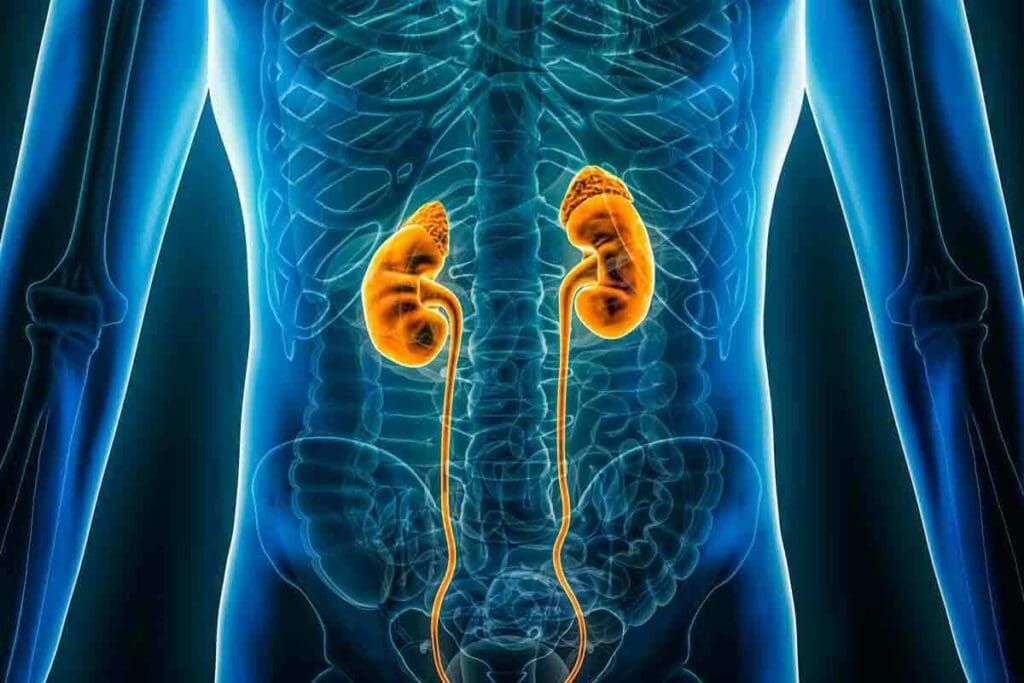
In nuclear medicine, the MAG 3 renal scan is key for checking kidney function. It helps see how well the kidneys work and spot urinary tract problems.
What is a MAG 3 Renal Scan?
A MAG 3 renal scan uses a tiny bit of radioactive material to see the kidneys and urinary tract. It shows how well the kidneys function and if there are any blockages.
The MAG3 tracer is chosen for its high extraction fraction. This makes it great for patients with kidney issues. The scan involves injecting the MAG3 tracer into a vein, followed by imaging with a gamma camera.
The Role of Lasix in Renal Scanning
Lasix, or furosemide, is a diuretic that’s important in renal scanning. It’s used during a MAG 3 scan to tell if urinary tract problems are blockages or not.
- Enhances diagnostic accuracy by increasing urine flow
- Helps identify obstructions in the urinary tract
- Assists in evaluating the functional significance of urinary tract dilatation
Lasix helps doctors understand how the kidneys react to more urine flow. This is key to diagnosing some conditions.
Differences Between MAG3 and DTPA Tracers
MAG3 and DTPA are both used in renal scans, but for different reasons. They have unique properties for different clinical needs.
| Tracer | Characteristics | Clinical Use |
| MAG3 | High extraction fraction, better for impaired renal function | Preferred for patients with kidney disease |
| DTPA | Primarily used for measuring glomerular filtration rate (GFR) | Ideal for assessing GFR in patients with relatively normal kidney function |
The choice between MAG3 and DTPA depends on the specific clinical question and patient factors. Knowing these differences is key to understanding renal scan results.
The Purpose and Clinical Applications
The MAG 3 renal scan with Lasix is key in nephrology. It shows how well the kidneys work and their structure. This scan is vital for checking and treating many kidney problems.
Evaluating Kidney Structure and Function
The MAG 3 renal scan with Lasix checks the kidneys’ structure and function. It does this by looking at how the kidneys handle the MAG 3 tracer. The scan gives important info on:
- Renal blood flow and perfusion
- Tracer uptake and extraction efficiency
- Excretion rates and patterns
This info helps doctors understand kidney function. It’s key for diagnosing and treating kidney issues.
Identifying Urinary Tract Obstructions
The MAG 3 renal scan with Lasix also finds urinary tract blockages. Lasix (furosemide) is given during the scan. This helps see how well the kidneys handle a diuretic. It’s great for:
- Diagnosing obstructive uropathy
- Differentiating between obstructive and non-obstructive hydronephrosis
- Evaluating the severity of urinary tract obstructions
The scan’s dynamic info on renal function and drainage is very helpful. It’s key in diagnosing and treating urinary tract blockages.
Assessing Differential Renal Function
The MAG 3 renal scan with Lasix also checks how each kidney works. This is important for:
- Evaluating patients with unilateral kidney disease
- Planning surgical interventions, such as nephrectomy or renal transplantation
- Monitoring the progression of renal disease
It gives a clear view of each kidney’s function. This helps doctors make better decisions for patient care.
In conclusion, the MAG 3 renal scan with Lasix is very useful. It checks kidney structure and function, finds urinary tract blockages, and looks at kidney function differences. It’s a vital tool in modern nephrology.
How Long Does a Renal Scan Take: Procedure Timeline
Knowing how long a MAG 3 renal scan with Lasix takes is key for patients. We’ll walk you through what happens from start to finish.
Pre-Scan Preparation
Patients usually arrive 30 minutes to 1 hour early. They fill out paperwork, change into a gown, and remove metal items. They also drink water to help their kidneys work well during the scan.
Injection and Initial Imaging Phase
The scan starts with a small radioactive tracer injection into a vein. A gamma camera then tracks the tracer through the kidneys. This first part takes about 20-30 minutes.
Lasix Administration and Extended Imaging
A diuretic called Lasix is given about 20 minutes into the scan. It helps see how the kidneys drain urine. More images are taken after Lasix, adding 15-20 minutes to the scan.
Total Duration and Factors Affecting Scan Length
A MAG 3 renal scan with Lasix usually lasts 45 minutes to 1 hour and 15 minutes. The scan’s length can change based on kidney function, the imaging facility’s protocol, and extra images needed.
Patients should listen to their healthcare provider or the imaging facility. This ensures the scan goes smoothly and is done right.
The Science Behind Renography
Renography is based on nuclear medicine, radiopharmaceutical tracers, and gamma camera imaging. It’s a tool that helps doctors understand how well our kidneys work. It also helps find problems with the kidneys.
Nuclear Medicine Principles in Renal Scanning
Nuclear medicine is key in renography. It lets us see how kidneys function. This is done by using tiny amounts of radioactive materials, or radiopharmaceuticals, in our bodies. These materials build up in the kidneys based on their function, showing how well they work.
The steps are:
- Administration of a radiopharmaceutical tracer
- Accumulation of the tracer in the kidneys
- Emission of gamma rays by the tracer
- Detection of gamma rays by a gamma camera
Radiopharmaceutical Tracers and Their Function
Radiopharmaceutical tracers are central to renography. They are made to be taken up by the kidneys and then passed out. This lets doctors check how well the kidneys are working. The most used tracer is Technetium-99m MAG3 (Mercaptoacetyltriglycine).
This tracer is great for checking how well the kidneys are working and if there are blockages in the urinary tract.
Gamma Camera Imaging Technology
The gamma camera is a key part of the renography setup. It picks up the gamma rays from the tracer, making images that show kidney function. Today’s gamma cameras are very advanced, giving clear images and the ability to watch changes over time.
The gamma camera works with:
- Collimators that focus gamma rays onto the detector
- Scintillation crystals that turn gamma rays into light
- Photomultiplier tubes that make the light signal stronger
- Computer systems that turn the data into images
By using nuclear medicine, radiopharmaceutical tracers, and gamma camera technology, renography is a powerful tool. It helps doctors understand kidney function and make better decisions for treatment.
Renal Scan with Lasix: Normal Results
Knowing what a normal renal scan with Lasix looks like is key to good care. A MAG 3 renal scan with Lasix checks for signs of healthy kidneys. We look for certain patterns and rates to see if the kidneys are working properly.
Expected Tracer Uptake Patterns
A normal scan shows the kidneys quickly take in the tracer, usually in 1-2 minutes. This fast uptake means the kidneys are getting enough blood and working well. The tracer should be evenly spread between the kidneys, with the left kidney sometimes taking in a bit more.
Normal Filtration Rates
We check how well the kidneys filter by looking at their function. Each kidney should filter about 45-55% of the total. If this isn’t the case, it could mean there’s a problem. The total MAG3 clearance should match the patient’s age and size for it to be normal.
Typical Washout Timeframes After Lasix
After Lasix, the tracer should leave the kidneys quickly. The curve should drop sharply after Lasix, showing good drainage. If it takes longer than 10 minutes, it might mean there’s a blockage.
Normal Time-Activity Curves
Normal curves have three parts. The first part goes up fast as the tracer arrives. The second part goes up more slowly as more tracer comes in. The third part goes down after Lasix, showing the tracer is leaving. “A normal renogram curve is characterized by a prompt uptake, a moderate peak, and a significant decline post-Lasix,” say nuclear medicine experts.
By knowing these normal patterns, we can spot problems and give accurate diagnoses for patients having renal scans with Lasix.
Interpreting Time-Activity Curves in Renograms
Understanding time-activity curves is key to reading renograms correctly. These curves show how radiopharmaceuticals move in and out of the kidneys over time. They give us important info on kidney health and help spot kidney problems.
The Three Phases of a Renogram Curve
A typical renogram curve has three main parts: the perfusion, uptake, and excretion phases.
- The perfusion phase is when the radiopharmaceutical first reaches the kidney.
- The uptake phase shows how much of the tracer builds up in the renal cortex.
- The excretion phase is when the tracer leaves the kidney and goes into the collecting system.
Quantitative Measurements and Parameters
Several key numbers come from these curves to check on kidney function.
| Parameter | Description |
| Tmax | Time to peak activity |
| T1/2 | The time for the activity to decrease by half after Lasix administration |
| Differential Renal Function | Relative function of each kidney |
Comparing Left and Right Kidney Function
Looking at the curves of both kidneys helps us see how they work differently. This is important for finding out if one kidney is sick or blocked.
“The differential renal function is a critical parameter in evaluating the relative contribution of each kidney to overall renal function.” – Renal Nuclear Medicine Expert
Abnormal Renal Scan Results: What They Mean
Abnormal findings on a MAG 3 renal scan can signal a range of kidney problems. These include obstruction to impaired renal function. When we encounter abnormal results, it’s essential to delve deeper into the specifics of the scan.
Delayed or Poor Tracer Washout Patterns
A key indicator of potential kidney issues is the presence of delayed or poor tracer washout patterns. Normally, after the administration of Lasix, we expect to see a rapid washout of the tracer from the kidneys. However, if the washout is delayed or incomplete, it may suggest an obstruction or other kidney dysfunction. The timing and pattern of tracer washout are critical in diagnosing urinary tract obstructions.
Obstructive vs. Non-Obstructive Patterns
Distinguishing between obstructive and non-obstructive patterns is crucial in interpreting abnormal renal scan results. Obstructive patterns typically show a significant delay in tracer washout, indicating a blockage in the urinary tract. In contrast, non-obstructive patterns may show other abnormalities, such as poor renal function or atypical tracer uptake. Accurate differentiation between these patterns is vital for guiding appropriate treatment.
Indicators of Impaired Renal Function
Abnormal renal scan results can also indicate impaired renal function. This might be evident through reduced tracer uptake, poor clearance, or other abnormalities in the scan. Impaired renal function can have significant implications for patient health, necessitating further evaluation and potentially intervention.
Common Pathological Findings
Various pathological conditions can lead to abnormal renal scan results. These include obstructive uropathy, chronic kidney disease, and other renal disorders. By carefully analyzing the scan results, we can identify specific patterns that correlate with these conditions, aiding in diagnosis and treatment planning.
In conclusion, abnormal renal scan results require careful interpretation to understand their implications fully. By examining the specifics of the scan, including tracer washout patterns, obstructive vs. non-obstructive patterns, indicators of impaired renal function, and common pathological findings, we can gain valuable insights into kidney health and guide appropriate patient care.
Kidney Scintigraphy: Special Considerations
We must think carefully about special factors when doing kidney scintigraphy on certain groups. Kidney scintigraphy, like MAG 3 scans with Lasix, is very useful. But we need to plan and adjust it for some groups.
Pediatric Renal Scans
When scanning kids, we adjust the dose based on their weight and age. Kids might need extra help and support to feel less scared during the scan. The scan is done like for adults, but we focus more on the child’s comfort and safety.
Renal Scans During Pregnancy
Pregnancy makes renal scintigraphy tricky. Even though the radiation is low, we must think about the risks to the baby. Sometimes, ultrasound is a better choice. But if we really need a MAG 3 scan, we use special shielding and adjust the dose.
Considerations for Patients with Allergies
Patients with allergies need extra care. If they’re allergic to the medicine or Lasix, we might give them antihistamines or steroids first. We also need to have emergency supplies ready, just in case.
In short, kidney scintigraphy is very useful but needs careful handling in special cases. By knowing the needs of kids, pregnant women, and those with allergies, we can make sure the scans are safe and work well.
Comparing Lasix Renogram with Other Renal Diagnostic Tests
Many tests are used to check kidney health and function. The Lasix renogram, which uses MAG3, is a key tool in kidney studies. We’ll look at how it compares with other tests, focusing on their uses and differences.
MAG3 vs. DTPA Scanning
MAG3 and DTPA are used in kidney scans. MAG3 is better for kidneys that don’t work well because it’s secreted by the tubules. DTPA, filtered by the glomeruli, measures how well the kidneys filter waste.
A study on NCBI shows MAG3 is great for kidneys that are very sick.
Choosing between MAG3 and DTPA depends on the patient’s needs. MAG3 is better for checking if there’s a blockage or for comparing kidney function.
Comparison Table: MAG3 vs. DTPA
| Characteristics | MAG3 | DTPA |
| Primary Mechanism | Tubular secretion | Glomerular filtration |
| Effective in Impaired Renal Function | Yes | Limited |
| Preferred Use | Assessing obstruction, differential renal function | Measuring GFR |
Renal Ultrasound vs. Nuclear Renal Scan
Ultrasound and nuclear scans are used to look at the kidneys. Ultrasound is safe and shows the kidney’s shape and size. Nuclear scans, like the Lasix renogram, give details on blood flow and how well the kidneys work.
Ultrasound is often the first choice because it’s safe and easy to get. But nuclear scans are key for detailed kidney function information.
CT Urography and MR Urography Alternatives
CT and MR urography show the urinary tract in detail. CT uses contrast to find problems like stones or tumors. MR urography uses magnetic fields to see the urinary tract without radiation.
These tests add to what nuclear scans, like the Lasix renogra,m show. The right test depends on what you need to know and the patient’s situation.
Potential Risks and Limitations of Renal Lasix Scans
Before getting a renal Lasix scan, it’s important to know the risks and limits. This test helps check how well your kidneys work and their shape. But it’s not risk-free.
Radiation Exposure Considerations
One big worry is the radiation from renal Lasix scans. They use small amounts of radioactive stuff. It’s key to think about the scan’s benefits against the risk of radiation, especially for those needing many scans or with other health risks.
Doctors try to use the least amount of radiation needed. They follow the ALARA principle. Patients can talk to their doctor about their own risks.
Potential Adverse Reactions to Lasix
Lasix, the diuretic in the scan, can cause side effects. These can be mild, like more pee, or serious, like dehydration. People with allergies should tell their doctor before the scan.
Though rare, Lasix can lead to severe reactions. Doctors watch patients closely to avoid these problems.
Limitations in Diagnostic Accuracy
Renal Lasix scans are useful but have limits. Things like how hydrated you are and your kidney health can affect the results. Doctors must look at the whole picture when reading scan results.
The scan might not show all the details. Using it with other tests, like ultrasound or CT scans, can give a clearer picture of your kidneys.
Contraindications for Certain Patients
Some people shouldn’t get a renal Lasix scan. This includes those allergic to Lasix or the radioactive stuff, or with certain health issues.
For example, those with severe kidney disease or pregnant women might need other tests. It’s vital to talk to your doctor about your health and any worries before the scan.
Conclusion: The Value of MAG 3 Renal Scans in Modern Nephrology
We’ve seen how MAG 3 renal scans with Lasix are key in checking kidney health. They are crucial in today’s nephrology, helping doctors make better decisions and care for patients.
The MAG 3 scan can tell how well each kidney works, spot blockages, and look at kidney shape. Adding Lasix helps doctors see how the kidneys perform under stress. This makes the scan even more useful.
To wrap up, MAG 3 renal scans are essential in diagnosing kidney issues. They give doctors the info they need to plan treatments and help patients get better. As we keep improving in nephrology, MAG 3 scans with Lasix will keep being a key part of caring for patients.
FAQ
What is a MAG 3 renal scan, and how does it differ from other renal scans?
A MAG 3 renal scan is a test that uses a special tracer to check how well the kidneys work. It’s different because it works well even when the kidneys aren’t functioning well.
What is the role of Lasix in a MAG 3 renal scan?
Lasix is used in the scan to see how well the kidneys can drain urine. It helps doctors figure out if there’s a blockage in the urinary tract.
How long does a MAG 3 renal scan with Lasix take?
The scan usually takes between 30 to 60 minutes. This time can vary based on the patient’s condition and the scan’s details.
What are the normal results for a MAG 3 renal scan with Lasix?
Normal results show the kidneys take up the tracer quickly and work equally. The tracer is washed out fast after Lasix, usually in 10-15 minutes.
What does an abnormal MAG 3 renal scan result indicate?
Abnormal results might mean there’s a blockage or the kidneys aren’t working properly. If the tracer takes too long to leave after Lasix, it could be a sign of a blockage.
How is a MAG 3 renal scan different from a DTPA scan?
MAG3 and DTPA are both used in kidney scans. MAG3 is better for kidneys that aren’t working well because it’s secreted by the tubules. DTPA is filtered by the glomeruli.
Are there any risks or side effects associated with a MAG 3 renal scan with Lasix?
The risks are low but include radiation exposure and allergic reactions. You might also feel uncomfortable during the scan. It’s not safe for severe kidney failure or known allergies.
How is a MAG 3 renal scan used in pediatric patients?
In kids, the scan is adjusted for their size and age. It helps check how well their kidneys are working and spot any problems.
Can a MAG 3 renal scan be performed during pregnancy?
Yes, but it’s usually avoided unless it’s really needed. The radiation is a concern, and other tests might be safer.
How does a MAG 3 renal scan compare to other renal diagnostic tests like ultrasound or CT urography?
A MAG 3 scan shows how the kidneys drain and function. Ultrasound gives anatomical details. CT urography shows detailed images but uses more radiation and contrast.
What are the limitations of a MAG 3 renal scan with Lasix?
It might not be accurate for very bad kidney function. You need to be well-hydrated, and there’s a chance of allergic reactions to Lasix or the tracer.
How do time-activity curves help in interpreting renogram results?
Time-activity curves show kidney function over time. They help diagnose kidney problems by showing how the kidneys take up and release the tracer.
References
- Taylor, A. T. (2018). SNMMI procedure standard/EANM practice guideline for diuretic renography in suspected urinary tract obstruction. Journal of Nuclear Medicine Technology, 46(1), 4-10. https://www.ncbi.nlm.nih.gov/pmc/articles/PMC6020824/