For women over 40 or those facing diminished egg quality, donor egg IVF is a top choice. It’s one of the most effective fertility treatments today. Key factors that determine the success of egg donation ivf success rates (Recipient age, embryo grade).
Success rates are high, reaching 50 to 70 percent per cycle. At Liv Hospital, we know how complex fertility treatments can be. We’re here to offer world-class healthcare and support every step of the way.
Our team is here to help you on your family-building journey. We think it’s key to know what makes egg donor IVF successful.
Key Takeaways
- Egg donation IVF offers high success rates, even for women over 40.
- Success rates for egg donor IVF range between 50 to 70 percent per cycle.
- Several key factors contribute to the success of egg donation IVF.
- Liv Hospital is committed to providing evidence-based, internationally competitive reproductive medicine.
- Our team is dedicated to supporting you throughout your fertility treatment journey.
The Remarkable Success of Egg Donation IVF
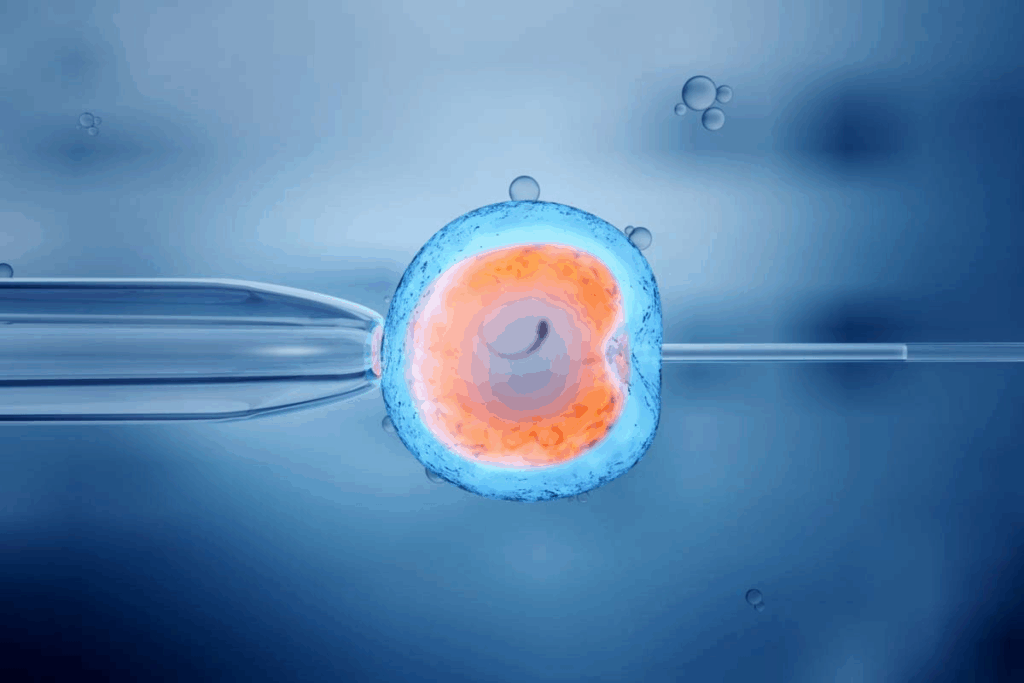
Egg donation IVF has changed the world of reproductive medicine. It brings hope to couples facing infertility. This method has become popular because of its egg donation success rates, which are much higher than traditional IVF for some patients.
What is Egg Donation IVF?
Egg donation IVF uses eggs from a donor, usually a young and healthy woman. These eggs are then mixed with the recipient’s sperm (or donor sperm) through IVF. The embryos are then placed in the recipient’s uterus. This way, women who can’t use their own eggs can get pregnant.
More and more people are choosing donor eggs because of their high success rates. This is true for women over 40 or those with low egg counts. The quality of the donor eggs is key to this treatment’s success.
Why Many Couples Choose Donor Eggs
Many couples pick donor eggs because of their better success rates, even for women over 40. Success rates for donor egg IVF can be 50-70%. This is a big jump from the lower success rates with older eggs.
Couples might choose donor eggs after failing with their own eggs or due to health issues. The emotional and psychological benefits also matter. Using donor eggs can give them hope and control over their fertility journey.
By going for egg donation IVF, couples can enjoy the high success rates. These are thanks to the latest in reproductive technology.
Understanding Egg Donation IVF Success Rates
For many, the success rates of egg donation IVF are a beacon of hope. It has changed the field of assisted reproductive technology. It offers higher success rates, even for women over 40.
Statistical Overview of Success Rates
Studies show egg donation IVF has remarkable success rates. Fresh donor egg cycles result in about 54 percent live birth rates for recipients under 40. This highlights the effectiveness of donor eggs in IVF.
Success rates depend on several factors. These include the donor’s age and health, sperm quality, and the recipient’s uterus receptivity. We’ll explore these in more detail later.
The 50-70% Success Rate Advantage
Egg donation IVF has a big advantage in success rates. For women over 40 or those who’ve had IVF failures before, success rates can be 50 to 70 percent. This depends on the donor eggs’ quality and the specific situation.
This high success rate comes from using eggs from younger donors. These eggs are healthier and more resilient. So, egg donation IVF is a top choice for many facing fertility challenges.
How Success Rates Are Measured
Success rates in egg donation IVF are measured by live birth rate per transfer. This shows the chance of a successful pregnancy and live birth with donor eggs.
Clinics and fertility specialists report success rates based on several factors. These include the recipient’s age, embryo number, and IVF protocols. Knowing these metrics helps prospective parents make informed decisions.
By looking at the statistics, understanding the success rate factors, and knowing how rates are measured, individuals can better understand egg donation IVF. This helps them make informed decisions about their fertility journey.
Traditional IVF vs. Donor Egg IVF: A Statistical Comparison
For many women, choosing between traditional IVF and donor egg IVF is key. This choice depends on their age and the success rates of each method. Donor egg IVF is often better for older women.
Age-Related Success Differences
IVF success rates drop as women get older, more so after 40. This is because older eggs are less likely to work well.
Donor egg IVF, using eggs from younger donors, has better success rates. It works well for women of many ages.
The 7% vs. 51% Success Gap for Women Over 40
Women over 40 face a big difference in success rates. Traditional IVF has a 7 percent success rate. But donor egg IVF has a 51 percent success rate.
This big gap shows the benefits of donor egg IVF for older women wanting to have a baby.
Cumulative Success Rates with Multiple Cycles
Looking at success rates over multiple cycles is also important. Both methods get better with more tries. But donor egg IVF does better than traditional IVF.
Research shows donor egg IVF can lead to higher success rates. This gives hope to women facing low chances with traditional IVF.
Knowing these stats helps women and their partners make better choices about fertility treatments.
Key Factor #1: Donor Age – The Critical Success Determinant
Donor age is a key factor in egg donation IVF success. The age of the egg donor greatly affects egg quality and IVF success.
Why Donor Age Trumps Recipient Age
The donor’s age is more important than the recipient’s when it comes to egg donation IVF success. Egg quality and viability depend more on the donor’s age than the recipient’s. Younger donors usually have better-quality eggs, leading to better IVF results.
The significance of donor age cannot be overstated. It is the main factor that affects egg donation IVF success rates. We will look at the best age range for egg donors and the evidence supporting the importance of donor age.
Optimal Age Range for Egg Donors
Research shows that egg donors aged 21 to 28 have the highest success rates in IVF. This age range is linked to the best egg quality and quantity. Donors in this range have a lower risk of genetic issues and higher egg viability.
Clinical Evidence on Age-Related Outcomes
Many studies have shown a link between donor age and IVF success. For example, a study in the Journal of Assisted Reproduction and Genetics found that donors under 25 had much higher live birth rates than older donors.
Donor Age Range | Live Birth Rate |
21-25 | 55% |
26-30 | 45% |
31-35 | 35% |
These results highlight the importance of choosing donors in the optimal age range for better IVF success. This approach can greatly increase the chances of a successful pregnancy for those undergoing egg donation IVF.
Key Factor #2: Donor Egg Quality and Selection Criteria
Donor egg quality is key to IVF success. Choosing the right eggs is a detailed process. It aims to boost the chances of a successful cycle.
Markers of High-Quality Donor Eggs
High-quality donor eggs have certain traits. These include:
- Optimal Age: Eggs from donors aged 21 to 35 are best.
- Healthy Lifestyle: Donors who eat well and exercise are preferred.
- Normal Ovarian Reserve: Donors with a normal AMH level are more likely to have good eggs.
Comprehensive Donor Screening Processes
Donors go through strict screening. This ensures the eggs are safe and of high quality. The screening includes:
- Medical and family history checks for genetic issues.
- Psychological tests to check the donor’s mental health.
- Tests for diseases like HIV and hepatitis.
Genetic Testing Considerations
Genetic tests are vital for egg quality. They check for genetic problems. Costs vary, but places like Cofertility offer good prices.
Genetic Test | Purpose | Approximate Cost |
Karyotyping | Identifies chromosomal abnormalities | $500-$1,000 |
Genetic Carrier Screening | Detects carrier status for genetic disorders | $300-$800 |
Choosing the best donor eggs and doing thorough tests boosts IVF success. This careful method improves egg transfer rates. It also gives peace of mind to those hoping to conceive.
Key Factor #3: Sperm Quality and Male Factor Influence
Sperm quality is a key factor in IVF success with donor eggs. It’s often overlooked but very important. The quality of donor eggs and the uterine environment get a lot of attention. But, the male factor also plays a big role in IVF success.
Essential Sperm Parameters for Successful Fertilization
Several key parameters determine sperm quality and fertilization success. These include:
- Sperm Concentration: The number of sperm per milliliter of semen. A higher concentration increases the chances of successful fertilization.
- Motility: The percentage of moving sperm. Sperm with good motility are more likely to reach and fertilize the egg.
- Morphology: The shape and structure of sperm. Normal morphology is critical for effective penetration of the egg.
- DNA Integrity: The quality of the genetic material within the sperm. High DNA fragmentation can negatively impact fertilization and embryo development.
Male Age Considerations
The age of the egg donor is very important for IVF success. But, the male partner’s age also matters. Advanced paternal age can increase the risk of genetic conditions and lower fertilization rates. But, the impact of male age is generally less than that of female age.
Advanced Sperm Selection Techniques
To improve fertilization chances, advanced sperm selection techniques can be used. These include:
- Intracytoplasmic Sperm Injection (ICSI): A technique where a single sperm is injected directly into the egg, bypassing natural barriers to fertilization.
- Microfluidic Sperm Sorting: A method that isolates the healthiest sperm based on their motility and morphology.
- Physiological Intracytoplasmic Sperm Injection (PICSI): A variation of ICSI that selects sperm based on their ability to bind to hyaluronic acid, a natural component of the egg’s outer layer.
By focusing on sperm quality, couples can improve their chances of success with egg donation IVF. It’s important to work with fertility specialists to assess and enhance sperm parameters. This can lead to better IVF outcomes.
Key Factor #4: Fresh vs. Frozen Donor Eggs
The choice between fresh and frozen donor eggs is key in egg donation IVF success. It’s important to know the differences and how they affect IVF treatment outcomes.
Survival Rates After Thawing
Frozen donor egg IVF cycles rely on egg survival after thawing. New egg freezing technology has greatly improved these rates. For example, eggs from donors under 36 have a 95 percent survival rate after thawing. The average is about 85 percent.
Success Rate Comparisons Between Fresh and Frozen Cycles
Success rates are key when comparing fresh and frozen donor egg cycles. Fresh eggs have slightly higher success rates. But, frozen eggs are now a top choice thanks to better freezing techniques. Here’s a comparison of fresh and frozen donor egg IVF cycles:
Parameter | Fresh Donor Eggs | Frozen Donor Eggs |
Survival Rate After Thawing | N/A | 85-95% |
IVF Success Rate | 60-70% | 50-60% |
Donor Age Consideration | Typically under 35 | Typically under 36 |
Technological Advances in Egg Freezing
Egg freezing technology has made huge strides, boosting frozen egg viability. Vitrification, a new method, has replaced slow freezing. This has led to higher survival rates and better IVF outcomes. These advancements have made frozen donor eggs a popular choice for many couples.
As we keep improving egg donation IVF protocols, the fresh vs. frozen egg debate will stay important. Knowing the survival and success rates, and the egg freezing technology, helps us guide patients better. This can lead to higher IVF success rates.
Key Factor #5: Recipient Uterine Receptivity
Improving uterine receptivity is key for high success rates in egg donation IVF. The uterus must be ready to accept the embryo. Any problems with receptivity can greatly affect the IVF cycle’s outcome.
Endometrial Preparation Protocols
Preparing the endometrium is a vital step in IVF. We use hormone replacement therapy (HRT) to get the uterus ready. This involves giving estrogen and progesterone to thicken the endometrium and make it receptive for the embryo.
The timing of hormone administration is critical. We match the hormone doses with the embryo transfer to ensure the uterus is most receptive. This timing is essential for high egg transfer success rates.
Testing for Optimal Implantation Timing
To boost implantation chances, we assess the best timing for embryo transfer. We look at the recipient’s hormonal levels and endometrial thickness. This helps us find the perfect time for the embryo transfer, improving embryo adoption success rates.
- Ultrasound monitoring to assess endometrial thickness and morphology
- Hormonal assays to confirm adequate estrogen and progesterone levels
- Timing of embryo transfer to coincide with the window of implantation
Managing Underlying Uterine Conditions
Uterine conditions can greatly affect IVF success. We check the recipient’s uterine health for any issues that might affect implantation. We address problems like endometrial polyps, fibroids, or adhesions before starting the IVF cycle.
Our approach to uterine receptivity includes advanced diagnostics and tailored treatments. By improving uterine health and receptivity, we increase the chances of success in egg donation IVF cycles.
The Role of the Fertility Clinic in Maximizing Success
Choosing the right fertility clinic is key to success in egg donation IVF. The clinic’s expertise, lab quality, and donor program rules all matter a lot. They help decide how well the treatment will work.
When looking at a fertility clinic for egg donation IVF, several things are important. We look for clinics with high success rates, top-notch labs, and good donor programs.
Evaluating Clinic-Specific Success Rates
Success rates of a clinic are a big sign of their skill and care quality. It’s smart to find clinics that share their success rates and details about their egg donation programs.
For example, a clinic with a big egg donation program might have better success rates. Recent data shows that clinics with lots of egg donation experience often have higher live birth rates.
Clinic | Success Rate | Number of Cycles |
Clinic A | 55% | 200 |
Clinic B | 60% | 150 |
Clinic C | 65% | 100 |
Laboratory Quality and Embryology Expertise
The lab quality and the skill of the embryologists are very important for egg donation IVF success. The latest lab equipment and techniques, like time-lapse embryo imaging, help pick the best embryos and improve transfer success.
“The embryology laboratory is the heart of any IVF clinic. The skill of the embryologists and the technology available can make a significant difference in the outcome of the treatment.”
Medical Expert, Fertility Expert
When checking out a clinic’s lab, ask about their equipment, quality checks, and the experience of their embryologists.
Questions to Ask About a Clinic’s Donor Program
It’s important to know about a clinic’s donor program. Ask about the donor screening, donor traits, and the clinic’s policies on donor anonymity and communication.
For example, you might ask: “Is CoFertility legit?” and ask about their costs, including “CoFertility cost.” It’s key to know how open the clinic is about their programs and costs.
- What is the clinic’s donor screening process?
- How are donors matched with recipients?
- What are the clinic’s policies on donor anonymity?
- What is the cost of the egg donation program?
By carefully looking at these factors and asking the right questions, future parents can make smart choices for their egg donation IVF journey. This can help them increase their chances of success.
Financial Planning for Egg Donation IVF
Egg donation IVF comes with many financial aspects to consider. It’s key for parents-to-be to grasp these to make informed choices. This includes looking at different financial factors that can shape their decisions.
Average Costs and Budget Considerations
The cost of egg donation IVF can change a lot. This depends on the clinic, how much the donor gets paid, and if extra services like genetic testing are needed. On average, a single cycle can cost between $20,000 and $30,000.
Let’s look at the usual costs for egg donation IVF:
Service | Average Cost |
Donor Compensation | $5,000 – $10,000 |
IVF Cycle | $12,000 – $15,000 |
Genetic Testing | $1,500 – $3,000 |
Egg Freezing (if applicable) | $8,000 – $12,000 |
Total | $20,000 – $30,000 |
Insurance Coverage Possibilities
Insurance for egg donation IVF can vary a lot. It depends on the insurance company and the policy. Some plans might cover the IVF cycle but not other costs like donor pay or genetic testing.
It’s important for parents-to-be to check their insurance policy. They should talk to their fertility clinic to know what’s covered and what’s not.
Financing Options and Shared Risk Programs
Many fertility clinics offer ways to make egg donation IVF more affordable. They might have financing plans or shared risk programs. These can help spread out the cost or offer refunds if the treatment doesn’t work.
Some clinics also have deals for more than one cycle. This can be good for those who might need more than one treatment.
By understanding the financial side of egg donation IVF and looking at financing options, parents can make better choices for their treatment.
Emotional and Psychological Support Throughout the Process
Understanding the emotional side of egg donation IVF is key for those wanting to be parents. This journey is not just about medical steps. It also comes with big emotional and psychological hurdles.
Mental Preparation for the Journey Ahead
Getting ready mentally for egg donation IVF is a big step. It can really change how you feel about the whole thing. It’s important to talk to a counselor or therapist to handle the ups and downs.
Some important things to think about when getting ready mentally include:
- Learning about the IVF process and what to expect
- Using stress-relief methods
- Building a support network of family, friends, or groups
Support Resources for Recipients
Having the right support can really help those going through egg donation IVF. Support groups, online or in-person, offer a sense of belonging. Many fertility clinics also offer counseling for IVF patients.
“The emotional support we received during our egg donation IVF journey was invaluable. It helped us navigate the ups and downs with more confidence and less stress.”
— A grateful couple
Navigating Relationships with Donors
For many, the relationship with the egg donor is a big part of the emotional journey. It’s important to set clear boundaries and understandings from the start. Open communication and respect are key to a good relationship.
Some things to think about when dealing with donors include:
- Talking about and agreeing on contact levels during and after the process
- Understanding the donor’s reasons and what they expect
- Setting boundaries for future contact or information sharing
By focusing on emotional and psychological support, parents can better handle the challenges of egg donation IVF. Success stories from donor egg IVF often talk about the emotional journey and the role of support.
Every journey of egg donation IVF is unique. By preparing mentally, using support resources, and handling relationships with donors carefully, recipients can improve their experience and chances of success.
Conclusion: Optimizing Your Egg Donation IVF Journey
Egg donation IVF is a powerful solution for those facing infertility. Understanding what affects egg donation ivf success rates helps make better choices. This can lead to a successful outcome.
Success depends on the egg donor’s age and egg quality, sperm quality, and whether to use fresh or frozen eggs. The recipient’s uterine health also plays a big role. Improving these areas can greatly increase the chance of a successful pregnancy.
Choosing a reputable fertility clinic is key. They offer support and have high egg donor ivf success rates. This ensures the best care and guidance during the IVF process.
Egg donation IVF has changed reproductive medicine, giving hope to many. With the right insights and care, achieving a successful outcome is possible. This helps individuals fulfill their dream of starting a family.
FAQ
What are the overall success rates for egg donation IVF?
Egg donation IVF success rates are usually between 50-70% per cycle. This is higher than traditional IVF for some age groups.
How do egg donation IVF success rates compare to traditional IVF for women over 40?
For women over 40, egg donation IVF has a success rate of about 51%. Traditional IVF has a rate of around 7%.
What is the optimal age range for egg donors, and why is it important?
The best age for egg donors is between 21 and 30. Donor age greatly affects egg quality and IVF success.
What factors contribute to the quality of donor eggs?
Quality donor eggs have normal morphology and proper mitochondrial function. They also lack chromosomal abnormalities. Genetic testing is part of the screening process.
How does sperm quality affect IVF success rates?
Sperm quality is key for fertilization. Important sperm traits include motility, concentration, and morphology. Advanced techniques can improve fertilization chances.
Are fresh or frozen donor eggs more successful in IVF?
Both fresh and frozen donor eggs can work well. Fresh eggs have slightly better success rates. Frozen eggs, though, have better survival rates after thawing, thanks to new freezing tech.
What is the role of uterine receptivity in IVF success?
Uterine receptivity is key for implantation. Factors like endometrial thickness and hormonal balance are important. Proper preparation and managing conditions are essential.
How do I choose a reputable fertility clinic for egg donation IVF?
Look for a clinic with good success rates and quality labs. Check their expertise in embryology and donor program details. Ask about screening, freezing methods, and support resources.
What are the average costs associated with egg donation IVF?
Egg donation IVF costs vary by location and clinic. It’s important to ask about all costs, insurance, and financing options.
What kind of emotional and psychological support is available during egg donation IVF?
Mental support is vital for recipients. Clinics offer counseling, support groups, and guidance on donor relationships.
How do cumulative success rates change with multiple IVF cycles using donor eggs?
Success rates can improve with more cycles. This offers hope for success even after initial failures.
Is Cofertility a legitimate option for egg donation and IVF services?
Cofertility is a known platform for egg donors and IVF resources. It’s important to research their services, costs, and how they meet your needs.
What are the embryo adoption success rates compared to egg donation IVF?
Embryo adoption success rates vary. It’s a viable option for those struggling with infertility. Success rates may differ from egg donation IVF, based on individual circumstances and medical advice.
How do egg transfer success rates vary between different clinics and techniques?
Success rates can differ between clinics due to technique and expertise. It’s important to ask about a clinic’s specific success rates and methods.
References
National Health Service (NHS). Egg Donation IVF: 5 Factors Influencing Success. Retrieved from https://www.nhs.uk/conditions/ivf/