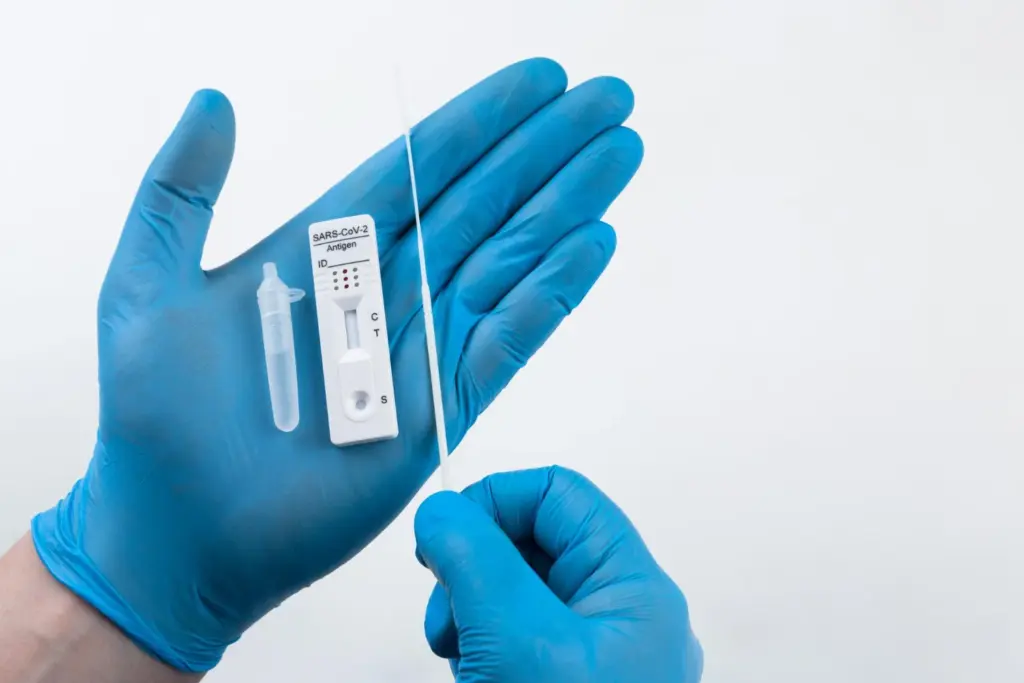
PCR, or Polymerase Chain Reaction, is a molecular diagnostic technique that functions as a high-precision biological photocopier. While microscopes allow doctors to see cells, and X-rays allow them to see bones, PCR allows medical professionals to “see” the genetic code itself. It detects and amplifies trace amounts of DNA or RNA the fundamental building blocks of life found in viruses, bacteria, or human cells.
The primary problem PCR solves is the issue of detection thresholds. In the early stages of an infection or a genetic disease, the pathogen or mutation is often present in such minuscule quantities that standard laboratory tests cannot find it. A patient might have a virus, but if the viral count is too low, a traditional culture test might return a “false negative.” PCR bypasses this limitation by isolating that specific microscopic segment of genetic material and copying it billions of times in a matter of hours. This exponential amplification transforms an invisible trace into a detectable sample, enabling physicians to diagnose conditions with near-perfect accuracy long before clinical symptoms become severe.
How the PCR Works?
The PCR process occurs inside a sophisticated machine called a thermal cycler. To understand how it works, imagine a molecular construction site that operates through precise changes in temperature. The process typically involves a cycle of heating and cooling repeated 30 to 40 times.
Step 1: Denaturation (The Unzipping)
The diagnostic process begins with the extraction of genetic material from the patient’s sample (blood, saliva, or tissue).
- Heating: This purified DNA is placed into a test tube and heated to roughly 95°C (203°F).
- Separation: At this high temperature, the double-stranded DNA helix splits apart. The hydrogen bonds holding the two strands together break, resulting in two single strands of DNA. This exposes the genetic information, making it accessible for copying.
Step 2: Annealing (The Targeting)
The temperature is then lowered to between 50°C and 65°C.
- Primers: Short, synthetic strands of DNA called “primers” are introduced. These act like molecular GPS coordinates. They are engineered to match only the specific target sequence the doctor is looking for such as a gene from the Influenza virus or a specific cancer mutation.
- Binding: If the target is present in the patient’s sample, these primers attach (anneal) to the specific landing sites on the single-stranded DNA. If the target is not there, the primers have nothing to hold onto, and no reaction occurs.
Step 3: Extension (The Copying)
The temperature is raised slightly to 72°C, the optimal operating temperature for a specialized enzyme called Taq polymerase.
- Building: This enzyme attaches to the primer and moves down the DNA strand, adding complementary building blocks (nucleotides) to create a new, double-stranded copy of the DNA.
- Exponential Growth: At the end of one cycle, one DNA strand has become two. The cycle repeats. Two become four, four become eight, and so on. Within an hour or two, a few strands turn into millions, creating a sample large enough to be detected by a fluorescent signal or a gel analysis.
Clinical Advantages and Patient Benefits
PCR has largely replaced older, slower diagnostic methods like bacterial culture or serology for many conditions because of its speed and specificity.
Extreme Sensitivity
The defining advantage of PCR is its sensitivity. It can theoretically detect a single molecule of target DNA.
- Window Period: For infectious diseases like HIV or Hepatitis, traditional antibody tests require the body to produce an immune response, which can take weeks (the “window period”). PCR looks for the virus itself, not the body’s reaction to it. This allows for diagnosis days after exposure rather than weeks, enabling immediate treatment and preventing transmission.
Speed and “Real-Time” Results
Before PCR, identifying a specific bacterium often required growing it in a petri dish (culturing), which could take days or even weeks for slow-growing organisms like Tuberculosis.
- Same-Day Diagnosis: PCR provides results in hours. In critical care settings, such as diagnosing meningitis or sepsis, this speed saves lives by allowing doctors to start the correct antibiotic immediately rather than guessing while waiting for culture results.
Specificity (Targeted Diagnosis)
PCR is highly specific. It distinguishes between pathogens that look similar but require different treatments.
- Differentiation: For example, it can determine not just that a patient has the Flu, but specifically whether it is Influenza A or Influenza B. In oncology, it differentiates between cancer cells that have a specific mutation (like EGFR in lung cancer) and those that do not, dictating which chemotherapy drug will work.
Targeted Medical Fields and Applications
PCR is a ubiquitous tool used across almost every department dealing with diagnostics and personalized medicine.
Infectious Diseases
- Viral Load Monitoring: It is the gold standard for managing chronic viral infections like HIV and Hepatitis C. By quantifying exactly how many viral copies are in the blood (Viral Load), doctors can determine if antiviral medications are working.
- Respiratory Panels: A single PCR swab can simultaneously test for multiple respiratory pathogens (COVID-19, RSV, Influenza, Adenovirus), preventing unnecessary antibiotic use for viral infections.
Oncology (Precision Medicine)
- Liquid Biopsy: PCR facilitates the detection of “Circulating Tumor DNA” (ctDNA) in a simple blood draw. This allows oncologists to detect cancer recurrence or monitor treatment response without performing invasive surgical biopsies.
- Genetic Profiling: It identifies specific mutations (such as BRCA1/2 in breast cancer or BRAF in melanoma) that qualify patients for targeted immunotherapies or oral oncolytics.
Clinical Genetics
- Prenatal Screening: Non-Invasive Prenatal Testing (NIPT) uses PCR technology to analyze fetal DNA found in the mother’s blood, screening for chromosomal abnormalities like Down Syndrome without the risk of amniocentesis.
- Carrier Screening: It identifies parents who carry genes for hereditary conditions like Cystic Fibrosis or Spinal Muscular Atrophy, aiding in family planning.
Step-by-Step: The PCR Experience
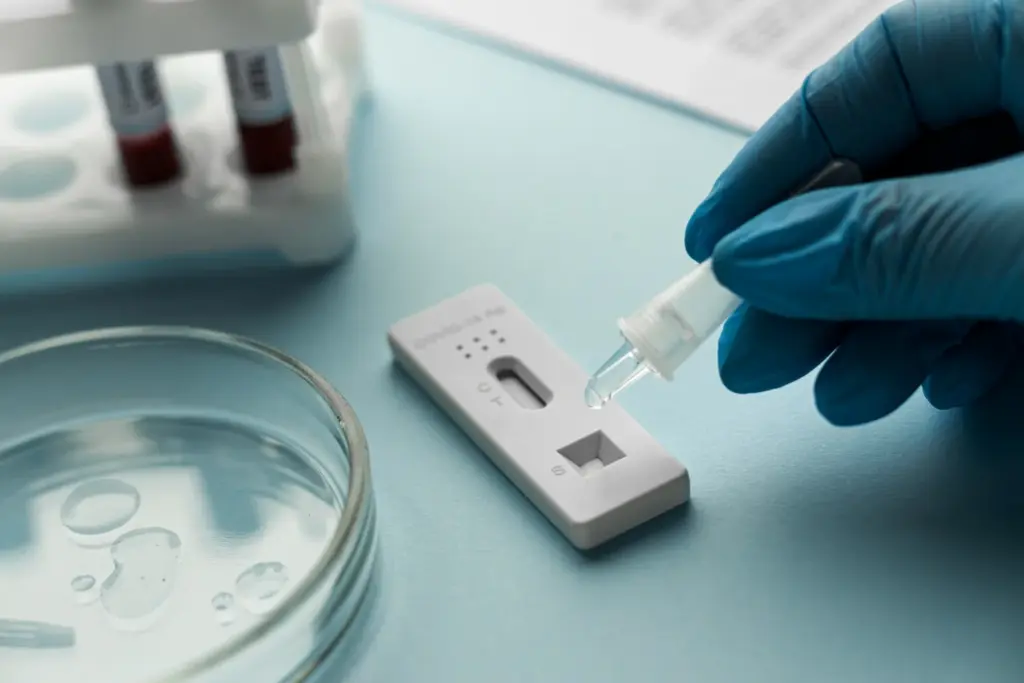
For the patient, a PCR test is defined by the sample collection method, as the actual “reaction” happens entirely in the laboratory.
Sample Collection
The experience depends on what is being tested:
- Respiratory Swabs: For viruses like the flu or COVID-19, a thin, flexible swab is inserted into the nose (nasopharyngeal) or throat. This can cause brief discomfort, often described as a tickle or the sensation of getting water in the nose.
- Blood Draw: For genetic testing, HIV monitoring, or liquid biopsies, a standard venous blood draw from the arm is performed. No fasting is typically required for genetic PCR tests.
- Tissue Sample: In oncology, the PCR is often run on a piece of tissue already removed during a previous biopsy or surgery. The patient does not undergo a separate procedure for the test itself.
The Waiting Period
- Turnaround: While the chemical reaction takes only a few hours, logistical processing means results are typically available within 24 to 48 hours.
- Interpretation: The result is usually binary (Detected/Not Detected) or quantitative (a specific number of copies/mL). Your physician interprets this data to adjust your treatment plan.
Safety and Precision Standards
Because PCR is so sensitive, it is prone to “contamination risk.” Laboratories adhere to rigorous standards to ensure the DNA found belongs to the patient and not a stray particle in the lab.
Unidirectional Workflow
PCR laboratories are designed with a strict one-way traffic flow to prevent contamination.
- Separation: The area where samples are prepared (DNA extraction) is physically separated from the area where the amplification happens. Technicians never move from the “dirty” (amplified) room back to the “clean” (prep) room without a complete change of clothing and decontamination, preventing millions of floating DNA copies from ruining new samples.
Internal Controls
Every PCR run includes “controls” to verify accuracy.
- Negative Control: A sample known to have no DNA is run alongside patient samples. If this control shows a positive result, it signals contamination, and the entire batch is discarded and re-run.
- Positive Control: A sample known to have the target DNA is run to prove the enzyme is active and the machine is cycling correctly.
Automation
Modern high-throughput PCR systems utilize robotic pipetting arms.
- Human Error Reduction: Robotics handle the microscopic liquid transfers (often measuring in microliters). This eliminates the risk of a technician accidentally swapping samples or pipetting the wrong volume, ensuring that the diagnosis attached to the medical record is chemically undeniable.