The 13C Urea Breath Test (UBT) is a rapid, non-invasive diagnostic procedure considered the clinical “gold standard” for detecting active infection with Helicobacter pylori (H. pylori) bacteria in the human stomach. Unlike general blood tests that only indicate if a patient has ever been exposed to the bacteria, the Urea Breath Test confirms the actual presence of living, metabolically active bacteria at the time of the exam. This distinction is critical for accurate diagnosis and for verifying that a course of antibiotic treatment has successfully eradicated the infection.
The primary problem this technology solves is the diagnostic difficulty of identifying gastric pathogens without surgical intervention. H. pylori is a spiral-shaped bacterium that burrows into the mucous lining of the stomach, protecting itself from the body’s natural acid. It is the leading cause of peptic ulcers (sores in the lining of the stomach or small intestine), chronic gastritis, and is a recognized risk factor for gastric cancer. Historically, confirming this infection required an upper endoscopy a procedure involving sedation and the insertion of a camera tube down the throat to take tissue samples. The 13C Urea Breath Test eliminates the need for this invasive approach in many cases, providing a highly accurate diagnosis through the simple analysis of exhaled air.
How the The 13C Urea Breath Test Works?
The technology relies on a sophisticated chemical reaction that occurs inside the body, utilizing a stable, non-radioactive isotope of carbon to “tag” the bacteria. The test exploits a specific biological characteristic of H. pylori: its production of high levels of an enzyme called urease.
The “Tagged” Solution
- Carbon-13 (13C): Carbon normally exists in nature as Carbon-12. Carbon-13 is a stable, heavier isotope of carbon that is safe and non-radioactive. It acts as a tracer.
- The Substrate: The patient ingests a solution containing urea (a chemical compound normally found in the body) that has been synthesized using this unique Carbon-13 atom. This is known as “13C-labeled urea.”
The Biological Reaction
- Ingestion: The patient drinks the clear, tasteless solution. It travels down the esophagus and enters the stomach.
- Enzymatic Breakdown: If H. pylori bacteria are present in the stomach lining, they secrete the urease enzyme to neutralize stomach acid and survive. When the 13C-labeled urea encounters this enzyme, it is instantly broken down (hydrolyzed) into ammonia and carbon dioxide (CO2).
- The Tracer Path: Because the urea was labeled with Carbon-13, the resulting carbon dioxide also carries this “heavy” Carbon-13 tag. This gas is absorbed through the stomach wall into the bloodstream.
Exhalation and Detection
- Circulation: The blood carries the 13C-labeled CO2 to the lungs.
- Exhalation: The patient exhales the gas. A specialized analyzer typically an Isotope Ratio Mass Spectrometer (IRMS) or an Infrared Spectrometer measures the ratio of 13C (heavy carbon) to 12C (normal carbon) in the breath sample.
- The Result: If the ratio of 13C is significantly higher in the post-drink sample compared to the baseline, the test is positive, confirming that bacteria are actively breaking down urea in the stomach.
Clinical Advantages and Patient Benefits
The 13C Urea Breath Test offers a superior alternative to both invasive surgical procedures and less accurate serological tests, balancing clinical precision with patient comfort.
Non-Invasive and Painless
The most immediate benefit is the complete absence of physical trauma.
- No Sedation: Unlike an endoscopy, which requires intravenous sedation and recovery time, the breath test requires only breathing.
- No Discomfort: There are no needles, throat sprays, or uncomfortable tubes involved. The patient simply drinks a small amount of water and blows into a bag.
Active Infection Confirmation (Real-Time Status)
- Superior to Blood Tests: Serology (blood tests) detects antibodies, which the immune system produces in response to infection. However, antibodies can remain in the bloodstream for years even after the bacteria are dead. Therefore, a blood test cannot distinguish between a past cured infection and a current active one. The breath test only turns positive if the bacteria are currently alive and producing enzymes, preventing unnecessary antibiotic prescriptions for patients who are already cured.
- Test of Cure: Because of this real-time capability, it is the only non-invasive method approved to verify that the infection has been successfully eradicated 4 to 6 weeks after treatment ends.
Universal Safety Profile
- Non-Radioactive: Older versions of this test used Carbon-14 (14C), which is radioactive. The modern 13C test uses a stable isotope found naturally in corn and cane sugar. It emits zero radiation.
- Pediatric and Obstetric Use: Because it is radiation-free, it is completely safe for children, pregnant women, and breastfeeding mothers, populations that are typically excluded from X-ray or radioactive diagnostic procedures.
Targeted Medical Fields and Applications
While primarily utilized in Gastroenterology, the implications of the test extend to primary care, oncology, and internal medicine.
Gastroenterology (Upper GI Disorders)
- Peptic Ulcer Disease: It is the primary diagnostic tool for patients presenting with burning stomach pain, identifying the bacterial root cause of duodenal and gastric ulcers.
- Dyspepsia (Indigestion): For patients under 60 with persistent indigestion, bloating, or nausea but no “alarm symptoms” (like weight loss), the “Test and Treat” strategy uses the breath test to diagnose and treat H. pylori without needing an expensive endoscopy.
- Chronic Gastritis: It helps diagnose the cause of long-term stomach inflammation.
Oncology (Gastric Cancer Prevention)
- Risk Stratification: H. pylori is a Class I carcinogen. Eradicating the bacteria significantly reduces the risk of developing stomach cancer and MALT lymphoma (Mucosa-Associated Lymphoid Tissue lymphoma). The breath test is used in screening protocols for high-risk populations to detect and treat the infection before cellular changes occur.
Hematology
- Idiopathic Thrombocytopenic Purpura (ITP): Surprisingly, H. pylori infection is linked to certain blood clotting disorders. Hematologists often request this test, as eradicating the bacteria can sometimes improve platelet counts in ITP patients.
How to Prepare for Your Urea Breath Test?
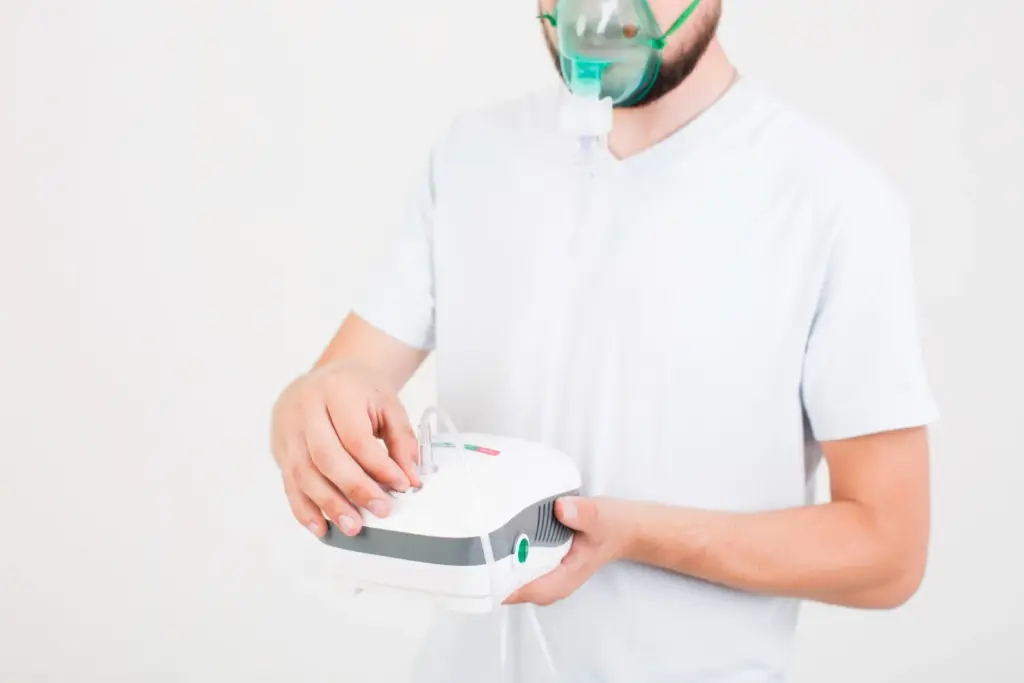
The procedure is simple, quick, and conducted in an outpatient setting, typically lasting 20 to 30 minutes.
Preparation (The Critical Phase)
Accuracy depends heavily on patient compliance before the appointment.
- Medication Pause: Patients must stop taking antibiotics and bismuth preparations (like Pepto-Bismol) for at least 4 weeks prior. Proton Pump Inhibitors (PPIs) and acid reducers must be stopped 2 weeks prior. These drugs suppress the bacteria’s activity without killing them, which can lead to a “false negative” result.
- Fasting: Patients are required to fast (no food or water) for at least 6 hours before the test to ensure the stomach is empty.
Step 1: Baseline Sample
- Collection: Upon arrival, the patient breathes normally into a small collection bag or tube. This captures the “baseline” level of CO2 in their breath before the test solution is introduced.
Step 2: Ingestion
- The Solution: The patient drinks a small volume (usually 75ml to 100ml) of water mixed with the 13C-Urea powder. Often, citric acid (orange juice flavor) is added to the drink. The acid slows stomach emptying, keeping the solution in the stomach longer to interact with any bacteria present.
Step 3: The Wait and Final Sample
- Incubation: The patient sits quietly for 15 to 30 minutes. During this time, the solution coats the stomach lining, and if bacteria are present, the enzymatic reaction begins.
- Post-Dose Collection: The patient breathes into a second collection bag. The two samples are then labeled and sent to the laboratory for comparative analysis.
Safety and Precision Standards
The 13C Urea Breath Test is engineered for high specificity, minimizing human error through rigorous chemical controls.
Sensitivity and Specificity
The test boasts diagnostic accuracy rates exceeding 95% for both sensitivity (detecting the infection when present) and specificity (correctly identifying negative cases). This makes it statistically comparable to the invasive biopsy method.
Isotope Stability
The use of Carbon-13 ensures stability. Unlike radioactive isotopes that decay over time, 13C is stable indefinitely. This means the breath samples do not deteriorate quickly; they can be stored or transported to a central laboratory without losing accuracy.
Quality Control Ratios
The analytical machines (Mass Spectrometers) measure the ratio of 13C to 12C to a precision of parts per thousand (delta value).
- Thresholds: A strict cut-off value (typically a delta over baseline of >4.0 parts per thousand) is established to define a positive result. This quantitative threshold removes the subjectivity involved in visual tests or rapid urease tests, providing a binary, scientifically validated answer.
False Negative Prevention
To ensure the test solution covers the entire stomach lining (where bacteria might be hiding in patches), patients are often asked to change positions (lie on their side) or the solution is formulated with citric acid to stimulate gastric distribution. This protocol minimizes the risk of missing a localized colony of bacteria.