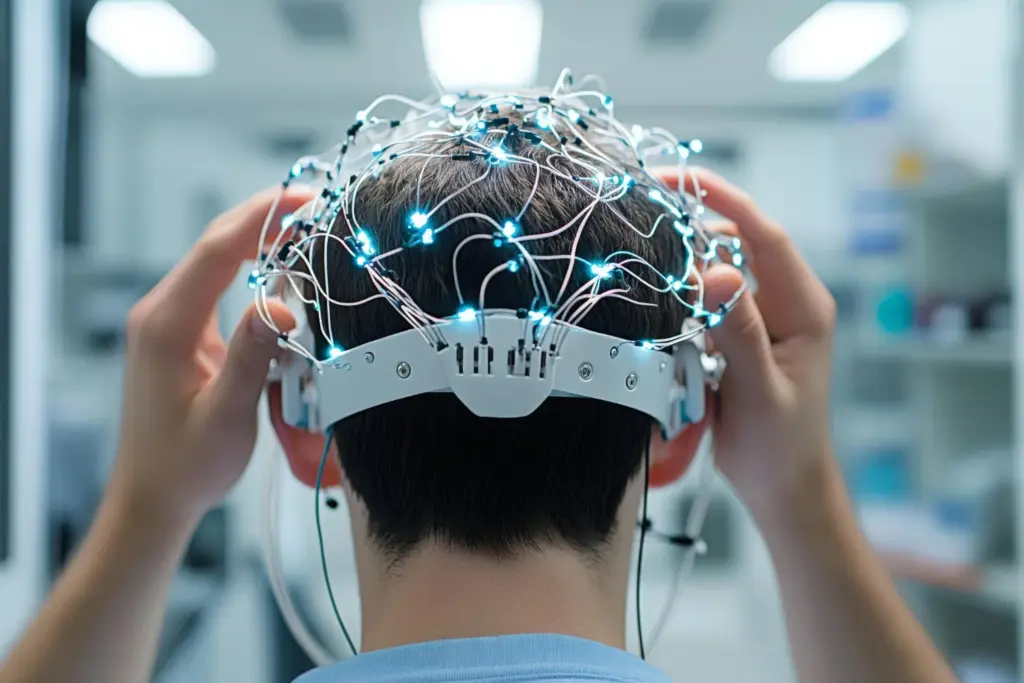
Transcranial Magnetic Stimulation (TMS) is a non-invasive form of neuromodulation that uses focused magnetic fields to stimulate specific areas of the brain. Unlike pharmacological treatments that circulate throughout the entire bloodstream and affect the whole body, TMS is a targeted physical therapy for the brain’s electrical circuitry. It is designed to safely regulate the activity of neurons (nerve cells) without the need for surgery, anesthesia, or electrodes implanted in the body.
The primary purpose of TMS is to treat neurological and psychiatric disorders that have failed to respond to standard medication protocols. It addresses the problem of “treatment resistance.” For example, in Major Depressive Disorder, certain areas of the brain involved in mood regulation specifically the prefrontal cortex often exhibit low electrical activity or sluggish blood flow. Antidepressants attempt to fix this chemically, but they do not work for everyone and often carry systemic side effects. TMS solves this by directly activating these underactive neural networks using magnetic energy, effectively “waking up” the brain’s mood control center to restore normal function.
How the TMS Works?
The technology operates on the scientific principle of electromagnetic induction, a phenomenon discovered by Michael Faraday. It converts magnetic energy outside the skull into electrical energy inside the brain.
The Electromagnetic Coil
The core component of the TMS machine is a specialized electromagnetic coil, typically shaped like a figure-8 or a butterfly. This coil is encased in plastic and placed gently against the patient’s scalp.
- Pulse Generation: When the machine is activated, a powerful electric current flows through the copper wiring inside the coil.
- Magnetic Field Creation: This rapid burst of electricity creates a highly concentrated magnetic field that projects outward from the coil. This field is similar in strength to an MRI machine (roughly 1.5 to 2 Tesla) but is extremely localized, reaching only about 2 to 3 centimeters deep.
Neural Depolarization (The Spark)
The skull presents a barrier to electricity but is transparent to magnetic fields. The magnetic pulses pass effortlessly through the skin and bone to reach the surface of the brain (the cortex).
- Induction: Once the magnetic field hits the brain tissue, it induces a tiny, secondary electric current within the neurons themselves.
- Action Potential: This induced current causes the neurons to fire (depolarize). It triggers an “action potential,” forcing the nerve cells to release neurotransmitters (like serotonin, dopamine, and norepinephrine) and communicate with deeper brain structures. By delivering thousands of these pulses over a session, TMS strengthens the synaptic connections between neurons, a process known as neuroplasticity (or Long-Term Potentiation).
Clinical Advantages and Patient Benefits
TMS offers a distinct therapeutic profile that bridges the gap between medication and invasive procedures like Electroconvulsive Therapy (ECT).
Zero Systemic Side Effects
The most significant benefit for patients is the lack of “whole-body” side effects. Antidepressants often cause weight gain, sexual dysfunction, lethargy, dry mouth, or nausea because they travel through the blood to every organ.
- Localized Action: TMS is a focal treatment. It affects only the specific brain circuit being targeted. As a result, it does not cause systemic issues. Patients do not experience the “zombie-like” feeling often reported with heavy sedation or high-dose medication.
Non-Invasive and Sedation-Free
Unlike ECT (shock therapy) or Deep Brain Stimulation (DBS), TMS requires no anesthesia or hospitalization.
- Full Alertness: Patients remain completely awake and alert throughout the procedure. They can talk, watch TV, or listen to music.
- Immediate Recovery: There is no “post-anesthesia grogginess.” Patients can drive themselves to the clinic, receive the treatment, and drive themselves immediately back to work or home. It fits seamlessly into a daily routine.
Superior Tolerability
- No Memory Loss: A major concern with older therapies like ECT is cognitive side effects, particularly memory loss. TMS has no negative impact on memory or concentration. In fact, many patients report improved cognitive clarity as their depression lifts.
Targeted Medical Fields and Applications
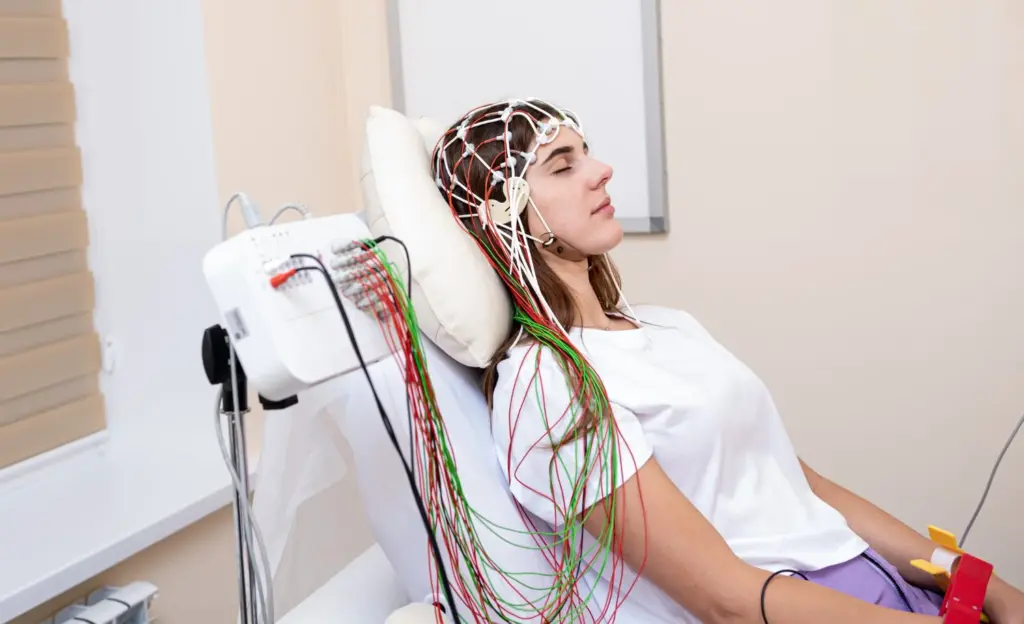
While originally developed for depression, the precision of TMS allows it to be adapted for various neuropsychiatric conditions by changing the location and frequency of the stimulation.
Psychiatry
- Treatment-Resistant Depression (TRD): This is the most common FDA-cleared indication. It targets the Dorsolateral Prefrontal Cortex (DLPFC), an area often underactive in depressed patients.
- Obsessive-Compulsive Disorder (OCD): TMS uses a different coil and target (often deeper brain structures or the Supplementary Motor Area) to disrupt the hyperactive loops responsible for intrusive thoughts and compulsive behaviors.
- Anxiety and PTSD: Protocols are used to dampen overactive areas (like the right prefrontal cortex) to reduce the symptoms of hyperarousal and panic.
Neurology
- Migraine: Single-pulse TMS (sTMS) devices are used to abort a migraine attack by disrupting the “cortical spreading depression,” the electrical wave that precedes a migraine headache.
- Stroke Rehabilitation: TMS is used to stimulate the damaged motor cortex to encourage the brain to rewire itself, potentially improving movement in paralyzed limbs.
- Neuropathic Pain: High-frequency stimulation of the motor cortex can interfere with pain signals traveling from the spinal cord, offering relief for conditions like fibromyalgia or trigeminal neuralgia.
TMS Procedure, Recovery, and Aftercare
A typical TMS treatment course is intensive but straightforward, usually involving daily sessions (5 days a week) for 4 to 6 weeks.
The Initial Mapping Session
The first appointment is longer (about 60 minutes) and involves calibrating the machine to the patient’s unique anatomy.
- Motor Threshold Determination: The physician places the coil over the part of the brain that controls the hand. They deliver single pulses to find the exact magnetic strength required to make the patient’s thumb twitch. This “Motor Threshold” serves as the customized dosage reference for the treatment.
- Measurement: Measurements are taken to locate the specific treatment target (e.g., 5.5 cm forward from the motor strip for depression), ensuring the pulses land on the mood-regulating center.
The Daily Treatment Sessions
- Positioning: The patient sits in a comfortable, reclining treatment chair similar to a dentist’s chair. Earplugs are provided because the machine produces a loud clicking sound (like a woodpecker tapping).
- Sensation: The coil is placed against the head. When the machine is on, the patient feels a tapping or knocking sensation on the scalp under the coil. This is caused by the magnetic field contracting the tiny muscles of the scalp.
- Comfort: The tapping can be intense initially but is generally not described as painful. Most patients get used to the sensation within the first week (habituation).
- Duration: Standard sessions last about 19 to 37 minutes. Newer “Theta Burst” protocols can deliver the same therapeutic effect in just 3 minutes.
- Post-Treatment: The session ends, the coil is removed, and the patient leaves immediately. There is no dizziness or disorientation.
Safety and Precision Standards
TMS is a rigorous medical procedure governed by strict safety protocols to maximize efficacy and minimize risk.
Seizure Risk Management
The most serious potential side effect of magnetic stimulation is the induction of a seizure, but this is extremely rare (less than 0.1% of cases) when safety guidelines are followed.
- Screening: Patients are screened for risk factors such as a history of epilepsy, heavy alcohol use, or metal implants in the head.
- Protocol Limits: The machine is programmed with safety limits regarding the frequency (speed) and intensity of the pulses. These “safety tables” ensure the brain is not over-stimulated.
Coil Positioning Systems
- Neuronavigation: In advanced setups, TMS is paired with MRI-guided neuronavigation. This acts like a GPS for the brain. The patient’s MRI is loaded into the system, and an infrared camera tracks the coil’s position in real-time. This ensures that the magnetic pulses are delivered to the exact anatomical structure targeted on the MRI, adjusting for even millimeter-level movements of the patient’s head.
Contact Sensors
- Consistent Contact: For the magnetic field to be effective, the coil must remain flush against the scalp. Modern TMS coils are equipped with contact sensors that alert the operator if the coil lifts off the head even slightly, ensuring that the patient receives the full prescribed dose every single pulse.