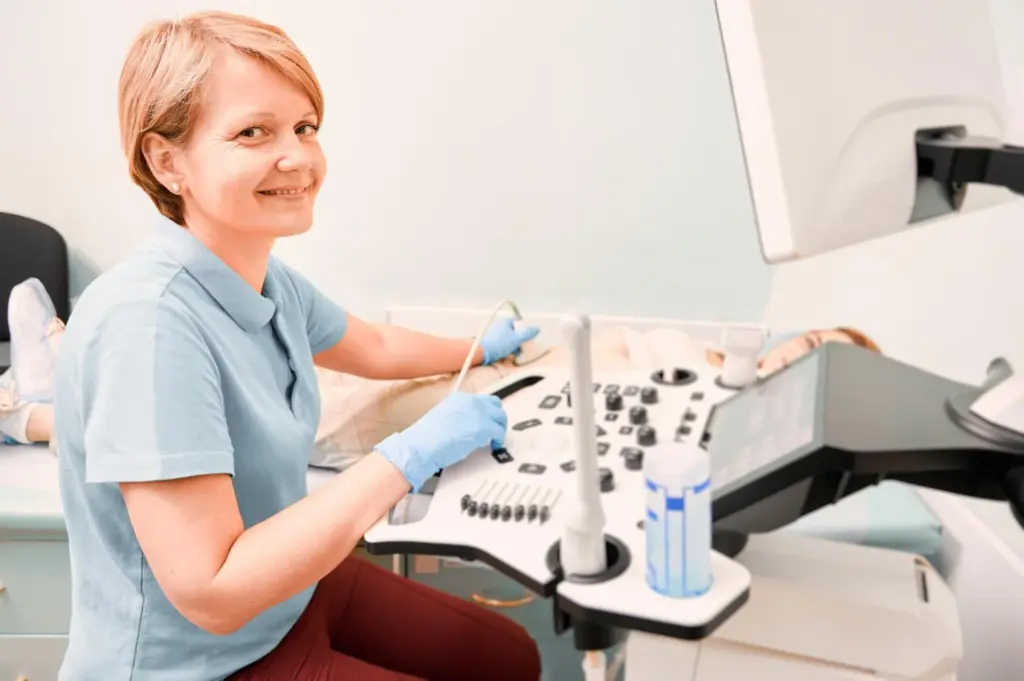
Ultrasonography, commonly known as ultrasound, is a sophisticated diagnostic imaging modality that utilizes high-frequency sound waves to visualize the body’s internal structures. Unlike X-rays or CT scans, which generate images using ionizing radiation, ultrasound operates on the principles of sonar (sound navigation and ranging). It acts as a non-invasive visual window, allowing physicians to examine organs, soft tissues, and blood flow in real-time without exposing the patient to potentially harmful radioactive energy.
The primary purpose of ultrasonography is to provide immediate, dynamic visual data to differentiate between healthy and diseased tissue. It effectively solves the problem of “static” diagnosis. While a standard X-ray can show the size of the heart, an ultrasound (echocardiogram) shows the heart actually beating, revealing how well the valves open and close. In abdominal medicine, it distinguishes between solid masses (potentially tumors) and fluid-filled cysts with high accuracy. Furthermore, it serves as the critical guidance system for interventional procedures, allowing doctors to steer needles precisely into tumors for biopsies or into nerves for pain blocks, eliminating the risks associated with “blind” needle insertion.
How Ultrasonography Works?
The technology functions through the “Pulse-Echo” principle, relying on a specialized device called a transducer to send and receive sound information.
The Piezoelectric Transducer
The core technology lies within the handheld probe (transducer) that the doctor places on the skin.
- Crystal Vibration: Inside the probe are ceramic piezoelectric crystals. When an electric current hits these crystals, they vibrate rapidly, changing shape and emitting sound waves at frequencies between 2 and 18 megahertz far above the range of human hearing.
- Beam Transmission: These sound waves travel out of the probe and penetrate the body.
Acoustic Impedance and Reflection
As the sound waves travel through the body, they encounter different tissues (skin, fat, muscle, bone, fluid).
- The Echo: Each tissue type has a different density or “acoustic impedance.” When the sound wave hits a boundary between two different tissues (e.g., fluid vs. liver tissue), part of the wave continues forward, but part of it bounces back toward the probe.
- Reception: The probe switches mode from “sender” to “receiver.” It catches the returning echoes. The time it took for the echo to return tells the computer how deep the tissue is. The strength of the echo tells the computer how dense the tissue is.
- Digital Construction: The system’s processor calculates these millions of echoes instantly, creating a grayscale image on the monitor. Fluid (like in the bladder) appears black because sound passes through it easily without echoing. Dense bone or stones appear bright white because they reflect almost all the sound.
The Doppler Effect
For vascular assessments, the system utilizes the Doppler shift principle.
- Measuring Motion: When sound waves hit moving objects specifically red blood cells the frequency of the echo changes (similar to how a siren sounds different as it passes you). The ultrasound machine translates this frequency shift into colors (Red and Blue) on the screen, showing the physician the direction and speed of blood flow.
Clinical Advantages and Patient Benefits
Ultrasonography offers a unique safety and utility profile that makes it the first-line diagnostic tool for a wide range of medical conditions.
Zero Radiation Exposure
The most significant benefit is safety. Because it relies on mechanical sound waves rather than ionizing radiation, it carries no risk of cellular damage or DNA mutation.
- Unlimited Repeatability: This makes it safe for the most vulnerable populations, including developing fetuses, infants, and pregnant women. It can be repeated as often as necessary to monitor a condition without cumulative toxicity.
Real-Time Dynamic Imaging
- Live Physiology: Unlike MRI or CT, which take a static “snapshot,” ultrasound provides a live movie of the body. Physicians can see the motion of intestinal loops (peristalsis), the gliding of tendons, or the contraction of heart muscle.
- Patient Interaction: The doctor can interact with the patient during the scan, asking them to cough, breathe deeply, or move a limb to see how the anatomy changes under stress, providing functional diagnostic clues that static scans miss.
Comfort and Accessibility
- Non-Invasive: For the vast majority of exams, the probe simply slides over the skin. There is no tunnel to enter (no claustrophobia), no loud banging noises, and no need for sedation.
- Bedside Capability: Ultrasound machines are mobile. They can be wheeled directly to a patient’s bedside in the ICU or ER, providing immediate answers for unstable patients who are too sick to be transported to the radiology department.
Targeted Medical Fields and Applications

While famously associated with pregnancy, ultrasound is a workhorse tool used across virtually every major medical specialty.
Obstetrics and Gynecology
- Fetal Monitoring: It is the standard of care for visualizing the fetus, checking development, confirming the due date, and screening for anatomical anomalies.
- Pelvic Health: Transvaginal ultrasound assesses the uterus and ovaries for fibroids, cysts, or ectopic pregnancies.
Cardiology (Echocardiography)
- Structural Analysis: It visualizes the heart chambers and valves. It is the gold standard for measuring “Ejection Fraction” the percentage of blood leaving the heart each time it contracts which diagnoses heart failure.
- Valve Disease: Doppler flow confirms leaking (regurgitation) or narrowed (stenosis) heart valves.
Radiology (Abdominal and General)
- Gallbladder and Liver: It is the most sensitive test for detecting gallstones. It also screens the liver for fatty deposits (steatosis), cirrhosis, or masses.
- Kidneys: Detects kidney stones, blockages (hydronephrosis), and cysts.
Vascular Surgery
- DVT Screening: Compression ultrasound is the primary test to check for Deep Vein Thrombosis (blood clots) in the legs that could travel to the lungs.
- Carotid Arteries: It screens for plaque buildup in the neck arteries to assess stroke risk.
Musculoskeletal (Orthopedics)
- Soft Tissue Injury: It provides high-resolution images of muscles, tendons, and ligaments to diagnose rotator cuff tears, Achilles tendonitis, or joint effusion (fluid).
The Patient Experience of Ultrasonography
An ultrasound exam is typically short, painless, and interactive.
Preparation
Preparation varies by exam type.
- Abdominal Scans: Patients are often asked to fast (no food or drink) for 6 to 8 hours. This reduces gas in the bowel (which blocks sound waves) and ensures the gallbladder is full and visible.
- Pelvic/Bladder Scans: Patients may need to drink 32 ounces of water an hour before the test to fill the bladder. A full bladder acts as an “acoustic window,” pushing the intestines out of the way to reveal the uterus or prostate behind it.
The Procedure
- Gel Application: The patient lies on an exam table. The sonographer applies a clear, water-based gel to the skin. This gel is crucial it eliminates the thin layer of air between the probe and the skin, which would otherwise block the sound waves. It may feel cold initially.
- Scanning: The sonographer presses the probe firmly against the skin and slides it back and forth.
- Pressure: To see deep organs, the sonographer might apply moderate pressure. This is generally not painful, though it can be slightly uncomfortable if the area is already tender (like an inflamed appendix).
- Instructions: You may be asked to “take a deep breath and hold it.” This pushes the liver and spleen down below the rib cage, giving the doctor a clear view.
- Duration: Most exams take between 15 and 30 minutes.
Post-Procedure
- Cleanup: Once the images are captured, the gel is wiped off with a towel. The gel is non-staining and hypoallergenic.
- Immediate Return: There are no side effects. Patients can eat, drive, and resume normal activities immediately.
Safety and Precision Standards
Although ultrasound is considered safe, modern systems are regulated by strict technical standards to ensure bio-safety and diagnostic accuracy.
Thermal and Mechanical Indices (TI & MI)
Sound waves carry energy, which can theoretically produce heat or microscopic bubbles in tissue.
- Safety Monitoring: Modern machines continuously calculate and display the Thermal Index (TI) and Mechanical Index (MI) on the screen. These indicators tell the operator the potential for tissue heating. Strict protocols (the ALARA principle) ensure these levels remain well below any threshold that could cause biological effects, particularly during fetal scans.
High-Frequency Resolution
- Frequency Selection: The technology minimizes error through variable frequencies. High-frequency probes (10-18 MHz) provide exquisite detail for superficial structures (like the thyroid or breast) but don’t penetrate deep. Low-frequency probes (2-5 MHz) penetrate deep into the abdomen but with lower resolution. Sonographers are trained to select the exact frequency that balances depth and detail for each specific body type.
Disinfection Protocols
- Infection Control: Because probes touch the skin (or mucous membranes in internal exams), rigorous disinfection is mandated. Surface probes are cleaned with medical-grade disinfectants between every patient. Internal probes undergo “High-Level Disinfection” (HLD) in automated reprocessing systems to kill all bacteria and viruses, eliminating cross-contamination risks.