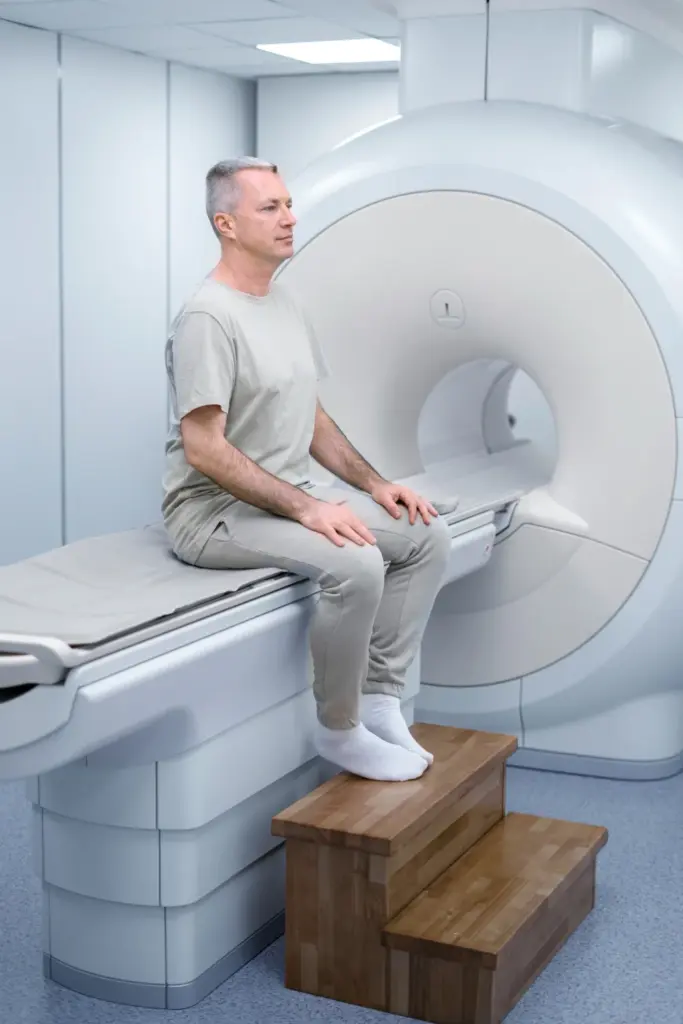
Whole Body MRI (Magnetic Resonance Imaging) is a comprehensive diagnostic imaging technique that captures high-resolution images of the entire human body, from head to toe, in a single session. Unlike standard MRI exams that focus on a specific region like the knee or the brain this technology screens the entire anatomy to detect pathologies affecting bones, organs, and soft tissues simultaneously.
The primary problem this technology solves is the “fragmented” nature of traditional diagnostics. Historically, if a physician suspected systemic disease or cancer spread, a patient would require multiple separate scans (a CT of the chest, an MRI of the brain, a bone scan) scheduled over several days. This not only delayed diagnosis but also exposed the patient to significant cumulative radiation. Whole Body MRI solves this by providing a unified, radiation-free “biological map” of the body. It is the gold standard for detecting early-stage tumors, monitoring metastatic disease, and evaluating systemic inflammatory conditions without the risks associated with X-rays or radioactive tracers.
How the Whole Body MRI Works?
The technology relies on the interaction between strong magnetic fields, radio waves, and the body’s natural hydrogen atoms. It turns the human body into a signal emitter.
Magnetic Alignment
The patient lies inside a large, cylinder-shaped machine that generates a powerful magnetic field (typically 1.5 or 3.0 Tesla).
- Proton Alignment: The human body is approximately 60% water. Each water molecule contains hydrogen atoms, which act like tiny magnets. Normally, these atoms spin randomly. Inside the MRI scanner, the strong magnetic field forces these hydrogen protons to align in the same direction, like compass needles pointing north.
Radio Frequency Pulses
- Excitation: The machine sends a brief burst of radio waves (RF pulse) into the body. This energy knocks the protons out of alignment.
- Resonance: When the radio pulse stops, the protons snap back to their aligned position. As they return to equilibrium, they release the stored energy in the form of a radio signal.
Diffusion Weighted Imaging (DWI)
The “secret weapon” of Whole Body MRI is a sequence called Diffusion Weighted Imaging.
- Water Movement: DWI measures the microscopic movement of water molecules within tissues (Brownian motion).
- The Cancer Signal: In healthy tissue, water moves freely. In cancerous tissue, cells are densely packed and multiply rapidly, restricting the movement of water. The MRI detects this restriction. On the final image, these areas of restricted diffusion light up brightly, acting as a “searchlight” for tumors or active inflammation against a dark background.
Image Reconstruction
- The Table Movement: The scan is performed in “stations.” The table moves the patient through the scanner in steps (Head, Neck, Chest, Abdomen, Pelvis, Legs).
- Stitching: The computer processes the signals from each station and digitally stitches them together to create a seamless, full-body 3D image.
Clinical Advantages and Patient Benefits
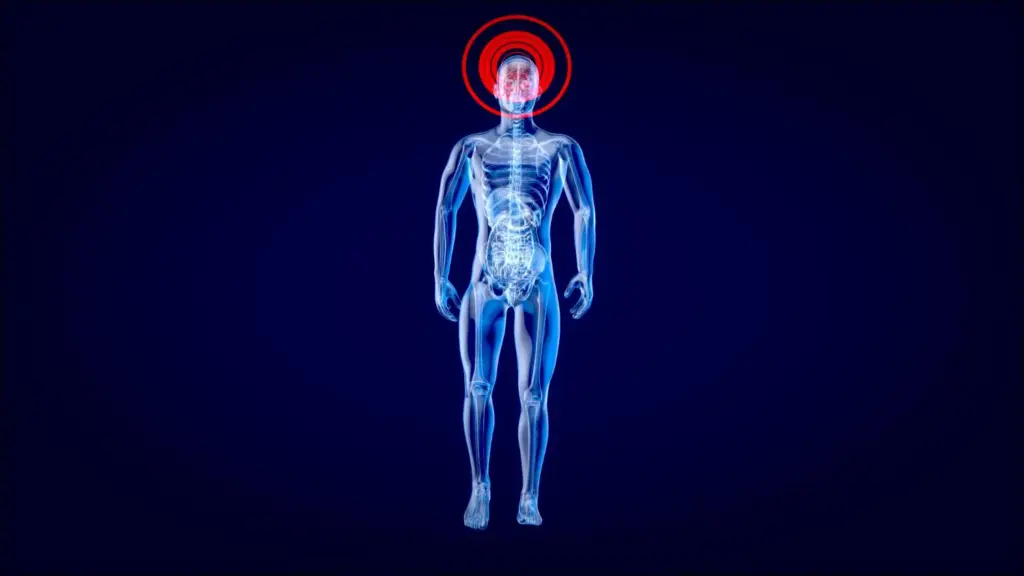
Whole Body MRI offers distinct advantages over competing modalities like PET-CT or CT scans, particularly regarding long-term safety and soft-tissue definition.
Zero Ionizing Radiation
The most critical advantage is the complete absence of radiation.
- Safe Repetition: CT scans and PET scans use X-rays and radioactive tracers, which carry a cumulative risk of DNA damage over a lifetime. Whole Body MRI uses only magnetic fields and radio waves. This makes it safe for children, pregnant women (after the first trimester), and cancer patients who require frequent monitoring (e.g., every 3 to 6 months) for many years.
Superior Soft Tissue Contrast
- Detailed Anatomy: While CT is excellent for bone, MRI is superior for characterizing soft tissues. It can distinguish between a benign cyst, a fluid-filled abscess, and a solid tumor without needing a biopsy in many cases.
- Bone Marrow Sensitivity: It is the most sensitive method for detecting bone marrow infiltration (e.g., in Multiple Myeloma or Leukemia) before significant bone destruction occurs. An X-ray might look normal until 30-50% of the bone is destroyed; an MRI detects the change immediately.
One-Stop Diagnostic
- Efficiency: Instead of visiting the hospital three times for three different body parts, the patient completes the entire assessment in 45 to 60 minutes. This reduces anxiety (“scanxiety”) and accelerates the start of treatment.
Targeted Medical Fields and Applications
Whole Body MRI is a multidisciplinary tool utilized by Oncology, Rheumatology, and Preventative Medicine.
Oncology (Cancer Screening and Staging)
- Metastatic Screening: It is used to check if a primary cancer (like breast, prostate, or melanoma) has spread to the liver, lungs, or bones.
- Multiple Myeloma: It is now the preferred method for staging Multiple Myeloma, as it detects “focal lesions” in the marrow that other scans miss.
- Li-Fraumeni Syndrome: For patients with genetic conditions predisposed to cancer, Whole Body MRI allows for annual surveillance without the radiation risk of CT.
Preventative Medicine (Executive Screening)
- Early Detection: Healthy individuals opt for Whole Body MRI as part of a premium “check-up.” It can detect asymptomatic tumors in the kidneys, liver, or pancreas, as well as early aneurysms or disc herniations, allowing for intervention before symptoms arise.
Rheumatology
- Systemic Inflammation: It visualizes inflammation in muscles (myositis) and joints (arthritis) across the entire body, helping doctors assess the total burden of autoimmune diseases like Ankylosing Spondylitis.
The Patient Experience of Whole Body MRI
A Whole Body MRI is a longer procedure than a standard scan, requiring patience and stillness.
Preparation
- Screening: A safety checklist is completed to ensure the patient has no non-compatible metal implants (like older pacemakers).
- Clothing: Patients change into a hospital gown to remove zippers or metallic threads.
- Coils: The patient lies on the scanner table. Lightweight devices called “coils” are placed over the chest and abdomen like a blanket. These act as antennae to receive the signal.
The Scan Session
- Duration: The scan typically lasts between 45 and 60 minutes.
- Noise: The MRI machine produces loud rhythmic tapping, thumping, and buzzing sounds as the magnetic coils switch on and off. Patients are provided with high-quality headphones and can often listen to music to mask the noise.
- Positioning: The table moves automatically. The patient starts with their head in the scanner and slowly moves through until the feet are scanned.
- Stillness: Staying perfectly still is crucial. Movement blurs the images. The technologist communicates via an intercom, telling the patient when to breathe normally and when to hold their breath for a few seconds (usually during chest and abdomen scanning).
Post-Scan
- Immediate Release: There are no after-effects. Patients can drive and return to work immediately.
- Results: Because the dataset is massive (thousands of images), a specialized radiologist requires time to analyze the full body. Results are typically available within 24 to 48 hours.
Safety and Precision Standards
Whole Body MRI is a strictly regulated procedure designed to maximize diagnostic yield while ensuring absolute patient safety in the magnetic environment.
Implant Safety Protocols
The powerful magnet is always “on.”
- Ferromagnetic Detection: Rigorous protocols ensure no loose metal objects enter the scan room.
- Device Compatibility: Modern implants (joint replacements, screws, stents) are usually titanium and MRI-safe. However, electronic devices (pacemakers, neurostimulators) must be verified. Many modern devices have an “MRI Mode” that a cardiologist can activate to make them safe for the scan.
Specific Absorption Rate (SAR) Monitoring
Radio waves deposit a small amount of heat in the body.
- Thermal Management: The MRI system continuously calculates the Specific Absorption Rate (SAR) the amount of energy the patient’s body is absorbing. The machine automatically adjusts the pauses between scans to ensure the patient’s body temperature does not rise, keeping the procedure comfortable and within strict FDA/IEC safety limits.
Contrast Agents (Gadolinium)
While many Whole Body MRIs are non-contrast (relying on DWI), some require a contrast dye called Gadolinium to characterize a specific lesion.
- Kidney Safety: Unlike the iodine-based dye used in CT scans, Gadolinium rarely causes allergic reactions. Safety standards require a quick blood test (creatinine) beforehand to ensure the patient’s kidneys are healthy enough to filter the dye out effectively.