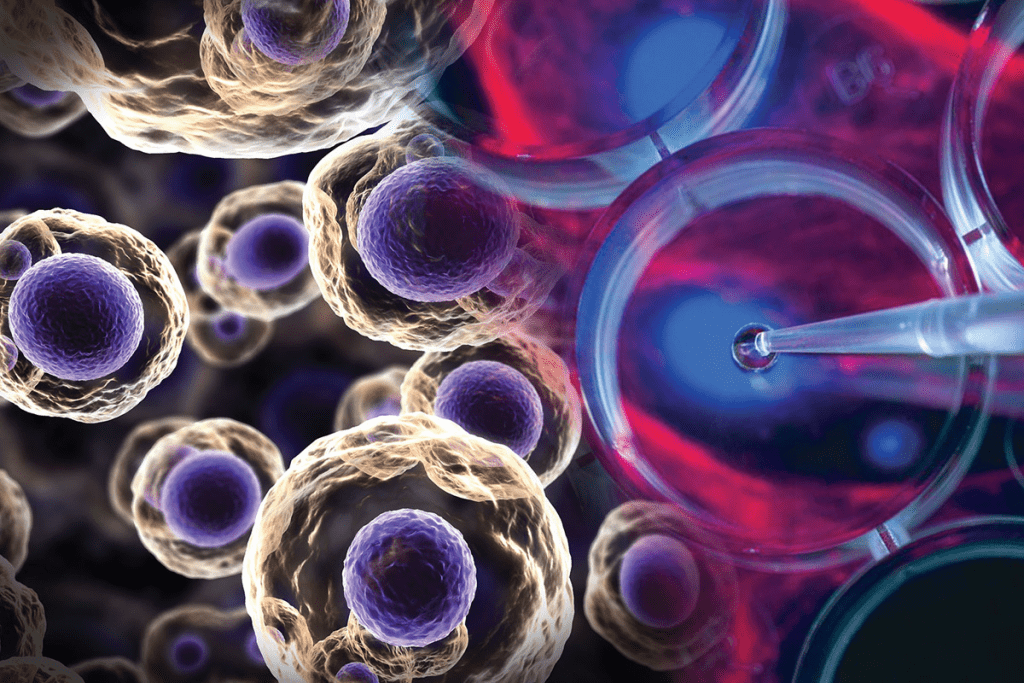
mesenchymal stem cells
Did you know that mesenchymal stem cells (MSCs) can turn into different cell types? This includes bone, cartilage, and muscle cells. Their ability to do this makes them very important in regenerative medicine. They could help treat many diseases and injuries.
MSCs are special cells that help fix and grow tissues. They can change into various cell types. This makes them a big deal in medical research.
Key Takeaways
- MSCs can differentiate into multiple cell types.
- They play a critical role in fixing and growing tissues.
- MSC therapy shows great promise for treating many health issues.
- Research on MSCs is moving fast in regenerative medicine.
- Learning about MSCs could lead to new ways to treat diseases.
What Are Mesenchymal Stem Cells?
MSCs, or mesenchymal stem cells, can turn into different types of cells. They can become bone, cartilage, and fat cells. This makes them very important in regenerative medicine.
Definition and Biological Properties
Mesenchymal stem cells stick to plastic and have specific markers like CD73, CD90, and CD105. They can also become osteoblasts, adipocytes, and chondrocytes. These cells are key for making bone, fat, and cartilage.
MSCs have special powers that help them work with the immune system. They can help fix damaged tissues. This is why they’re useful in treating diseases that cause inflammation and autoimmunity.
Differentiation Potentia
Mesenchymal stem cells can turn into many types of cells. They can become:
- Osteoblasts: Cells that help make bones.
- Adipocytes: Cells that make up fat tissue.
- Chondrocytes: Cells in healthy cartilage.
This ability to change into different cells is key for fixing and growing tissues. It makes MSCs a great tool in regenerative medicine.
Therapeutic Mechanisms
The therapeutic mechanisms of MSCs help fix tissues and control the immune system. They do this by releasing anti-inflammatory substances and growth factors that help heal.
MSCs help fix damaged tissues and grow new ones. This is very helpful in treating conditions like osteoarthritis. They can help make new cartilage and improve joint function.
Primary Sources of Mesenchymal Stem Cells
Mesenchymal stem cells (MSCs) come from many tissues. Each source has its own benefits and drawbacks. This variety makes MSCs useful for many treatments.
Overview of Available Sources
MSCs can be found in bone marrow, fat tissue, and umbilical cord. Bone marrow is a classic source, full of MSCs. Adipose tissue, taken from liposuction, is also popular for its easy access and many MSCs. The umbilical cord and birth tissues are a non-invasive, ethical option with lots of MSCs.
“MSCs in regenerative medicine show great promise,” studies say. The right source depends on the treatment, cell number needed, and donor health.
Autologous vs. Allogeneic Collection
MSCs can be taken from the same person (autologous) or from a donor (allogeneic). Autologous MSCs lower immune rejection risks but depend on patient health. Allogeneic MSCs are ready to use but need careful matching to avoid immune issues.
Factors Influencing Source Selection
Choosing an MSC source depends on the treatment, cell number, and donor health. Younger donors have MSCs that grow and change better. The ease and yield of MSCs from different sources also matter.
Knowing the strengths of each MSC source is key to their best use in therapy.
Bone Marrow Extraction Procedures
Bone marrow aspiration is a common method used to collect mesenchymal stem cells. This process involves extracting bone marrow from the patient’s bone, usually from the iliac crest or sternum.
Bone Marrow Aspiration Technique
The bone marrow aspiration technique requires precision and care. It is done under local anesthesia to reduce discomfort. A needle is inserted into the bone marrow cavity, and marrow is aspirated into a syringe.
The aspirated marrow contains a mixture of cells, including mesenchymal stem cells. These cells are then processed to isolate the MSCs.
Patient Preparation and Recovery
Patient preparation is key for a successful bone marrow aspiration procedure. This includes a thorough medical evaluation, informed consent, and preparation for possible risks. After the procedure, patients are monitored for complications and pain is managed.
Patients are usually advised to rest and avoid strenuous activities for a few days after the procedure.
Advantages and Limitations
Bone marrow-derived mesenchymal stem cells have many benefits. They can differentiate into various cell types and have immunosuppressive properties. Yet, there are drawbacks, like the invasive nature of the procedure and the risk of complications.
The yield and quality of MSCs can also vary between individuals. The use of MSC cell therapy derived from bone marrow has shown promise in regenerative medicine and tissue repair. It’s important to understand the advantages and limitations of bone marrow extraction procedures for better mesenchymal stem cell therapy outcomes.
Harvesting MSCs from Adipose Tissue
adipose-derived mesenchymal stem cells
Adipose tissue is a rich source of MSCs, making it great for stem cell therapy. It has a lot of MSCs and is easy to get them from. This is why more people are interested in using MSCs from fat.
Liposuction and Mini-Liposuction Methods
Liposuction removes extra fat from the body. Mini-liposuction is a gentler version used to get fat for MSCs. Both methods suck out fat, which is then processed for MSCs.
The liposuction process starts with a small cut in the skin. A cannula is used to loosen and remove the fat. The fat is then taken to a lab to get the MSCs. This method is good for getting MSCs and has a lot of tissue for therapy.
Advantages of Fat-Derived MSCs
MSCs from fat have many benefits. They are easy to find and get, and the process is simple. This is different from getting MSCs from bone marrow.
- High yield of MSCs
- Ease of isolation
- Potential for minimally invasive harvesting
Processing Techniques
To get MSCs from fat, several steps are needed. Enzymatic digestion breaks down the fat to release cells. Then, centrifugation separates the MSCs. These cells are grown and expanded for use.
The quality of the MSCs is very important for their effectiveness. So, strict quality checks are done during processing. This ensures the MSCs are up to standard.
Umbilical Cord and Birth Tissue Collection
MSCs from umbilical cord and birth tissues are key in regenerative medicine. These areas are full of stem cells. They offer a way to get MSCs without surgery.
Cord Blood and Wharton’s Jelly
Cord blood and Wharton’s jelly are rich in MSCs. Cord blood has hematopoietic stem cells. Wharton’s jelly has MSCs that grow a lot.
Extraction from Cord Blood: MSCs are found in cord blood. Getting them is hard because they’re rare. But, new methods have made it easier.
MSCs from Wharton’s Jelly: Wharton’s jelly is a gel in the umbilical cord. It’s full of MSCs. These cells can turn into many types of cells, making them useful for healing.
Placental Extraction Methods
The placenta is also a good source of MSCs. To get them, the placenta is processed. Then, the MSCs are grown for use in treatments.
- It’s important to purify MSCs from the placenta.
- Enzymatic digestion helps release MSCs from the tissue.
Banking and Long-Term Storage
Umbilical cord and placental tissues are banked for future use. This means freezing MSCs or tissues. Keeping them frozen is key to keeping them alive and working well.
| Storage Method | Description | Advantages |
| Cryopreservation | Freezing cells or tissues at very low temperatures. | Long-term preservation, maintains cell viability. |
| Liquid Nitrogen Storage | Storage in liquid nitrogen at -196 °C. | Highly effective for long-term storage, minimal cell degradation. |
Donor Screening Protocols
Checking donors is very important. It makes sure MSCs are safe and of good quality. This includes looking at the donor’s health and testing for diseases.
Rigor in donor screening is essential for the therapeutic application of MSCs.
Alternative Sources of Mesenchymal Stem Cells
alternative sources of mesenchymal stem cells
Researchers are looking into dental pulp, peripheral blood, synovial fluid, and menstrual blood for MSCs. These options could help solve some problems with traditional sources.
Dental Pulp Extraction
Dental pulp stem cells (DPSCs) come from tooth pulp. DPSCs are promising because they’re easy to get and can become different cell types. They can turn into odontoblasts, osteoblasts, and chondrocytes, which is great for dental and bone health.
Peripheral Blood Collection
MSCs can also be found in peripheral blood, but it’s not as common. There are fewer MSCs in blood, so getting them is harder. But, getting blood is less painful than bone marrow, making it a good choice.
Synovial Fluid Aspiration
Synovial fluid from joints is another MSC source. Synovial MSCs are good for fixing cartilage and treating osteoarthritis. Getting the fluid is a bit risky, but it’s less invasive than other methods.
Menstrual Blood Collection
Menstrual blood is a new MSC source. Menstrual blood MSCs (MenSCs) grow well and can change into different cells. It’s collected easily and can be used by the person it comes from, making it very appealing.
These new sources of MSCs open up more chances for cell therapy and regenerative medicine. Each has its own benefits and challenges. Scientists are working hard to make them work better for medical use.
Laboratory Processing and Expansion Methods
The success of MSC-based therapies depends on careful laboratory work. It’s important to keep MSCs viable, potent, and safe for use in clinics.
Isolation Techniques
Several methods are used to isolate MSCs, like density gradient centrifugation and fluorescence-activated cell sorting (FACS). Density gradient centrifugation separates MSCs from other cells by density. FACS isolates MSCs based on specific surface markers.
MSC isolation is key. It requires choosing the right cell surface markers. Common markers include CD73, CD90, and CD105. Negative markers like CD34 and CD45 help exclude other cells.
Cell Culture Expansion Protocols
After isolation, MSCs are grown in culture. Cell culture expansion protocols help them multiply without losing their stem cell properties.
The right growth factors and culture conditions are vital. For example, using fetal bovine serum (FBS) or platelet-derived growth factors can help MSCs grow better.
Quality Control and Characterization
Quality control and characterization are essential for MSCs. They check the cells’ viability, growth, and ability to differentiate.
Characterization verifies MSC markers and their ability to modulate the immune system. These steps are critical to ensure MSCs are ready for clinical use.
Following strict laboratory protocols helps keep MSCs effective and safe for patients.
Accessing Mesenchymal Stem Cell Treatments
mesenchymal stem cell therapy
The world of mesenchymal stem cell therapy is growing. More ways to get these treatments are opening up. As research gets better, more options are coming for patients.
FDA-Approved Clinical Applications
Some mesenchymal stem cell therapies have FDA approval. These treatments have been tested well and are safe and effective. For example, some are used for MSC-based therapies for graft-versus-host disease.
Patients should talk to their doctors to see if these treatments are right for them.
Clinical Trials and Research Programs
Clinical trials are looking into MSC therapies for many conditions. These include autoimmune diseases, degenerative joint disorders, and cardiovascular diseases. Joining a trial can give you access to new treatments.
Patients can find trials on ClinicalTrials.gov. They should talk to their doctors about joining.
Commercial Stem Cell Banks
Commercial stem cell banks help people save their stem cells for later. They offer info on how to save and the costs. It’s important to look at accreditation, storage methods, and costs when choosing a bank.
International Treatment Options
Some countries offer MSC treatments not approved in the U.S. These options might be a chance for patients looking for MSC therapies. But, it’s key to check the treatment providers’ qualifications and the treatments’ safety.
Patients should talk to their doctors about the pros and cons of going abroad for treatment. They should also check the treatment facility’s credentials and the doctors’ qualifications.
Safety and Efficacy Considerations
MSC-based treatments show great promise. But, their safety and how well they work need careful checking. It’s key for doctors and patients to understand the risks, quality, and results of these treatments.
Potential Risks and Complications
MSC therapies are mostly safe, but there are risks. These include immune reactions, infection, and unintended cell growth. It’s important to think about these risks and the possible benefits before choosing MSC therapy.
Studies have found important factors that affect MSC therapy safety. These include where the MSCs come from, how they’re prepared, and how they’re used.
Quality Standards and Regulations
It’s vital to ensure MSC therapies are of high quality. Agencies like the FDA have rules for making and using MSC treatments. These rules cover cell isolation, expansion protocols, and quality control measures.
Following these standards helps reduce risks and ensures patients get the best treatments.
Evidence-Based Outcomes
Many studies have looked at MSC therapy’s effectiveness. They’ve shown promising results for orthopedic conditions, autoimmune diseases, and cardiovascular diseases.
Reviewing the evidence, MSC therapies seem to offer real benefits for some patients. But, more research is needed to fully understand their benefits and how to use them best.
Cost-Benefit Analysis
Thinking about the cost of MSC therapy is important. The costs can be high, and it’s important to consider them against the possible benefits.
When doing a cost-benefit analysis, look at the cost of the therapy, the chance of better outcomes, and the risk of complications. This helps patients and doctors make smart choices about using MSC therapies.
Conclusion
Mesenchymal stem cells (MSCs) are a promising area in research and therapy. They could help treat many diseases and injuries. MSCs can turn into different cell types, which is great for regenerative medicine.
The future of MSC therapy is bright. Scientists are working hard to improve how we get and grow MSCs. They’re also looking into new ways to use them to help people.
MSCs have a lot of promise for healthcare’s future. More studies and trials are needed to fully understand their benefits. This will help bring new treatments to those who need them.
FAQ
What are mesenchymal stem cells (MSCs)?
MSCs are a special kind of stem cell. They can turn into different cell types, like bone, cartilage, and fat cells. They aid in the repair and regeneration of damaged tissues..
What are the primary sources of MSCs?
MSCs come from places like bone marrow, fat tissue, and umbilical cord. They can also be found in dental pulp and menstrual blood.
What is the difference between autologous and allogeneic MSC collection?
Autologous MSC collection means taking MSCs from the patient themselves. Allogeneic collection means getting MSCs from someone else.
How are MSCs isolated and expanded in the laboratory?
To get MSCs, scientists use methods like density gradient centrifugation and cell sorting. Then, they grow them in a lab using special media and protocols.
What are the therapeutic mechanisms of MSCs?
MSCs can change how the immune system works. They help fix tissues and grow new ones. They do this by releasing growth factors and cytokines.
Are MSC-based therapies FDA-approved?
Some MSC-based treatments have FDA approval for certain uses. Others are being tested in clinical trials.
What are the possible risks and complications with MSC-based therapies?
MSC-based treatments might cause immune reactions, tumors, or other problems. But, the risk is usually low.
How can I access MSC-based treatments?
You can get MSC-based treatments through FDA-approved uses, clinical trials, stem cell banks, or international options.
What is the cost-benefit analysis of MSC-based therapies?
When thinking about MSC-based treatments, consider the benefits and costs. The cost can vary based on the treatment and condition.
What are the quality standards and regulations for MSC-based therapies?
MSC-based treatments must follow quality standards and regulations. This includes guidelines for processing, testing, and FDA compliance.
References
Costela-Ruiz, V. J., Illescas-Montes, R., Puerta-GarcÃa, A., Melguizo-Ruiz, F., Ruiz, C., & de Luna, M. M. (2022). Different sources of mesenchymal stem cells for tissue regeneration: A comparison of bone marrow, adipose tissue, and dental tissue MSCs. Stem Cell Reviews and Reports, 18(3), 495-515. https://doi.org/10.1007/s12015-021-10316-x
Mahmood, R., Shaukat, M., & Choudhery, M. S. (2018). Biological properties of mesenchymal stem cells derived from adipose tissue, umbilical cord tissue and bone marrow. AIMS Cell and Tissue Engineering, 2(2), 78-90. https://doi.org/10.3934/celltissue.2018.2.78
Heo, J. S., Choi, Y., Kim, H. S., & Kim, H. O. (2016). Comparison of molecular profiles of human mesenchymal stem cells derived from bone marrow, adipose tissue, the placenta and umbilical cord blood. International Journal of Molecular Medicine, 37(1), 115-125. https://doi.org/10.3892/ijmm.2015.2413
Li, J., Li, N., Zhao, G., Chen, J., Su, Y., & Qiu, X. (2023). The heterogeneity of mesenchymal stem cells: An important consideration in basic research and clinical application. Stem Cell Research & Therapy, 14, Article 330. https://doi.org/10.1186/s13287-023-03587-y
Montesinos, J. J., Araña, J., MartÃnez, C., & others. (2009). Human mesenchymal stromal cells from adult and neonatal tissues: Characteristics and potential therapeutic uses. Cytotherapy, 11(4), 414-425. https://doi.org/10.1080/14653240902818440